
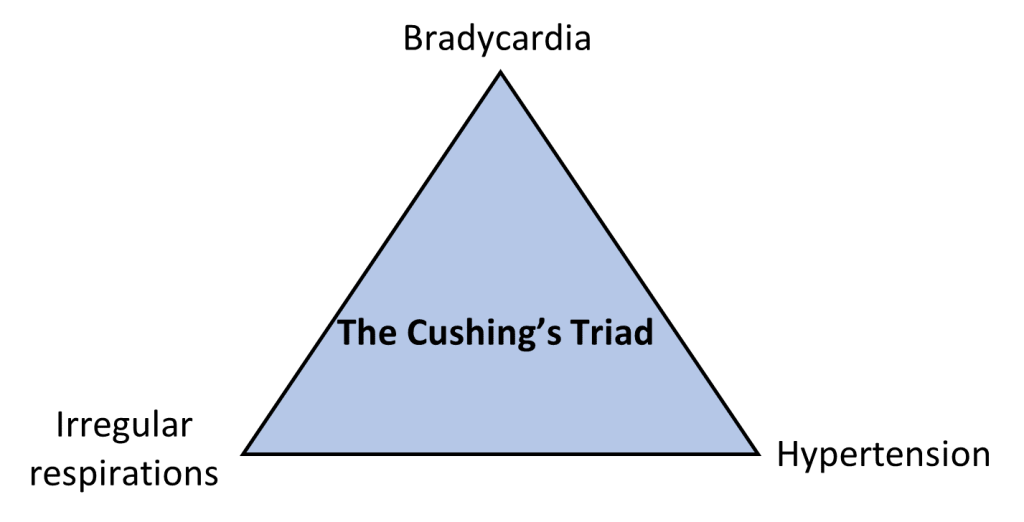
In the high-stakes environment of neurocritical care, time is the only currency that truly matters. Traditionally, clinicians have relied on a clinical classic known as “Cushing’s Triad”—a set of three primary signs (hypertension, bradycardia, and irregular respirations) that indicate a life-threatening increase in intracranial pressure (ICP). However, as we move further into the decade of digital transformation, the way we define, detect, and respond to Cushing’s Triad is undergoing a radical shift.
No longer is this phenomenon merely a bedside observation for a resident with a stethoscope and a blood pressure cuff. Today, it represents a complex data puzzle that modern technology is uniquely equipped to solve. From AI-driven predictive modeling to non-invasive IoT sensors, the “Tech” behind monitoring neurological emergencies is setting a new gold standard for patient outcomes.

Understanding the Digital Signature of Cushing’s Triad
To understand how technology is revolutionizing this space, one must first understand the “signature” that Cushing’s Triad leaves within a digital monitoring system. When a patient suffers from a brain injury or hemorrhage, the pressure within the skull rises. To compensate and ensure the brain receives oxygenated blood, the body triggers a massive sympathetic response.
The Mechanics of Increased Intracranial Pressure (ICP)
In a biological sense, the triad is a late-stage manifestation of the brain’s struggle for survival. High blood pressure (hypertension) occurs as the body tries to force blood into a high-pressure cranial environment. Bradycardia (slow heart rate) is a compensatory response to that high pressure, and irregular respirations occur because the brainstem is being compressed.
From a technological standpoint, these are three distinct data streams. In the past, these were checked intermittently. In the modern “Smart ICU,” these streams are continuous. The challenge for software developers has been to create systems that can distinguish between a random fluctuation in blood pressure and the specific, synchronized shifts that signal a true Cushing response.
From Manual Observation to Real-Time Data Streams
The shift from manual to digital began with the integration of high-fidelity bedside monitors. These devices do more than just display numbers; they capture waveforms. For instance, the respiratory rate in Cushing’s Triad isn’t just “slow”; it is often Cheyne-Stokes breathing or ataxic breathing. Modern signal-processing software can analyze the shape of a breathing wave and alert staff to irregularities long before a human eye might notice a change in the patient’s chest rise. This transition to “waveform analytics” is the cornerstone of 21st-century neuro-monitoring.
AI and Machine Learning: Predicting the Unpredictable
The most significant tech trend in healthcare today is the application of Artificial Intelligence (AI) and Machine Learning (ML) to physiological data. When it comes to Cushing’s Triad, AI is moving us from a reactive stance to a proactive one.
Algorithmic Detection of Hypertension and Bradycardia
Machine learning algorithms are exceptionally good at pattern recognition. By feeding millions of hours of ICU data into neural networks, tech companies have developed models that can identify the “pre-symptomatic” phase of Cushing’s Triad.
While a human clinician might see a slight rise in blood pressure and a slight dip in heart rate as two unrelated events, an AI algorithm sees the mathematical correlation. It can calculate the probability of an impending “pressure crisis” based on the velocity of these changes. These software tools serve as an “extra set of eyes,” processing data at a frequency that is impossible for human staff to maintain over a twelve-hour shift.
Early Warning Systems (EWS) in Modern ICUs
Integrated software platforms like Epic’s monitor modules or Cerner’s predictive suites now feature Early Warning Systems (EWS). These systems use the “Modified Early Warning Score” (MEWS) but are increasingly being supplemented by proprietary AI “Sepsis” and “Neuro” triggers.
When the software detects the specific confluence of physiological triggers associated with Cushing’s Triad, it can trigger a “Code Brain” or a “Rapid Response” alert. This automation reduces the “alarm fatigue” that plagues modern hospitals by filtering out noise and focusing on the specific cluster of symptoms that indicate a true neurological emergency.

IoT and Wearable Integration in Neurological Monitoring
While much of the focus remains on the ICU, the “Internet of Medical Things” (IoMT) is expanding the reach of Cushing’s detection into the field—specifically in ambulances and even into the homes of high-risk patients.
Smart Sensors and Non-Invasive ICP Monitoring
One of the greatest hurdles in managing Cushing’s Triad is that measuring the root cause—intracranial pressure—has traditionally been invasive, requiring a hole to be drilled in the skull for a pressure probe. Tech startups are currently disrupting this space with non-invasive sensors.
Using techniques like “Transcranial Doppler Ultrasound” or “Ocular Nerve Sheath Diameter” sensors, new gadgets can estimate ICP using sound waves or light. These devices are increasingly being miniaturized and connected via Bluetooth to tablet-based diagnostic software. This allows first responders to identify the precursors of Cushing’s Triad at the scene of an accident, long before the patient reaches a trauma center.
Remote Patient Monitoring (RPM) and Post-Trauma Care
The tech-driven approach to Cushing’s Triad also extends to the recovery phase. Patients who have undergone neurosurgery are at risk for secondary pressure spikes. Wearable technology, such as smart patches that monitor continuous ECG and respiratory patterns, allows these patients to be moved out of the intensive care unit sooner.
By streaming this data to a centralized “Command Center,” a single technician can monitor dozens of patients. If the software identifies the specific combination of bradycardia and hypertension that suggests a recurrence of pressure, the system can immediately alert the surgical team. This “hub-and-spoke” model of care is only possible through robust cloud computing and high-speed data transmission.
The Future of Neuro-Tech: Toward Fully Automated Response Systems
As we look toward the horizon, the intersection of tech and neuro-critical care is moving toward “closed-loop” systems. This is the ultimate goal of HealthTech: a system that not only detects a crisis like Cushing’s Triad but also initiates the first steps of treatment.
Integrating Neural Links and Biofeedback
We are already seeing the early stages of brain-computer interfaces (BCIs). While currently used primarily for restoring movement in paralyzed patients, the long-term application involves “Neuro-Telemetry.” Imagine a system where a sub-dermal chip monitors brain oxygenation and pressure in real-time.
In this scenario, Cushing’s Triad wouldn’t just be a set of symptoms; it would be a digital trigger. If the pressure exceeds a certain threshold, the device could theoretically communicate with a smart IV pump to titrate medications like Mannitol or hypertonic saline—treatments used to reduce brain swelling—automatically. While this sounds like science fiction, the hardware for such integrated systems is already in development at various biotech labs.
Ethical Considerations in Algorithmic Life-Saving Decisions
The rise of automated detection for Cushing’s Triad brings with it significant technological and ethical questions. If an AI fails to detect the triad, who is liable? Or, conversely, if an AI recommends a high-risk intervention based on its analysis of a patient’s vital signs, should the human doctor have the right to override it?
Software developers are currently working on “Explainable AI” (XAI). This is a subset of AI designed to show its work. Instead of simply saying “Alert: Cushing’s Triad Detected,” the next generation of software will provide a dashboard showing the specific data points—the widening pulse pressure, the specific respiratory waveform, and the heart rate trend—that led to the conclusion. This transparency is vital for building trust between the tech tools and the medical professionals who use them.
Conclusion: The New Era of Neurological Tech
Cushing’s Triad remains a fundamental concept in medicine, but its application has been transformed by the digital age. We have moved from a world where we waited for the “triad” to appear to a world where we use technology to predict its arrival and intervene before it can cause permanent damage.
The synergy between advanced software, AI algorithms, and IoT hardware is creating a safety net for patients with neurological injuries. By turning physiological signs into actionable data, technology is ensuring that Cushing’s Triad is no longer a harbinger of doom, but rather a solvable problem in the modern digital hospital. As these tools become more accessible and intelligent, the focus will continue to shift from simply understanding “what is Cushing’s Triad” to “how fast can our technology resolve it.”
aViewFromTheCave is a participant in the Amazon Services LLC Associates Program, an affiliate advertising program designed to provide a means for sites to earn advertising fees by advertising and linking to Amazon.com. Amazon, the Amazon logo, AmazonSupply, and the AmazonSupply logo are trademarks of Amazon.com, Inc. or its affiliates. As an Amazon Associate we earn affiliate commissions from qualifying purchases.