
In the intricate world of brand development, where every visual element contributes to a cohesive narrative, understanding fundamental design principles is paramount. Among these, the concept of a tessellation—a captivating pattern of shapes fitted together without any gaps or overlaps—stands out as a powerful, yet often understated, tool for creating distinctive and memorable brand identities. Far from being a mere mathematical curiosity, tessellations offer a rich vocabulary for designers and strategists to craft unique visual languages, imbue brands with specific personalities, and foster deeper connections with their audiences. This article delves into the essence of tessellations, exploring their historical significance and, more importantly, their profound strategic value in shaping contemporary brand experiences.

The Fundamental Geometry of Branding: Defining Tessellations and Their Historical Roots
At its core, a tessellation, also known as a tiling, is a collection of plane figures that fill a surface without any gaps or overlaps. Imagine a bathroom floor tiled perfectly, or a honeycomb’s hexagonal structure; these are everyday examples of tessellations. The beauty of a tessellation lies in its inherent order, rhythm, and the illusion of infinite extension it can create. For brand identity, this intrinsic structure provides a powerful foundation upon which to build visual consistency and recognition.
Mathematical Principles Guiding Design
The mathematical precision behind tessellations dictates their aesthetic potential. Regular tessellations use only one type of regular polygon (e.g., triangles, squares, hexagons), creating highly uniform and predictable patterns often associated with stability, order, and classical elegance. Semi-regular tessellations combine two or more types of regular polygons, introducing complexity and visual interest while maintaining symmetry. Beyond these, non-periodic tessellations, like Penrose tilings, offer intriguing structures that never perfectly repeat, hinting at innovation, complexity, and a modern, avant-garde appeal. Understanding these mathematical underpinnings allows brand designers to select patterns that inherently communicate desired traits, from the robustness of a square tile to the interconnectedness of a hexagonal grid, or the dynamic asymmetry of more complex forms.
Ancient Applications in Art and Architecture
The application of tessellations is as old as civilization itself, reflecting humanity’s innate desire for order and beauty. Ancient Roman mosaics, with their intricate geometric and figurative patterns, are early testaments to the art of tiling, transforming functional surfaces into breathtaking visual narratives. Islamic art and architecture elevated tessellations to an unparalleled level, using complex geometric patterns to adorn mosques and palaces. These patterns, often symbolizing the infinite and divine, demonstrated profound mathematical understanding and artistic skill, creating immersive and spiritually resonant environments. Similarly, the meticulous patterns found in traditional textiles across various cultures showcased how tessellations could convey cultural identity, status, and narrative. These historical precedents underscore the timeless appeal and deep communicative power of tessellated designs, providing a rich legacy for modern brands to draw upon in their pursuit of unique visual identities.
Tessellations as Visual Language: Crafting Distinctive Brand Identities
In a crowded marketplace, a brand’s visual identity is its most immediate and potent form of communication. Tessellations offer a unique vocabulary for crafting identities that are not only aesthetically pleasing but also strategically aligned with a brand’s core values and message. By leveraging the inherent structure and repetition of tessellated patterns, brands can forge a visual language that is both memorable and deeply resonant.
Building Recognition and Recall Through Pattern
A well-chosen tessellation can become an indelible signature for a brand, fostering instant recognition and recall. Think of the iconic check pattern of Burberry, the intricate motifs of Versace, or even the distinct geometric arrangements found in the branding of certain technology companies. These patterns transcend mere decoration; they become synonymous with the brand itself, instantly evoking its heritage, luxury, or technological prowess. The repetitive nature of tessellations makes them highly effective for creating pervasive brand cues across multiple touchpoints. When a customer encounters a tessellated pattern consistently associated with a brand—whether on packaging, in an advertisement, or within a retail environment—it reinforces the brand’s presence and strengthens its hold on their memory. This consistent visual language builds familiarity and trust, crucial elements for long-term brand loyalty.
Expressing Brand Personality Through Pattern
Beyond mere recognition, tessellations are powerful tools for expressing a brand’s personality. The choice of shapes, colors, and the arrangement within a tessellation can communicate a wide spectrum of traits. A brand aiming for a sense of tradition and reliability might opt for simpler, regular tessellations using classic polygons, evoking stability and order. Conversely, a brand seeking to portray innovation, creativity, or a modern edge might experiment with more complex, irregular, or even dynamic tessellations that suggest movement and forward-thinking design.
For instance, a luxury brand might use intricate, symmetrical tessellations with elegant curves and opulent materials to convey sophistication and exclusivity. A children’s brand, on the other hand, might employ playful, colorful tessellations with organic shapes to evoke joy and imagination. Even the density and scale of the pattern contribute: a dense, tight pattern can suggest meticulousness and quality, while a looser, more open pattern might imply spaciousness, freedom, or accessibility. By carefully selecting and designing tessellated patterns, brands can articulate their unique ethos without uttering a single word, allowing their visual identity to speak volumes about who they are and what they stand for.
Beyond the Logo: Integrating Tessellations into Comprehensive Brand Experiences
While a logo is the cornerstone of brand identity, a truly powerful brand experience extends far beyond a single emblem. Tessellations provide an exceptional means to infuse a brand’s visual language into every touchpoint, creating immersive and cohesive environments that deeply engage consumers. Their inherent repeatability and adaptability make them ideal for creating holistic brand worlds.
Environmental Branding and Interior Design
Tessellations excel in environmental branding, where physical spaces are designed to reflect and reinforce brand identity. Consider a retail store or a hotel lobby: the flooring, wall coverings, ceiling patterns, and even furniture fabric can all incorporate tessellated designs. A tech company might use a sharp, angular tessellation in their office lobby to communicate innovation and precision, while a spa might opt for fluid, organic tessellations with soothing colors to evoke tranquility and wellness. These patterns don’t just decorate; they transform spaces into extensions of the brand, guiding the customer experience and creating a distinct atmosphere. By thoughtfully applying tessellated patterns, businesses can craft environments that are not only aesthetically pleasing but also strategically aligned with their brand message, leaving a lasting impression on visitors.
Packaging and Product Design
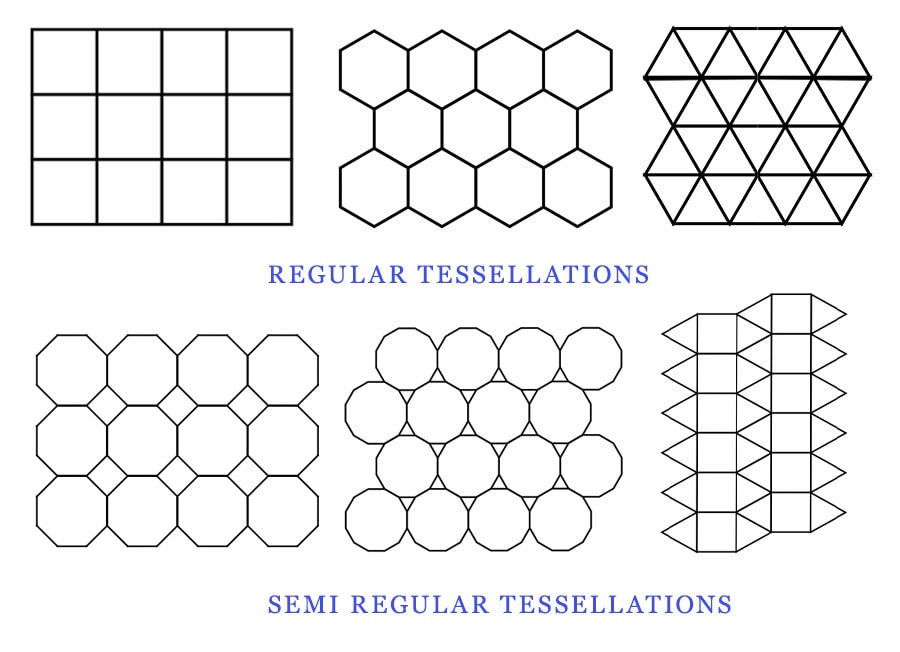
In the realm of packaging and product design, tessellations offer significant advantages for differentiation and consumer engagement. A product’s packaging is often the first physical interaction a consumer has with a brand, and a distinctive tessellated pattern can make it stand out on the shelf. This could be a subtly embossed pattern on a luxury perfume box, a vibrant geometric design on a snack bag, or a functional, repeating texture on the product itself. Beyond aesthetics, tessellations can be integral to the product’s form or function. For example, a sports brand might incorporate a tessellated grip pattern on their equipment, blending visual appeal with ergonomic functionality. The visual consistency provided by a recurring tessellated pattern across a product line helps consumers easily identify and connect with the brand’s offerings, reinforcing brand recognition and perceived quality.
Digital Touchpoints and User Interfaces
In the digital age, a brand’s online presence is just as critical as its physical one. Tessellations are perfectly suited for digital touchpoints, offering dynamic possibilities for websites, apps, social media graphics, and user interfaces. A tessellated background on a website can provide visual depth and sophistication, while animated tessellations can create engaging transitions or loading screens. For user interfaces, subtle tessellated textures can improve usability by providing visual cues or differentiating sections without overwhelming the user. Digital patterns can also be responsive, adapting to different screen sizes and orientations while maintaining brand consistency. This adaptability makes tessellations an invaluable asset for creating fluid, engaging, and memorable digital brand experiences that seamlessly extend the brand’s identity into the virtual realm.
Strategic Application: When and How to Leverage Tessellations in Your Brand
The strategic deployment of tessellations goes beyond mere aesthetic appeal; it involves a thoughtful consideration of brand objectives, target audience, and market positioning. For a tessellated pattern to truly amplify a brand, its integration must be purposeful and aligned with overarching brand strategy.
Considerations for Brand Messaging and Storytelling
Before adopting a tessellated design, brand strategists must ask: What story do we want to tell? What message do we want to convey? The inherent qualities of different tessellations can powerfully underscore a brand’s narrative. A brand emphasizing innovation and forward-thinking might opt for irregular or abstract tessellations, signaling dynamism and a break from tradition. A brand rooted in heritage and craftsmanship might choose intricate, classic patterns that speak to timeless quality and meticulous detail.
Furthermore, tessellations can be used metaphorically. A pattern of interconnected shapes could represent a brand’s community focus or its comprehensive suite of integrated services. A tessellation based on natural forms might align with an eco-conscious brand’s commitment to sustainability. The key is to ensure that the chosen pattern isn’t just visually appealing, but also deeply resonant with the brand’s mission, values, and the emotional connection it seeks to build with its audience. This requires a deep dive into the brand’s essence to select a pattern that visually embodies its core narrative.
Evolution and Adaptability of Tessellated Designs
A crucial aspect of any strong brand identity is its ability to evolve while maintaining its core essence. Tessellations offer remarkable flexibility in this regard. A brand can establish a foundational tessellated pattern and then adapt it through variations in color, scale, texture, or even the underlying shapes, without losing its recognizable character. For instance, a luxury fashion brand might launch seasonal collections featuring the same core tessellation but rendered in different color palettes or materials. A technology company might simplify or abstract its tessellated pattern for digital interfaces, while using a more elaborate version for physical branding elements.
This adaptability allows brands to stay fresh and relevant without undergoing a complete identity overhaul, protecting the equity built in their visual language. It also enables brands to apply their tessellated pattern across diverse cultural contexts or product lines, ensuring global consistency while allowing for local nuances. The judicious evolution of tessellated designs ensures that a brand’s visual identity remains dynamic and responsive to market changes, yet always unmistakably itself.
Case Studies in Pattern Power: Iconic Brands and Their Tiling Tales
Examining how successful brands have harnessed the power of tessellations offers compelling insights into their strategic value. From the high-end fashion houses to modern digital enterprises, patterns serve as silent yet potent brand ambassadors.
Luxury Brands and Geometric Opulence
Luxury brands are masters at leveraging tessellations to communicate exclusivity, heritage, and meticulous craftsmanship. Louis Vuitton, for instance, is globally recognized for its iconic “Monogram Canvas” pattern, a tessellation of its founder’s initials, four-leaf clovers, and flowers. This pattern is not just a logo; it’s a statement of identity, a mark of luxury that has been consistently applied across its product range for over a century. The intricate repetition speaks to heritage, quality, and a cultivated sense of style.
Similarly, the geometric patterns of Versace, often featuring the Medusa head within Greek key motifs, create a sense of opulent grandeur and distinct brand personality. These patterns are deeply integrated into their textiles, accessories, and even architectural spaces, ensuring a holistic brand experience that exudes confidence and lavishness. These brands demonstrate how tessellations, when consistently and thoughtfully applied, become inseparable from their identity, embodying their values and creating an aspirational allure.

Modern Brands and Dynamic Patterns
Tessellations are equally relevant for contemporary brands, especially those looking to convey innovation, dynamism, or community. Consider the visual identity of a brand like Google, which, while not using a traditional tessellation, often employs geometric modularity and repetition in its brand system and product iconography. Its Material Design language, for example, emphasizes a grid-based, tiled approach that creates a consistent, intuitive, and aesthetically pleasing user experience across its digital ecosystem.
Another example can be found in the subtle use of tessellation-like structures in architectural or interior designs for modern corporate campuses like those of Apple or Amazon. The precise, repeating geometric forms in their buildings, furniture, and environmental graphics often subtly reinforce their brand values of innovation, efficiency, and cutting-edge design. These examples illustrate that tessellations are not confined to traditional ornamentation; they are versatile tools that can be adapted to modern aesthetics, minimalist designs, and complex digital interfaces, proving their enduring relevance in shaping the perception and experience of diverse brands.
In conclusion, tessellations are far more than decorative elements; they are powerful strategic assets in the brand designer’s toolkit. By understanding their mathematical foundations, historical resonance, and versatile applications, brands can unlock the profound pattern power to craft distinctive identities, express unique personalities, and create immersive experiences that resonate deeply with their audiences. In a world saturated with visual noise, the clarity, consistency, and compelling beauty of a well-conceived tessellation can be the key to lasting brand recognition and enduring success.
aViewFromTheCave is a participant in the Amazon Services LLC Associates Program, an affiliate advertising program designed to provide a means for sites to earn advertising fees by advertising and linking to Amazon.com. Amazon, the Amazon logo, AmazonSupply, and the AmazonSupply logo are trademarks of Amazon.com, Inc. or its affiliates. As an Amazon Associate we earn affiliate commissions from qualifying purchases.