
In the dynamic landscape of modern communication, the efficacy of our messaging often hinges on our ability to solicit information, provoke thought, and engage our audience. Whether you are drafting a technical manual, designing a user interface for a software application, or constructing a high-conversion marketing prompt for an artificial intelligence model, the interrogative sentence is your most powerful instrument. Understanding the structural nuances and strategic application of the interrogative sentence is essential for anyone operating within the digital technology space, where precision and clarity dictate the success of every interaction.
The Architecture of Interrogative Structures
At its core, an interrogative sentence is a grammatical construct designed to elicit information. Unlike declarative sentences, which state facts, or imperative sentences, which issue commands, the interrogative sentence functions as a bridge between the user and the system. In the context of software development and AI interaction, the interrogative sentence serves as the primary input mechanism for natural language processing (NLP).

Direct and Indirect Inquiries
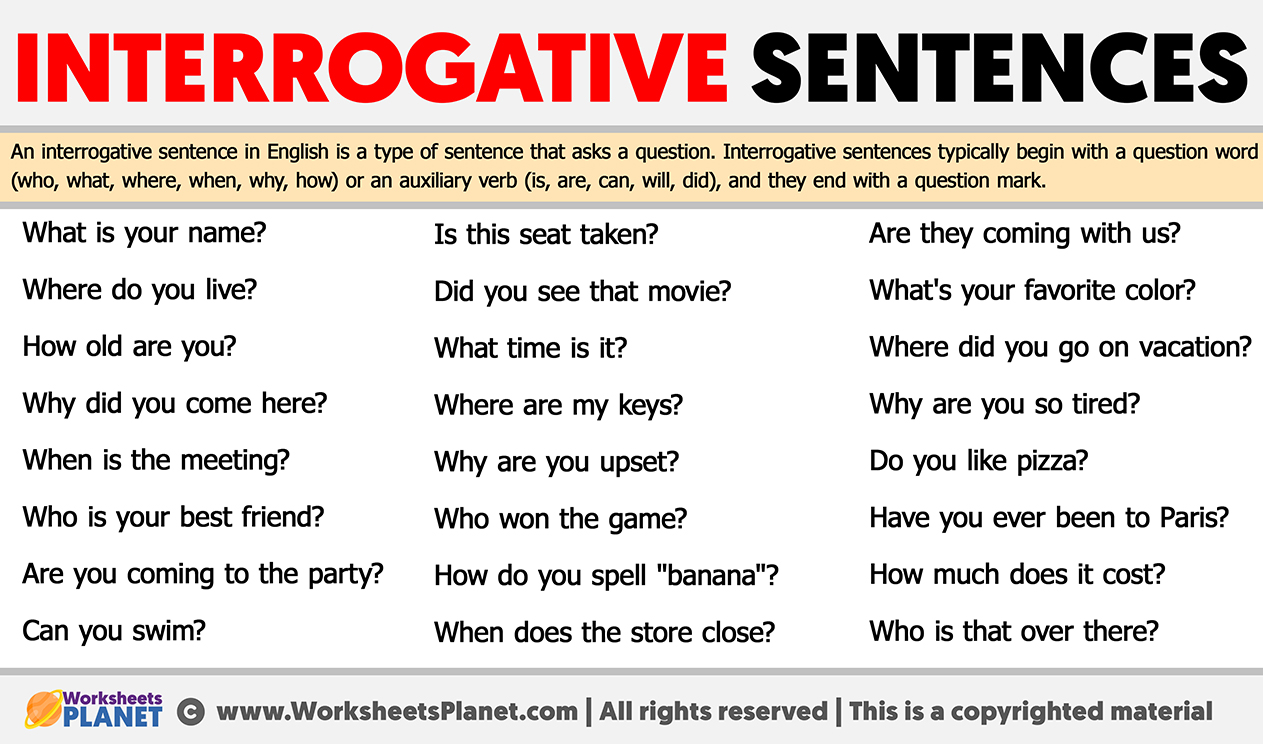
Direct questions are the most common form of interrogative sentences. They typically begin with an auxiliary verb (such as “is,” “can,” or “does”) or a “wh-” word (who, what, where, when, why, how). For instance, a software engineer might ask, “Does the current API integration support asynchronous data processing?” This direct approach minimizes ambiguity, providing the system with a clear objective.
Indirect questions, conversely, are embedded within declarative statements. Instead of asking, “What is the error code?” a developer might document, “We need to determine what the error code signifies.” While the intent remains interrogative, the grammatical structure is softened. In UI/UX design, these distinctions are critical; using the wrong interrogative structure can lead to cognitive load issues for the end-user.
The Role of Syntax in Digital Querying
Syntax determines how a system parses your inquiry. When interacting with Large Language Models (LLMs) or sophisticated query languages like SQL, the structure of your interrogative sentence directly impacts the output quality. A poorly structured question, such as “How about the data and the thing?” fails to provide the semantic context necessary for an AI to retrieve specific insights. Conversely, an interrogative sentence built with specific parameters—”How does the latency of this server affect the database query response time?”—allows for a precise, technically accurate response.
Strategic Application in Technical Communication
In the tech industry, the interrogative sentence is more than a grammatical necessity; it is a diagnostic tool. Whether troubleshooting a failed deployment or documenting system requirements, the ability to frame the correct question is the hallmark of a high-level technical professional.
Debugging Through Inquiry
Troubleshooting often follows a path of systematic interrogation. When a software application crashes, the developer performs a mental or scripted interrogation of the environment:
- What was the last state of the application before the crash?
- Which log files indicate a breach in memory allocation?
- How does this specific bug correlate with the recent firmware update?
By framing these queries as formal interrogative sentences, developers can isolate variables and move closer to a root cause analysis. This process mirrors the “Socratic Method,” where persistent, structured questioning leads to a deeper understanding of the system’s architecture.

Crafting Effective Prompts for Artificial Intelligence
We live in an era where the interrogative sentence is the primary programming language for AI tools. The quality of a response from an AI is directly proportional to the quality of the interrogative structure used in the prompt. Users who leverage clear, concise, and context-rich interrogative sentences—known in the industry as “prompt engineering”—consistently outperform those who use vague inputs.
For example, asking “How do I fix this?” is an interrogative sentence with low utility. It provides no context for the AI. A superior interrogative structure would be: “What are the most efficient debugging steps for resolving a 403 Forbidden error in a Python-based Flask application?” This sentence provides the subject, the error, and the technical environment, enabling the AI to deliver a tailored, actionable technical solution.
The UI/UX Implications of Questioning
The design of digital products often relies on the interrogative sentence to guide the user journey. From registration flows to interactive dashboards, the questions we ask our users dictate their engagement level and the overall usability of the product.
Reducing Friction via Questioning
Good UX design often replaces long-winded explanations with short, punchy interrogative sentences. Consider a data-heavy application. Instead of providing a cluttered manual, a well-designed tool might ask, “What data set would you like to analyze today?” at the point of entry. This interrogative structure serves two purposes: it directs the user’s attention to the most important feature and establishes a conversational tone that reduces user fatigue.
Contextual Help and Tooltips
In complex software, interrogative labels are frequently used to provide contextual help. A button labeled “How do I optimize my project settings?” is far more inviting than a static “Help” tab. This specific type of interrogative sentence acts as a navigational signpost, telling the user exactly what to expect when they click. By anticipating the user’s needs through these inquiries, designers can create a more intuitive and responsive software experience.
Advancing Digital Literacy Through Structural Precision
As we move toward a future where human-machine interaction is the standard, the ability to formulate robust interrogative sentences will become a foundational skill. It is not merely about asking for information; it is about how we organize our thoughts to interact with complex software systems and algorithmic intelligence.
The Evolution of Query Languages
Even beyond natural language, the logic of the interrogative sentence remains prevalent. Database query languages like SQL (Structured Query Language) are essentially formalized interrogative systems. When you write a SELECT statement, you are essentially asking the database a question: “What records exist in this table that meet these specific criteria?” Mastery of these languages requires an understanding of how to frame an interrogative query in a way that the machine can execute.
Cultivating a Questioning Mindset
To be an effective technologist, one must cultivate the habit of asking the right questions. This involves moving away from “why is this broken?” and toward “what specific component of the distributed system is returning the timeout error?” This transition—from vague questioning to specific, interrogative-driven inquiry—is what separates a junior practitioner from a subject matter expert.
By refining our interrogative sentences, we become more adept at communicating with the tools we build and use. Whether you are debugging code, training a neural network, or designing the user interface of a high-performance application, the interrogative sentence is your primary bridge to clarity. It forces us to define our objectives, identify our constraints, and articulate our needs with the precision required for the digital age.
As technology continues to integrate more deeply into our daily workflows, the elegance and efficiency of our communication will dictate our professional trajectory. Start by reviewing your documentation, your prompt history, and your system requirements. Identify where your inquiries are vague, and replace them with clear, structured, and deliberate interrogative sentences. You will find that when you ask better questions of your technology, your technology will provide better answers to your problems. The interrogative sentence is the tool that transforms complex data into actionable insight, and mastering it is the most critical step toward becoming a more effective participant in the digital ecosystem.
aViewFromTheCave is a participant in the Amazon Services LLC Associates Program, an affiliate advertising program designed to provide a means for sites to earn advertising fees by advertising and linking to Amazon.com. Amazon, the Amazon logo, AmazonSupply, and the AmazonSupply logo are trademarks of Amazon.com, Inc. or its affiliates. As an Amazon Associate we earn affiliate commissions from qualifying purchases.