
In the intricate world of finance, precision is not just a virtue; it’s a necessity. Slight changes in rates, yields, or fees can translate into millions, if not billions, of dollars across portfolios, national economies, and individual financial plans. To communicate these minute yet significant fluctuations with absolute clarity and without ambiguity, financial professionals rely on a specialized unit of measurement: the basis point. Far from being an obscure piece of jargon, understanding what a basis point is and how it functions is fundamental to comprehending everything from central bank policy announcements to the expense ratios of your investment funds. It’s a concept that underpins the very language of financial markets, ensuring that every participant, from institutional investors to individual savers, can accurately interpret and react to changes that impact their financial well-being.
Understanding the Fundamentals: Deconstructing the Basis Point
At its core, a basis point is a simple yet powerful concept designed to eliminate confusion when discussing small percentage changes. It provides a standardized unit that allows for accurate and unambiguous communication, especially in environments where fractional shifts carry substantial weight.
Defining the Basis Point (BPS): The ‘One-Hundredth of a Percent’ Rule
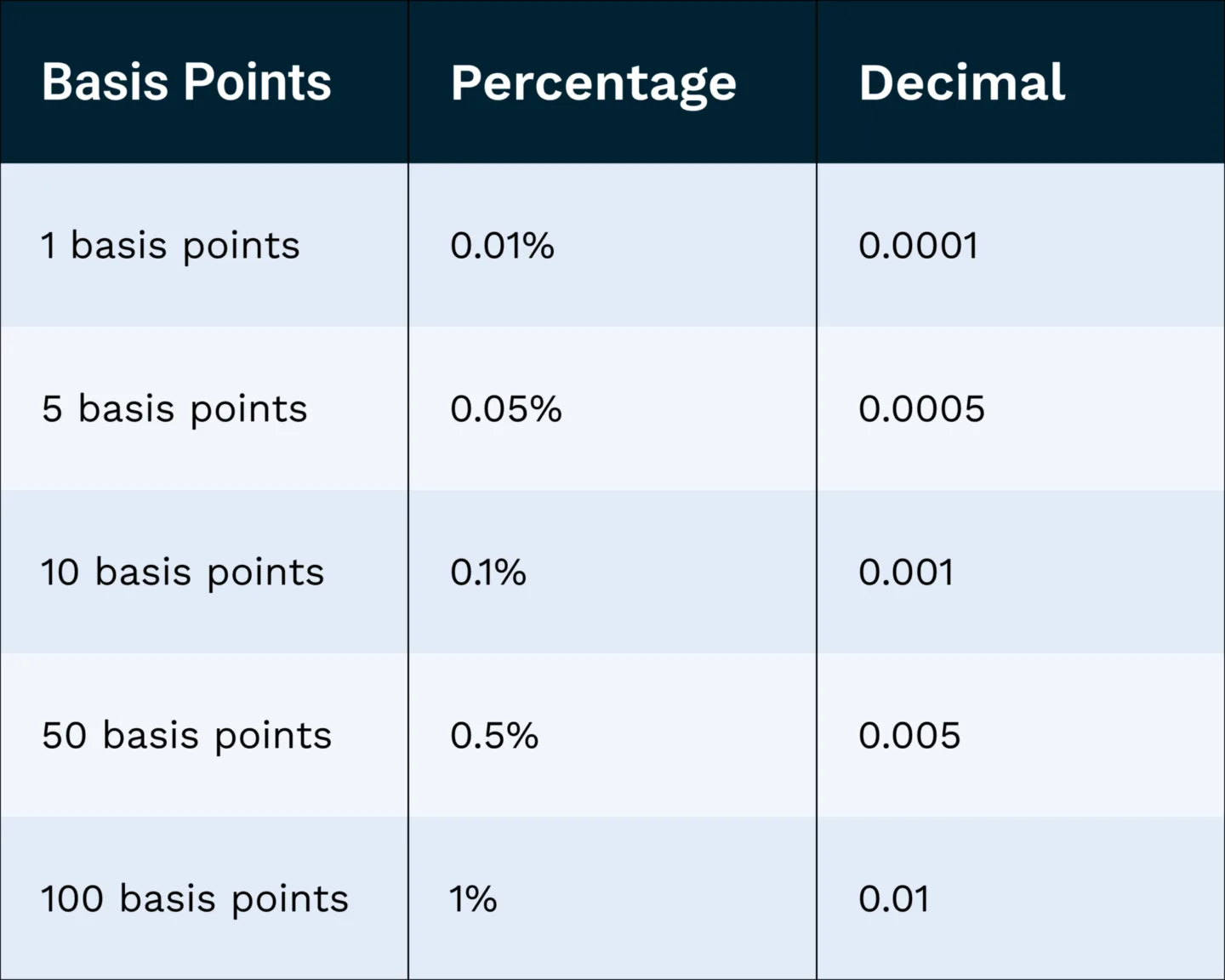
A basis point, often abbreviated as “bp” or “bps” (for plural), is defined as one one-hundredth of a percentage point. In mathematical terms, this means:
-
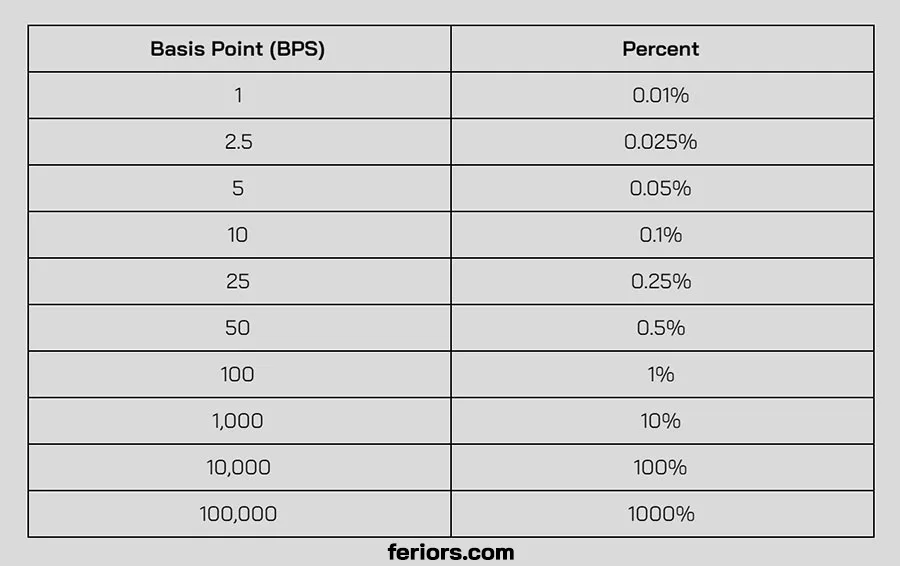
1 basis point = 0.01%
-
100 basis points = 1.00%
This seemingly minor distinction from simply using percentages directly is critical. Imagine a scenario where an interest rate moves from 2.00% to 2.25%. Stating that the rate increased by “0.25 percent” could be misinterpreted. Did it increase by 0.25 percentage points, or did it increase by 0.25% of the original rate (which would be a much smaller increment)? By saying the rate increased by “25 basis points,” there is absolutely no room for misinterpretation. It unambiguously means an increase of 0.25 percentage points. This clarity is invaluable in fast-paced financial markets where misunderstanding can lead to significant errors and financial losses.
Why Basis Points Matter: Precision and Clarity
The primary advantage of using basis points lies in their ability to provide extreme precision and eliminate ambiguity, particularly when dealing with interest rates, bond yields, and other financial instruments that are highly sensitive to small changes. When financial markets are dealing with massive sums of money, even a tiny fraction of a percentage can represent a huge dollar amount.
For instance, consider a $100 million bond issue. A change in yield of 0.01% (1 basis point) translates to a $10,000 difference in annual interest payments or investment returns. If analysts, traders, or policymakers were to constantly refer to these minute shifts as fractions of a percent, the potential for error and miscommunication would skyrocket. Basis points provide a universal, unambiguous lexicon for these critical discussions, ensuring that all parties are on the same page regarding the exact magnitude of change. This meticulousness is not merely academic; it forms the bedrock of transparent and efficient financial operations globally.
Where Basis Points Are Used: Key Financial Applications
The utility of basis points extends across virtually every corner of the financial landscape, making them an indispensable tool for professionals and a key concept for anyone navigating their personal finances.
Interest Rates and Yields
Perhaps the most common application of basis points is in the context of interest rates and bond yields.
-
Bonds: When bond yields change, they are almost always quoted in basis points. For example, if the yield on a 10-year Treasury bond moves from 3.50% to 3.65%, financial news will report this as an increase of “15 basis points.” This precision is vital for bond traders and investors, as bond prices move inversely to yields; even small yield changes can significantly impact a bond’s valuation.
-
Loans: Lenders often quote adjustments to loan rates in basis points. Mortgage rates, corporate loan rates, and interbank lending rates (like the historical LIBOR or current SOFR/Fed Funds Rate) are constantly in flux, and their movements are frequently communicated in basis points. When a central bank like the Federal Reserve announces an interest rate hike, it’s almost always stated in basis points (e.g., “The Fed raised rates by 25 basis points”).
-
Savings Accounts and CDs: While less dramatic, even the interest rates offered on consumer savings products can see changes quoted in basis points, reflecting the competitive landscape or broader economic policy shifts.
Investment Management and Fees
Basis points are also the standard unit for expressing the costs associated with managing investments, providing transparency to investors.
-
Expense Ratios: Mutual funds and Exchange-Traded Funds (ETFs) disclose their annual operating expenses as an expense ratio, typically expressed in basis points. An expense ratio of 75 basis points means the fund charges 0.75% of your investment annually for management and operational costs. This allows for easy comparison between different funds.
-
Management Fees: Hedge funds and private equity firms also levy management fees, often expressed in basis points (e.g., “200 basis points” or “2 and 20,” meaning a 2% management fee and a 20% performance fee on profits).
-
Performance Fees: While often a percentage of profits, the thresholds for earning these performance fees can sometimes be linked to benchmark performance quoted in basis points above a certain index.
Foreign Exchange (Forex) and Spreads
In the fast-paced world of foreign exchange, basis points help articulate the narrow margins involved in currency trading.
- Bid-Ask Spreads: The difference between the price a buyer is willing to pay (bid) and the price a seller is willing to accept (ask) for a currency pair is known as the spread. While often quoted in “pips” (points in percentage), especially for major currency pairs (which are usually 0.0001 or 1/100th of a basis point for most pairs), the underlying concept of tiny fractional movements is analogous to basis points, highlighting the thin margins that define profitability in FX markets.
Derivatives and Risk Management
For complex financial instruments and risk assessment, basis points offer the granularity needed for sophisticated calculations.
-
Swaps, Options, and Futures: The pricing and valuation of derivative contracts, which derive their value from an underlying asset, often involve basis points. Changes in implied volatility or interest rate expectations can shift these prices by basis points.
-
Measuring Interest Rate Risk (DV01): In fixed income markets, a key risk metric is DV01 (Dollar Value of a 01), which quantifies the change in a bond’s price for every one basis point change in its yield. This highly precise measure is critical for portfolio managers hedging against interest rate fluctuations.
The Practical Impact of Basis Point Movements
While seemingly small, basis point movements collectively have profound implications for individuals, businesses, and the broader economy. Understanding these effects is key to making informed financial decisions.
On Borrowers: Loan Costs and Mortgage Rates
For anyone with a loan, basis point changes can directly impact their financial obligations.
-
Variable-Rate Loans: If you have a variable-rate mortgage, student loan, or business loan, an increase of, say, 50 basis points (0.50%) in the underlying benchmark rate can significantly raise your monthly payments over the life of the loan. Conversely, a decrease means cost savings.
-
New Borrowing Costs: When interest rates rise by a certain number of basis points, new mortgages, car loans, and credit card rates become more expensive, potentially dampening consumer spending and business investment.
On Investors: Bond Valuations and Portfolio Returns
Investors, particularly those in fixed income, are highly attuned to basis point changes.
-
Bond Prices: There’s an inverse relationship between bond yields and bond prices. When interest rates rise by even a few basis points, existing bonds with lower fixed interest payments become less attractive, causing their market value to fall. A 100-basis-point (1%) increase in yields can lead to substantial capital losses for bondholders, especially on long-duration bonds.
-
Equity Valuations: While less direct, basis point changes in interest rates can also influence stock prices. Higher rates increase borrowing costs for companies and make future earnings streams less valuable when discounted back to the present, potentially leading to lower stock valuations.
-
Dividend Yields: For income-focused investors, changes in the yields of other assets, expressed in basis points, can make dividend-paying stocks more or less attractive by comparison.
On Savers: Deposit Rates and Returns
For individuals holding cash in savings accounts or certificates of deposit (CDs), basis point movements directly affect their returns.
-
Increased Earnings: When the central bank raises interest rates, banks often follow suit by increasing the rates they offer on savings products. A 25-basis-point increase in your savings rate means your money grows slightly faster, offering a tangible benefit to patient savers.
-
Inflation Impact: While higher rates are generally good for savers, the real return on savings must also be considered against inflation. If inflation is significantly higher than the nominal interest rate, even with basis point increases, savers might still see their purchasing power erode.
Calculating and Converting Basis Points
Working with basis points involves straightforward arithmetic that quickly becomes second nature with practice. The key is understanding the relationship between basis points and percentage points.
From Percentage to Basis Points
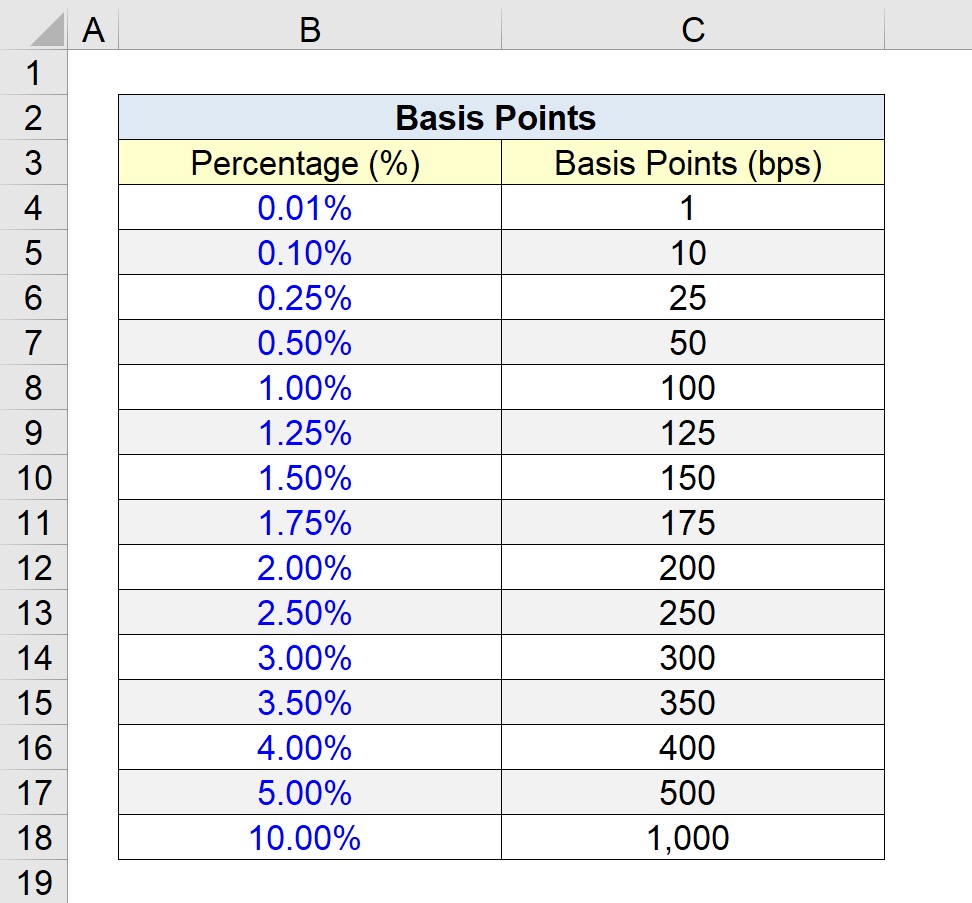
To convert a percentage to basis points, you simply multiply the percentage by 100.
-
Example 1: An increase of 0.25% in the prime rate.
- 0.25% * 100 = 25 basis points
-
Example 2: An expense ratio of 1.5%.
- 1.5% * 100 = 150 basis points
-
Example 3: A change of 0.08% in a bond yield.
- 0.08% * 100 = 8 basis points
From Basis Points to Percentage
To convert basis points back to a percentage, you divide the number of basis points by 100.
-
Example 1: A central bank raises rates by 10 basis points.
- 10 / 100 = 0.10%
-
Example 2: A fund charges 200 basis points in management fees.
- 200 / 100 = 2.00%
-
Example 3: A bond’s yield falls by 5 basis points.
- 5 / 100 = 0.05%
Practical Scenarios: Applying the Conversion
Let’s consider how these conversions play out in real-world financial scenarios:
-
A Loan Rate Increase: If your adjustable-rate mortgage (ARM) rate is tied to a benchmark that increases by 75 basis points, this means your interest rate will go up by 0.75 percentage points. If your original rate was 4.00%, it would become 4.75%.
-
Fund Expense Ratio Comparison: You’re comparing two ETFs. Fund A has an expense ratio of 15 basis points, and Fund B has an expense ratio of 40 basis points. This means Fund A charges 0.15% annually, while Fund B charges 0.40% annually. The difference of 25 basis points (0.25%) might seem small, but over decades, it can significantly impact your total investment returns due to compounding.
The Future of Basis Points in a Dynamic Financial Landscape
The role of basis points remains as critical as ever, even as the financial world evolves with new technologies and complex economic challenges.
Central Bank Policies and Monetary Tightening/Easing
Central banks worldwide, such as the Federal Reserve, the European Central Bank, and the Bank of England, regularly adjust their benchmark interest rates to manage inflation, stimulate growth, or stabilize financial markets. These policy shifts are almost exclusively announced and discussed in terms of basis points. A “rate hike of 50 basis points” sends a clear signal to markets, influencing everything from lending rates to currency valuations. As economies grapple with global inflation and potential recessions, the precision offered by basis points in communicating these critical policy changes will continue to be paramount.
The Digital Transformation and Algorithmic Trading
In an era of high-frequency and algorithmic trading, where financial decisions are executed in milliseconds, the need for exact figures is amplified. Trading algorithms are programmed to react to minute changes in market data, and basis points provide the unambiguous data points necessary for these complex systems to function correctly. The ability to express ultra-fine changes in yields, spreads, and prices ensures that automated systems can make precise trading decisions, maintaining market efficiency and liquidity.
Financial Literacy: Empowering Informed Decisions
For individuals, understanding basis points is a vital component of financial literacy. It empowers them to:
-
Evaluate Loan Offers: Comprehend how even small basis point differences in interest rates can impact total repayment over a loan’s lifetime.
-
Analyze Investment Costs: Make informed choices about mutual funds and ETFs by comparing expense ratios expressed in basis points.
-
Interpret Financial News: Understand the true implications of central bank announcements or bond market movements reported in the media.
As financial markets become more interconnected and sophisticated, a firm grasp of basis points will remain essential for both seasoned professionals and everyday consumers to navigate the complexities and make financially sound decisions.
In conclusion, the basis point is more than just a unit of measurement; it is the cornerstone of clear communication and precise calculation in finance. By simplifying the expression of small percentage changes, it eliminates ambiguity, enhances transparency, and enables accurate decision-making across all facets of the financial world. Whether you’re tracking the federal funds rate, evaluating investment fees, or simply managing your savings, a solid understanding of basis points is an indispensable tool in your financial toolkit.
aViewFromTheCave is a participant in the Amazon Services LLC Associates Program, an affiliate advertising program designed to provide a means for sites to earn advertising fees by advertising and linking to Amazon.com. Amazon, the Amazon logo, AmazonSupply, and the AmazonSupply logo are trademarks of Amazon.com, Inc. or its affiliates. As an Amazon Associate we earn affiliate commissions from qualifying purchases.