
In the dynamic and often perplexing world of cryptocurrency, understanding key metrics is paramount for any investor seeking to make informed decisions. Among these, “market capitalization,” or simply “market cap,” stands out as one of the most fundamental and frequently cited figures. Far more than just a number, market cap provides a crucial lens through which to assess the scale, perceived value, and potential trajectory of a digital asset. For both seasoned financial veterans and newcomers to the blockchain space, grasping what market cap signifies in crypto is an indispensable step towards navigating this volatile yet potentially rewarding investment landscape. It’s a foundational concept that underpins many investment strategies, offering insights into a project’s dominance, stability, and growth prospects.
Unpacking the Fundamentals: Defining Market Capitalization in Crypto
At its core, market capitalization in cryptocurrency is a straightforward calculation designed to estimate the total value of all circulating coins or tokens of a particular asset. It is a direct analogue to how market cap is calculated for traditional equities, offering a comparable metric to assess the overall size of a company or, in this case, a cryptocurrency project. However, while the concept is simple, its implications and nuances within the crypto sphere are rich and varied, demanding a deeper dive than a mere surface-level understanding.
The Core Formula: Price x Circulating Supply
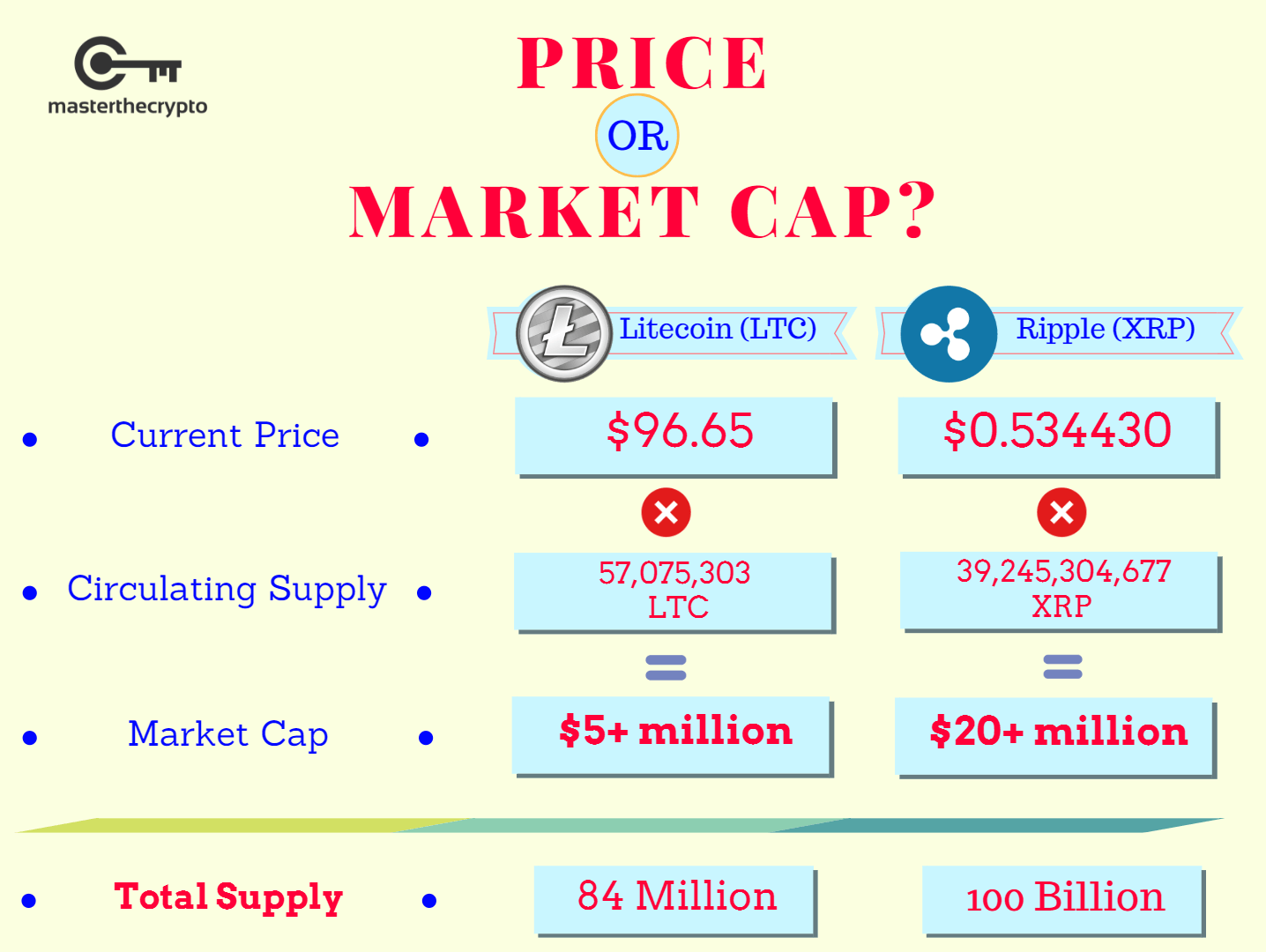
The formula for market cap is elegantly simple: Market Cap = Current Price per Coin/Token × Circulating Supply.
Let’s break this down:
-
Current Price per Coin/Token: This is the real-time trading price of a single unit of the cryptocurrency on exchanges. This price is constantly fluctuating, driven by supply and demand, trading volume, and market sentiment.
-
Circulating Supply: This refers to the total number of coins or tokens that are publicly available and actively trading in the market. It’s crucial to distinguish this from the total supply or maximum supply, as not all minted coins may be in circulation. For example, some tokens might be locked up in staking protocols, held by project founders, or not yet released according to a predetermined schedule.
Consider Bitcoin: if its price is $60,000 and there are 19 million Bitcoins in circulation, its market cap would be $60,000 * 19,000,000 = $1.14 trillion. This figure provides a quick snapshot of Bitcoin’s overall economic footprint within the crypto ecosystem.
Why Circulating Supply Matters More Than Total Supply
The distinction between circulating supply, total supply, and maximum supply is critical.
-
Total Supply: The total number of coins that currently exist (minus any burned coins), whether they are in circulation or not.
-
Maximum Supply: The absolute cap on the number of coins that will ever be created. Bitcoin, for instance, has a maximum supply of 21 million.
When calculating market cap, the focus is squarely on circulating supply because it represents the portion of the asset that is currently liquid and actively traded. A project might have a vast total supply, but if only a small fraction is circulating, its market cap will be based on that smaller, active portion. This dynamic significantly impacts perceived value and potential for future price movements. A low circulating supply coupled with high demand can lead to rapid price appreciation, even if the total supply is vast and subject to future releases.
A Snapshot of Value, Not Just Price
It’s a common mistake for new investors to focus solely on the price per coin. A cryptocurrency priced at $0.01 might seem “cheaper” or have “more room to grow” than one priced at $100. However, this perspective is fundamentally flawed without considering market cap. A $0.01 coin with a circulating supply of 100 billion has a market cap of $1 billion. A $100 coin with a circulating supply of 1 million also has a market cap of $100 million. The latter, despite its higher individual coin price, is a smaller project by market valuation. Market cap provides a more holistic view of a project’s overall size and value in the market, allowing for more meaningful comparisons.
The Significance of Market Cap for Investors
For investors, market cap is more than just an abstract number; it’s a vital analytical tool that offers profound insights into a cryptocurrency’s profile, risk level, and potential returns. It helps to contextualize a project within the broader crypto market, guiding decisions on portfolio diversification and risk management. Understanding market cap allows investors to gauge a project’s maturity, market dominance, and even its liquidity.
Gauging Project Size and Dominance
Market cap serves as the primary indicator of a cryptocurrency’s size and its relative dominance within the entire crypto market.
-
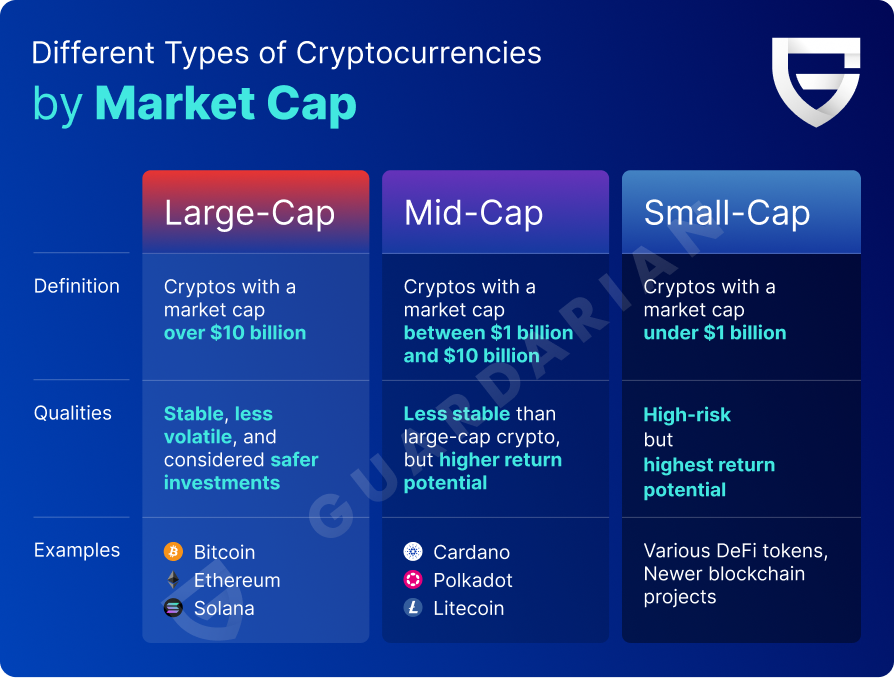
Large-Cap Cryptocurrencies: Typically assets with market caps in the tens of billions or even trillions of dollars (e.g., Bitcoin, Ethereum). These are often considered more established, have greater liquidity, and tend to be less volatile than smaller assets, though volatility is still inherent in crypto. They often act as market bellwethers.
-
Mid-Cap Cryptocurrencies: Usually range from a few billion to tens of billions of dollars. These projects are often more established than small-caps but still have significant growth potential. They can offer a balance between risk and reward.
-
Small-Cap Cryptocurrencies: Market caps generally under a few billion dollars, extending down to mere millions. These are often newer projects, highly speculative, and can experience extreme volatility. While they carry higher risk, they also present the potential for exponential returns if successful.
This categorization helps investors understand where a particular asset sits in the market hierarchy and what kind of market influence it might wield.
Risk Assessment: Large Cap vs. Small Cap Cryptocurrencies
Market cap is a crucial element in risk assessment.
-
Large-cap assets are generally perceived as lower risk due to their established networks, greater liquidity, and often, more robust development teams and ecosystems. They tend to be more resilient during market downturns, although none are immune. For a conservative investor, a portfolio heavily weighted towards large-cap assets might be preferable.
-
Small-cap assets, conversely, present higher risk. They are more susceptible to price manipulation, have lower liquidity (meaning it can be harder to buy or sell large amounts without affecting the price), and their success is often unproven. However, this higher risk is accompanied by the potential for much higher rewards if the project gains traction and mass adoption. A small initial investment could yield significant returns if a small-cap crypto grows to become a mid- or large-cap player. Diversifying across different market caps is a common strategy to balance risk and potential returns.
Liquidity Insights and Market Stability
Generally, cryptocurrencies with higher market caps tend to have greater liquidity. Liquidity refers to the ease with which an asset can be converted into cash without significantly affecting its price. A highly liquid asset means there’s a strong market of buyers and sellers, allowing for large trades to be executed without causing drastic price swings. This is critical for investors who might need to enter or exit positions quickly.
Lower market cap coins often suffer from lower liquidity, making them more vulnerable to significant price fluctuations from even relatively small buy or sell orders. This can be a concern for larger investors or institutions. Market cap, therefore, indirectly signals a project’s market stability and its ability to absorb large trading volumes without extreme price volatility.
Market Cap in Action: How It Influences Investment Decisions
Integrating market cap into an investment framework involves using it as a filtering tool, a comparison metric, and a signpost for potential opportunities or red flags. It’s not the sole determinant but a powerful one that helps investors refine their choices. Understanding how market cap translates into practical investment decisions is key to building a robust crypto portfolio.
Identifying Potential for Growth (and Decline)
Market cap offers clues about a project’s growth potential.
-
A very large market cap asset might have slower growth potential simply due to its already massive scale. Doubling a $1 trillion market cap requires an additional $1 trillion in value, which is a monumental feat.
-
Smaller market cap assets, on the other hand, have the theoretical potential for much higher percentage gains. A small-cap project going from $100 million to $1 billion market cap represents a 900% gain, which is far more achievable than a similar percentage gain for a large-cap asset.
However, this potential comes with the caveat of higher failure rates for smaller projects. Investors often seek out undervalued small-caps with strong fundamentals, hoping to capitalize on their growth trajectory. Conversely, a declining market cap, particularly in a healthy overall market, can signal underlying issues or waning interest in a project, prompting investors to reconsider their positions.
Comparing Cryptocurrencies Across Different Tiers
When evaluating potential investments, market cap enables apples-to-apples comparisons of projects within the same category or across different tiers.
For example, if an investor is looking into decentralized finance (DeFi) protocols, comparing the market caps of various DeFi tokens (e.g., Aave vs. Compound vs. MakerDAO) provides an immediate sense of their relative size and market adoption. This comparison helps in understanding which protocols are dominant, which are emerging, and where value is currently concentrated. It also aids in understanding the “value proposition” of a project relative to its peers. Is a smaller market cap project offering significantly better technology or utility to justify its lower valuation, and thus, higher growth potential?
Beyond Market Cap: Other Metrics to Consider
While invaluable, market cap should never be the only metric considered. A comprehensive investment analysis involves looking at a multitude of factors:
-
Trading Volume: Indicates liquidity and genuine market interest. High volume with low market cap could suggest speculative activity.
-
Fully Diluted Valuation (FDV): This is market cap calculated using the maximum supply of tokens rather than just the circulating supply. It provides a picture of the project’s potential future valuation if all tokens were released, helping to identify projects that might appear cheap based on current market cap but are actually heavily diluted by future token releases.
-
Project Fundamentals: The underlying technology, utility, use case, development team, community engagement, partnerships, and roadmap are all critical. A high market cap without strong fundamentals could be a sign of overvaluation.
-
Tokenomics: The supply distribution, emission schedule, burning mechanisms, and utility of the token within its ecosystem.
Integrating market cap with these other metrics provides a much more robust framework for evaluating investment opportunities and avoiding common pitfalls.
Understanding Market Cap Fluctuations and Their Implications
The cryptocurrency market is notorious for its volatility, and market cap is a direct reflection of this. Understanding why market caps fluctuate and what these movements signify is crucial for anticipating market trends and protecting investments. These fluctuations are not random; they are driven by a complex interplay of price movements, supply dynamics, and overarching market sentiment.
The Impact of Price Volatility on Market Cap
Given the formula (Price x Circulating Supply), changes in price are the primary driver of market cap fluctuations. Cryptocurrencies are highly volatile, with prices often moving by double-digit percentages in a single day.
-
When a cryptocurrency’s price surges due to positive news, increased adoption, or bullish market sentiment, its market cap will increase proportionally, even if the circulating supply remains constant.
-
Conversely, during bear markets or periods of negative news, a price drop directly translates to a decrease in market cap.
This direct relationship means that understanding market cap movements often requires understanding the factors influencing price. Monitoring market cap trends can provide a broader perspective on the overall health and direction of the crypto market or individual assets, rather than just focusing on hourly price candles.
Supply Dynamics: Token Burns and Releases
While less frequent than price changes, shifts in circulating supply can also impact market cap.
-
Token Burns: Some projects implement token burning mechanisms, where a certain number of tokens are permanently removed from circulation. This reduces the circulating supply, and if demand remains constant or increases, it can lead to a higher price per token and potentially a higher market cap over time, reflecting increased scarcity.
-
Token Releases/Vesting Schedules: Conversely, many projects have vesting schedules or emission plans that periodically release new tokens into circulation. If a large number of tokens are released and demand doesn’t keep pace, this increased supply can dilute the value of existing tokens, potentially leading to a lower price and, if the price drop is significant enough, a reduced market cap, even with more tokens in circulation.
Paying attention to a project’s tokenomics and supply schedule is therefore critical when analyzing its market cap.
Decoding Market Sentiment Through Cap Movements
Aggregate market cap data across the entire cryptocurrency market can serve as a powerful indicator of overall market sentiment.
-
A rapidly increasing total crypto market cap (the sum of all individual crypto market caps) often signals a bullish market, indicating strong investor confidence and an influx of new capital.
-
Conversely, a sustained decline in total market cap points towards a bearish trend, suggesting fear, profit-taking, or a general withdrawal of funds from the market.
Analyzing market cap trends for specific sectors (e.g., DeFi market cap, NFT market cap) can also offer insights into which narratives and technologies are gaining or losing traction among investors. This broad perspective helps investors gauge the “temperature” of the market, which can inform decisions about entering new positions, taking profits, or reducing exposure during periods of high risk.
Misconceptions and Nuances: What Market Cap Doesn’t Tell You
Despite its utility, market cap is not a perfect metric and can be misleading if interpreted in isolation or without understanding its inherent limitations. Investors must be aware of what market cap doesn’t tell them, allowing for a more nuanced and critical evaluation of crypto assets. Misconceptions can lead to poor investment decisions, highlighting the need for a multi-faceted approach to analysis.
Not a Direct Indicator of Project Success or Utility
A high market cap does not automatically equate to a successful, innovative, or useful project. While there’s often a correlation, a project can have a large market cap primarily due to hype, speculative trading, or even manipulation, rather than genuine utility or widespread adoption. Conversely, a groundbreaking project in its early stages might have a small market cap simply because it hasn’t yet gained widespread recognition.
Investors should always look beyond the market cap to assess the project’s actual technology, its problem-solving capabilities, the strength of its development team, its community support, and its real-world use cases. A project with weak fundamentals but a high market cap could be significantly overvalued and prone to drastic corrections.
Beware of Wash Trading and Inflated Volumes
The crypto market, particularly on lesser-regulated exchanges, can be susceptible to practices like wash trading, where individuals or bots repeatedly buy and sell an asset to themselves to artificially inflate trading volume and create a false impression of demand. While market cap is based on price and circulating supply, inflated volumes can contribute to an artificial price, thereby distorting the market cap figure.
It’s important to analyze trading volume from reputable exchanges and to be wary of projects with surprisingly high trading volumes relative to their market cap, especially on obscure platforms. This due diligence helps in discerning genuine market activity from manufactured hype.
The Role of Fully Diluted Valuation (FDV)
A significant nuance often overlooked is the concept of Fully Diluted Valuation (FDV). As discussed, market cap uses circulating supply. FDV, however, calculates the market cap based on the maximum (or total) supply of a cryptocurrency.
FDV = Current Price per Coin/Token × Maximum Supply
If a project has a low circulating supply but a very large maximum supply (meaning many more tokens are yet to be released), its FDV can be significantly higher than its current market cap. A high discrepancy between market cap and FDV can indicate that the current market cap might be deceptively low, and that future token releases could dilute the value for early investors. A project with a seemingly attractive market cap might actually be heavily overvalued when its FDV is considered. Savvy investors often compare these two metrics to get a fuller picture of a project’s future potential valuation and potential for dilution.

Integrating Market Cap into Your Crypto Investment Strategy
Market capitalization is an indispensable tool in the crypto investor’s arsenal, offering a window into the size, perceived value, and relative standing of a digital asset. It helps in segmenting the market, assessing risk, and identifying potential growth opportunities. However, its true power is unlocked when integrated with a broader analytical framework that considers fundamental project strengths, technological innovation, team expertise, tokenomics, and the overall market sentiment.
By understanding what market cap means, its drivers, and its limitations, investors can move beyond mere price speculation to make more informed, strategic decisions. Whether you’re aiming for the relative stability of large-cap assets or the high-growth potential of smaller projects, a thorough understanding of market cap is a cornerstone of responsible and potentially profitable crypto investing. It encourages a disciplined approach, moving away from impulsive decisions towards a research-driven strategy that is essential for navigating the complex and ever-evolving cryptocurrency landscape.
aViewFromTheCave is a participant in the Amazon Services LLC Associates Program, an affiliate advertising program designed to provide a means for sites to earn advertising fees by advertising and linking to Amazon.com. Amazon, the Amazon logo, AmazonSupply, and the AmazonSupply logo are trademarks of Amazon.com, Inc. or its affiliates. As an Amazon Associate we earn affiliate commissions from qualifying purchases.