
In the vast and intricate landscape of molecular biology, where life’s fundamental processes unfold with astounding precision, DNA replication stands as a cornerstone. It is the sophisticated mechanism by which an organism duplicates its genetic material, ensuring the faithful transmission of heredity from one generation to the next. At the heart of this seemingly miraculous process lies a cohort of molecular machinery, each enzyme playing a critical, specialized role. Among these, DNA primase, often an unsung hero, performs a function so vital that without it, the entire edifice of DNA replication would crumble. While its primary role is rooted in fundamental biology, understanding DNA primase is not merely an academic exercise; it provides profound insights into the engineering principles of life itself and holds significant implications for numerous biotechnological applications, from advanced diagnostics to synthetic biology and even drug discovery.
To fully grasp the “what does DNA primase do” question, we must venture beyond its basic definition and explore its catalytic activity, its interplay with other replication machinery, and crucially, how this fundamental understanding has been leveraged and mimicked in technological advancements that define modern molecular biology and biotechnology. It is a testament to nature’s elegant design that a single enzyme can hold such profound sway over processes that underpin all known life, and by extension, many of the most exciting innovations in the tech sphere.
The Unsung Architect of DNA Replication: Delving into Primase’s Fundamental Role
At its core, DNA primase is an enzyme that catalyzes the synthesis of short RNA sequences called primers. These primers are absolutely essential because DNA polymerase, the enzyme responsible for synthesizing new DNA strands, cannot initiate DNA synthesis de novo. It requires a pre-existing 3′-hydroxyl group to add new nucleotides. This is where DNA primase steps in, acting as the crucial initiator.
The RNA Primer: A Crucial Starting Point
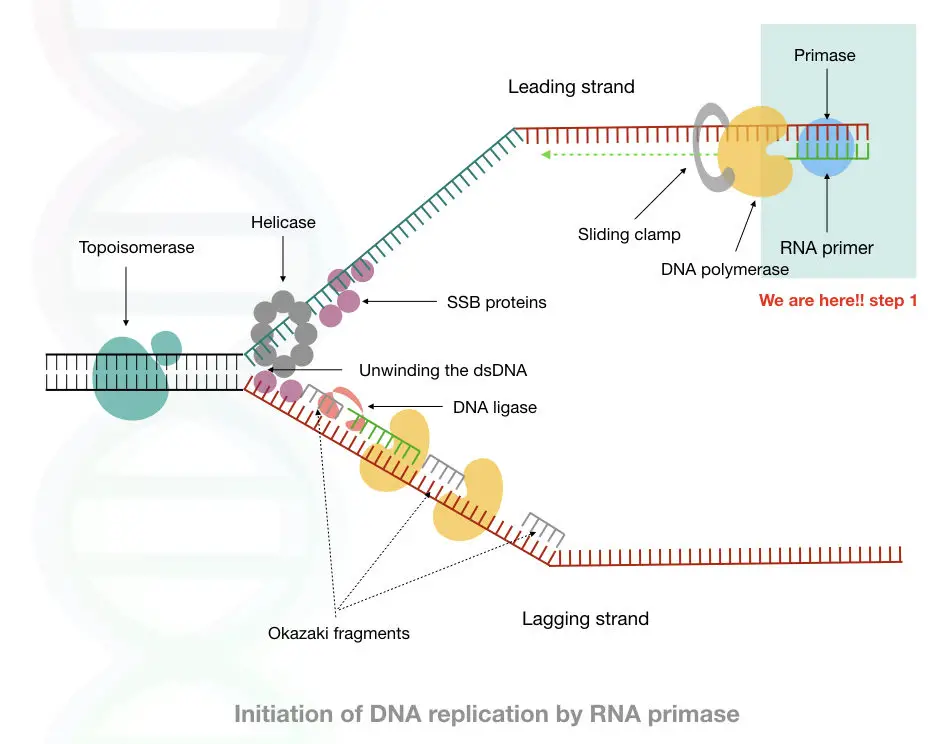
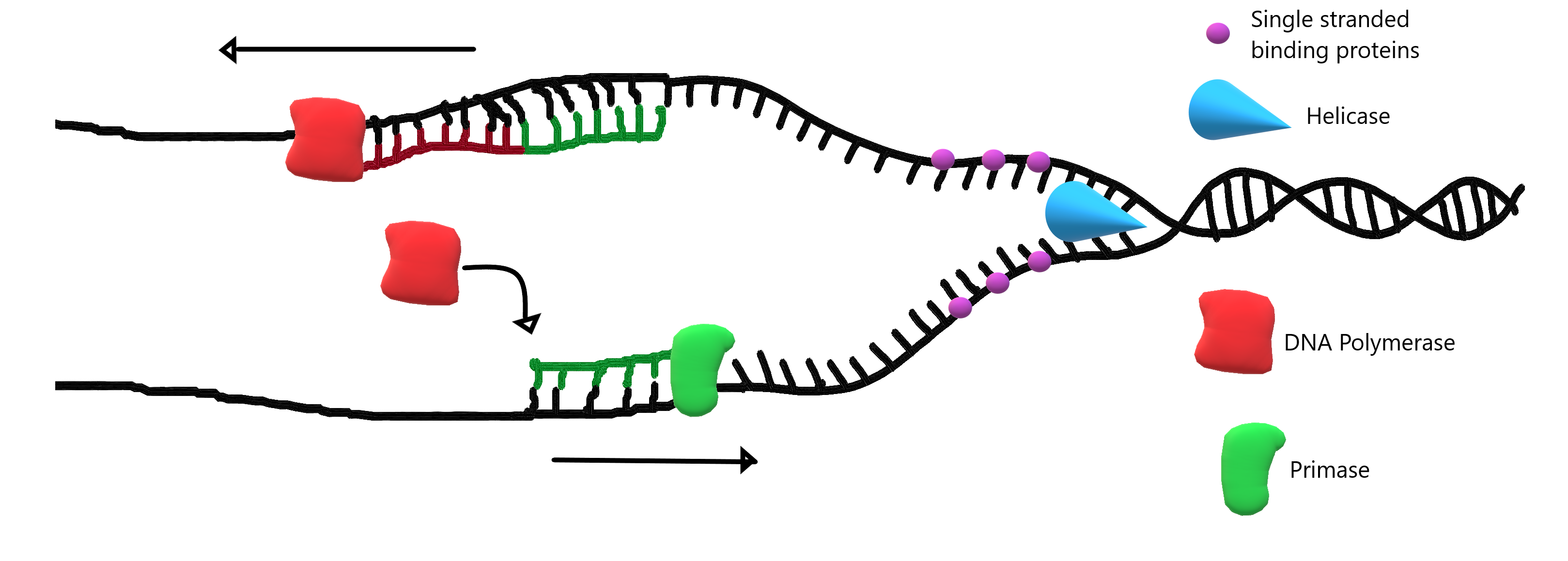
The process begins when the double-stranded DNA molecule unwinds, forming a replication fork, a Y-shaped structure where replication is actively occurring. On each of the separated single strands, DNA primase synthesizes a short stretch of RNA nucleotides complementary to the DNA template. These RNA primers typically range from 5 to 10 nucleotides in length and provide the necessary free 3′-hydroxyl group that DNA polymerase needs to begin elongating the new DNA strand.
This reliance on an RNA primer might seem counterintuitive for DNA synthesis, but it’s a brilliant evolutionary solution. RNA polymerases (which include primase) are capable of initiating synthesis without a pre-existing primer, making them ideal for “kickstarting” the replication process. Once DNA polymerase takes over, it uses the RNA primer as its starting block, adding deoxyribonucleotides sequentially. Later in the replication process, these RNA primers are removed by other enzymes (like RNase H and DNA polymerase I), and the resulting gaps are filled with DNA by DNA polymerase, finally sealed by DNA ligase. This temporary use of RNA ensures high fidelity DNA synthesis, as errors in the short RNA primers are inconsequentially removed and replaced.
Bridging the Gap: Primase’s Action on Leading and Lagging Strands
DNA replication is semi-discontinuous, meaning it proceeds differently on the two template strands. DNA is synthesized in a 5′ to 3′ direction. On the “leading strand,” which runs 3′ to 5′ relative to the replication fork, synthesis is continuous. Only one RNA primer is needed near the origin of replication, and DNA polymerase can then continuously extend the new strand as the replication fork unwinds.
However, the “lagging strand” presents a unique challenge. This template runs 5′ to 3′ relative to the replication fork, meaning new DNA must be synthesized discontinuously, in short segments known as Okazaki fragments, each moving back towards the origin in the 5′ to 3′ direction. For every Okazaki fragment, a new RNA primer must be laid down by DNA primase. As the replication fork opens further, primase repeatedly binds to the lagging strand template, synthesizes a new RNA primer, and then hands off to DNA polymerase to extend that primer into an Okazaki fragment. This repetitive action of DNA primase on the lagging strand underscores its critical and continuous role in efficient DNA duplication, a process that is as elegant as it is complex, operating with nanometer precision within the cellular machinery.
Beyond Basic Biology: Primase’s Relevance in Modern Biotechnology
Understanding the fundamental mechanics of DNA primase has transcended pure biology, becoming a cornerstone for numerous biotechnological applications. While we don’t directly “use” DNA primase in most lab settings in its native form for synthesis (we typically use synthetic DNA primers), the principles derived from its function are absolutely vital. The requirement for a primer to initiate DNA synthesis is a universal truth leveraged across a spectrum of advanced technologies.
DNA Sequencing and Primase’s Legacy
Modern high-throughput DNA sequencing technologies, such as next-generation sequencing (NGS), are designed to read the genetic code with incredible speed and accuracy. At their core, these methods rely on the principle of DNA synthesis from a primer. While specific primase enzymes aren’t used, the entire concept of sequencing starts with short, synthetic DNA oligonucleotides (primers) that bind to known regions of the DNA template. These primers then allow DNA polymerase to initiate synthesis, incorporating fluorescently labeled nucleotides that are detected in real-time or sequentially, thus revealing the DNA sequence. Without the foundational understanding of how primase initiates synthesis, the rational design and optimization of synthetic primers for sequencing would be impossible. The evolutionary lesson taught by primase—the necessity of a starting point—is directly applied here.
PCR and the Artificial Primer Advantage
Perhaps one of the most direct and widely recognized technological offshoots of primase’s mechanism is the Polymerase Chain Reaction (PCR). PCR is a revolutionary molecular biology technique used to amplify a single copy or a few copies of a piece of DNA across several orders of magnitude, generating thousands to millions of copies of a particular DNA sequence. Just like DNA polymerase in a cell needs primase-generated RNA primers, the DNA polymerase used in PCR (typically a heat-stable Taq polymerase) requires synthetic DNA primers.
Researchers design two short, single-stranded DNA primers that are complementary to the ends of the target DNA sequence they wish to amplify. During the annealing step of PCR, these artificial DNA primers bind to the denatured (single-stranded) template DNA. The DNA polymerase then extends these primers, synthesizing new DNA strands. This cyclical process of denaturation, annealing, and extension, repeated 20-40 times, leads to exponential amplification. PCR, a staple in everything from forensic science to disease diagnostics and genetic engineering, is a direct technological mimicry of primase’s initiating function, albeit using DNA rather than RNA for the primers, demonstrating the power of understanding natural mechanisms for engineering solutions.
Gene Editing Technologies: Indirect Dependencies
While systems like CRISPR-Cas9, the revolutionary gene-editing tool, don’t directly employ DNA primase for their cutting action, their utility and development are indirectly dependent on the broader understanding of DNA replication and repair, where primase plays an initial role. The construction of guide RNAs for CRISPR, the amplification of target DNA regions for analysis of editing efficiency, and the subsequent repair processes within the cell (which might involve re-synthesis of DNA) all touch upon principles where DNA replication mechanisms, including the need for priming, are foundational. Furthermore, the molecular cloning strategies used to deliver gene-editing components into cells often rely on PCR and DNA sequencing, bringing us back to the fundamental role of primers.
Primase in the Digital Age: Computational Biology and Synthetic DNA
The insights gleaned from DNA primase’s activity are not confined to wet-lab experiments; they extend into the digital realm of computational biology and the emerging field of synthetic biology, where the design and creation of novel biological systems are at the forefront of innovation.
Modeling DNA Replication: Simulating Primase’s Activity
Computational biologists and biophysicists routinely develop complex simulations of DNA replication forks to understand the dynamics and kinetics of the molecular machinery involved. These models incorporate the actions of individual enzymes, including DNA primase. By simulating primase’s binding preferences, its rate of primer synthesis, and its interaction with other proteins like helicase and DNA polymerase, researchers can gain insights into how replication fidelity is maintained, how errors might arise, and how cellular processes respond to various stresses. Such computational models are invaluable for predicting the outcomes of genetic manipulations, designing more efficient biotechnological protocols, and even understanding the origins of diseases rooted in replication errors.
Synthetic Biology: Engineering with Primase Principles
Synthetic biology aims to design and build new biological parts, devices, and systems, or to re-design existing natural biological systems for useful purposes. This ambitious field often involves the de novo synthesis of DNA sequences, ranging from short oligonucleotides to entire genes or even whole genomes. While direct DNA primase activity might not be central to industrial DNA synthesis (which often uses phosphoramidite chemistry), the principles it embodies are critical.
When researchers design synthetic genes or regulatory circuits, they must account for how these sequences will be replicated once introduced into a host cell. This means considering origins of replication, promoter regions, and other elements that ensure the stable propagation of the synthetic DNA—all processes that implicitly rely on the host cell’s native replication machinery, including its DNA primase. Furthermore, novel approaches in enzymatic DNA synthesis are exploring ways to mimic or improve upon natural replication processes, where a better understanding of primase’s robust, processive priming could inspire new enzymatic methods for synthesizing long, accurate DNA molecules more efficiently. The ability to “print” DNA sequences accurately and reliably is a cornerstone of synthetic biology, and the natural blueprint provided by enzymes like primase continually informs these technological advancements.
Challenges and Opportunities: Targeting Primase in Tech and Medicine
The critical role of DNA primase in DNA replication makes it an attractive target for therapeutic interventions and a focal point for understanding fundamental biological vulnerabilities. Its functional specificity also presents opportunities for developing new biotechnological tools.
Antiviral and Anticancer Strategies
Many viruses, particularly DNA viruses like herpesviruses or adenoviruses, encode their own DNA primase or interact heavily with the host cell’s primase to replicate their viral genomes. Targeting these viral primases with specific inhibitors offers a promising avenue for developing novel antiviral drugs. By blocking the viral primase, the virus’s ability to replicate its DNA and spread throughout the host can be severely curtailed. Similarly, rapidly dividing cancer cells are highly dependent on efficient DNA replication. While targeting human DNA primase directly could have significant side effects on healthy cells, understanding its regulation and interplay with DNA damage response pathways could inform the development of more selective anticancer therapies that exploit differences between normal and cancerous cell replication. Research into these areas often leverages high-throughput screening technologies and advanced computational modeling—both tech-driven approaches—to identify and optimize potential inhibitors.
Overcoming Replication Stress in Bioprocessing
In industrial biotechnology, particularly in the production of recombinant proteins or gene therapy vectors using cell cultures, cells are often pushed to their metabolic limits. This can lead to replication stress, where DNA replication forks stall or collapse, impacting cell viability and productivity. A deeper understanding of DNA primase’s activity under stress conditions, and its interaction with DNA repair pathways, could lead to engineering cell lines that are more robust and resistant to replication stress. This could involve genetic modifications to optimize primase expression or activity, thereby improving the efficiency and yield of biopharmaceutical manufacturing processes—a critical aspect of modern biotech production.

Future Innovations in DNA Synthesis Technologies
The quest for faster, cheaper, and more accurate methods of DNA synthesis continues. While chemical synthesis is well-established, enzymatic methods are gaining traction due to their potential for scalability and reduced environmental footprint. Future innovations might involve engineering novel DNA primase-like enzymes or enzyme complexes that can synthesize DNA or RNA primers with unprecedented control, potentially leading to de novo enzymatic DNA synthesis techniques that can rapidly assemble long, error-free genetic sequences without the need for traditional phosphoramidite chemistry. Such breakthroughs would revolutionize synthetic biology, enabling the creation of complex biological systems and accelerating research in areas like personalized medicine and biomaterial development.
In conclusion, DNA primase, though a microscopic enzyme, orchestrates a molecular ballet that is indispensable for life. Its discovery and the subsequent elucidation of its mechanism have not only expanded our fundamental understanding of biology but have also directly inspired, enabled, and informed a vast array of technological advancements. From the omnipresent PCR to sophisticated DNA sequencing platforms, and the burgeoning fields of synthetic biology and targeted drug development, the insights gained from “what does DNA primase do” continue to resonate, proving that even the most fundamental biological processes hold profound implications for the cutting edge of technological innovation.
aViewFromTheCave is a participant in the Amazon Services LLC Associates Program, an affiliate advertising program designed to provide a means for sites to earn advertising fees by advertising and linking to Amazon.com. Amazon, the Amazon logo, AmazonSupply, and the AmazonSupply logo are trademarks of Amazon.com, Inc. or its affiliates. As an Amazon Associate we earn affiliate commissions from qualifying purchases.