
In the hyper-competitive arena of global commerce, businesses often look to modern frameworks like Agile or Lean for guidance. However, there is a profound, ancient metaphor for market dominance found in the Japanese art of Sumo. While a spectator might see two giants in a physical struggle, a brand strategist sees something else: a masterclass in positioning, psychological warfare, and the relentless pursuit of market boundaries.
So, what is the goal of sumo wrestling when translated to the world of brand strategy? It is not merely to “win” a single transaction; it is to occupy the center of the ring so completely that your competitors are forced out of the conversation. In branding, the “Sumo Goal” is about achieving a state of “Yokozuna” status—where your brand identity is synonymous with the category itself, and your presence is so immovable that your rivals must exhaust themselves just to stand on the same ground.

The Ritual of Brand Identity: Establishing Authority Before the Clash
In Sumo, the match begins long before the physical contact. The elaborate rituals—the salt-throwing, the rhythmic leg-stomping, and the intense psychological staring match—serve a singular purpose: to establish dominance and purity of intent. In the world of corporate identity and marketing, this is the equivalent of building a pre-launch brand presence that commands respect.
The Salt Throw: Building Consumer Trust and Market Purity
The shio-maki (salt-throwing) is a ritual used to purify the ring. In brand strategy, this represents the “cleansing” of the market through transparency and trust-building. Before a brand can dominate, it must purge the “dirt” of consumer skepticism. High-impact brands achieve this by leading with their values and establishing a “pure” narrative. When a brand like Patagonia or Apple enters a space, they throw their metaphorical salt by clearly defining their ethical or aesthetic standards. The goal here is to create a “sanctified” space where the consumer feels safe, effectively lowering the barriers to entry for the brand while raising them for less principled competitors.
The Stamping of the Ground: Asserting Market Presence
The shiko (leg-stomping) is intended to drive away evil spirits and demonstrate the wrestler’s power. For a brand, this is the “Noise” phase of a marketing campaign. It is the bold assertion of presence. When a brand “stamps the ground” through high-production advertising or a massive social media rollout, it signals to the market that it has the stability and resources to stay the course. This is not just vanity; it is a signal of “Brand Weight.” A brand that stamps the ground effectively makes it known that it is not a “fly-by-night” startup but a foundational pillar of the industry.
Defining the Ring: Market Positioning and Boundaries
The goal of a Sumo wrestler is to either force the opponent out of the dohyo (ring) or make them touch the ground with anything other than the soles of their feet. In branding, the “ring” is your specific market niche. If you try to wrestle in every ring, you lose your leverage. The most successful brands identify the exact diameter of their expertise and defend it ruthlessly.
Staying Inside the Circle: The Power of Hyper-Focus
In Sumo, the moment your toe touches the sand outside the straw bales, you have lost. Many brands fail because they suffer from “brand dilution”—they try to step into too many rings at once. The “Sumo Goal” of branding is to maintain a center of gravity so strong that you never have to overextend. By focusing on a core competency, a brand becomes “heavy” and hard to move. For instance, Rolex does not try to compete in the smartwatch ring; they remain firmly in the center of the luxury mechanical ring. Their goal is not to win the “watch market,” but to own the “luxury circle” so definitively that no one can push them out.
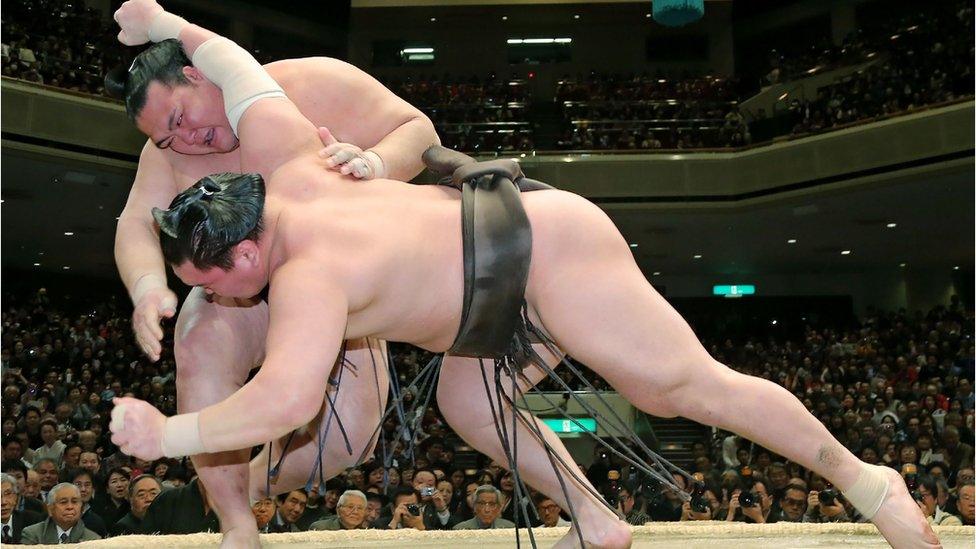
Forcing the Competition Out: The Art of Differentiation
A Sumo match is often won by yorikiri (frontal force), simply walking the opponent out of the ring. In brand strategy, this is achieved through “Aggressive Differentiation.” When a brand creates a feature set or a brand story that is so unique, it effectively changes the boundaries of the ring. If your brand defines “quality” in a way that your competitor cannot match, you have pushed them out of the circle of consideration. The goal is to make the competitor’s value proposition irrelevant to the consumer’s needs.
Momentum and Leverage in Corporate Strategy
A Sumo match rarely lasts more than a few seconds. It is a game of explosive force followed by the expert use of leverage. In the corporate world, this translates to the “Tachi-ai” (initial charge) of a product launch and the strategic use of an opponent’s momentum to secure market share.
The Power of the Initial Charge: The Tachi-Ai Launch
The tachi-ai is the explosive moment when both wrestlers leap from their crouch to collide. In brand marketing, this is your Go-To-Market (GTM) strategy. A weak start in Sumo is almost impossible to recover from; similarly, a brand that launches with a “whimper” rather than a “bang” often finds itself being pushed backward from day one. The goal of the Sumo Brand is to hit the market with such coordinated force—across PR, digital advertising, and retail presence—that the competition is caught on their heels. This initial momentum creates a “Brand Inertia” that makes the brand difficult to stop, even when the initial excitement fades.
Using the Competitor’s Weight: Tactical Intelligence
One of the most elegant ways to win a Sumo match is henka—stepping aside and letting the opponent’s own momentum carry them out of the ring. In the brand world, this is seen when a smaller, more agile brand uses a larger competitor’s rigid corporate identity against them. When a massive corporation spends millions on a generic, “heavy” campaign, an agile brand can use “Brand Aikido” to pivot, highlighting the competitor’s lack of authenticity or slow response times. The goal is to let the “Big Brand” overextend its resources while you stay balanced and ready to capitalize on their mistakes.
Longevity and the Yokozuna Standard: Sustaining Brand Equity
In Sumo, the highest rank is Yokozuna. Unlike other ranks, a Yokozuna cannot be demoted; if they can no longer perform at a championship level, they are expected to retire with dignity. This is the ultimate goal of Brand Strategy: to reach a level of “Grand Champion” status where your brand is no longer just a business, but a cultural institution.
Beyond Winning: Dignity and Brand Equity
A Yokozuna must exhibit hinkaku (dignity). Winning is not enough; one must win with grace. For high-tier brands, this means that their marketing must transcend “salesy” tactics and move into the realm of “Brand Stewardship.” A brand like Mercedes-Benz or Hermès does not just sell products; they uphold a standard of excellence. Their goal is to maintain “Brand Equity” so high that their premium pricing is never questioned. This dignity acts as a barrier to entry for “discount” competitors who can match the product’s function but can never match the brand’s hinkaku.

Sustaining Excellence in Saturated Markets
The final goal of Sumo wrestling, much like brand strategy, is the pursuit of perfection within a limited space. As markets become saturated, the “Sumo Brand” doesn’t panic. It digs its heels into the clay and waits for the right moment to move. Sustaining excellence requires a brand to constantly “train”—to innovate behind the scenes while maintaining a consistent, powerful image in the public eye.
The Sumo Brand understands that the goal is not to win every single skirmish, but to remain the last one standing in the center of the ring when the dust settles. It is about “Brand Weight,” “Strategic Leverage,” and “Ritualized Authority.” When you ask, “What is the goal of Sumo wrestling?” in the context of branding, the answer is clear: It is the relentless pursuit of an unshakeable market position that commands both the space and the respect of everyone who enters the arena.
aViewFromTheCave is a participant in the Amazon Services LLC Associates Program, an affiliate advertising program designed to provide a means for sites to earn advertising fees by advertising and linking to Amazon.com. Amazon, the Amazon logo, AmazonSupply, and the AmazonSupply logo are trademarks of Amazon.com, Inc. or its affiliates. As an Amazon Associate we earn affiliate commissions from qualifying purchases.