
In the world of real estate and personal finance, terminology can often be confusing, leading to common misnomers. One of the most frequent phonetic misunderstandings is the “quick deed.” While it sounds like a fast-track way to move property, the actual legal term is a Quitclaim Deed. Despite the name difference, the sentiment remains the same: it is one of the fastest and most straightforward methods to transfer interest in a property from one party to another.
For individuals navigating personal finance, estate planning, or business restructuring, understanding the nuances of a quitclaim deed is essential. It is a powerful financial tool that, when used correctly, simplifies the transition of assets. However, because it lacks the protections found in more complex deeds, it carries specific risks that every property owner must understand. This guide explores the mechanics, applications, and financial implications of the quitclaim deed.
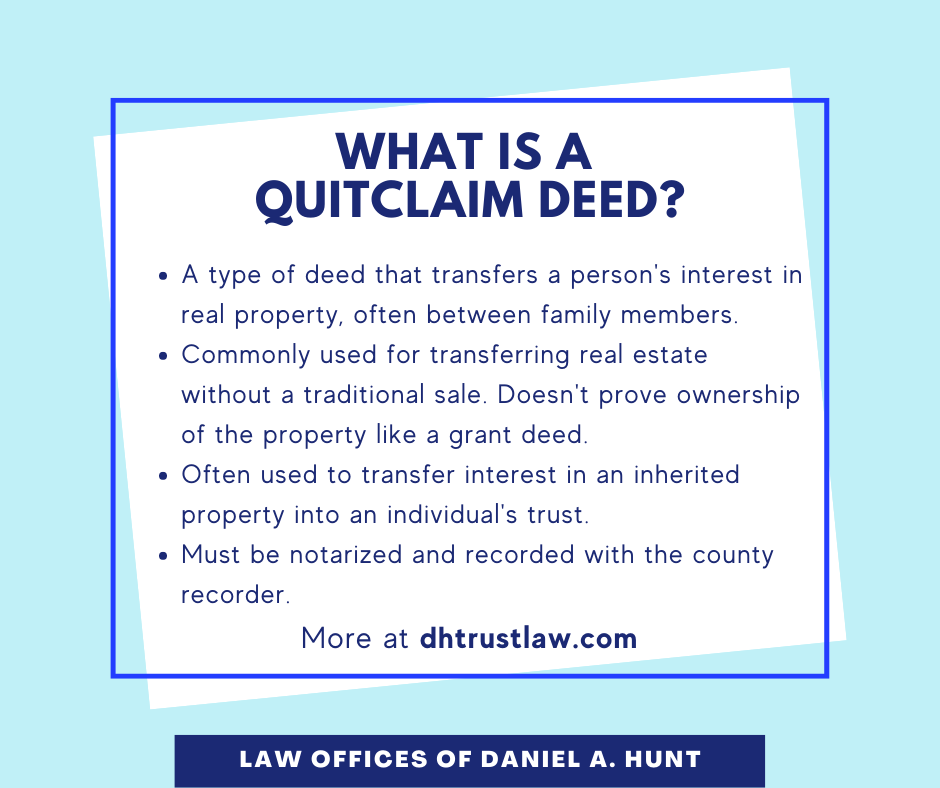
Understanding the Quitclaim Deed: Mechanics and Definitions
At its core, a quitclaim deed is a legal instrument used to transfer whatever interest a person (the “grantor”) has in a piece of real property to another person (the “grantee”). Unlike other types of deeds, a quitclaim deed makes no promises or guarantees about the quality of the title. It essentially says, “Whatever interest I have in this property, I am giving to you—but I am not promising that I actually own it or that the title is clear.”
Key Characteristics of a Quitclaim Deed
The defining feature of a quitclaim deed is the absence of a “title covenant.” In most real estate transactions, a seller provides a warranty that they own the property free and clear of liens. A quitclaim deed does none of this. It is a “release” of interest. Because there is no title search required for the deed itself to be valid, the process is incredibly fast—hence the common “quick deed” moniker.
From a financial perspective, this makes the document both inexpensive and efficient. There is no need for title insurance or expensive attorney-led discovery phases, provided the parties involved trust one another. It is a transfer of “as-is” interest, making it a unique tool in the financial toolkit.
Quitclaim vs. Warranty Deeds: Knowing the Difference
To understand the quitclaim deed, one must compare it to its more robust counterpart: the General Warranty Deed. In a standard home sale, a General Warranty Deed is used to protect the buyer. It guarantees that the seller owns the property, has the right to sell it, and will defend the buyer against any future claims to the title.
In contrast, the quitclaim deed offers zero protection. If a grantor signs a quitclaim deed for a property they don’t actually own, the grantee receives nothing, and they usually have no legal recourse against the grantor based on the deed itself. This is why quitclaim deeds are rarely used in traditional real estate sales between strangers and are instead reserved for specific financial and familial scenarios.
Common Scenarios for Using a Quitclaim Deed
Because of its simplicity and lack of warranties, the quitclaim deed is the preferred method for “non-sale” transfers. These are situations where money might not change hands, or where the parties have a high level of mutual trust.
Transferring Property Within a Family
One of the most common uses for a quitclaim deed is moving property between family members. For example, a parent might want to add a child to the title of a family home, or a person might transfer a property they owned before marriage into a joint tenancy with their new spouse.
In these cases, the “speed” of the “quick deed” is its greatest asset. It allows for the seamless adjustment of ownership stakes without the overhead of a formal sale. From a personal finance perspective, this is a low-cost way to manage family wealth and ensure that property remains within the family lineage.
Divorce and Property Settlements
During a divorce, real estate is often one of the most significant assets to be divided. If the court awards the family home to one spouse, the other spouse must “quit” their claim to the property. A quitclaim deed is the standard instrument used to remove one spouse’s name from the title.
It is important to note, however, that while a quitclaim deed removes a person from the title, it does not remove them from the mortgage. This is a critical financial distinction. If both spouses are on the loan, the departing spouse must still be released by the lender, often through a refinance, to avoid being held liable for payments on a property they no longer own.
Moving Property into a Trust or LLC
For investors and those focused on asset protection, quitclaim deeds are indispensable. Many property owners choose to move their real estate holdings into a Living Trust to avoid probate or into a Limited Liability Company (LLC) to shield themselves from personal liability.

Using a quitclaim deed to transfer a property from an individual’s name to their own business entity is a routine financial maneuver. It maintains the continuity of ownership while providing the legal layers necessary for modern wealth management.
The Financial Risks and Tax Implications
While the quitclaim deed is efficient, it is not without financial peril. Because it bypasses the traditional rigors of a real estate closing, it can create unintended consequences regarding taxes and liability.
Potential Pitfalls for the Grantee
The primary risk for the person receiving the property (the grantee) is the “clouded title.” Since no title search is performed, the grantee inherits any existing problems. If there are unpaid property taxes, mechanic’s liens from contractors, or undisclosed mortgages, those burdens stay with the property.
The grantee essentially steps into the shoes of the grantor. If the grantor owed $50,000 in back taxes, the grantee is now responsible for that debt if they wish to keep the property. For this reason, even in “quick” transfers, savvy financial advisors often recommend a preliminary title report to ensure the recipient isn’t inheriting a financial nightmare.
Tax Implications: Gift Taxes and Capital Gains
Transferring property is a “taxable event” in the eyes of the IRS. If a property is transferred via quitclaim deed for little or no money, it may be considered a gift. Depending on the value of the property, the grantor may need to file a gift tax return.
Furthermore, there is the issue of “cost basis.” If a parent quitclaims a house to a child, the child typically inherits the parent’s original cost basis. If the child later sells the house, they may face significant capital gains taxes. Conversely, if the child were to inherit the property after the parent’s death, they would receive a “step-up in basis” to the current market value, potentially saving thousands in taxes. Consulting a financial planner before executing a quitclaim deed is vital to avoid these tax traps.
The Role of Title Insurance
A significant financial risk of using a quitclaim deed is the potential voiding of title insurance. Most title insurance policies are issued to a specific owner. When that owner transfers the property via quitclaim deed, the policy may not transfer to the new owner. This leaves the property unprotected against future claims that might arise from the period before the transfer. If you are moving property into an LLC or a Trust, it is essential to contact the insurance provider to ensure coverage remains intact.
How to Execute a Quitclaim Deed Correctly
If you have determined that a quitclaim deed is the right financial move for your situation, the process is relatively straightforward but requires precision to be legally binding.
Drafting and Notarizing the Document
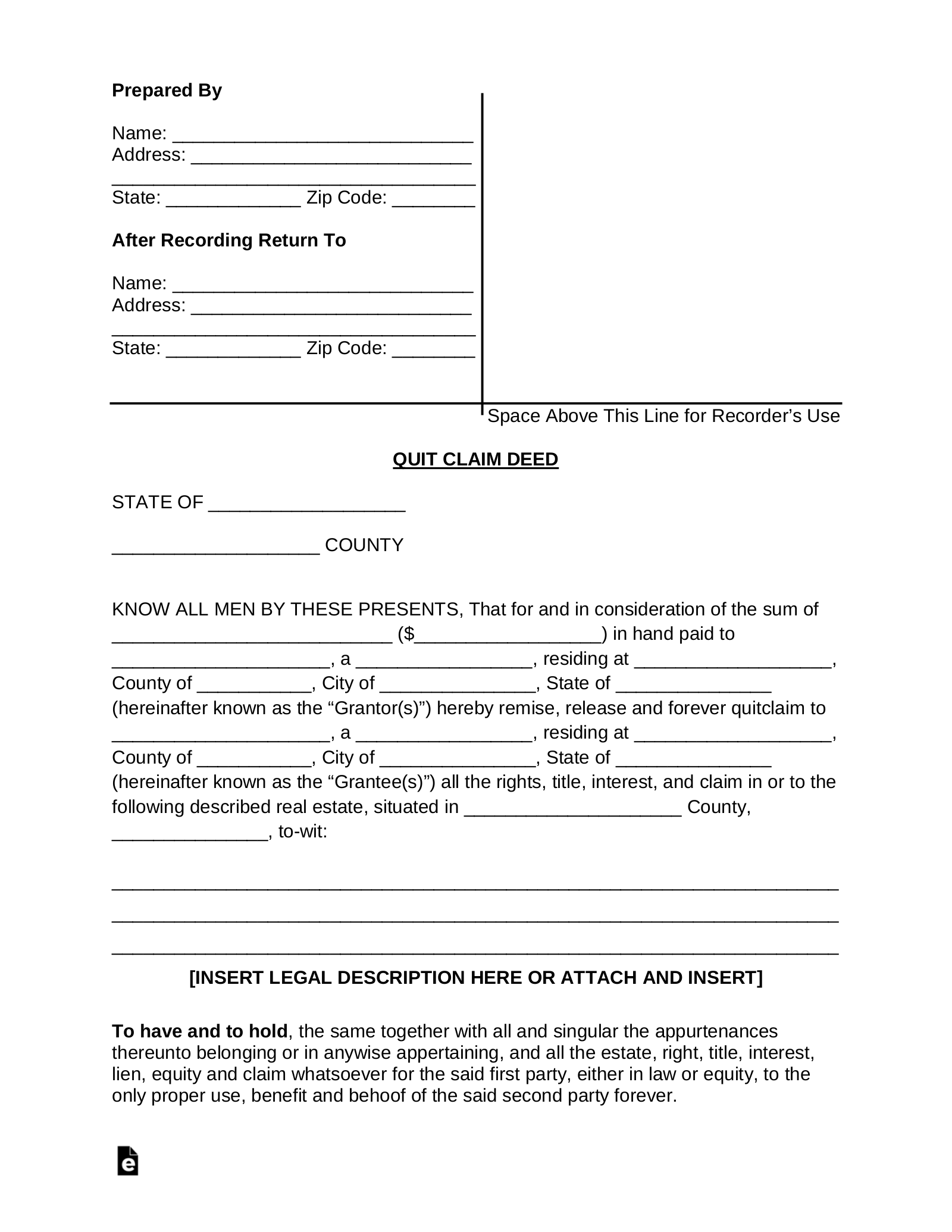
A quitclaim deed must contain specific information: the legal names of the grantor and grantee, a full legal description of the property (often found on previous deeds or at the county assessor’s office), and a statement of consideration (even if it is just “ten dollars and love and affection”).
The document must be signed by the grantor in the presence of a notary public. In many states, the grantee does not need to sign the deed, but they must “accept” the transfer. Without notarization, the deed cannot be recorded, and the transfer of interest may not be recognized by third parties like banks or insurance companies.
Recording the Deed with Local Authorities
The final, and perhaps most important, step is recording the deed with the County Recorder or Registrar of Deeds. While a signed and notarized deed may be valid between the two parties, it does not provide “public notice” until it is recorded.
Failing to record the deed can lead to “intervening liens.” For example, if the grantor has a judgment filed against them after signing the deed but before it is recorded, that judgment could attach to the property. From a business finance perspective, recording the deed immediately is the only way to solidify the transfer and protect the grantee’s new interest.
Conclusion: Integrating the Quitclaim Deed into Your Financial Strategy
The “quick deed”—properly known as the quitclaim deed—is a vital instrument for anyone managing property, family wealth, or business assets. Its strength lies in its simplicity and speed, allowing for the flexible movement of interest without the bureaucratic hurdles of a traditional sale.
However, its simplicity is also its greatest weakness. Because it offers no warranties and can trigger significant tax liabilities, it should never be used haphazardly. Whether you are settling a divorce, protecting assets in an LLC, or passing a home to the next generation, the quitclaim deed must be part of a broader, well-considered financial strategy. By understanding the risks and following the proper legal steps, you can leverage this “quick” tool to secure your financial future and streamline your estate management.
aViewFromTheCave is a participant in the Amazon Services LLC Associates Program, an affiliate advertising program designed to provide a means for sites to earn advertising fees by advertising and linking to Amazon.com. Amazon, the Amazon logo, AmazonSupply, and the AmazonSupply logo are trademarks of Amazon.com, Inc. or its affiliates. As an Amazon Associate we earn affiliate commissions from qualifying purchases.