
In the rapidly evolving landscape of social media, the mechanics of user engagement are constantly being redesigned to foster deeper platform loyalty. One of the most talked-about technical implementations in recent years is the “Snapchat Planets” system. Part of the Snapchat+ premium subscription tier, this feature utilizes a solar system metaphor to represent a user’s digital proximity to their friends. While it appears as a simple set of celestial icons, the system is a complex integration of algorithmic data processing, gamified user experience (UX) design, and a strategic shift in app monetization.

Understanding what the planets mean on Snapchat requires more than a basic knowledge of astronomy; it requires an analytical look at how modern applications use data to quantify human relationships and the technical infrastructure that supports these real-time rankings.
Understanding the Tech Behind Snapchat Planets
The Snapchat Solar System is not a static feature but a dynamic, data-driven representation of a user’s communication patterns. To understand the technology, one must first look at how Snapchat categorizes “Best Friends.”
The Algorithm of Closeness: How Rankings are Calculated
At its core, the planet system is an extension of the “Best Friends” list. Snapchat’s backend infrastructure tracks several metrics to determine these rankings: the frequency of Snaps exchanged, the consistency of chat interactions, and the speed of responses. Unlike the traditional “Best Friends” list, which is visible to the user as a simple list of names, the Planets feature provides a specific rank from one to eight.
This ranking is generated through a proprietary algorithm that weights different types of interactions. For instance, a direct Snap (photo or video) likely carries more “weight” in the proximity algorithm than a simple text-based chat. The system processes this data in near real-time, meaning a user’s “planet” status relative to another user can shift within a 24-hour window based on activity spikes.
The Role of Snapchat+ in App Monetization
The Planets feature is a core component of Snapchat+, a subscription service launched by Snap Inc. to diversify its revenue streams beyond digital advertising. From a software development perspective, this represents a “gated feature” model. By locking social status metrics behind a paywall, Snap Inc. has successfully gamified the user interface, encouraging power users to pay for deeper insights into their social standing. This move highlights a broader trend in tech where data transparency is treated as a premium commodity.
A Technical Guide to the Snapchat Planet Order
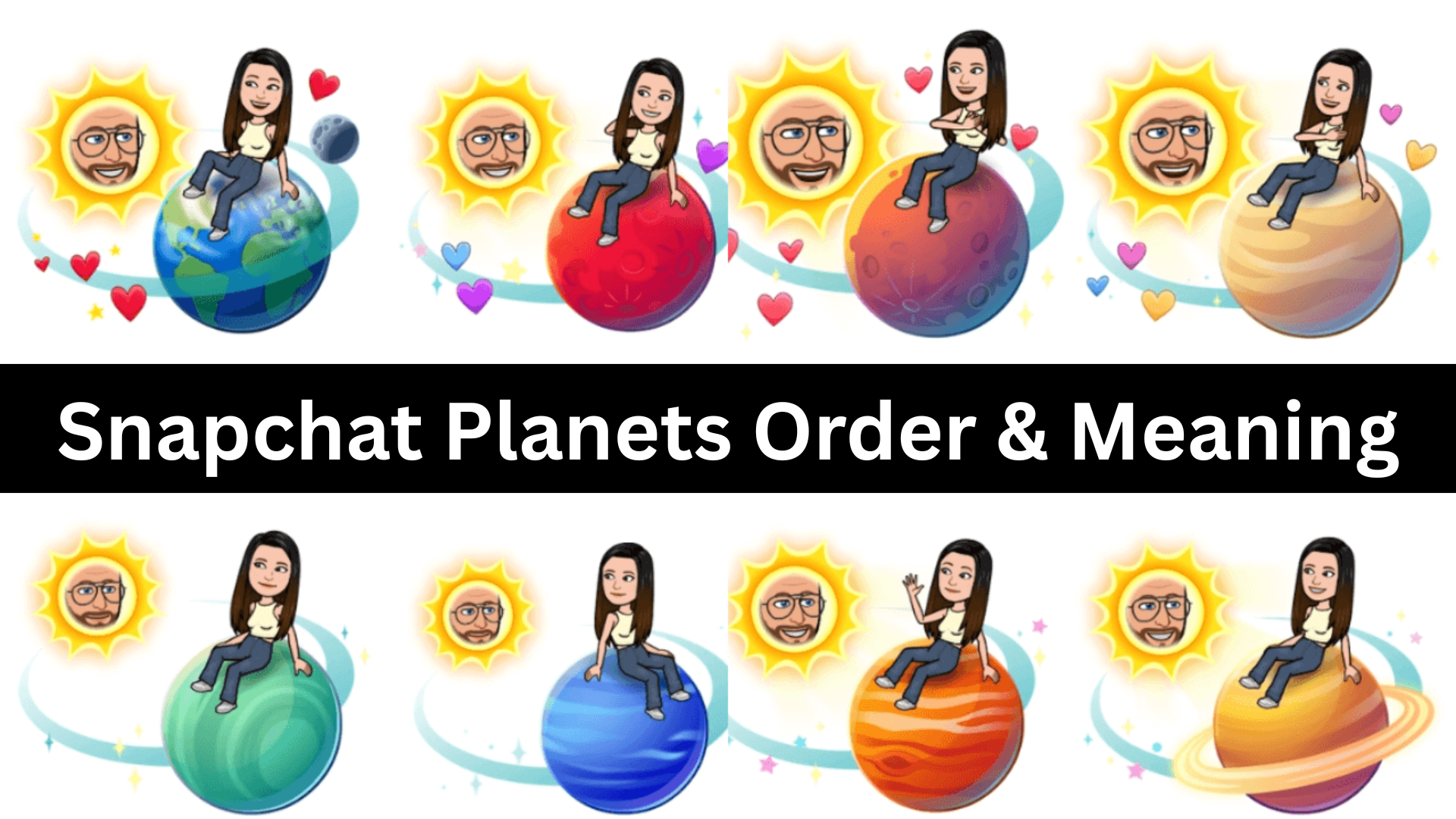
The Snapchat Solar System assigns a specific planet to your top eight friends, based on how close you are to them in their “Best Friend” list. If you are their #1 Best Friend, you will appear as Mercury on their profile. If you are their #8 Best Friend, you will appear as Neptune.
Mercury through Mars: The Inner Circle
The first four planets represent the most frequent interactions and the highest data throughput between two accounts.
-
Mercury: This is the #1 spot. In technical terms, this user shares the highest coefficient of interaction with the subscriber. The icon is represented by a pink planet with red hearts.
-
Venus: Representing the #2 Best Friend, Venus appears as a beige planet with colorful hearts. It signifies a secondary level of high-frequency data exchange.
-
Earth: As the #3 spot, Earth is represented by the familiar blue and green globe with red hearts. This indicates a consistent, daily interaction pattern.
-
Mars: The #4 spot is Mars, a red planet with small hearts. Reaching this level usually requires a significant “Streak” or high volume of daily Snaps.
Jupiter through Neptune: The Outer Orbit
The “outer planets” represent friends who are still within the top eight but have a lower interaction frequency compared to the inner circle.
-
Jupiter: The #5 spot. Jupiter is represented as a brownish-orange planet with stripes and stars.
-
Saturn: The #6 spot. Saturn is easily identifiable by its rings and yellow-orange hue.
-
Uranus: The #7 spot. This is a green planet with stars, representing a lower tier of the algorithmic ranking.
-
Neptune: The #8 spot. As the furthest planet in the digital solar system, Neptune is a blue, desolate-looking planet with stars. It marks the edge of the premium “Best Friend” tracking.
The UX and UI Logic of Friendship Gamification
The implementation of the Planet system is a masterclass in psychological UI design. By using familiar celestial bodies, Snapchat creates an intuitive hierarchy that users understand without needing a manual. However, the technical execution of these visuals serves a specific purpose in user retention.
User Interface Shifts and Feedback Loops
When a Snapchat+ subscriber taps on a “Best Friends” badge, the app triggers a visual overlay. This is not just an aesthetic choice; it is a feedback loop. By providing a visual “reward” (being someone’s Mercury or Venus), the app encourages users to maintain their interaction levels. From a software engineering standpoint, this involves maintaining a high-concurrency database that can update these badges across millions of profiles simultaneously without lagging the user experience.
Gamification and User Retention
Gamification is the practice of applying game-design elements to non-game contexts. By turning friendship into a ranking system, Snapchat increases its “stickiness.” Users are incentivized to send more Snaps to “climb” the planetary ladder or to maintain their position as a “Mercury.” This translates to higher Daily Active User (DAU) counts and increased time spent within the app—metrics that are vital for the platform’s technical and financial health.
Privacy, Data, and the Social Impact of Metrics
While the Planet system is a technical achievement in data visualization, it has faced significant scrutiny regarding its impact on user psychology and privacy. In early 2024, Snap Inc. made technical adjustments to how this feature is displayed due to concerns over mental health.
Managing Digital Presence and Privacy Settings
One of the key technical updates to the Planets feature was the transition from a default-on setting to an “opt-in” or hidden-by-default system. Originally, seeing your rank on someone else’s profile was a central draw of Snapchat+. However, the company recognized that quantifying friendship so precisely could lead to social anxiety.
The current technical framework allows users to choose whether they want to see their Solar System. This reflects a growing trend in tech toward “Human-Centered Design,” where developers must balance engaging features with the potential for negative psychological impact. The data still exists in the backend, and the rankings are still calculated, but the UI has been modulated to be less “in-your-face.”
Data Integrity and Ranking Accuracy
A common question among users is why their planet ranking might seem “wrong.” From a technical perspective, this usually stems from the way the algorithm caches data. If a user sends 100 Snaps in an hour, the “Best Friends” rank might not update instantly across all global servers. Snapchat uses a distributed database system, and “eventual consistency” means that while the data will eventually sync, there might be a delay between a surge in interaction and a change in the planetary icon.
The Future of Social Analytics in Mobile Apps
The Snapchat Planets feature is likely just the beginning of a trend where social media platforms provide users with more granular data about their digital lives. As AI and machine learning become more integrated into app backends, we can expect these rankings to become even more sophisticated.
Predictive Social Modeling
The next step in the evolution of features like Snapchat Planets is predictive analytics. Imagine an algorithm that doesn’t just tell you who your Best Friend is, but predicts who your Best Friend will be based on shared interests, location data (Snap Map integration), and group chat dynamics. This requires a massive increase in processing power and a more complex algorithmic approach than the current Planet system uses.

The Ethics of “Hidden” Data
As we move forward, the tech industry must grapple with the ethics of how much data should be revealed to the user. The Snapchat Planets feature serves as a case study in transparency. By showing users where they stand, Snap Inc. provided a level of transparency that other platforms (like Instagram or X) keep hidden in their “relevancy algorithms.” The technical challenge for future developers will be creating these insights in a way that adds value to the user experience without compromising the organic nature of social interaction.
In conclusion, the Snapchat Planets are far more than just cute icons. They represent a sophisticated intersection of real-time data processing, premium subscription modeling, and psychological design. For the average user, they are a way to see who they talk to most. For the tech-savvy observer, they are a window into how modern social media platforms quantify our lives, one Snap at a time. Whether you are a Mercury or a Neptune, you are part of a vast, algorithmic solar system that is redefining the boundaries of digital communication.
aViewFromTheCave is a participant in the Amazon Services LLC Associates Program, an affiliate advertising program designed to provide a means for sites to earn advertising fees by advertising and linking to Amazon.com. Amazon, the Amazon logo, AmazonSupply, and the AmazonSupply logo are trademarks of Amazon.com, Inc. or its affiliates. As an Amazon Associate we earn affiliate commissions from qualifying purchases.