
In the digital age, seeing is no longer believing. We have entered an era where the visual landscape is dominated by sophisticated algorithms, high-resolution displays, and synthetic media. Yet, as our technology improves, a nagging sensation often remains when we look at a screen: the feeling that something is “off.” Whether it is a six-fingered hand in an AI-generated portrait, the eerie smoothness of a motion-interpolated video, or the subtle distortions of a deepfake, the phrase “what’s wrong with this picture” has evolved from a casual observation into a critical technical inquiry.

The current state of technology presents a fascinating paradox. While we possess the tools to render near-perfect simulations of reality, the cracks in these digital facades reveal profound truths about how software processes information, how hardware interprets data, and how security frameworks are struggling to keep pace with innovation. To understand the future of tech, we must first analyze the technical inconsistencies that define our present.
The Visual Glitch: Understanding AI Hallucinations and Generative Flaws
Generative Artificial Intelligence has democratized creativity, allowing anyone to synthesize complex imagery from a simple text prompt. However, these tools—built on Large Language Models (LLMs) and Diffusion Models—frequently produce artifacts that highlight the fundamental difference between human cognition and machine pattern matching.
The Anatomy of the “Uncanny Valley” in AI
The most common answer to “what’s wrong with this picture” in the context of AI is often found in the extremities. AI models struggle with hands, teeth, and symmetrical patterns. This happens because models like Midjourney or Stable Diffusion do not “know” what a hand is in a biological sense. Instead, they understand the hand as a probabilistic cluster of pixels that frequently appear near arms.
When the AI “hallucinates,” it is essentially miscalculating the spatial relationship between these clusters. This creates the “Uncanny Valley”—a psychological phenomenon where a digital representation is close enough to reality to be recognizable but flawed enough to provoke a sense of revulsion. As we push toward more complex generative tasks, solving this spatial reasoning gap remains one of the primary hurdles for neural network developers.
Diffusion Models and the Limits of Pattern Recognition
To understand why these errors occur, one must look at the “denoising” process. Diffusion models work by taking a field of random noise and gradually refining it into a coherent image based on learned patterns. The “wrongness” often stems from the model’s reliance on 2D data to represent a 3D world. Because the AI lacks a physics engine or a geometric understanding of volume, it may render a chair with five legs or a window that leads to nowhere. The technology is essentially a master of mimicry without a master of context, leading to visual paradoxes that the human eye, honed by millions of years of evolution, immediately identifies as fraudulent.
Beyond the Pixels: The Technical Flaws in AI Training Data
If the visual output is the symptom, the training data is the cause. The phrase “garbage in, garbage out” has never been more relevant than in the current race to build more powerful AI models. When we ask what is wrong with the current digital picture, we are often looking at the reflected biases and limitations of the datasets used to train these systems.
The Data Integrity Problem and Algorithmic Bias
Most generative models are trained on massive datasets scraped from the internet, such as LAION-5B. These datasets are often uncurated, containing low-resolution images, watermarked content, and inherent cultural biases. When an AI generates a picture of a “CEO” and consistently renders a middle-aged male in a suit, the “wrongness” isn’t just a technical glitch; it is a data integrity failure.
Furthermore, as the internet becomes flooded with AI-generated content, we face a “recursive loop.” If a model is trained on data that was itself generated by an AI, the errors begin to compound. This leads to a degradation of quality known as “model collapse,” where the AI loses the ability to represent reality accurately because it is only mimicking its own previous mistakes.
The Looming Threat of Model Collapse
Model collapse is perhaps the most significant long-term technical challenge in the software industry. As authentic, human-generated data becomes a scarce commodity, developers are forced to find ways to filter out “synthetic noise.” If “what’s wrong with this picture” becomes a question we can no longer answer because the AI has smoothed over all identifiable human characteristics, the diversity and accuracy of digital information will plummet. Engineers are currently working on “watermarking” techniques at the model level to prevent this recursive degradation, but the arms race between synthetic generation and authentic detection is only just beginning.
The Security Blind Spot: Deepfakes and the Weaponization of Synthetic Media
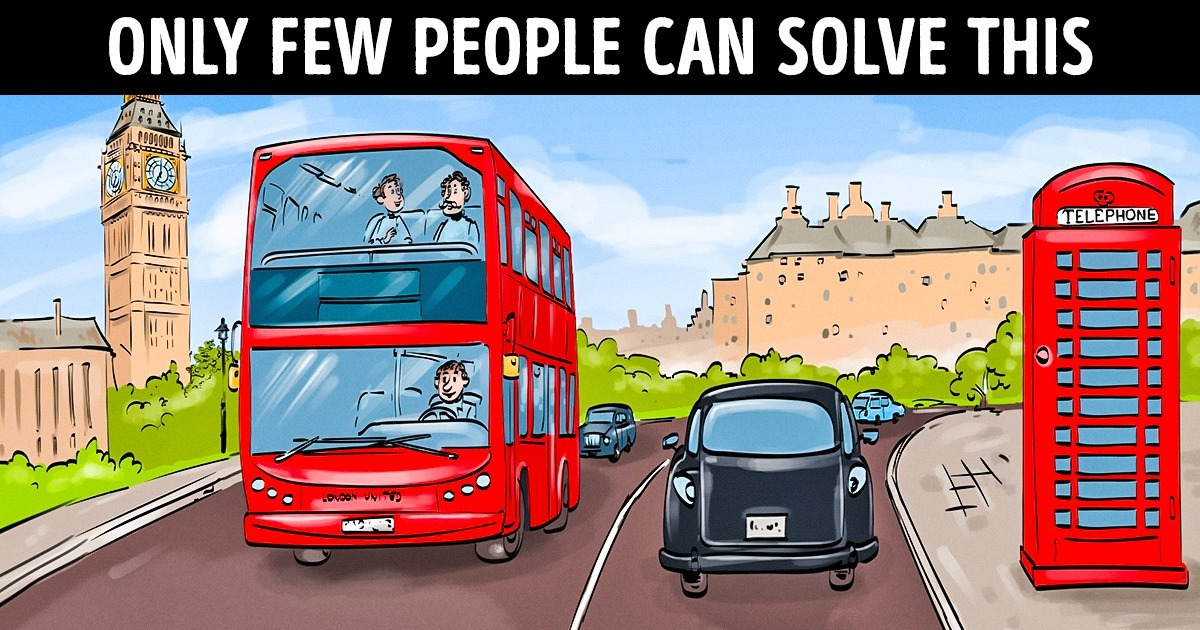
Perhaps the most alarming application of the “wrongness” in digital imagery lies in the realm of digital security. Deepfakes—synthetic media where a person in an existing image or video is replaced with someone else’s likeness—have moved from the laboratory to the wild, creating a new frontier for cybercrime and misinformation.
Adversarial Attacks and Metadata Manipulation
Modern deepfakes utilize Generative Adversarial Networks (GANs), where two neural networks are pitted against each other: one creates the fake, and the other tries to detect it. This process continues until the detector can no longer tell the difference. From a security perspective, “what’s wrong with this picture” is no longer something a human can detect with the naked eye.
Sophisticated attackers are now using these tools for “Business Email Compromise” (BEC) through synthetic audio and video calls. The technical flaw here isn’t just in the image, but in our current authentication protocols. We have long relied on visual and auditory confirmation as a “secondary factor” of trust. In a world of real-time deepfakes, that trust is fundamentally broken.
The Race for Digital Provenance and Authenticity Standards
To combat this, tech giants and news organizations are rallying around standards like the C2PA (Coalition for Content Provenance and Authenticity). This technology embeds cryptographic metadata into files at the point of capture. Instead of trying to find “what’s wrong” with the pixels, security professionals are looking at the “digital paper trail.”
If a picture lacks a verifiable chain of custody from the camera sensor to the screen, it must be treated as suspect. This shift from “detecting fakes” to “verifying facts” represents a massive architectural change in how software handles media files, moving toward a “Zero Trust” model for visual data.
The Hardware-Software Gap: Why Display Tech Outpaces Human Perception
Sometimes, what is “wrong” with a picture isn’t a result of AI or malice, but a byproduct of the hardware we use to view it. As display technology moves toward 8K resolution, 2000-nit brightness, and 240Hz refresh rates, the software processing required to drive these panels often introduces its own set of artifacts.
The “Soap Opera Effect” and Motion Interpolation
One of the most common complaints in modern home theater tech is the “Soap Opera Effect.” This occurs when a television’s processor uses motion interpolation to add extra frames to a 24fps film, making it look hyper-smooth. To the average viewer, the picture feels “wrong” because it breaks the cinematic language we have been conditioned to accept. Technically, the TV is trying to fix a “flaw” (judder) that the human brain actually perceives as a feature of high-quality storytelling. This highlights a growing rift in tech: just because we can process an image to be more “perfect” doesn’t mean it should be.
Latency and the “Uncanny Valley” in Extended Reality (XR)
In the world of Virtual and Augmented Reality (VR/AR), what’s wrong with the picture can have physical consequences. “Meticulous latency”—the delay between a user’s head movement and the display updating—can cause motion sickness. Devices like the Apple Vision Pro or Meta Quest 3 use incredibly complex sensor fusion to minimize this delay.
However, even a micro-stutter in the “pass-through” video (where cameras show you the real world inside a headset) can break the immersion. In XR, the technical goal is to make the technology invisible. When we notice the picture, the technology has failed. The challenge for the next decade of hardware is not just adding more pixels, but reducing the “computational friction” that reminds us we are looking at a screen.

Conclusion: The Future of the Digital Image
As we have explored, the question “what’s wrong with this picture” serves as a gateway into the most pressing challenges of modern technology. From the “hallucinations” of generative AI to the security risks of deepfakes and the processing artifacts of high-end hardware, our digital world is riddled with inconsistencies.
However, these flaws are not merely bugs; they are the roadmap for the next generation of tech innovation. Solving these issues requires a multi-disciplinary approach: better spatial reasoning in AI models, more ethical and diverse datasets, cryptographic standards for digital truth, and a more human-centric approach to hardware processing.
As technology continues to blur the line between the physical and the digital, our ability to identify “what’s wrong” will be our greatest asset. By understanding the technical limitations of the images we consume, we can better navigate a world where reality is increasingly optional, but clarity is more essential than ever.
aViewFromTheCave is a participant in the Amazon Services LLC Associates Program, an affiliate advertising program designed to provide a means for sites to earn advertising fees by advertising and linking to Amazon.com. Amazon, the Amazon logo, AmazonSupply, and the AmazonSupply logo are trademarks of Amazon.com, Inc. or its affiliates. As an Amazon Associate we earn affiliate commissions from qualifying purchases.