
In the fast-paced world of Silicon Valley and global tech hubs, the word “theory” is often tossed around with casual disregard. We hear about “product theories,” “growth theories,” and “user behavior theories.” However, in the realm of true science—the very discipline that gave us the transistor, the internet, and artificial intelligence—a “theory” is not a mere hunch or a speculative guess.
To understand what a scientific theory means in science is to understand the bedrock upon which all modern technology is built. For developers, data scientists, and tech innovators, distinguishing between a colloquial “theory” and a “scientific theory” is crucial for building systems that are reliable, scalable, and grounded in reality. In the tech sector, a scientific theory represents the highest level of certainty, a framework that has survived rigorous testing and provides the predictive power necessary to engineer the future.

The Architecture of Truth: Defining Scientific Theory in a Tech-Driven Era
To the layperson, a theory is often synonymous with a “hypothetical guess.” To a scientist or a high-level engineer, a theory is a comprehensive explanation of an observed phenomenon that is supported by a vast body of evidence. It is the “why” and the “how” behind the data.
Beyond the Hypothesis: Why Rigor Matters for Software
In software development, we often start with a hypothesis: “If we change this UI element, user retention will increase.” This is a testable statement, but it is not a theory. A scientific theory in the tech world would be something much broader, such as Information Theory.
A theory incorporates laws, hypotheses, and facts into a single, cohesive framework. When we talk about scientific theory in the context of technology, we are talking about the difference between a “hack” and an “architecture.” A hack works once under specific conditions; a theory-based architecture works consistently because it respects the underlying laws of logic, physics, and mathematics.
Predictability and Falsifiability in Algorithm Development
One of the hallmarks of a scientific theory is its predictive power. If a theory cannot predict future outcomes, it is useless in a technical environment. For instance, the Theory of Computation allows developers to know, with mathematical certainty, whether a problem is “computable” before they even write a single line of code.
Furthermore, a scientific theory must be falsifiable. In tech, this means that for a framework to be scientifically valid, there must be a way to prove it wrong. This is the essence of “unit testing” on a grand, conceptual scale. If an AI model’s logic cannot be challenged or tested against a null hypothesis, it isn’t based on a scientific theory; it’s based on a “black box” assumption.
From Lab to Code: How Information Theory Shapes Modern Computing
Perhaps no scientific theory has had a greater impact on the tech niche than Information Theory, pioneered by Claude Shannon. This is the perfect example of what a scientific theory means in science and how it manifests in our gadgets and apps.
Claude Shannon’s Legacy: The Theory That Built the Internet
Before Shannon, there was no scientific theory regarding how to quantify information. People thought of communication as a series of waves or pulses. Shannon’s theory proposed that information could be broken down into “bits”—the fundamental unit of data.
This theory didn’t just explain how we talk; it provided the blueprint for every digital tool we use today. It defined the limits of data compression and the necessity of “noise” reduction. When you stream a 4K video on your smartphone without lag, you are witnessing Shannon’s Information Theory in action. It is a scientific theory because it has been tested billions of times across every network on earth and has never been debunked.
Applying Theoretical Frameworks to Digital Security and Encryption
Our digital security relies on Number Theory and the Complexity Theory. These aren’t just academic exercises; they are the scientific theories that guarantee your bank password remains private. These theories explain how prime numbers can be used to create one-way functions—mathematical problems that are easy to solve in one direction but nearly impossible to reverse-engineer. In the tech world, understanding the “theory” behind RSA encryption or Elliptic Curve Cryptography is the difference between a secure application and a catastrophic data breach.
The Role of Theory in Artificial Intelligence and Machine Learning
In the current gold rush of Artificial Intelligence, the term “scientific theory” is becoming more relevant than ever. As we move from simple automation to complex Large Language Models (LLMs), the industry is struggling to define the theoretical limits of what machines can “know.”

Neural Networks: Moving from Heuristics to Theoretical Understanding
For many years, Deep Learning was criticized for being “alchemy” rather than “chemistry.” Engineers knew that stacking layers of neurons worked, but they didn’t have a robust scientific theory as to why.
Today, the tech community is working toward a Learning Theory for AI. This involves using statistical mechanics and information geometry to explain how a machine generalizes from data. Without a scientific theory, AI development is just trial and error. With a theory, it becomes a predictable engineering discipline where we can forecast the performance of a model based on its parameters and training data.
The Importance of “Black Box” Theory in Tech Ethics
As AI takes over critical infrastructure—from self-driving cars to medical diagnostics—the lack of a complete scientific theory for “Interpretability” is a major tech hurdle. In science, a theory must explain the mechanism. If we cannot explain the mechanism of an AI’s decision, we are operating outside the bounds of traditional scientific theory. This has led to the rise of Explainable AI (XAI), a field dedicated to bringing the rigor of the scientific method back into the world of opaque algorithms.
Building Robust Systems: Theoretical Foundations of Software Engineering
Software engineering is often seen as a craft, but the most successful tech companies treat it as an applied science. This transition is made possible by adhering to established theories of system design.
Distributed Systems and the CAP Theorem
While technically called a “theorem,” the CAP Theorem (Consistency, Availability, Partition tolerance) functions within the tech industry as a foundational theory for distributed systems. It states that a distributed data store can only provide two out of three guarantees.
This is a scientific reality that dictates how every major cloud provider—AWS, Google Cloud, and Azure—builds their infrastructure. When a tech lead decides whether to prioritize “Consistency” or “Availability” during a network outage, they are applying a scientific theory to ensure the system doesn’t collapse into chaos.
Why Scalability Requires Theoretical Models
You cannot scale a tech product to millions of users based on a “hunch.” Scalability requires an understanding of Queuing Theory and Complexity Theory (Big O Notation).
-
Queuing Theory helps tech companies manage server loads and minimize latency.
-
Big O Notation allows developers to theoretically calculate how an algorithm’s performance will change as the dataset grows.
In science, these theories allow us to predict the behavior of a system under extreme stress. In tech, they allow us to build platforms like Netflix or Spotify that can serve millions of concurrent streams without crashing.
The Scientific Method as a Product Development Cycle
Finally, the relationship between scientific theory and tech is most visible in the “Lean Startup” or “Agile” methodologies. These are essentially the scientific method rebranded for the tech industry.
-
Observation: Analyzing user data and market trends.
-
Hypothesis: Proposing a new feature or software solution.
-
Experiment: Building a Minimum Viable Product (MVP) and A/B testing.
-
Refinement: Analyzing the results to build a “Product-Market Fit” theory.
However, the “theory” in a business context is often much more fragile than a “scientific theory.” A scientific theory, like the Theory of General Relativity or Cell Theory, is universal. A tech company’s theory of user behavior is localized and prone to change. The most successful tech leaders are those who recognize which parts of their stack are based on “Universal Scientific Theories” (which cannot be broken) and which are based on “Market Theories” (which must be constantly tested).
Conclusion: Why the Tech Sector Must Respect Scientific Theory
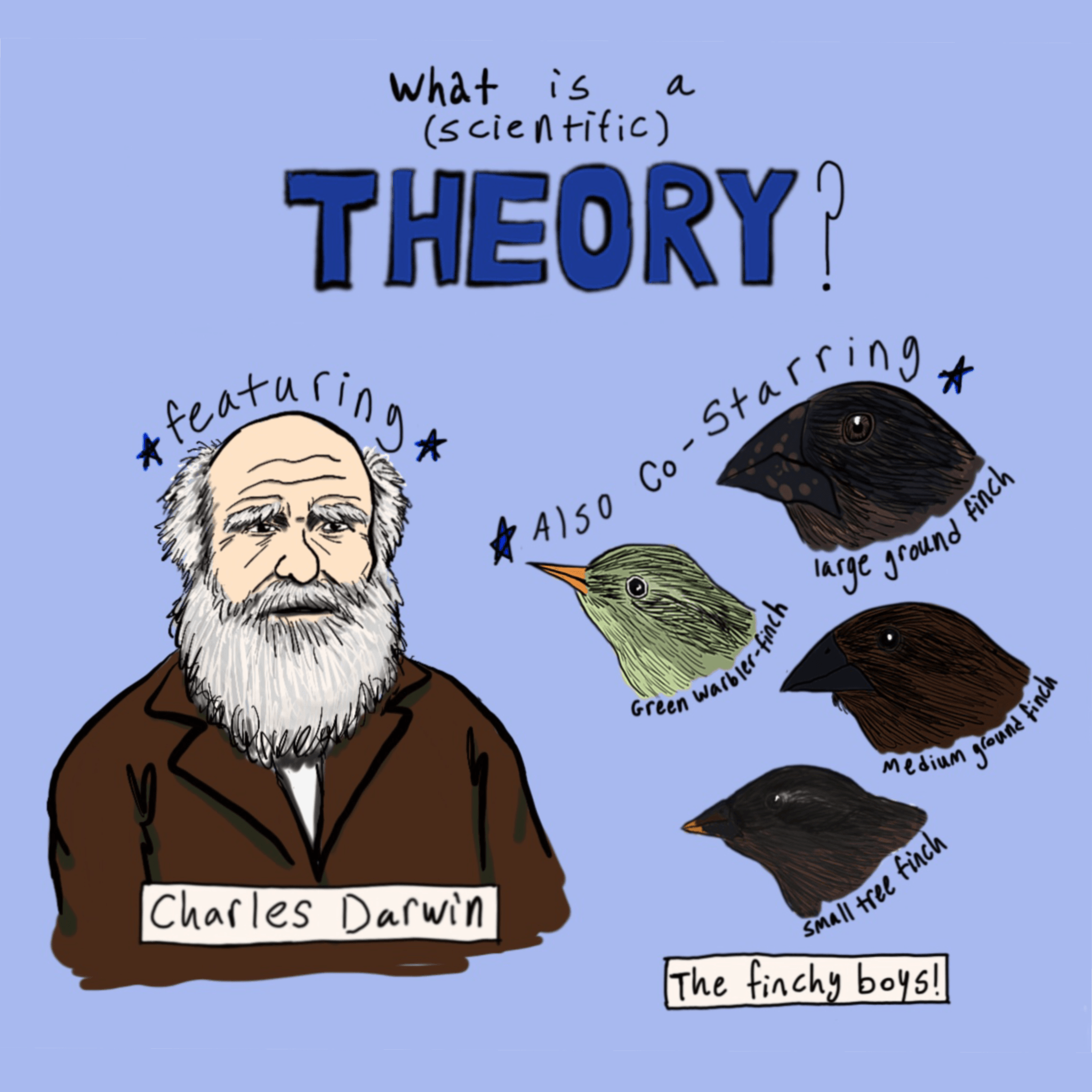
What does scientific theory mean in science? It means a high-water mark of human understanding. It is an explanation that has earned its keep through the gauntlet of peer review and experimental validation.
In the tech niche, we often move so fast that we forget the foundations. We prioritize “shipping” over “knowing.” However, as our technology becomes more integrated into the fabric of human life, the cost of theoretical failure rises. A bridge built on a flawed theory of physics will fall; an AI built on a flawed theory of ethics or a database built on a flawed theory of consistency will fail just as spectacularly.
By embracing the true meaning of scientific theory, the technology industry can move beyond disruptive “guesses” toward sustainable, predictable, and revolutionary innovation. Whether you are coding a simple app or training a trillion-parameter model, you are standing on the shoulders of giants who turned “theories” into the digital reality we inhabit today.
aViewFromTheCave is a participant in the Amazon Services LLC Associates Program, an affiliate advertising program designed to provide a means for sites to earn advertising fees by advertising and linking to Amazon.com. Amazon, the Amazon logo, AmazonSupply, and the AmazonSupply logo are trademarks of Amazon.com, Inc. or its affiliates. As an Amazon Associate we earn affiliate commissions from qualifying purchases.