
In the world of global finance and international trade, nomenclature often carries weight far beyond simple geography. When analysts, investors, and policymakers discuss the “North of Ireland,” they are navigating a unique economic landscape that sits at a complex crossroads of jurisdictions, currencies, and market access. For the modern investor or business leader, understanding what this region represents means looking past traditional borders to identify a high-potential zone characterized by dual-market access, a burgeoning tech-driven economy, and a sophisticated cross-border financial ecosystem.
The term “North of Ireland” in a financial context refers to more than just the six counties of Northern Ireland; it encapsulates an economic region that is increasingly integrated with the Republic of Ireland while maintaining its constitutional position within the United Kingdom. This intersection creates a “best of both worlds” scenario that has significant implications for personal finance, corporate strategy, and long-term investment.

The Economic Distinction: Navigating Dual Market Access
The primary financial significance of the North of Ireland in the current era is its unprecedented position in global trade. Following the complexities of Brexit, the region has emerged with a status that is unique on the planet. For businesses managing supply chains or looking for a European foothold, the “North” represents a strategic gateway.
Understanding the Dual Market Access
From a business finance perspective, the North of Ireland is the only location where companies can trade goods freely into both the United Kingdom and the European Union Single Market. This “Dual Market Access” removes the friction that many UK-based firms face when exporting to the Continent and provides a hedge against the regulatory divergence seen elsewhere. For investors, this translates into a lower risk profile for manufacturing and distribution hubs, as the region avoids the “hard” customs borders that disrupt cash flow and increase administrative overhead in other jurisdictions.
The Windsor Framework and Trade Logistics
The implementation of the Windsor Framework has further solidified this financial advantage. By creating “green lanes” for goods moving from Great Britain, the framework reduces the cost of doing business within the internal UK market while preserving the region’s access to the EU. In terms of business finance, this stability is a vital asset. Predictability in logistics translates directly to tighter margins and more accurate forecasting—qualities that attract venture capital and institutional investment to the region’s growing industrial parks.
Investment Landscapes and Regional Growth Catalysts
When we analyze the North of Ireland through the lens of “Money,” we see a region that has moved from a traditional manufacturing base to a high-value service and technology economy. The financial metrics for the region show a consistent upward trend in Foreign Direct Investment (FDI), particularly from North American and European firms looking to leverage a highly educated workforce and competitive operating costs.
The Rise of the Belfast-Dublin Economic Corridor
One of the most compelling narratives for institutional investors is the development of the Belfast-Dublin Economic Corridor. This isn’t just a geographical strip; it is a financial powerhouse. By treating the North of Ireland and the Republic as a continuous economic zone, planners have created a region with a population of over 2 million people and a high concentration of research institutions. For private equity and real estate investors, this corridor represents a high-growth area where property yields remain attractive compared to the saturated markets of London or Paris, yet the connectivity and talent pool rival any major European hub.
Foreign Direct Investment (FDI) Trends
Statistics consistently show that the North of Ireland, particularly Belfast, is a global leader in attracting FDI for specialized sectors such as cybersecurity and financial technology. For the investor, the “meaning” of the North of Ireland is synonymous with a cost-effective operational environment. With lower prime office rents and a lower cost of living than the South of Ireland or South East England, companies can achieve a higher Return on Investment (ROI) while still accessing the same high-level talent. This fiscal efficiency is a cornerstone of the region’s appeal to multinational corporations.
Personal Finance and Cross-Border Wealth Management
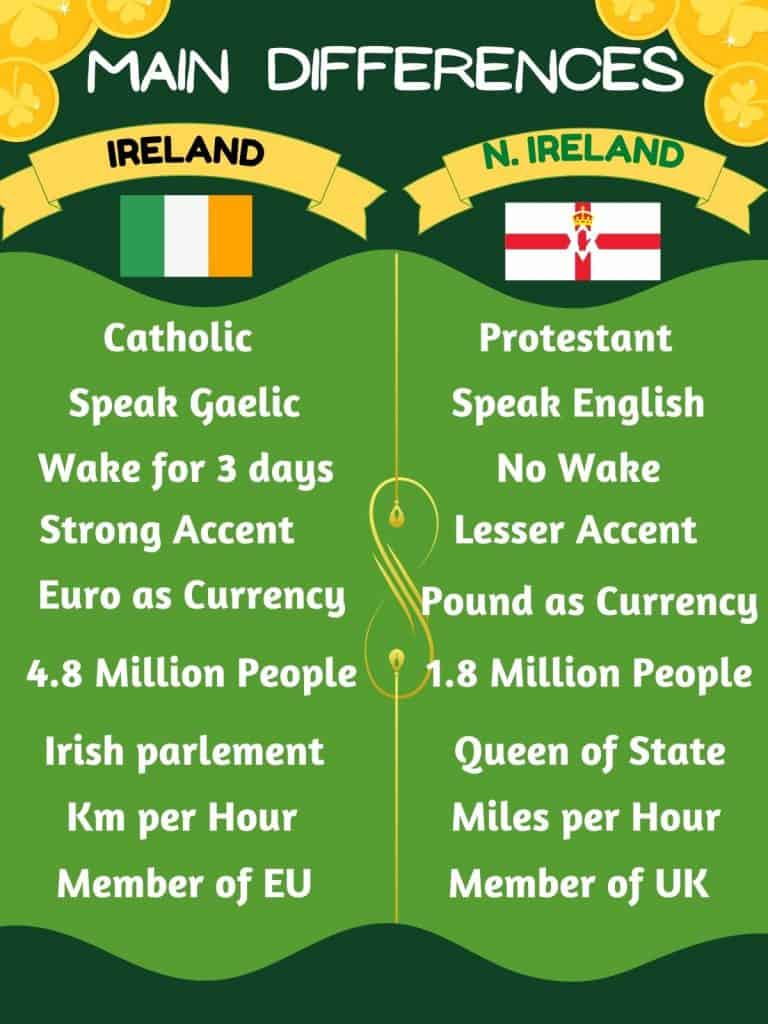
For individuals living or working in the North of Ireland, “Money” is a cross-border affair. The proximity of two different tax regimes and currencies (the British Pound and the Euro) creates a set of challenges and opportunities that require sophisticated financial planning.
Currency Fluctuations and Hedging Strategies
For those whose business or personal life spans the border, currency risk is a daily reality. The relationship between GBP and EUR dictates purchasing power, mortgage affordability, and business profitability. In the North of Ireland, financial tools such as forward contracts and multi-currency accounts are not just for large corporations; they are essential personal finance tools. Savvy individuals often engage in “natural hedging”—earning in one currency while maintaining liabilities in another—to capitalize on exchange rate movements. Understanding these dynamics is crucial for anyone managing a portfolio that includes Northern Irish assets.
Tax Residency and Property Investment
The North of Ireland offers a unique proposition for property investors. Residential and commercial real estate prices in the North have historically been more accessible than in the Republic of Ireland. This has led to a significant “Money” flow from the South to the North, as investors seek better yields. However, this requires a deep understanding of tax residency rules. Navigating the UK’s Capital Gains Tax (CGT) versus the Republic’s tax laws is a specialized area of wealth management. For the individual investor, the North of Ireland means an opportunity for diversification in a stable, legal-rights-protected environment with high rental demand.
Future Outlook: Digital Economy and Financial Innovation
As we look toward the next decade, the meaning of the North of Ireland will increasingly be defined by its role as a “Fintech” and digital innovation hub. The convergence of financial services and technology is where the most significant wealth creation is currently happening in the region.
Fintech Hubs in the North
Belfast has established itself as a premier location for financial services technology. Major global banks and financial institutions have set up significant operations here, not just for back-office support, but for high-end software development and algorithmic trading. For the career-focused professional or the tech-sector investor, the North of Ireland signifies a cluster of innovation. This ecosystem provides a fertile ground for startups and “side hustles” in the digital space, supported by government grants and a supportive regulatory environment designed to foster entrepreneurship.

Long-term Fiscal Stability and Sustainability
Finally, the “Money” story of the North of Ireland is one of increasing fiscal autonomy and sustainability. As the region continues to leverage its unique position, we are seeing a shift toward green energy investments and sustainable finance. The North’s geography makes it ideal for wind energy and hydrogen production, sectors that are attracting billions in “green” capital. For the ethically-minded investor, the North of Ireland represents a maturing market where ESG (Environmental, Social, and Governance) goals can be met alongside traditional financial returns.
In conclusion, “what the North of Ireland means” depends entirely on your financial vantage point. To a logistics company, it means a frictionless bridge between the UK and the EU. To a tech investor, it means a high-yield, talent-rich environment for innovation. To a personal finance planner, it means a complex but rewarding landscape of cross-border opportunities. Ultimately, it is a region that has successfully turned a complex political history into a unique economic advantage, making it one of the most interesting and potentially lucrative niches in the global financial map today.
aViewFromTheCave is a participant in the Amazon Services LLC Associates Program, an affiliate advertising program designed to provide a means for sites to earn advertising fees by advertising and linking to Amazon.com. Amazon, the Amazon logo, AmazonSupply, and the AmazonSupply logo are trademarks of Amazon.com, Inc. or its affiliates. As an Amazon Associate we earn affiliate commissions from qualifying purchases.