
In the landscape of modern finance, particularly within the realms of the gig economy, remote work, and business scaling, administrative documents often serve as the silent architecture of financial transparency. Among these, the IRS Form W-9, officially titled “Request for Taxpayer Identification Number and Certification,” is perhaps one of the most frequently encountered yet misunderstood documents. Whether you are a freelance graphic designer, a consultant, or a small business owner hiring external talent, understanding the mechanics of the W-9 is essential for maintaining tax compliance and ensuring seamless financial operations.
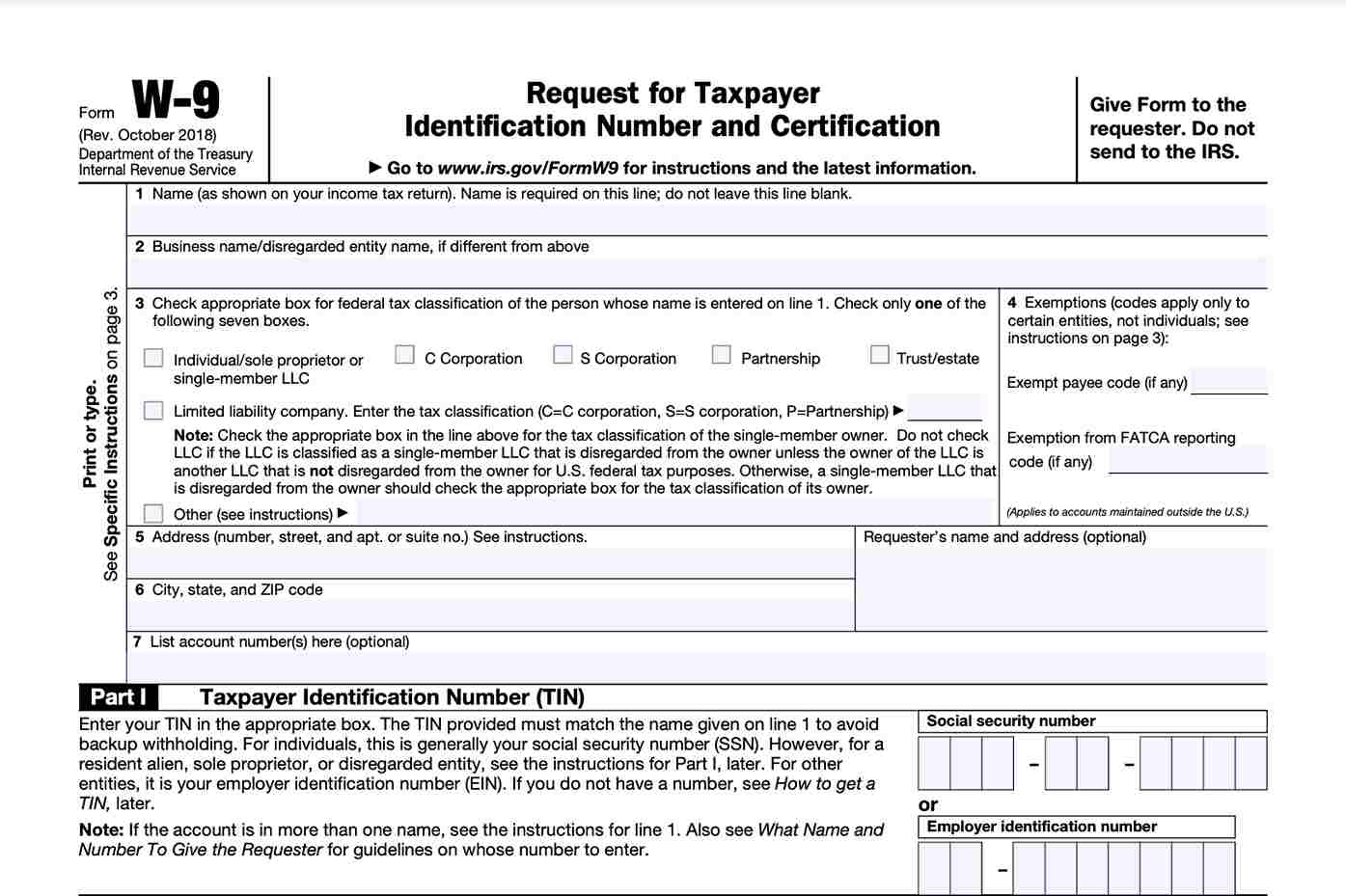
This article explores the multifaceted role of Form W-9, detailing its purpose, its impact on independent contractors and businesses, and the critical security measures required to handle the sensitive data it contains.
Understanding the Fundamental Purpose of Form W-9
At its core, Form W-9 is a standardized information-gathering tool used by businesses to obtain the correct Taxpayer Identification Number (TIN) from individuals or entities they intend to pay. Unlike the W-4 form, which employees fill out so that employers can withhold income tax from their paychecks, the W-9 is used when no taxes are being withheld upfront.
Identifying the Taxpayer: SSNs vs. EINs
The primary function of a W-9 is to confirm the identity and tax status of the payee. For individual freelancers or sole proprietors, this identification is usually their Social Security Number (SSN). However, for established business entities like LLCs or corporations, an Employer Identification Number (EIN) is typically provided. By providing this information, the payee is essentially certifying to the payor—and by extension, the IRS—that the identification number provided is correct and that they are not subject to backup withholding.
The Information Exchange: Who Requests the Form?
A W-9 is typically requested by a business or person who is required to file an information return with the IRS to report payments made. These payments can include, but are not limited to, professional service fees, interest, dividends, real estate transactions, and even the cancellation of debt. The form acts as a bridge; the payor collects the data via the W-9, keeps it on file, and later uses that data to generate a 1099 form at the end of the fiscal year. It is important to note that the W-9 is not actually sent to the IRS by the person filling it out; it is kept by the business making the payment for their internal records and future reporting obligations.
Why the W-9 is the Foundation of the Gig Economy
The explosion of “side hustles” and independent contracting has turned the W-9 into a staple of personal finance management. In a traditional employment model, the employer handles the bulk of tax logistics. In the world of independent work, the burden of tax accuracy shifts toward the individual, and the W-9 is the first step in that professional relationship.
Independent Contractors vs. Employees (W-9 vs. W-4)
The distinction between a W-9 and a W-4 is a critical concept in business finance. When a person is hired as an “employee,” they fill out a W-4, and the employer is responsible for withholding Social Security, Medicare, and income taxes. Conversely, an “independent contractor” provides a W-9. This signifies that the contractor is a separate business entity responsible for paying their own self-employment taxes. For the hiring business, the W-9 represents a reduction in administrative overhead, as they are not responsible for the contractor’s tax withholdings or benefits.
Navigating the $600 Threshold and Form 1099-NEC
The most common reason a freelancer will encounter a W-9 is the IRS “reporting threshold.” If a business pays a contractor $600 or more for services during a tax year, the business is legally obligated to report those payments to the IRS using Form 1099-NEC (Nonemployee Compensation). To fill out that 1099-NEC accurately, the business must have the information from the contractor’s W-9 on file. For the contractor, receiving a 1099-NEC (triggered by the W-9) serves as an official record of income that must be reported on their personal or business tax returns. Failing to provide a W-9 can lead to payment delays or the immediate implementation of backup withholding.
Step-by-Step Breakdown: How to Accurately Complete Form W-9
Completing a W-9 may seem straightforward, but errors can lead to significant headaches for both the payor and the payee. Accuracy is paramount, as the IRS uses automated systems to match 1099 forms with individual tax returns.
Avoiding Common Filing Errors
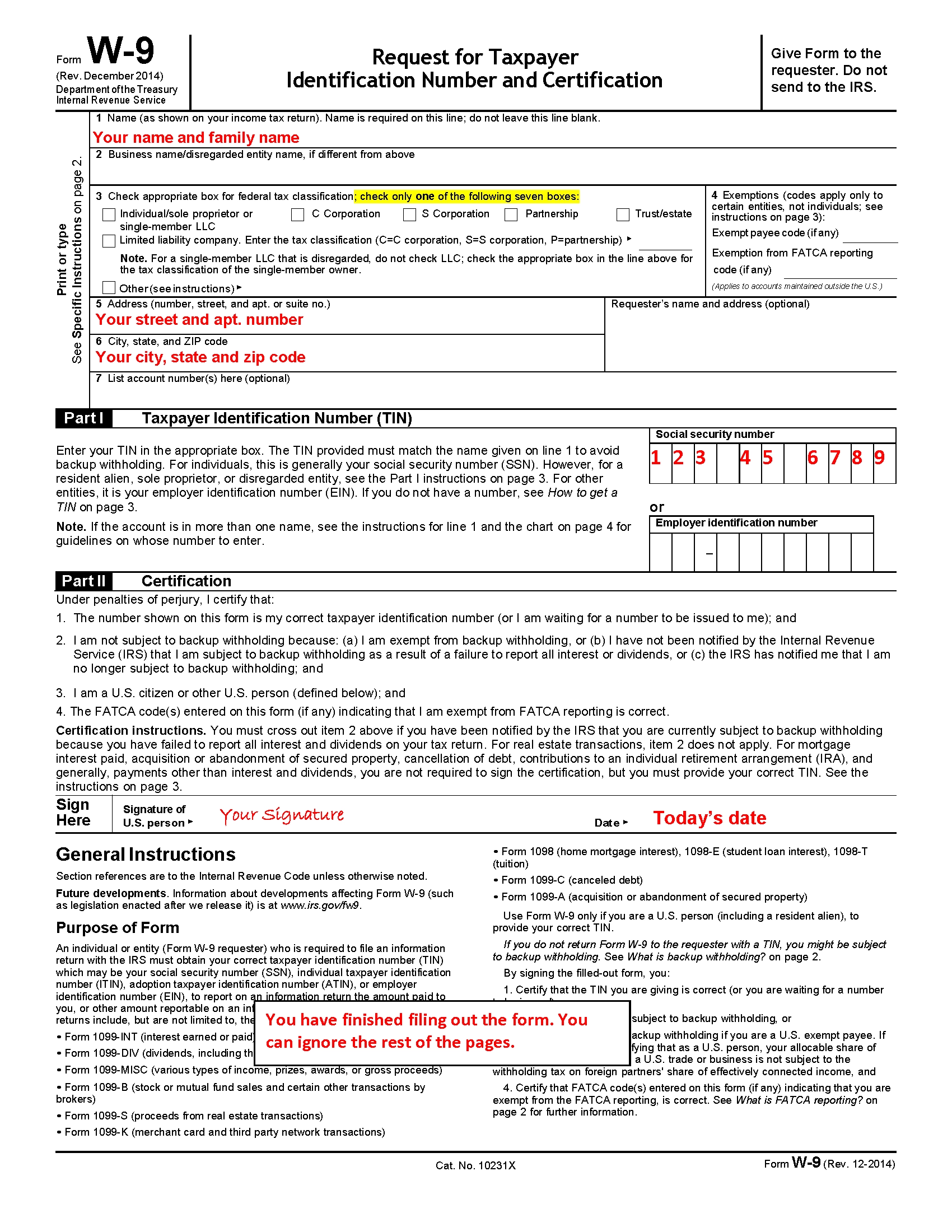
The W-9 requires several key pieces of information:
-
Name: This must match the name shown on your tax return. If you are a sole proprietor using a “Doing Business As” (DBA) name, your individual name should go on the first line, and the business name on the second.
-
Federal Tax Classification: You must check the appropriate box (e.g., Individual/Sole Proprietor, C Corporation, S Corporation, Partnership, or LLC). This tells the payor how you are taxed and whether they need to issue a 1099 at all (some corporations are exempt from receiving 1099s).
-
Address: The address where you want to receive your tax documents.
-
Taxpayer Identification Number (TIN): As discussed, this is your SSN or EIN.
One of the most common mistakes is providing a DBA name on the “Name” line while providing an SSN that is registered to an individual. This creates a mismatch in the IRS database, often resulting in an “error notice” that requires both parties to resolve the discrepancy months later.
Special Cases: LLCs and S-Corps
For many in the “Money” and “Business Finance” niche, the complexity of the W-9 increases with different business structures. If you operate an LLC, the way you fill out the W-9 depends on how the LLC is taxed. A single-member LLC that is a “disregarded entity” for tax purposes should generally use the owner’s name and SSN. However, if the LLC has elected to be treated as an S-Corp or C-Corp, the business name and EIN should be used. Understanding these nuances is vital for professional branding and financial legalities.
Critical Compliance and Security: Protecting Sensitive Data
Because a W-9 contains a person’s name, address, and Social Security Number, it is a high-value target for identity thieves. Managing these forms requires a high level of digital security and an understanding of the legal consequences of non-compliance.
Backup Withholding: What Happens if You Don’t Comply?
If a contractor refuses to provide a W-9 or provides an incorrect TIN, the IRS mandates a process called “backup withholding.” Currently, the backup withholding rate is 24%. This means the business making the payment must immediately deduct 24% of the payment and send it directly to the IRS. For a freelancer, this is a major cash-flow disruption. For the business, failing to withhold these funds when required can result in the business being held liable for the taxes they failed to collect from the contractor.
Cybersecurity and Handling Personal Identifiable Information (PII)
In an era of digital-first business, the method by which a W-9 is sent and stored is a major concern. Sending a completed W-9 as an unencrypted email attachment is a significant security risk. Professionals are encouraged to use secure portals, encrypted file-sharing services, or specialized tax compliance software to exchange this information. For businesses, the W-9 should be stored in a secure, restricted-access environment. Under IRS regulations, these records should typically be kept for at least four years after the date the relevant tax return was filed.
Best Practices for Businesses Managing W-9 Records
For business owners and financial managers, handling a revolving door of contractors requires a systematic approach to W-9 collection. Integrating this process into your onboarding workflow ensures that you are never scrambling for information during the stress of tax season.
Digitizing the Workflow: Financial Tools and Automation
Modern financial tools have revolutionized how businesses handle W-9s. Platforms like QuickBooks, Gusto, or Bill.com allow businesses to request a digital W-9 as part of the initial vendor setup. These tools often include built-in TIN matching services, which verify the information against IRS databases in real-time. This automation reduces human error, ensures that 1099s are generated accurately at year-end, and provides a secure, centralized repository for sensitive data.
Furthermore, businesses should implement a “No W-9, No Pay” policy. By requiring a completed W-9 before the first invoice is processed, a business protects itself from the risk of backup withholding and ensures they have the necessary documentation to claim the expense as a business deduction.
Final Thoughts on Financial Discipline
While “Form W-9” might sound like a dry administrative requirement, it is a foundational element of financial integrity. For the individual, it is a declaration of professional status and a commitment to personal tax responsibility. For the business, it is a shield against audits and a tool for accurate financial reporting. By mastering the W-9, participants in the modern economy can focus less on the anxieties of tax compliance and more on the growth and sustainability of their financial ventures.
aViewFromTheCave is a participant in the Amazon Services LLC Associates Program, an affiliate advertising program designed to provide a means for sites to earn advertising fees by advertising and linking to Amazon.com. Amazon, the Amazon logo, AmazonSupply, and the AmazonSupply logo are trademarks of Amazon.com, Inc. or its affiliates. As an Amazon Associate we earn affiliate commissions from qualifying purchases.