
On August 9, 1974, Richard Nixon became the first and only U.S. President to resign from office. As he boarded Army One and gave his final, defiant double-V salute, his personal brand was at an absolute nadir. He was a pariah, facing potential criminal prosecution, financial ruin, and a legacy defined entirely by the word “Watergate.” To any brand strategist, Nixon’s “product” was toxic.
However, the twenty years that followed offer one of the most remarkable case studies in personal branding and reputation management in political history. Nixon did not simply disappear; he executed a calculated, multi-decade strategy to transition from a disgraced politician to a respected elder statesman. By analyzing his actions through the lens of modern brand strategy, we can uncover how he rehabilitated a legacy that many thought was beyond repair.

Phase One: Strategic Withdrawal and Crisis Management
In the immediate aftermath of his resignation, Nixon’s first move was a classic crisis management tactic: withdrawal. A damaged brand needs a “cooling-off” period to allow the initial heat of the crisis to dissipate. Nixon retreated to “La Casa Pacifica,” his estate in San Clemente, California.
The Power of the “Dark Period”
In branding, when a narrative is overwhelmingly negative, continuing to engage with the public often only fuels the fire. Nixon’s initial silence was a strategic necessity. By removing himself from the daily news cycle, he allowed the public’s immediate anger to soften. This period of isolation was not merely a retreat; it was a period of internal restructuring. He focused on his physical health and settled his legal status, most notably through the controversial pardon granted by Gerald Ford. While the pardon was unpopular at the time, from a brand perspective, it provided the “legal clearance” necessary for him to begin his comeback without the looming threat of a trial.
Financial Stabilization as a Brand Foundation
A brand cannot be rebuilt on shaky ground. Nixon faced mounting legal fees and a significant tax bill. To regain his footing, he leveraged his only remaining asset: his story. He secured a high-value book deal and negotiated the famous televised interviews with David Frost. This was the first step in “monetizing” his experience while simultaneously regaining control of his narrative. He understood that to be taken seriously as a global figure again, he first had to prove he could survive independently of the office he lost.
Phase Two: Content Strategy and Narrative Control
Once the initial dust had settled, Nixon began the “content” phase of his rebranding. In the world of personal branding, if you do not define your narrative, others will define it for you. Nixon recognized that his path back to relevance lay in his intellectual output.
The Frost Interviews: Facing the Critics
The 1977 interviews with British journalist David Frost were a masterclass in high-stakes communication. While often remembered for Nixon’s admission that “when the president does it, that means that it is not illegal,” the interviews served a specific brand purpose. They humanized him. By subjecting himself to nearly 30 hours of rigorous questioning, he signaled that he was no longer hiding. For his “audience,” this was a necessary moment of catharsis. It allowed him to pivot from the “Watergate defendant” to a “historical figure” providing context.
Establishing Authority Through Long-Form Content
Nixon authored ten books after his resignation, most of which focused on international relations and the future of American foreign policy. Works like RN: The Memoirs of Richard Nixon and The Real War were designed to reposition him as an expert. This is a classic “authority play.” By consistently producing high-level analysis on complex global issues, Nixon was effectively saying to the world: “You may dislike my domestic choices, but you cannot afford to ignore my global expertise.” He transitioned his brand from a domestic politician to a global strategist.
Phase Three: Thought Leadership and Geographic Positioning
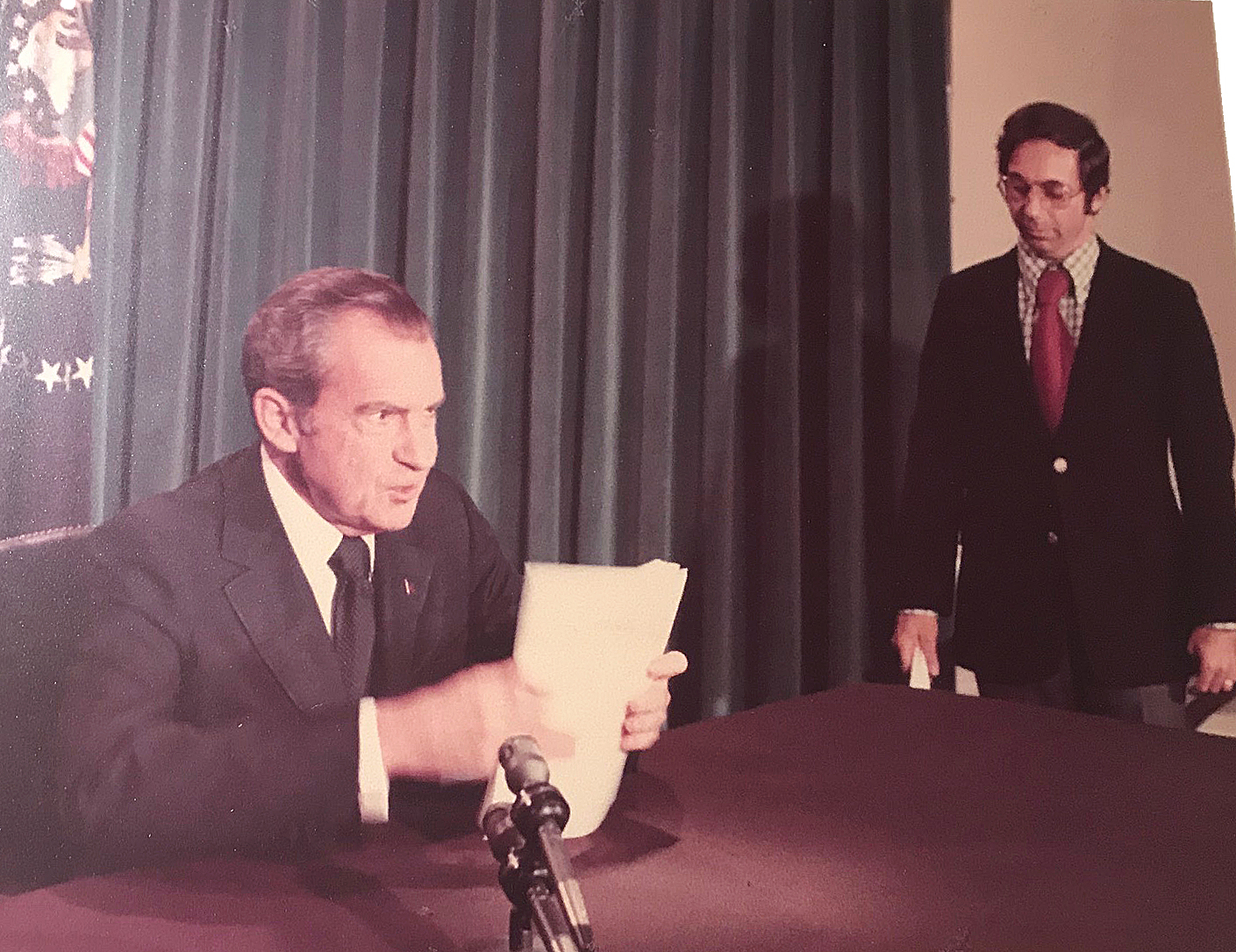
A successful rebrand often requires a change in environment. In 1980, Nixon moved from California to the New York City area, eventually settling in New Jersey. This move was a tactical positioning shift. By moving closer to the media and financial capital of the world, he placed himself in the “room where it happens.”
Reclaiming the “Elder Statesman” Identity
Nixon began a series of low-profile but high-impact travels. He visited China, the Soviet Union, and the Middle East, often meeting with heads of state who still viewed him as a significant figure in global diplomacy. Upon his return, he would share his insights with the sitting administration—whether Republican or Democratic—and with influential members of the press.
This created a “scarcity value” for his insights. He wasn’t on the Sunday talk shows every week; instead, he was the man who had the ear of the current President behind closed doors. This positioning was vital. It transitioned his brand from “The Man Who Resigned” to “The Man Who Understands the World.” He became a consultant to power, a role that commands respect regardless of past scandals.
Leveraging the “Old Guard” Network
Nixon meticulously maintained his network of former staffers and political allies, many of whom remained influential in Washington. This “brand advocacy” network worked quietly to ensure Nixon’s perspectives were included in policy discussions. By the time of the Reagan and Bush administrations, Nixon was frequently invited back to the White House for private consultations. Each visit was a public relations win, a visual confirmation that the brand had been “re-authorized” by the current leadership.
Phase Four: The Final Pivot—Legacy Management
The final decade of Nixon’s life was focused on the institutionalization of his brand. A personal brand is fleeting; an institutional brand is permanent.
The Richard Nixon Library and Birthplace
The opening of his presidential library in Yorba Linda, California, in 1990 was the symbolic culmination of his comeback. The event was attended by four presidents (Nixon, Ford, Carter, and Reagan), along with George H.W. Bush. This image—five presidents standing together—was the ultimate “brand endorsement.” It signaled to the public that Nixon was officially back in the fold of the most exclusive club in the world. The library allowed him to curate his history, ensuring that while Watergate was included, it was contextualized within a much broader story of global achievement.
Consistency and the “Long Game”
The key to Nixon’s successful rebrand was consistency. He never wavered from his core identity as a serious, hard-working, foreign policy-focused leader. He did not attempt to become a “celebrity” or a “talk show guest.” He stayed in his niche. In brand strategy, consistency breeds credibility over time. By the time of his death in 1994, the media narrative had shifted significantly. While his flaws were still acknowledged, the headlines focused on his “statesmanship” and his “resilience.”

Modern Branding Lessons from the Nixon Comeback
Richard Nixon’s post-presidency offers three critical lessons for any brand—personal or corporate—facing a catastrophic loss of trust.
-
Own the Recovery, Not Just the Crisis: Nixon didn’t just apologize and disappear; he actively worked to provide value. He identified a “market need” (foreign policy expertise) and filled it better than anyone else. A brand recovers by being useful.
-
Time is a Strategic Asset: Reputation recovery is not an overnight process. Nixon spent 20 years rebuilding his image. He understood that public memory is malleable, and that consistent, positive contributions over time can eventually outweigh a single, massive failure.
-
Positioning Trumps Popularity: Nixon never sought to be “liked” in the traditional sense. He sought to be “respected” and “necessary.” In high-level branding, being perceived as an essential authority is often more powerful than being perceived as a popular figure.
Richard Nixon’s journey from the depths of 1974 to his funeral in 1994—where he was eulogized by President Bill Clinton—remains the gold standard for reputation management. He proved that through strategic silence, authoritative content, and relentless persistence, it is possible to rewrite a brand’s ending, even after the most public of failures. He didn’t just survive his resignation; he rebranded the very meaning of what it means to be a former president.
aViewFromTheCave is a participant in the Amazon Services LLC Associates Program, an affiliate advertising program designed to provide a means for sites to earn advertising fees by advertising and linking to Amazon.com. Amazon, the Amazon logo, AmazonSupply, and the AmazonSupply logo are trademarks of Amazon.com, Inc. or its affiliates. As an Amazon Associate we earn affiliate commissions from qualifying purchases.