
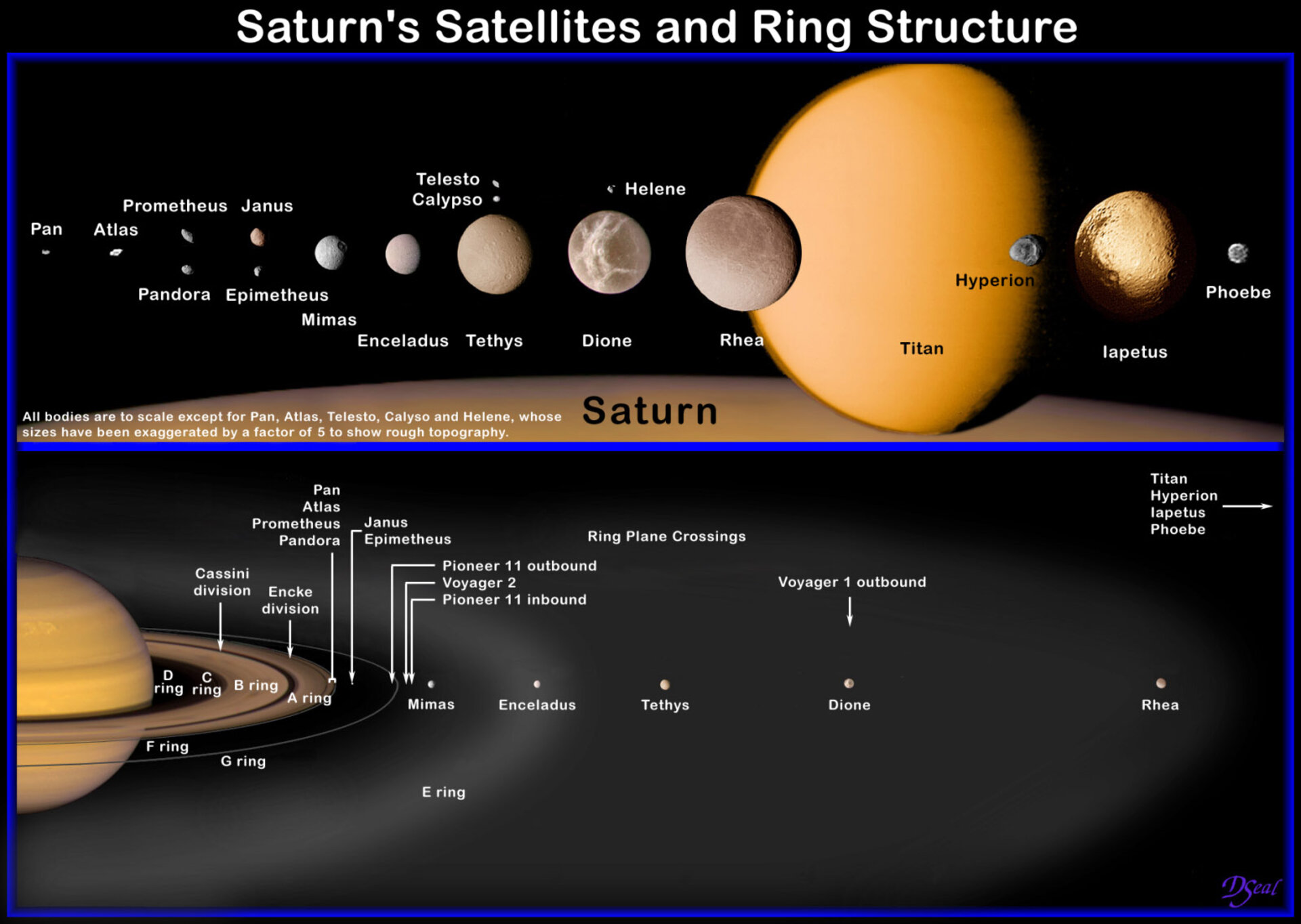
Saturn, the jewel of our solar system, is renowned for its majestic rings. Yet, encircling this gas giant is an equally captivating, though often less celebrated, array of natural satellites – a celestial family of over 140 known moons, each a unique world offering profound scientific mysteries. To understand “what are the satellites of Saturn” isn’t merely to list their names and sizes; it’s to embark on a journey through the cutting-edge technologies that have transformed them from distant pinpricks of light into laboratories for astrobiology, geophysics, and atmospheric science. Our comprehension of these distant worlds is a direct testament to human ingenuity and technological advancement, pushing the boundaries of engineering, data science, and remote sensing.
Pioneering Exploration: The Legacy of Robotic Probes
The revelation of Saturn’s moon system has been an epic saga of robotic exploration, each mission building upon the technological triumphs of its predecessors. These intrepid spacecraft, packed with sophisticated instrumentation, have been our eyes and ears in the outer solar system, enduring unimaginable conditions to transmit invaluable data back to Earth.
Voyager 1 & 2: First Glimpses and Early Innovations
The story begins in the late 1970s and early 1980s with NASA’s Voyager 1 and 2 probes. Launched in 1977, these identical spacecraft represented a pinnacle of space exploration technology for their era. Their mission: a “Grand Tour” of the outer planets, leveraging a rare planetary alignment. The Voyagers were equipped with a suite of instruments designed for remote sensing, including:
-
Imaging Science Subsystem (ISS): Consisting of wide-angle and narrow-angle cameras, these instruments captured the first detailed images of Saturn’s rings and several of its moons, including Titan, Rhea, Dione, Tethys, Enceladus, and Mimas. The technology, based on vidicon tubes, was revolutionary, allowing for clearer resolution than anything previously achieved from Earth.
-
Infrared Interferometer Spectrometer and Radiometer (IRIS): This instrument gathered data on atmospheric temperature profiles, compositions, and thermal properties of surfaces, providing initial insights into the atmospheres of Titan and the surface temperatures of icy moons.
-
Planetary Radio Astronomy (PRA) instrument: Designed to detect radio emissions, it helped characterize the magnetospheres of the outer planets.
The engineering challenge of the Voyager missions was immense, requiring robust radiation-hardened electronics, innovative power sources (Radioisotope Thermoelectric Generators, RTGs), and deep space communication systems capable of transmitting data across billions of miles. The data they sent back, though limited by bandwidth compared to modern standards, provided humanity’s first close-up look at Saturn’s diverse moons, confirming the complex nature of Titan’s atmosphere and the heavily cratered surfaces of the icy satellites.
Cassini-Huygens: A Decade of Unprecedented Data
The true technological leap in understanding Saturn’s satellites came with the Cassini-Huygens mission, a joint endeavor by NASA, ESA, and ASI. Launched in 1997 and orbiting Saturn from 2004 to 2017, Cassini was a monument to international collaboration and advanced engineering. Its mission was dedicated to a detailed, long-term study of the Saturnian system, and its technological payload was vastly more sophisticated than the Voyagers:
-
Composite Infrared Spectrometer (CIRS): This instrument allowed scientists to map temperatures and compositions of surfaces and atmospheres with unprecedented detail, crucial for studying Titan’s atmosphere and Enceladus’s plumes.
-
Radar Instrument (RADAR): Especially vital for peering through Titan’s opaque atmosphere, this radar mapped the surface, revealing lakes of liquid methane/ethane, river networks, and cryovolcanic features, fundamentally reshaping our understanding of this moon.
-
Ion and Neutral Mass Spectrometer (INMS): This “sniffer” instrument directly analyzed the composition of particles in Saturn’s magnetosphere and, crucially, the plumes erupting from Enceladus, leading to the discovery of organic molecules and salts indicative of a subsurface ocean.
-
Dual Technique Magnetometer (MAG): Provided detailed measurements of Saturn’s magnetic field and its interactions with the moons, helping infer internal structures and the presence of magnetic fields induced by subsurface oceans.
The Huygens probe, carried by Cassini, represented an astonishing feat of atmospheric entry and landing technology. It detached from Cassini and successfully parachuted through Titan’s dense, nitrogen-rich atmosphere in 2005, becoming the first probe to land on a moon in the outer solar system. Huygens’ instruments – including an Atmospheric Structure Instrument (HASI), Descent Imager/Spectral Radiometer (DISR), and Gas Chromatograph Mass Spectrometer (GCMS) – sent back invaluable data during its two-and-a-half-hour descent and brief surface operation, revealing a cold, wet landscape sculpted by methane rain and rivers. The sheer complexity of deploying, tracking, and communicating with Huygens from billions of miles away showcased the pinnacle of autonomous space technology.
Advanced Instrumentation: Peering into Distant Worlds
The data collected by missions like Cassini hinges on specialized instruments that employ various physical principles to extract information from distant celestial bodies. These technologies are continually refined, allowing scientists to piece together an increasingly detailed picture of Saturn’s moons.
Remote Sensing Technologies: Spectroscopy and Imaging
Remote sensing is the backbone of planetary science, enabling us to study objects without direct contact. For Saturn’s moons, this primarily involves:
-
Spectroscopy: Instruments like CIRS and UVIS (Ultraviolet Imaging Spectrograph) on Cassini measured the way different materials absorb and emit light across various wavelengths. This allows scientists to determine the chemical composition of surfaces, atmospheres, and even the plumes from Enceladus. For example, specific spectral signatures reveal the presence of water ice, ammonia, methane, and various organic compounds, indicating unique geological processes and potentially supporting conditions for life. The technology behind these spectrometers involves highly sensitive detectors and sophisticated optical systems capable of resolving subtle spectral features.
-
Multi-spectral and Hyperspectral Imaging: Beyond simple visible light photography, modern cameras on spacecraft capture images across many specific wavelength bands. This multi-spectral approach allows for the creation of detailed compositional maps, highlighting regions with different mineralogies, ice types, or atmospheric constituents. Advanced image processing algorithms are then employed to reconstruct these datasets into informative visual representations.
Gravimetry and Magnetometry: Unveiling Internal Structures
While remote sensing provides surface-level and atmospheric information, gravimetry and magnetometry offer profound insights into the internal structures of moons, often revealing hidden oceans or geological activity.
-
Gravimetry: This technique relies on precisely tracking the trajectory of a spacecraft as it flies past a moon. Subtle variations in the moon’s gravitational field, caused by internal mass distributions (like a dense core or a subsurface ocean), slightly perturb the spacecraft’s path. By meticulously measuring these tiny accelerations and decelerations using radio tracking systems, scientists can infer the moon’s internal density structure. Cassini’s multiple close flybys of Enceladus and Titan, for instance, provided the gravimetric data crucial for confirming the presence of a global subsurface ocean on Enceladus and the complex layered interior of Titan.
-
Magnetometry: Magnetometers are instruments designed to measure magnetic fields. For icy moons like Enceladus, the interaction between Saturn’s strong magnetosphere and a moon’s internal conductive layer (like a salty ocean) can induce a weak, secondary magnetic field. Detecting and characterizing this induced field provides compelling evidence for the presence of a liquid, electrically conductive layer beneath the moon’s surface. Cassini’s magnetometers played a pivotal role in detecting these induced fields around Enceladus, strengthening the case for its habitability potential. The technology involves highly sensitive sensors capable of distinguishing minute magnetic signals from the much stronger background field of Saturn.
Data Science and AI: Making Sense of the Cosmos
The torrent of data from missions like Cassini is immense – terabytes of images, spectral readings, and sensor telemetry. Extracting meaningful scientific discoveries from this raw data is a monumental task that increasingly relies on advanced data science techniques and artificial intelligence.
Processing Vast Datasets: From Raw Signals to Scientific Insights
Planetary missions generate complex, multi-modal datasets that require specialized computational tools for processing and interpretation.
-
Image Processing Algorithms: Raw images from spacecraft cameras often contain noise, distortions, and varying lighting conditions. Sophisticated algorithms are used for calibration, geometric correction, mosaicking (stitching together multiple images), and enhancing features to reveal subtle details that are invisible to the naked eye. This includes techniques like statistical filtering, deconvolution, and spectral unmixing to isolate specific materials.
-
Data Fusion and Visualization: Scientists combine data from different instruments (e.g., radar, visible light, infrared) to create comprehensive models of planetary surfaces and atmospheres. Advanced visualization software allows researchers to explore these complex 3D datasets, identifying correlations and anomalies that might not be apparent in individual data streams. This involves high-performance computing clusters and specialized graphical rendering technologies.
-
Big Data Analytics: Managing, archiving, and accessing these enormous datasets requires robust infrastructure and intelligent indexing systems. Techniques borrowed from big data analytics help scientists query and analyze vast archives of mission data, enabling long-term studies and the discovery of patterns over time.
Artificial Intelligence in Astronomical Discovery
The advent of Artificial Intelligence (AI) and Machine Learning (ML) is rapidly transforming how we analyze planetary data, promising to accelerate the pace of discovery and even enable autonomous exploration.
-
Automated Feature Detection: AI algorithms, particularly convolutional neural networks (CNNs), are being trained on existing planetary imagery to automatically identify and classify geological features like craters, fault lines, cryovolcanoes, and plume activity. This drastically reduces the time required for manual mapping and allows for more consistent and comprehensive surveys of moon surfaces. For example, AI can be used to scan thousands of images of Enceladus to track changes in plume activity or identify new fractures.
-
Anomaly Detection: Machine learning models can be trained to recognize “normal” planetary features and flag anything that deviates significantly, potentially identifying previously unknown phenomena or geological processes. This is invaluable for sifting through massive datasets for unexpected discoveries.
-
Predictive Modeling: AI can be used to build models that predict the behavior of planetary systems, such as the interactions between moons and rings, atmospheric dynamics, or the long-term evolution of subsurface oceans. These models, informed by observational data, can guide future observations and refine our understanding of physical processes.
-
Autonomous Navigation and Science: In future missions, AI will play an increasingly critical role in autonomous spacecraft operation, allowing probes to make real-time decisions about what to observe, where to land, or how to react to unexpected conditions, optimizing science return in environments with communication delays.
Future Frontiers: Next-Generation Technologies for Icy Worlds
Our technological journey to understand Saturn’s satellites is far from over. The discoveries made by past missions, particularly the potential for habitability on Enceladus and Titan, are fueling the development of even more ambitious and technologically advanced missions.
Europa Clipper and Dragonfly: Probing Ocean Worlds
While focused on other icy moons, upcoming missions like NASA’s Europa Clipper (to Jupiter’s moon Europa) and Dragonfly (to Titan) represent the next evolution in technology for exploring ocean worlds, many of which have direct parallels to the challenges and opportunities presented by Saturn’s moons.
-
Europa Clipper: This mission, launching in 2024, will carry an advanced suite of instruments, including a radar sounder (REASON) to penetrate Europa’s ice shell and characterize its ocean, a thermal imager (E-THEMIS) to detect hot spots from potential plumes, and improved spectrometers and cameras. The spacecraft is designed to withstand the intense radiation environment around Jupiter, requiring specialized shielding and radiation-hardened electronics, a technology that would be invaluable for extended missions within Saturn’s magnetosphere.
-
Dragonfly: Slated for launch in 2027, Dragonfly is a revolutionary rotorcraft lander designed to fly across Titan’s surface, exploring diverse locations. Its technology includes:
-
Dual Quadcopter Design: Enables atmospheric flight and precise landings, an engineering marvel for an extraterrestrial environment.
-
Advanced Power System (RTG): Provides power for extended operations in Titan’s cold, dark environment.
-
Mass Spectrometer (DraMS): Designed to analyze surface materials for organic molecules, crucial for astrobiological investigations.
-
Gamma-Ray Spectrometer (DraGNS): To determine surface composition.
-
Meteorology and Geophysics (DraGMet): Sensors for atmospheric conditions and seismic activity.
The autonomy required for Dragonfly to navigate and perform science over hundreds of miles on a distant moon is a significant technological leap.
-
Miniaturization and CubeSats: Democratizing Space Exploration
Looking further ahead, the trend toward miniaturization of spacecraft and instruments, exemplified by CubeSats and SmallSats, promises to democratize deep space exploration. While large flagship missions like Cassini will always be necessary for complex, long-duration studies, smaller, more specialized probes offer several advantages:
-
Reduced Cost and Development Time: Enabling more frequent missions and higher risk tolerance for novel technologies.
-
Focused Science Objectives: A small satellite might carry just one or two highly specialized instruments, allowing for targeted investigations.
-
Constellations and Swarms: Multiple small satellites could be deployed simultaneously to study a moon’s magnetosphere, atmosphere, or surface in a coordinated fashion, gathering distributed measurements over vast areas or long periods.
-
Enhanced Computing and Communication: Advances in miniaturized processors, AI-on-the-edge, and high-bandwidth communication technologies mean that even small probes can carry significant scientific capabilities.
The development of radiation-hardened, low-power, high-performance components suitable for the harsh environment of the outer solar system is critical for these smaller platforms to venture beyond Earth orbit.

Conclusion
Understanding “what are the satellites of Saturn” is a story inextricably linked with humanity’s relentless pursuit of technological innovation. From the first distant blurs captured by Voyager’s vidicon cameras to the precise spectral analyses by Cassini, the radar mapping of Titan’s hidden lakes, and the confirmation of Enceladus’s ocean via gravimetry and magnetometry, every revelation has been a triumph of engineering and scientific instrument design. As we move forward, integrating advanced data science, artificial intelligence, and revolutionary new mission architectures like drone landers and miniaturized probes, our capacity to unravel the deepest secrets of Saturn’s captivating moon system will only grow. The symbiotic relationship between scientific curiosity and technological advancement continues to push the boundaries of human knowledge, demonstrating that our understanding of these distant worlds is, at its core, a profound testament to the power of technology.
aViewFromTheCave is a participant in the Amazon Services LLC Associates Program, an affiliate advertising program designed to provide a means for sites to earn advertising fees by advertising and linking to Amazon.com. Amazon, the Amazon logo, AmazonSupply, and the AmazonSupply logo are trademarks of Amazon.com, Inc. or its affiliates. As an Amazon Associate we earn affiliate commissions from qualifying purchases.