
In the modern landscape of global mobility, travel is no longer just a logistical challenge; it is a complex financial equation. For the savvy traveler, understanding the baggage rules of a major carrier like Delta Airlines is not merely about knowing what to pack, but about managing overhead and protecting one’s bottom line. Baggage fees have evolved from minor inconveniences into a significant revenue stream for airlines and a potential “leak” in a traveler’s personal or business budget.
To master the economics of flying with Delta, one must look beyond the simple weight limits and dive into the strategic maneuvers that can save hundreds of dollars per trip. This guide analyzes Delta’s baggage framework through a financial lens, offering insights into cost-mitigation strategies, asset protection, and the return on investment (ROI) of brand loyalty.

The Direct Impact of Baggage Fees on Your Travel Budget
The most immediate financial consideration when booking a flight is the “fully loaded” cost of the ticket. Often, the price displayed on search engines is a base rate that does not account for the ancillary fees associated with luggage. Delta, like many of its peers, utilizes a tiered pricing structure that can drastically alter the final cost of a journey.
Understanding Basic Economy vs. Main Cabin Expenses
The distinction between Delta’s fare classes is primarily a financial one. A “Basic Economy” ticket might appear to be a cost-saving miracle, but it carries the highest potential for unexpected fees. While Delta allows one carry-on bag and one personal item for free across most fare classes, Basic Economy passengers are often the last to board, increasing the risk that overhead bin space will be depleted. If a passenger is forced to check a bag at the gate due to a lack of space, and their ticket does not include a checked bag allowance, they may be hit with fees that instantly negate the savings of the cheaper fare.
Conversely, “Main Cabin” and premium tiers like “Delta One” or “First Class” build the cost of luggage into the initial investment. From a cash-flow perspective, paying a higher upfront fare for a premium cabin can often be more economical than paying a base fare plus a $30–$60 checked bag fee each way, especially when factors like priority handling and increased weight limits are factored in.
The Hidden Costs of Oversized and Overweight Items
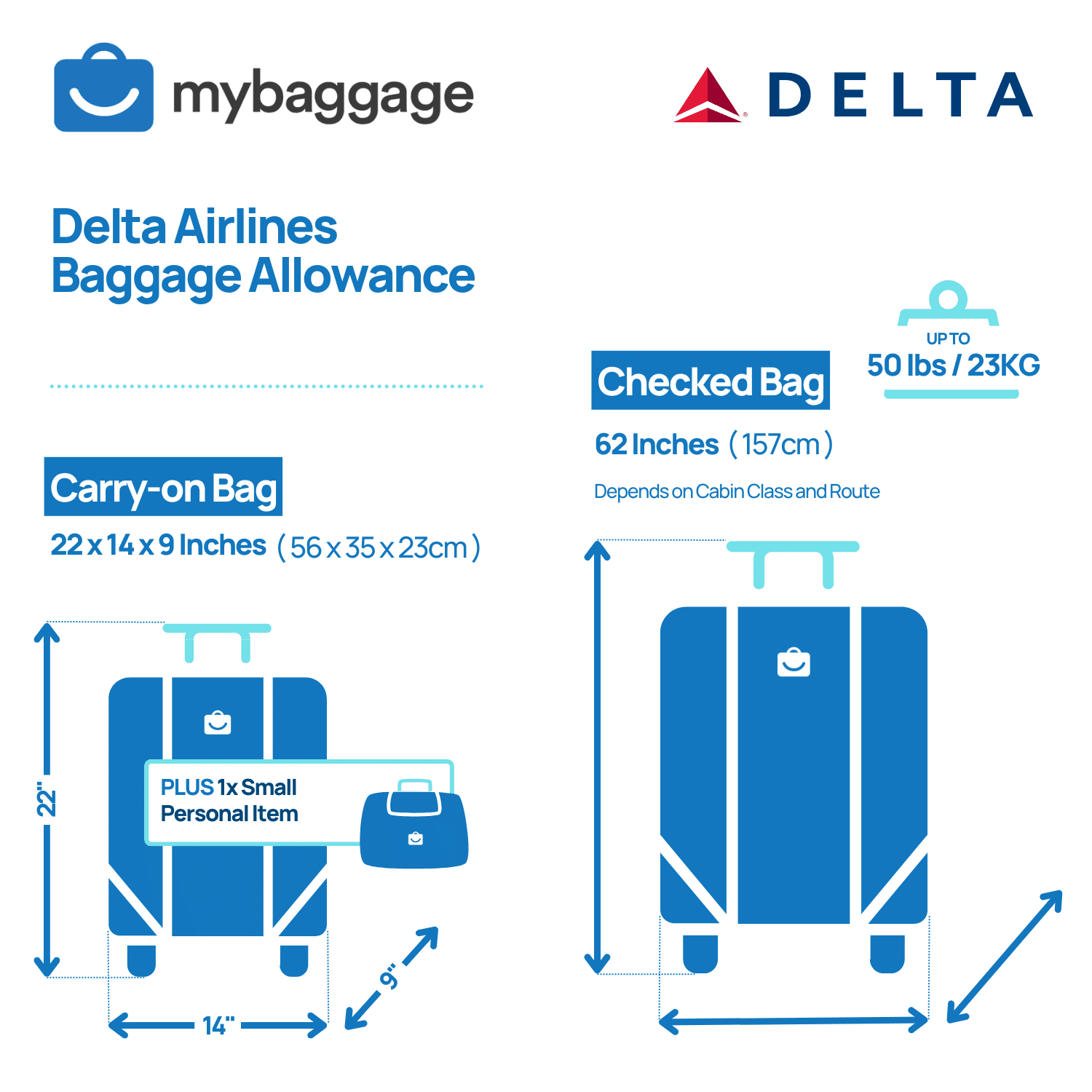
For business travelers transporting equipment or families on extended vacations, the “standard” 50-pound (23 kg) limit is a critical threshold. Exceeding this limit triggers “Overweight” fees that are intentionally punitive. On domestic flights, a bag weighing between 51 and 70 pounds can incur a fee of $100, while bags between 71 and 100 pounds can cost upwards of $200.
From a financial planning perspective, these fees represent a significant loss of capital. It is almost always more cost-effective to split a 70-pound load into two 35-pound bags, paying two standard bag fees (approximately $30 and $40) rather than one overweight fee of $100. Understanding these mathematical breakpoints allows travelers to optimize their cargo without falling into the “convenience trap” of heavy single-unit luggage.
Strategic Financial Planning: Leveraging Credit Cards and Status to Offset Fees
In the world of personal finance, “leverage” is the use of an instrument to increase the potential return of an investment. In the context of Delta Airlines, your primary instruments of leverage are co-branded credit cards and the SkyMiles loyalty program.
The ROI of Delta SkyMiles American Express Cards
For anyone flying Delta more than twice a year, the Delta SkyMiles Gold, Platinum, and Reserve American Express cards offer a clear return on investment. While these cards carry annual fees, they provide a “First Bag Free” benefit for the cardholder and up to eight companions on the same reservation.
If a family of four checks one bag each on a round-trip flight, the total cost in standard baggage fees would be $240 ($30 per bag, each way). A credit card with a $99 or $150 annual fee pays for itself in a single trip. This is a classic example of “spending money to save money,” where the annual fee acts as a hedge against recurring travel expenses. Furthermore, the ability to earn miles on these purchases creates a secondary stream of “travel currency” that can be reinvested into future flights.
Medallion Status: A Long-term Investment in Travel Savings
Delta’s Medallion status levels (Silver, Gold, Platinum, and Diamond) function as a tiered rewards system for frequent “investors” in the Delta brand. One of the most lucrative perks of reaching even the Silver tier is the waived baggage fees. Medallion members often receive at least one or two free checked bags up to 70 pounds—an upgrade from the standard 50-pound limit.
When calculating the value of pursuing status, a traveler must quantify the projected savings on baggage. For a consultant traveling 40 weeks a year, the elimination of baggage fees represents a direct savings of $2,400 to $4,000 annually. This makes the “cost” of loyalty—often choosing a slightly more expensive Delta flight over a cheaper competitor—a rational financial decision based on long-term expense reduction.
Calculating Value in International vs. Domestic Routing
The financial rules governing baggage change dramatically when a flight crosses international borders. Delta’s pricing model shifts based on market demand, international aviation treaties, and competition from foreign carriers.
Variable Pricing Models for Transatlantic and Transpacific Flights
On most long-haul international flights, Delta traditionally included the first checked bag in the fare. However, the introduction of “International Basic Economy” has disrupted this norm. Travelers heading to Europe or Asia must now meticulously check if their “deal” includes luggage.
The financial risk here is higher because international baggage fees are significantly steeper than domestic ones. A second bag on an international route can cost $100 or more. When booking international travel, the “Value Analysis” should include the cost of two checked bags, as long-duration trips typically require more cargo. If the price difference between a Basic Economy ticket and a Main Cabin ticket is $150, but the Main Cabin ticket includes a bag and the ability to choose a seat, the Main Cabin ticket is often the superior financial product.
Navigating Codeshare Financial Discrepancies
A common “money pit” in air travel occurs during codeshare flights—trips booked through Delta but operated by a partner like Air France, KLM, or Virgin Atlantic. While Delta tries to harmonize these rules, discrepancies exist. The baggage policy of the “operating carrier” (the airline actually flying the plane) usually takes precedence.
From a financial management standpoint, this requires a “due diligence” phase before booking. Failing to verify the baggage allowance of a partner airline can result in unexpected fees at a foreign check-in counter, where currency exchange rates may further inflate the cost. Always use the Delta website’s baggage calculator tool specifically for the flight numbers in question to ensure your budget remains intact.
Risk Management: Protecting Your Assets Through Insurance and Liability
Baggage is not just “stuff”; it is a collection of personal assets. When you hand your suitcase to Delta, you are essentially entering into a temporary bailment agreement. Understanding the financial protections available is vital for risk management.
Federal Liability Limits and Secondary Travel Insurance
For domestic flights, the Department of Transportation (DOT) limits an airline’s liability for lost or damaged luggage to $3,800 per passenger. For international flights, the limit is governed by the Montreal Convention, currently hovering around $1,700 (Special Drawing Rights).
If you are a professional photographer carrying $10,000 in gear, or a business executive with high-end bespoke suits, Delta’s standard liability does not cover your full asset value. In these cases, relying solely on the airline is a poor financial risk. Savvy travelers utilize “Excess Valuation” (purchasing additional coverage from Delta at check-in) or, more commonly, rely on the travel insurance built into premium credit cards like the Amex Platinum or Chase Sapphire Reserve. This secondary insurance acts as a safety net, ensuring that a lost bag doesn’t result in a net worth hit.
Claims Processes for Lost or Damaged Capital
Time is money, and the process of reclaiming value for a lost bag can be a bureaucratic drain. Delta has made significant technological investments in RFID bag tracking, which has reduced the rate of lost luggage. However, if a loss occurs, the financial recovery depends on documentation. Keeping digital receipts of high-value items within your luggage is a form of “financial record-keeping” that ensures you can maximize your claim. A well-documented claim is more likely to be settled quickly and at full value, whereas a lack of proof results in a “depreciated value” settlement that hurts your pocketbook.
Maximizing Your Per-Dollar Value: Practical Money-Saving Tactics
To conclude, the objective is to minimize the “cost per pound” of your travel. This requires a shift in mindset from passive passenger to active financial manager of your journey.
The “Carry-On Only” Financial Strategy
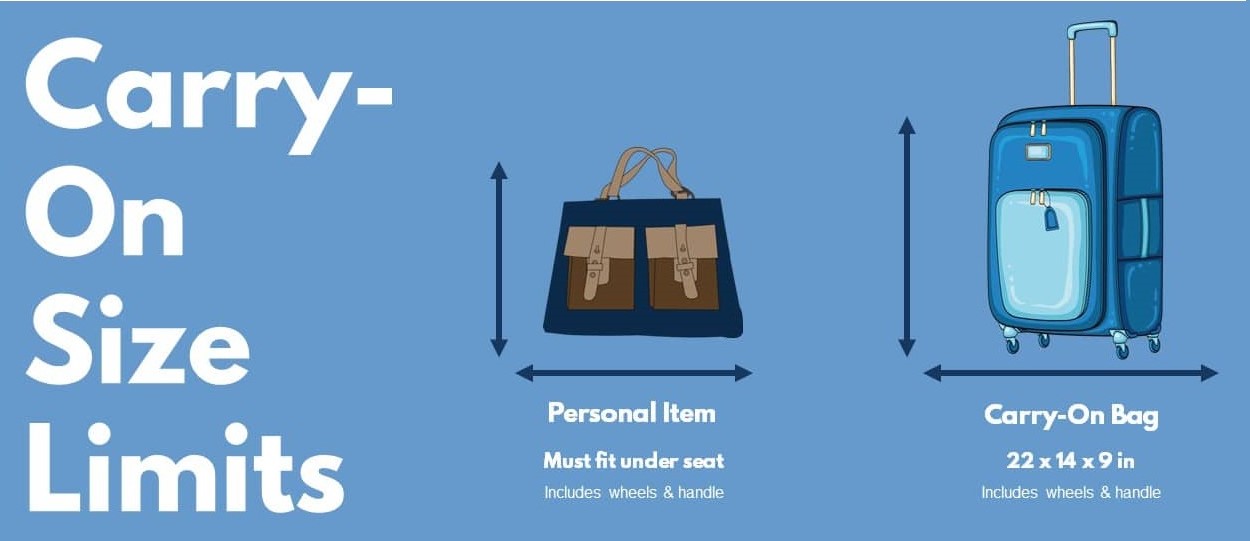
The most effective way to eliminate baggage overhead is to adopt a carry-on-only philosophy. By investing in high-quality, high-capacity carry-on luggage that fits within Delta’s 22″ x 14″ x 9″ dimensions, you effectively grant yourself a permanent waiver on baggage fees. The upfront cost of a $300 premium carry-on bag is recouped after just five round-trip flights where you would have otherwise checked a bag. This is a classic “Capital Expenditure” (CapEx) that reduces “Operating Expenses” (OpEx) over time.
Pre-Paying vs. Gate-Checking: Analyzing the Cost Differential
If you must check a bag, the timing of the transaction matters. Delta often provides incentives for checking bags online or via their app during the 24-hour check-in window. While the discount might be modest (often $5 to $10), it represents a high-percentage saving on the fee itself. Conversely, wait-to-pay at the airport often leads to stress and higher potential for “oversized” disputes at the scale. By locking in your baggage costs early, you ensure that your travel budget is predictable and controlled, allowing you to focus your financial resources on the experiences at your destination rather than the cost of getting there.
aViewFromTheCave is a participant in the Amazon Services LLC Associates Program, an affiliate advertising program designed to provide a means for sites to earn advertising fees by advertising and linking to Amazon.com. Amazon, the Amazon logo, AmazonSupply, and the AmazonSupply logo are trademarks of Amazon.com, Inc. or its affiliates. As an Amazon Associate we earn affiliate commissions from qualifying purchases.