
In the landscape of modern engineering, few innovations have transitioned from niche laboratory experiments to mainstream infrastructure as rapidly as solar panels. To the casual observer, a solar panel is a static, glass-covered rectangle mounted on a roof. However, from a technical perspective, these devices are sophisticated semiconductor assemblies designed to perform a complex task: the conversion of electromagnetic radiation into a controlled flow of electrons.
To understand what solar panels are for, one must look beyond their basic utility and explore their role as the cornerstone of decentralized energy technology. They are the primary interface between the untapped energy of our star and the digital, high-consumption world we inhabit. This article explores the technical architecture, the software integration, and the future-leaning hardware trends that define the solar industry today.
The Mechanics of Photovoltaic Conversion: The Core Technical Purpose
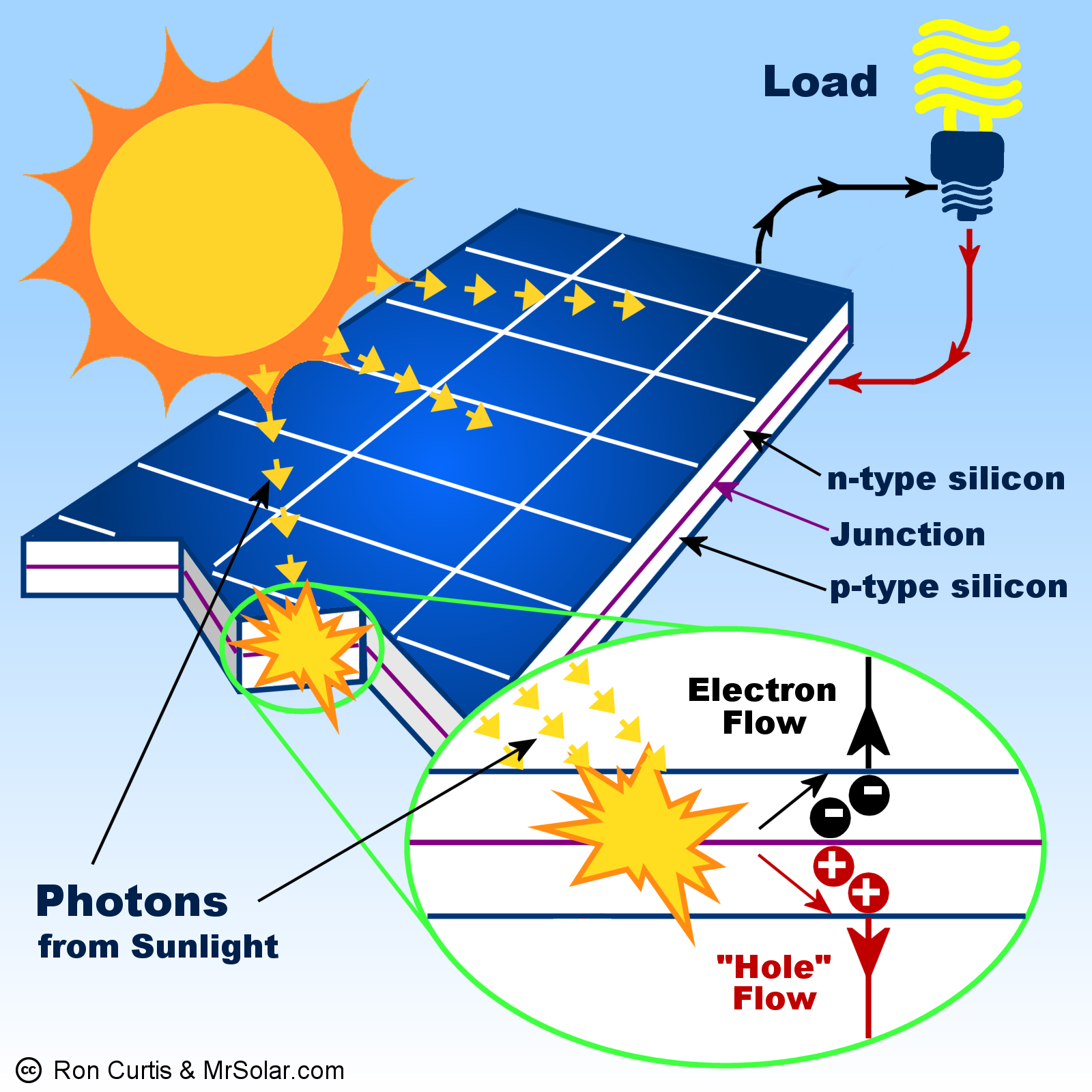
At its most fundamental level, the purpose of a solar panel is to facilitate the photovoltaic effect. This is not a mechanical process, like a wind turbine turning a generator, but a quantum mechanical process occurring at the atomic level within semiconductor materials.
Silicon Semiconductors and the P-N Junction
The vast majority of modern solar panels are constructed using crystalline silicon. The “tech” behind this involves doping silicon—a semiconductor—with specific impurities like phosphorus and boron to create a P-N junction. When photons from sunlight strike these silicon cells, they knock electrons loose from their atoms. The internal electric field created by the P-N junction then forces these electrons to flow in a specific direction, creating a direct current (DC). This elegant manipulation of particle physics is the “engine” of the panel, serving as a solid-state power generator with no moving parts.
From DC to AC: The Role of Inverters and Converters
While the panel generates DC electricity, our modern technological ecosystem runs primarily on alternating current (AC). Therefore, a solar panel system is incomplete without sophisticated power electronics. The purpose of the solar array is to feed DC power into a string inverter or micro-inverter. These devices use complex switching circuitry and high-frequency transformers to “invert” the signal into a synchronized AC wave. This transition is managed by sophisticated firmware that ensures the electricity produced matches the phase and frequency of the local power grid, a feat of digital synchronization that happens in real-time.
Emerging Solar Technologies and Innovations
The technology niche is defined by constant iteration, and solar panels are currently undergoing a period of intense hardware evolution. The goal of current research and development is to push past the theoretical efficiency limits of traditional silicon.
Perovskite Solar Cells: The Next Frontier
One of the most exciting trends in energy tech is the rise of Perovskite solar cells. Unlike traditional rigid silicon, Perovskites are a class of materials that can be printed or coated onto surfaces. Their purpose is to increase efficiency while lowering manufacturing complexity. Scientists are currently developing “tandem cells”—stacking Perovskite layers on top of traditional silicon. This allows the panel to capture a wider spectrum of light, potentially pushing panel efficiency from the current average of 20% to over 30%. This represents a significant leap in the energy density of hardware.
Bifacial Modules and Tracking Systems
In the realm of high-end hardware, bifacial solar panels have become a standard for industrial applications. Unlike traditional panels, bifacial modules have solar cells on both the front and the back. They are designed to capture the “albedo” light—sunlight reflected off the ground or surrounding structures. When paired with dual-axis tracking software, which uses GPS and light sensors to tilt the panels toward the sun throughout the day, these systems maximize energy yield through precise mechanical and digital optimization.
The Integration of AI and Smart Grid Technology
As solar panels become more prevalent, their purpose has expanded from simple power generation to becoming active “nodes” in a digital energy network. The integration of Artificial Intelligence (AI) and the Internet of Things (IoT) has transformed solar arrays into smart devices.
Predictive Analytics for Energy Harvesting
Modern solar installations are increasingly managed by AI-driven software platforms. These tools analyze historical weather data, real-time satellite imagery, and localized atmospheric sensors to predict energy production with startling accuracy. For tech-forward homeowners and grid operators, this software serves a vital purpose: it allows for “peak shaving” and load balancing. By knowing exactly how much energy a panel will produce in the next four hours, smart home systems can decide when to run heavy appliances or when to store energy in lithium-ion battery stacks.
IoT Integration in Residential Solar Ecosystems
Solar panels are now integral components of the “Smart Home.” Through Zigbee, Matter, or proprietary Wi-Fi protocols, solar inverters communicate with home automation hubs. This connectivity allows users to monitor the “health” of their hardware via mobile apps, providing granular data on voltage, amperage, and thermal performance. This level of digital transparency ensures that any degradation in the hardware can be identified via software alerts long before it causes a system failure, mirroring the “predictive maintenance” trends seen in enterprise IT.
Specialized Applications: Beyond the Rooftop
The versatility of solar tech has led to its deployment in specialized gadgets and architectural designs that go far beyond standard utility-scale farms.
Building-Integrated Photovoltaics (BIPV)
The tech industry is currently seeing a shift toward Building-Integrated Photovoltaics (BIPV). Here, the solar panel is not an “add-on” but is integrated into the building materials themselves—such as solar shingles, windows with transparent photovoltaic coatings, or solar facades. The technical challenge here is maintaining efficiency while ensuring the materials meet structural and aesthetic requirements. BIPV represents the ultimate convergence of material science and civil engineering.
Portable Solar and Wearable Technology
For the gadget-focused consumer, solar panels have shrunk into portable form factors. High-efficiency CIGS (Copper Indium Gallium Selenide) thin-film panels are used in foldable chargers for remote expeditions and even integrated into wearable tech like GPS watches and backpacks. The purpose of these devices is to provide energy autonomy in “off-grid” scenarios, using miniaturized power management integrated circuits (PMICs) to safely charge sensitive lithium batteries directly from a variable solar input.
Security and Lifecycle in the Digital Age
As solar panels become more “connected,” they fall under the umbrella of digital security and lifecycle management—key concerns for any tech professional.
Digital Security for Grid-Connected Systems
A solar inverter is essentially a specialized computer connected to the internet. As such, the purpose of modern solar software is not just energy management, but also cybersecurity. Manufacturers are now implementing robust encryption and secure boot protocols to prevent bad actors from gaining access to the grid through decentralized solar nodes. Ensuring the integrity of the firmware in millions of distributed solar systems is a burgeoning field within cybersecurity.
Hardware Longevity and Sustainability Tech
Finally, the “tech” of solar panels includes the science of their end-of-life. Solar panels are designed to last 25 to 30 years, but the industry is now developing advanced recycling technologies to reclaim high-purity silicon, silver, and glass. The goal is a “circular tech” economy where the materials from one generation of panels provide the raw inputs for the next. Innovations in chemical stripping and automated disassembly are turning what was once a waste problem into a high-tech resource recovery industry.

Conclusion
What are solar panels for? They are for more than just “saving money” or “saving the planet”—from a technical perspective, they are the hardware interface of a global transition toward a digital, decentralized, and electrified future. They represent the pinnacle of semiconductor application, the latest in AI-driven resource management, and a fascinating frontier for material science. As we move deeper into the 21st century, the solar panel will continue to evolve from a static component into a smart, integrated, and indispensable piece of the global technological stack.
aViewFromTheCave is a participant in the Amazon Services LLC Associates Program, an affiliate advertising program designed to provide a means for sites to earn advertising fees by advertising and linking to Amazon.com. Amazon, the Amazon logo, AmazonSupply, and the AmazonSupply logo are trademarks of Amazon.com, Inc. or its affiliates. As an Amazon Associate we earn affiliate commissions from qualifying purchases.