
In the rapidly evolving landscape of automotive engineering, the transition from internal combustion engines (ICE) to electric vehicles (EVs) has introduced a plethora of technological innovations. Among these, regenerative braking stands out as one of the most significant shifts in how we conceptualize mechanical efficiency. Traditionally, braking was a process of energy destruction—turning motion into useless heat. Today, through the lens of modern technology, braking has been reimagined as a process of energy harvest.
Regenerative braking is a sophisticated system that recovers kinetic energy that would otherwise be lost during deceleration, converting it back into electrical energy to recharge a vehicle’s battery. This article explores the intricate tech behind this system, the hardware that makes it possible, and how software integration is redefining the driving experience.
The Mechanics of Energy Recovery: How Regenerative Braking Works
To understand regenerative braking, one must first look at the laws of thermodynamics, specifically the conservation of energy. In a conventional vehicle, when you press the brake pedal, hydraulic fluid pushes brake pads against rotating rotors. The resulting friction slows the car down but generates immense amounts of heat, which dissipates into the atmosphere. This is, from a tech-efficiency standpoint, a total loss.
The Role of the Electric Motor as a Generator
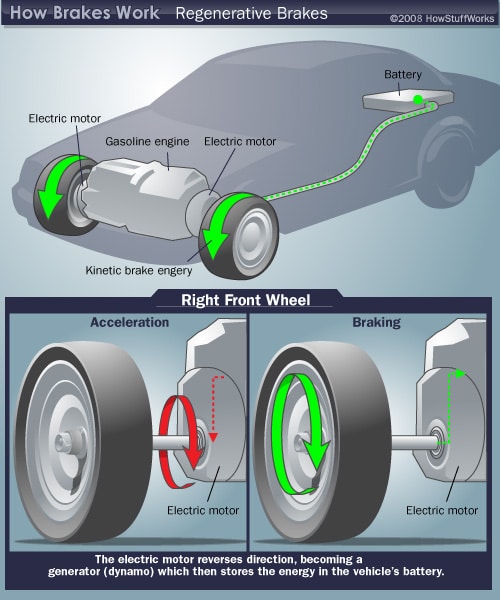
The core of regenerative braking technology lies in the dual nature of the electric motor. In an EV or hybrid, the motor serves two purposes. When you accelerate, the battery sends electricity to the motor, creating a magnetic field that spins the wheels. However, when the driver lifts their foot off the accelerator or applies the brake, the process reverses. The motor’s internal magnetism resists the rotation of the wheels, acting as a generator. Instead of consuming electricity to create motion, it uses the vehicle’s momentum to create electricity.
Kinetic to Electrical Conversion
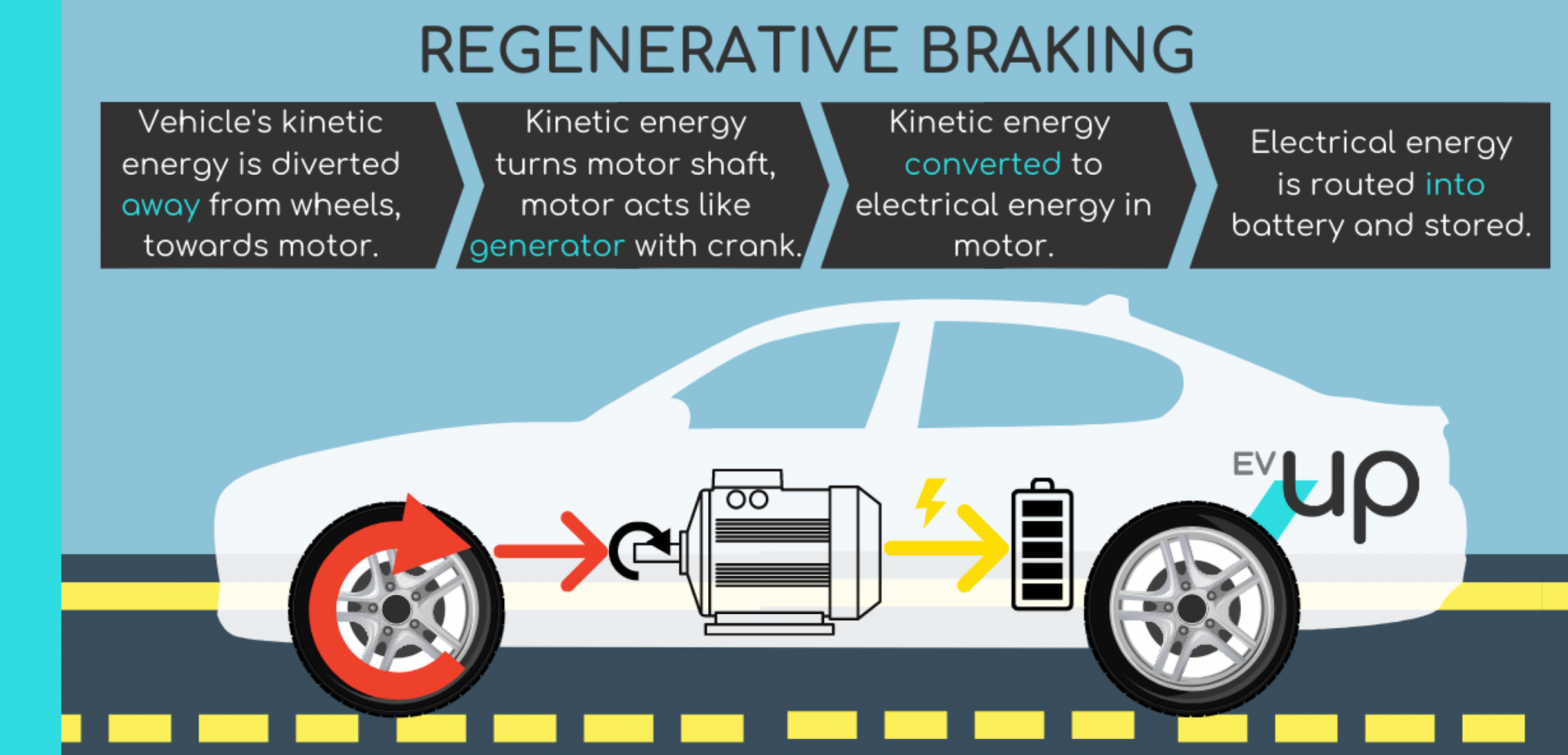
As the wheels drive the motor in reverse (electrically speaking), the kinetic energy of the moving vehicle is captured. This resistance—essentially electromagnetic drag—is what slows the vehicle down. The electricity generated during this phase is fed back through the power electronics into the high-voltage battery pack. This “round-trip” of energy is a hallmark of modern sustainable technology, ensuring that every joule of energy spent is utilized to its maximum potential.
Friction Brakes vs. Regenerative Brakes
It is important to note that regenerative braking does not entirely replace traditional friction brakes. Tech enthusiasts often refer to “blended braking,” where a computer determines the optimal mix of regenerative and mechanical stopping power. At high speeds or during emergency stops, the regenerative system cannot provide enough torque to stop the car instantly. In these cases, the hydraulic system engages. However, for about 80% of daily driving, the regenerative system handles the bulk of the deceleration.
Key Technological Components and Hardware
The seamless operation of a regenerative braking system requires a complex ecosystem of hardware. It is not merely a motor and a battery; it involves high-speed communication between various sub-systems.
Power Electronics and Inverters
The “brain” of the energy recovery system is the power inverter. The electricity generated by the motor during braking is Alternating Current (AC), but vehicle batteries store energy as Direct Current (DC). The inverter’s job is to convert that AC into DC with extreme precision and speed. Modern silicon carbide (SiC) inverters are becoming the industry standard because they offer higher efficiency and lower heat loss during this conversion process, allowing for more energy to be recovered.
Energy Storage Systems: Batteries and Ultracapacitors
While the lithium-ion battery is the primary recipient of recovered energy, there is a technological limit to how fast a battery can “swallow” electricity. If the braking event is too intense, the battery may not be able to absorb the surge of power. Some high-performance tech applications are experimenting with ultracapacitors. Unlike batteries, which store energy chemically, capacitors store it electrostatically, allowing them to charge and discharge almost instantaneously. Integrating these into the hardware stack allows for even more aggressive energy harvesting.
Brake-by-Wire Systems
A crucial technological leap that facilitates regenerative braking is “Brake-by-Wire.” In older cars, there was a physical, hydraulic link between your foot and the brake pads. In a modern tech-integrated vehicle, the pedal is often a sensor. When you press it, the computer calculates how much “regen” to apply and how much “friction” is needed, then executes those commands via electronic actuators. This decoupling allows for a much smoother transition between the two types of braking.
Software Calibration and the Driving Experience
The hardware provides the capability, but the software provides the soul of the regenerative system. The way a car feels when you lift off the throttle is entirely determined by lines of code and sensor calibration.
One-Pedal Driving and User Interface
One of the most popular features in modern EV tech is “One-Pedal Driving.” Through aggressive software mapping, the regenerative braking is tuned to be so strong that the vehicle can come to a complete stop just by the driver lifting their foot off the accelerator. This changes the UI (User Interface) of driving. It reduces driver fatigue and maximizes energy recovery by ensuring that the friction brakes are almost never used in stop-and-go traffic.
Adaptive Regeneration and AI Integration
Advanced vehicles now use front-facing radar and GPS data to adjust the level of regenerative braking automatically. If the car’s sensors detect a vehicle ahead or an upcoming stop sign, the software increases the regenerative drag to slow the car down proactively. This is a prime example of how AI and sensor fusion are being used to optimize energy efficiency without requiring direct input from the user.
Blended Braking Algorithms
The most difficult software challenge is “brake feel.” When a car switches from regenerative braking to friction braking, the driver shouldn’t feel a “clunk” or a change in pedal pressure. Engineers spend thousands of hours refining the algorithms that manage this transition. These algorithms must account for battery temperature (cold batteries charge slower), state of charge (a full battery cannot accept more regen), and road conditions (rain or ice).
The Impact on Vehicle Longevity and Efficiency
Regenerative braking isn’t just a gimmick for increasing range; it has profound implications for the mechanical lifespan of a vehicle and its overall environmental footprint.
Extending Battery Range
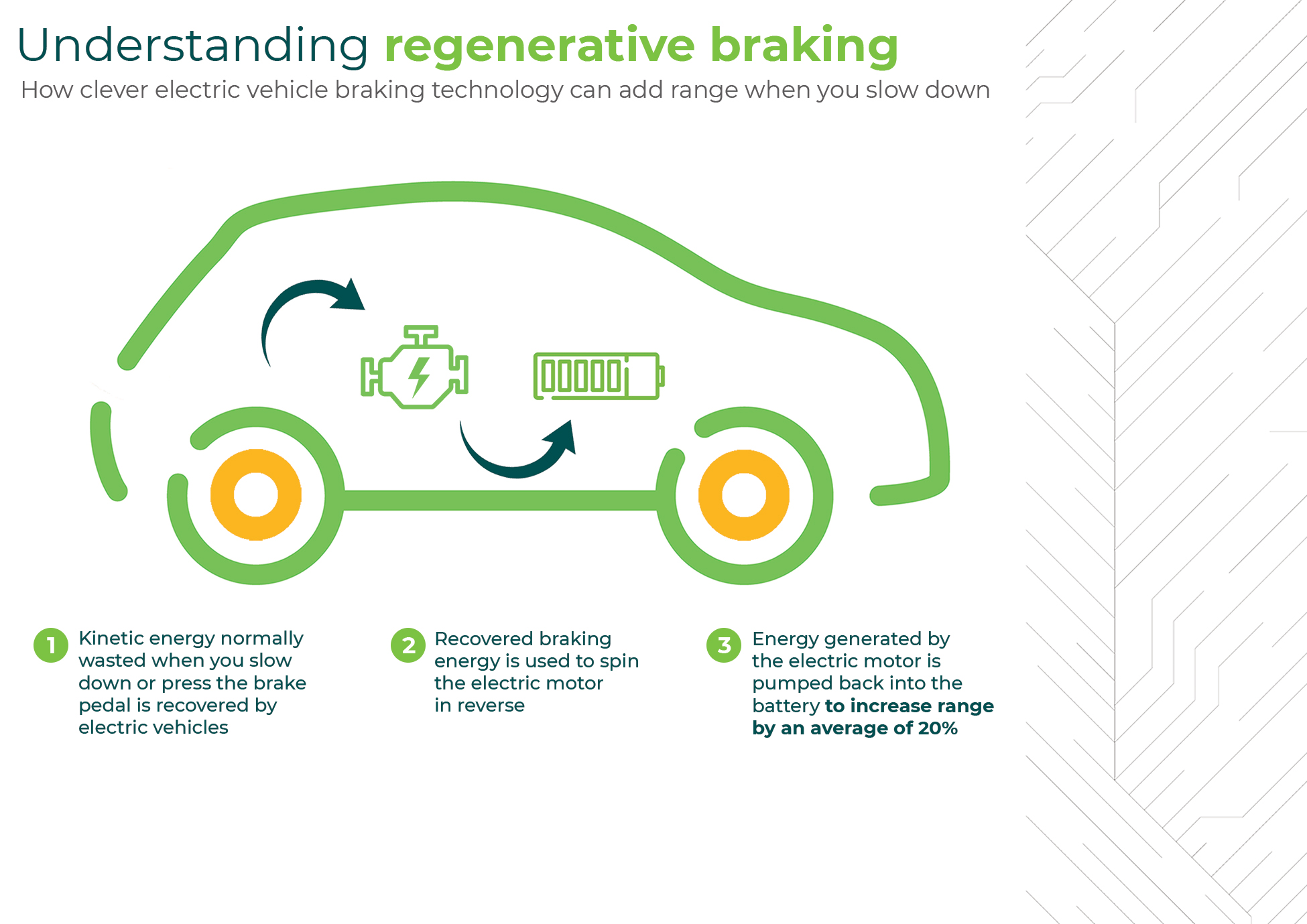
In urban environments characterized by frequent stopping and starting, regenerative braking can increase a vehicle’s range by 10% to 25%. For tech companies and automakers, this is a massive win. It allows for the use of slightly smaller, lighter batteries while achieving the same range, or alternatively, gives the vehicle a competitive edge in “miles per gallon equivalent” (MPGe) ratings.
Reducing Mechanical Wear and Tear
Because the electric motor does the heavy lifting during deceleration, the physical brake pads and rotors are used significantly less. In many EVs, brake pads can last over 100,000 miles—nearly double or triple the lifespan of pads on an internal combustion vehicle. This reduction in mechanical wear is a key selling point for fleet operators and tech-focused consumers who prioritize low-maintenance hardware.
Environmental Tech: Reducing Brake Dust
A secondary but vital benefit of this technology is the reduction of brake dust. Traditional friction brakes release fine particulate matter (PM2.5 and PM10) into the air as the pads wear down. By utilizing electromagnetic resistance instead of physical friction, regenerative braking significantly reduces this form of non-exhaust emission, making it a “cleaner” way to stop.
The Future of Deceleration Tech
As we look toward the future, regenerative braking is set to become even more efficient as battery chemistry and electrical architectures evolve.
800-Volt Architectures
Most current EVs use 400-volt systems. The industry is moving toward 800-volt architectures (seen in cars like the Porsche Taycan and Hyundai Ioniq 6). This higher voltage allows for faster energy transfer, meaning the regenerative system can capture more power during high-speed braking events without overheating the components.
Beyond EVs: Rail and Industrial Applications
While the automotive sector gets the most headlines, regenerative braking tech is expanding into heavy industry. Electric trains have used similar systems for years, feeding power back into the overhead lines. We are now seeing this tech integrated into electric cranes, elevators, and even mining trucks, where the massive weight of the vehicle allows for enormous amounts of energy to be harvested during downhill descents.
Solid-State Batteries
The holy grail of EV tech is the solid-state battery. These batteries are expected to handle much higher charge rates than current liquid-electrolyte batteries. When they hit the market, regenerative braking could become so powerful that hydraulic brakes might eventually be relegated to a purely emergency backup role, further simplifying vehicle architecture.
Conclusion
Regenerative braking is a masterpiece of modern engineering that sits at the intersection of physics, hardware design, and software intelligence. It transforms a formerly wasteful act—stopping—into a productive moment of energy creation. As software-defined vehicles become the norm, the refinement of these systems will continue to push the boundaries of how much range we can extract from a single charge. For the tech-savvy driver, understanding regenerative braking is the key to understanding the future of mobility: a world where efficiency is baked into every rotation of the wheel.
aViewFromTheCave is a participant in the Amazon Services LLC Associates Program, an affiliate advertising program designed to provide a means for sites to earn advertising fees by advertising and linking to Amazon.com. Amazon, the Amazon logo, AmazonSupply, and the AmazonSupply logo are trademarks of Amazon.com, Inc. or its affiliates. As an Amazon Associate we earn affiliate commissions from qualifying purchases.