
The Central Processing Unit (CPU) remains the undisputed brain of any computing system. Whether you are building a custom gaming rig, configuring a workstation for 4K video editing, or simply looking for a reliable laptop for office work, the CPU is often the most significant line item in your budget. However, determining a single “average” price for a CPU is a complex task. The hardware market is currently defined by rapid generational shifts, a fierce duopoly between Intel and AMD, and the emerging influence of ARM-based architecture.
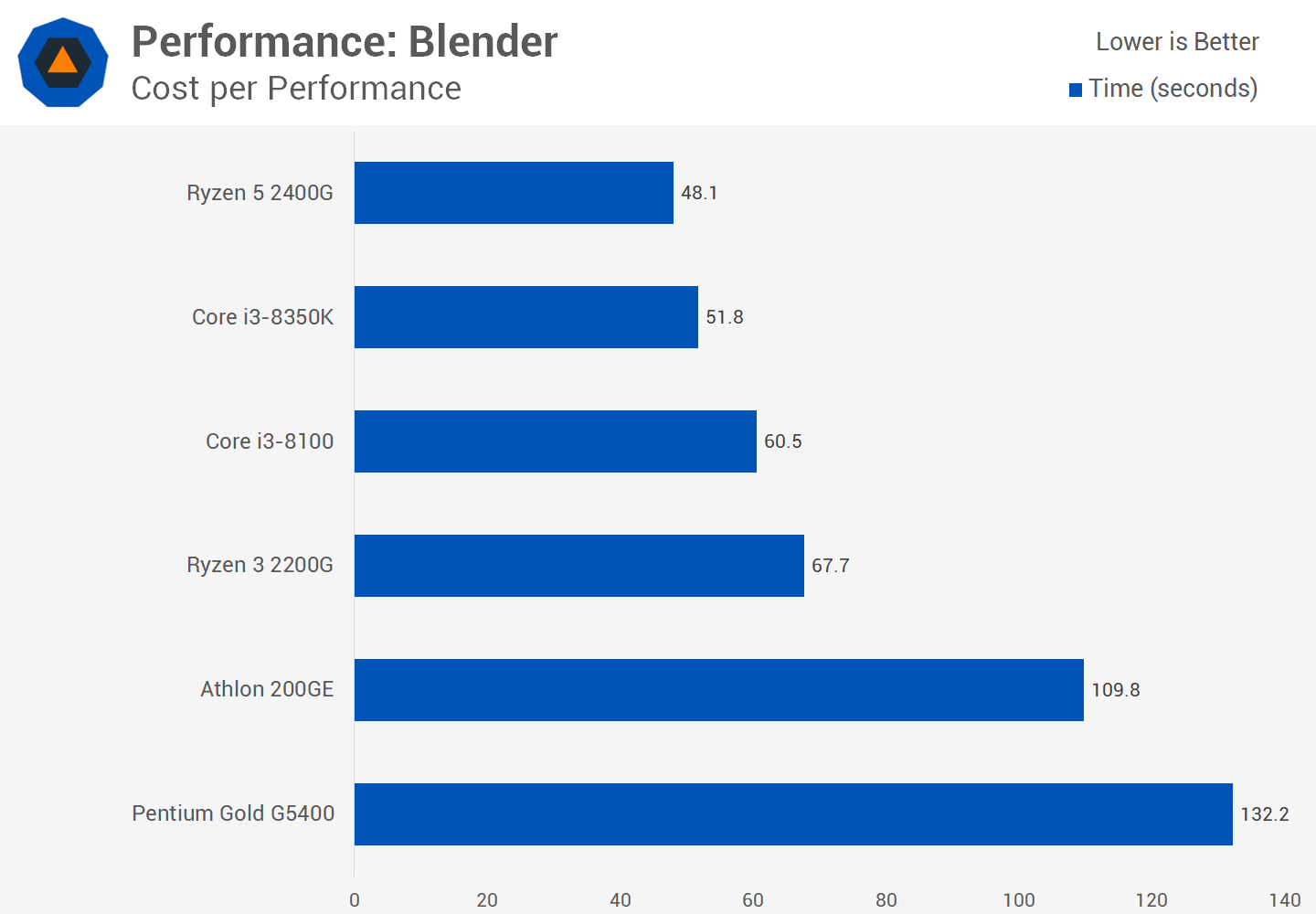
In the current landscape, the average price of a CPU depends heavily on the intended use case, with the market bifurcated into distinct tiers. To understand what you should be paying, one must look beyond the sticker price and analyze the performance-per-dollar ratio, the longevity of the platform, and the technological innovations driving costs upward.
Understanding the Market Segments: From Entry-Level to Enthusiast
The CPU market is not a monolith. Prices fluctuate based on core counts, clock speeds, and thermal efficiency. To find an average, we must categorize processors into three primary consumer brackets.
Entry-Level Solutions: The $100–$200 Bracket
For general productivity, web browsing, and light student work, the entry-level segment offers remarkable value. Currently, the average price in this category sits around $150. Processors like the Intel Core i3 or the AMD Ryzen 3 series dominate this space.
In recent years, these “budget” chips have become significantly more capable, often sporting four to six cores. This is a massive leap from a decade ago, where entry-level meant dual-core processing. For a user focused on basic tasks, spending more than $200 is often unnecessary, as these chips provide enough overhead for multitasking without the thermal demands of high-end silicon.
The Sweet Spot: Mid-Range Performance ($250–$450)
The mid-range segment is the most competitive and popular area of the market, serving the majority of gamers and creative professionals. Here, the average price hovers between $300 and $350. This is the home of the “workhorse” CPUs, such as the Intel Core i5/i7 and AMD Ryzen 5/7.
In this bracket, consumers expect a balance of high clock speeds for gaming and sufficient multi-threaded performance for applications like Adobe Premiere or Blender. The price in this segment has seen a slight “creep” upward over the last three years. While $250 used to be the standard for a high-quality gaming CPU, the introduction of specialized performance cores (P-cores) and efficiency cores (E-cores) has pushed the premium for the latest generations closer to $400.
Enthusiast and Workstation Tiers ($500–$1,000+)
For those requiring maximum throughput—such as data scientists, professional animators, or “extreme” gamers—the sky is the limit. The average price for an enthusiast-grade CPU starts at $500 but frequently climbs to $800 for flagship models like the Intel Core i9 or AMD Ryzen 9.
Beyond these consumer flagships lie HEDT (High-End Desktop) and workstation processors like AMD’s Threadripper or Intel’s Xeon series, where prices can range from $2,000 to over $5,000. While these are outliers for the average consumer, they pull the statistical average of the “CPU market” higher and represent the cutting edge of semiconductor fabrication.
Factors Influencing Modern CPU Pricing
The price you see on a retail site like Newegg or Amazon isn’t arbitrary. It is the result of a delicate interplay between manufacturing costs, competitive positioning, and global supply chain logistics.
The Duopoly Dynamics: Intel vs. AMD
For decades, the “Intel vs. AMD” rivalry has been the primary driver of CPU pricing. When one manufacturer gains a lead in architecture (such as AMD did with the Zen 3 launch), they often raise their MSRP (Manufacturer’s Suggested Retail Price) to reflect their market-leading status. Conversely, when the other brand plays catch-up, they often use aggressive pricing to regain market share.
Currently, we are in a period of relative parity. Intel’s hybrid architecture and AMD’s 3D V-Cache technology provide different types of value. This competition keeps the average price for a 6-core processor relatively stable, as neither company can afford to overprice their mid-range offerings without losing customers to the competition.
Architecture Shifts and Node Shrink Costs
The physics of making CPUs is getting more expensive. As the industry moves from 7nm to 5nm and now toward 3nm processes, the cost of Research and Development (R&D) and the price of extreme ultraviolet (EUV) lithography machines have skyrocketed.

These “node shrinks” allow for more transistors to be packed into the same area, increasing efficiency and power. However, the yield rates (the percentage of functional chips per silicon wafer) are lower during the early stages of a new node. These manufacturing hurdles are directly passed on to the consumer, explaining why “next-gen” processors often launch at a $50–$100 premium over their predecessors.
Supply Chain Volatility and Global Logistics
The CPU market is global, and geopolitical factors play a massive role in pricing. Shortages in raw materials, such as neon gas or specialized substrates, can cause temporary price spikes. Additionally, since most of the world’s high-end logic chips are manufactured in Taiwan by TSMC, any logistical disruption in the Pacific can lead to a supply-demand imbalance, driving retail prices well above the MSRP.
Performance vs. Price: Measuring True Value
To truly understand if a CPU is priced “fairly,” tech enthusiasts look at metrics that go beyond the dollar amount. The industry has shifted from focusing on raw gigahertz (clock speed) to focusing on architectural efficiency.
The Concept of “Price per Core”
One of the most effective ways to analyze the average CPU price is to look at the “price per core.” Five years ago, paying $50 per core was standard. Today, thanks to advances in multi-core processing, that price has dropped significantly in the mid-range. You can now often find high-performance 10-core or 12-core processors where the cost per core is closer to $25 or $30. For professionals whose software utilizes every available thread, the “average price” has actually become more affordable when viewed through the lens of computational density.
Gaming vs. Productivity: Where Your Money Goes
A $300 CPU for gaming and a $300 CPU for productivity may offer very different value. Gamers benefit from high single-core instructions per clock (IPC) and large L3 caches (as seen in AMD’s “X3D” line). Productivity users, however, benefit from high thread counts for rendering and encoding.
When calculating the average price, one must consider that “gaming” CPUs often carry a premium due to branding and specialized cache technology, whereas “productivity” CPUs may offer more raw cores for the same price but lower peak gaming speeds.
Integrated Graphics: Saving Costs on GPUs
An often-overlooked factor in the average CPU price is the inclusion of integrated Graphics Processing Units (iGPUs). CPUs with robust integrated graphics (like AMD’s G-series APUs) usually cost slightly more than their “headless” counterparts (like Intel’s “F” series). However, for a budget-conscious user, paying $200 for a CPU with a built-in iGPU can save them the $150–$300 they would have spent on an entry-level discrete graphics card, effectively lowering the “total system price” even if the CPU price itself is higher.
Future Trends and Price Projections
The average CPU price is not static; it is being reshaped by new players and new technologies that prioritize efficiency over raw power.
The Rise of ARM and Custom Silicon
Apple’s transition to its M-series silicon has fundamentally changed the consumer perception of CPU value. While Apple does not sell its CPUs standalone, the price-to-performance ratio of their integrated SoC (System on a Chip) has forced Intel and AMD to rethink their pricing strategies for the mobile and laptop markets. As ARM-based Windows laptops become more prevalent (via Qualcomm’s Snapdragon Elite chips), we may see a downward pressure on the prices of traditional x86 processors as they compete for dominance in the “thin and light” category.
AI-Enhanced Processing and its Premium
The current “AI boom” is beginning to manifest in hardware via NPUs (Neural Processing Units) integrated directly into the CPU die. Silicon designed to handle local AI workloads—such as background noise cancellation, image generation, or automated video editing—requires extra die space. As “AI PCs” become the new marketing standard, we should expect the average price of a mid-range CPU to rise slightly to account for this dedicated AI silicon.
Anticipating Refurbished and Previous-Gen Value
One of the best ways to beat the “average” price is to look at the “n-minus-one” strategy. Because CPU sockets (like Intel’s LGA 1700 or AMD’s AM4/AM5) often support multiple generations, the release of a new series typically leads to a 20–30% price drop in the previous generation. For the savvy tech consumer, the “average price” of a high-performance chip from 18 months ago represents the best value in the entire technology sector, offering 90% of the performance for 60% of the cost.

Conclusion: Setting Realistic Expectations
When asking “What is the average CPU price?” the answer is a moving target. For a standard, high-quality desktop experience in 2024 and beyond, $250 to $350 is the realistic average for a component that will remain relevant for 4 to 5 years.
While you can find chips for as low as $100 or as high as $1,000, the “Tech Sweet Spot” remains in the mid-range. As manufacturing processes become more complex and AI features become standard, we may see the floor of these prices rise. However, the sheer amount of computing power you receive for your dollar today remains at an all-time high, proving that while prices may fluctuate, the value of the modern CPU continues to trend upward.
aViewFromTheCave is a participant in the Amazon Services LLC Associates Program, an affiliate advertising program designed to provide a means for sites to earn advertising fees by advertising and linking to Amazon.com. Amazon, the Amazon logo, AmazonSupply, and the AmazonSupply logo are trademarks of Amazon.com, Inc. or its affiliates. As an Amazon Associate we earn affiliate commissions from qualifying purchases.