
For most of human history, answering the question “What’s it feel like outside?” required a literal step through a doorway or a glance through a pane of glass. Later, we relied on the evening news or the radio, where a meteorologist—standing miles away at a regional airport—provided a generalized snapshot of the city’s conditions. Today, however, the intersection of the Internet of Things (IoT), Artificial Intelligence (AI), and advanced sensor hardware has transformed this simple inquiry into a complex data science achievement.
The technology behind “feeling” the outside world has moved from the macro to the micro. We are no longer satisfied with knowing the temperature of our zip code; we want to know the humidity on our specific balcony, the air quality at the street corner, and the UV index in our backyard. This shift toward hyper-local environmental sensing is redefining how we interact with our physical surroundings.
1. From Macro to Micro: The Rise of Hyper-Local Data Networks
Traditional weather forecasting relies on high-altitude balloons, satellite imagery, and sparsely located official weather stations. While these are excellent for predicting moving fronts and large-scale atmospheric shifts, they often fail to account for “microclimates”—the specific conditions created by urban canyons, local vegetation, or elevation changes.
The Limitations of Official Weather Stations
Most official data comes from National Weather Service (NWS) stations, often located at airports. Because airports are typically vast, flat areas of asphalt and concrete, the data they produce can vary significantly from a residential neighborhood five miles away. A “heat island” effect in a city center might make it feel five degrees warmer than the airport report suggests. Tech solutions are now closing this “accuracy gap.”
Personal Weather Stations (PWS) and the IoT Mesh
The first major revolution in answering “what it feels like” came from the consumerization of high-end sensors. Companies like Ambient Weather, Netatmo, and Tempest have enabled individuals to install Personal Weather Stations (PWS) that connect to the cloud. These devices use ultrasonic anemometers (to measure wind without moving parts) and haptic rain sensors. When thousands of these devices are networked together, they create a “weather mesh,” providing a granular map of conditions that traditional meteorology simply cannot match.
Crowdsourced Data and Mobile Integration
Apps like Weather Underground (now part of IBM’s The Weather Company) pioneered the use of crowdsourced PWS data. By aggregating signals from over 250,000 personal stations, these platforms use proprietary algorithms to “fill in the blanks” between official stations. This ensures that when a user asks their smartphone what it feels like outside, the answer is calibrated to their specific GPS coordinates rather than the nearest airport.
2. The Intelligence of “Feeling”: AI and Apparent Temperature Algorithms
Knowing it is 75°F (24°C) doesn’t actually tell you what it feels like. The human perception of temperature is a biological calculation involving humidity, wind speed, solar radiation, and the “clothedness” of the individual. In the tech world, translating raw data into human experience requires sophisticated software and AI-driven modeling.
Beyond the Heat Index: The Role of Machine Learning
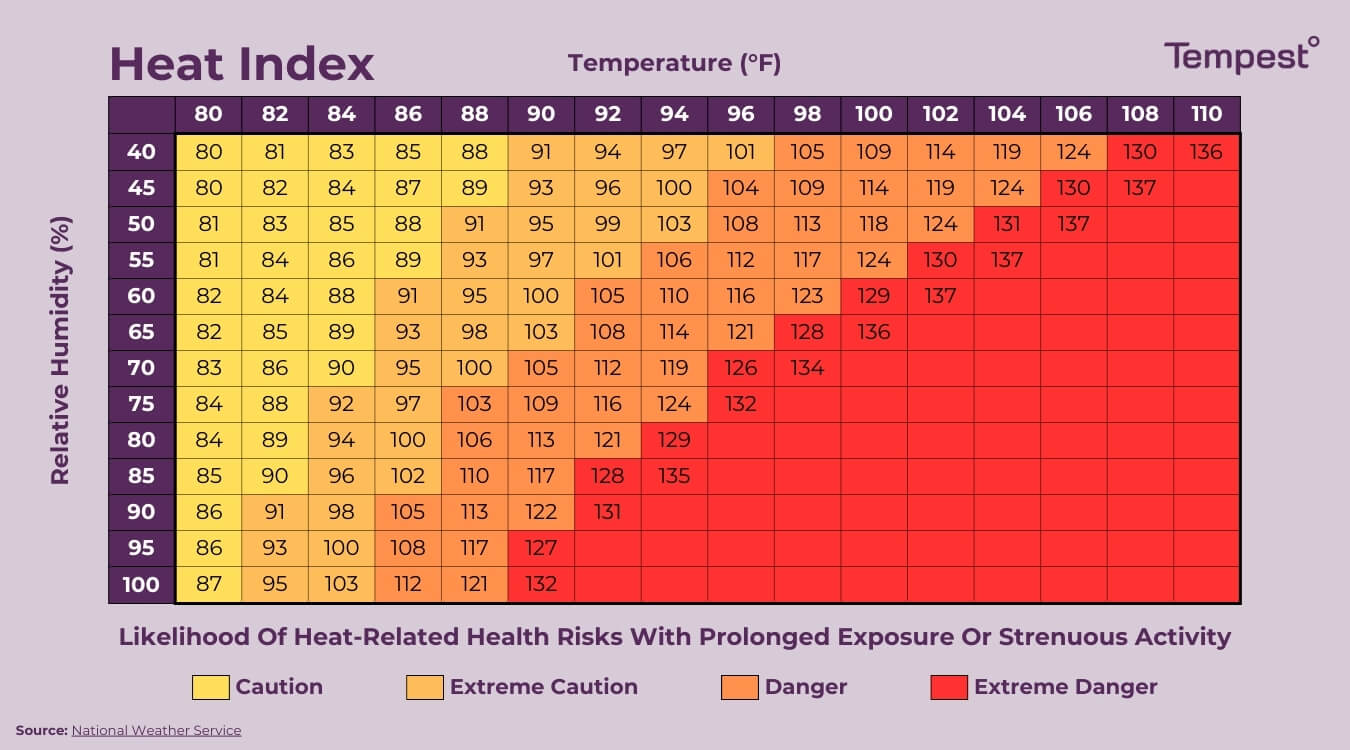
For decades, we relied on the “Heat Index” and “Wind Chill” tables. Modern tech has evolved toward the Universal Thermal Climate Index (UTCI). Software engineers now use machine learning models to process variables such as dew point and barometric pressure in real-time. AI models, like IBM’s GRAF (Global High-Resolution Atmospheric Forecasting System), can predict localized changes in “feels like” temperatures with unprecedented precision by processing trillions of data points from both sensors and satellite feeds.
Real-Time Data Processing at the Edge
One of the biggest hurdles in environmental tech is latency. To tell a user what it feels like now, the data must be processed instantly. This is where “Edge Computing” comes in. Instead of sending raw sensor data to a distant server to be analyzed, modern weather gadgets perform initial computations on the device itself. This allows for instant alerts—such as a sudden drop in pressure indicating a micro-burst or a rapid spike in VOCs (Volatile Organic Compounds) indicating nearby smoke—long before a regional forecast could catch it.
Predictive Comfort Modeling
Newer AI tools are moving beyond current conditions to “predictive comfort.” By analyzing your historical preferences (collected via smart thermostat integrations), AI can suggest the best time for outdoor activities. If the software knows you find 80% humidity oppressive, it won’t just tell you the temperature; it will interpret the data to provide a personalized comfort rating, essentially digitizing the subjective experience of being outdoors.
3. The Hardware Revolution: Wearables and Urban Infrastructure
As we move deeper into the 2020s, the tech used to sense the environment is becoming increasingly invisible and integrated. We are seeing a transition from stationary backyard poles to mobile, wearable, and city-wide sensor arrays.
Environmental Sensors in Wearables
Smartwatches and fitness trackers are no longer just for heart rate monitoring. High-end devices from Garmin and Apple now include barometric altimeters and ambient temperature sensors. However, the next frontier is the integration of skin-temperature sensors coupled with external environmental data. By comparing the environment’s temperature with the user’s skin temperature and sweat rate, wearables can provide a biological answer to “what it feels like,” warning of heatstroke or hypothermia risks during outdoor exercise.
Smart Cities and the Urban Heat Island Monitoring
Urban planners are deploying “Smart City” arrays—small, low-power sensor nodes mounted on streetlights and utility poles. These nodes, often powered by LoRaWAN (Long Range Wide Area Network) technology, monitor “canyon temperatures” and air quality at the pedestrian level. This tech is vital for addressing climate inequality, as it identifies “hot spots” in neighborhoods that lack tree canopy, allowing for data-driven urban cooling initiatives.
Precision Sensing in Industrial Applications
In sectors like precision agriculture and construction, “feeling” the outside world is a matter of safety and ROI. IoT sensors in fields monitor soil moisture and leaf wetness at a microscopic level, while “connected hardhats” for construction workers monitor the Wet Bulb Globe Temperature (WBGT). This is a specialized tech metric that factors in solar radiation and wind, providing a much more accurate safety reading for manual labor than a standard thermometer.
4. The Future: Digital Environmental Interfaces and Spatial Computing
As we look toward the future of “spatial computing” and the Metaverse, the way we consume environmental data is set to move beyond the 2D screen. The goal is to create a seamless digital overlay of the physical world.
Augmented Reality (AR) Overlays
Imagine wearing AR glasses while looking out your front door. Instead of checking an app, you see a digital overlay of the wind direction, the UV intensity in the sunnier parts of your yard, and a “heat map” of the sidewalk. Startups are already working on spatial weather data that visualizes invisible environmental factors. This tech would allow a gardener, for example, to see exactly which parts of their yard have the highest evaporation rate in real-time.
Haptic Feedback and Climate Simulation
For those in the VR and simulation space, “feeling” the outside world involves haptic technology. Advanced haptic suits and thermal interfaces can now simulate the sensation of wind or the radiant heat of the sun. While currently used for gaming and professional training (like firefighting simulations), this tech represents the ultimate synthesis of environmental data and human sensation—digitally recreating the “feel” of any climate on earth.
The Ethics of Environmental Data Privatization
As sensing tech becomes more ubiquitous, a critical tech-trend to monitor is data ownership. If a private company owns the most accurate sensor network in a city, does that data belong to the public or the shareholders? The “democratization of sensing” via open-source hardware (like the Arduino-based sensors) is a growing movement. Ensuring that “what it feels like outside” remains a transparent, accessible piece of data is becoming a central theme in digital rights and environmental tech policy.

Conclusion
The question “What’s it feel like outside?” has evolved from a subjective sensory experience into a data-rich technological achievement. Through the synergy of IoT hardware, AI-driven analysis, and wearable integration, we have gained the ability to quantify the invisible. We are no longer passive observers of the weather; we are users of a sophisticated environmental operating system that allows us to navigate the physical world with unprecedented precision and safety. As sensors become smaller and AI becomes smarter, our digital understanding of the “outside” will only become more intimate, blurring the line between the data we read and the world we feel.
aViewFromTheCave is a participant in the Amazon Services LLC Associates Program, an affiliate advertising program designed to provide a means for sites to earn advertising fees by advertising and linking to Amazon.com. Amazon, the Amazon logo, AmazonSupply, and the AmazonSupply logo are trademarks of Amazon.com, Inc. or its affiliates. As an Amazon Associate we earn affiliate commissions from qualifying purchases.