
In the dynamic and fiercely competitive world of consumer electronics, few battles are as iconic or as passionately followed as the console wars. Decades of innovation, marketing prowess, and sheer gaming genius have shaped an industry worth billions, with various contenders vying for supremacy. From the pixelated pioneering days to the hyper-realistic graphics of today, countless machines have entered the fray, each leaving its mark. But amidst this rich tapestry of technological advancement and entertainment, one question frequently arises: which console ultimately claimed the throne as the best-selling of all time? The answer is a testament to perfect timing, groundbreaking technology, and an unparalleled software ecosystem: the PlayStation 2.
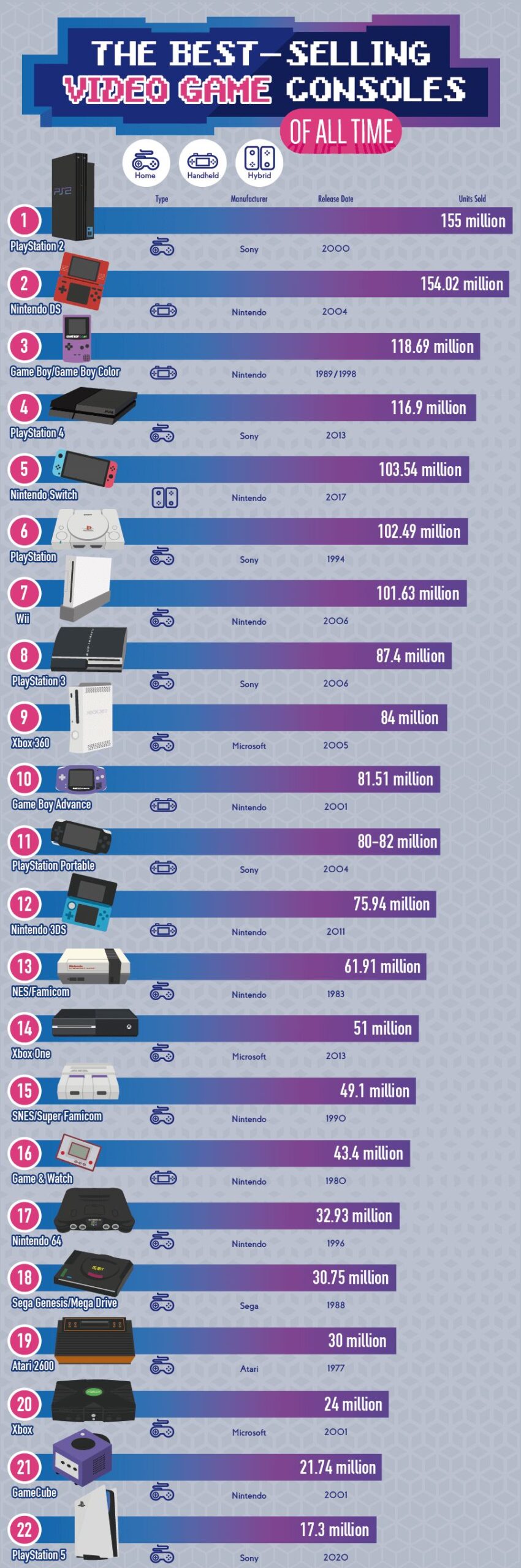
Sony’s second home console, launched in Japan in March 2000 and subsequently worldwide, went on to sell over 155 million units, cementing its place not just as the best-selling gaming console, but as a monumental piece of technological history. Its unprecedented success wasn’t merely a stroke of luck; it was the culmination of strategic foresight, hardware innovation, and a profound understanding of the evolving digital entertainment landscape. Understanding its dominance requires a deep dive into the technological currents of its era and the ingenious ways Sony harnessed them.
The Reign of the PlayStation 2: A Technological Marvel
The PlayStation 2 didn’t just sell well; it redefined what a home entertainment system could be. Launched at the dawn of the new millennium, it arrived with a set of features that positioned it as far more than just a gaming device, making it an indispensable part of millions of living rooms worldwide.
Unprecedented Market Penetration
The PS2’s launch was met with frenzied anticipation, fueled by the success of its predecessor, the original PlayStation. However, its market penetration quickly surpassed all expectations, even those of its fierce competitors like Nintendo’s GameCube and Microsoft’s inaugural Xbox. Several factors contributed to this explosive adoption. Firstly, Sony had cultivated a massive fanbase with the original PlayStation, creating a built-in audience eager for the next generation. Secondly, the console’s initial price point, while significant, was perceived as excellent value for money given its capabilities. Perhaps most critically, the PS2 arrived at a pivotal moment when DVD technology was gaining traction but dedicated DVD players were still relatively expensive. By integrating a DVD player into the console, Sony effectively offered a two-in-one entertainment solution, appealing to a broader demographic than just avid gamers. This shrewd strategic move propelled the PS2 into households that might otherwise have delayed a gaming console purchase, seeing it as an essential home entertainment upgrade.
Technical Specifications and Innovations
At the heart of the PlayStation 2’s technological prowess lay its custom-designed hardware. The console was powered by the “Emotion Engine” CPU, co-developed by Sony and Toshiba, an ambitious and complex chip designed for parallel processing, specifically optimized for 3D graphics. Clocked at 299 MHz, it featured a unique architecture that enabled it to handle intense graphical computations and physics simulations with impressive efficiency for its time. Complementing the Emotion Engine was the “Graphics Synthesizer,” a dedicated GPU operating at 147 MHz, capable of rendering millions of polygons per second and supporting advanced graphical effects. This potent combination allowed games on the PS2 to push visual boundaries, delivering experiences far more immersive and detailed than previous generations.
Beyond its raw processing power, the PS2 introduced several other innovations. Its adoption of the DVD-ROM format allowed for larger game capacities, enabling more expansive worlds, longer cutscenes, and richer audio experiences. The console also featured two USB ports, allowing for the connection of various peripherals, and an expansion bay for an optional hard drive and network adapter, hinting at the future of online gaming and digital content delivery. These technical foundations provided developers with a robust platform to unleash their creativity, resulting in a staggering library of games that captivated audiences for over a decade.
Software Ecosystem and Longevity
The PS2’s hardware was only half the story; its true power was unlocked by its expansive and diverse software library. Over its remarkable 13-year production run, more than 3,870 game titles were released for the console, collectively selling over 1.5 billion copies. This vast ecosystem ensured there was literally something for everyone, from critically acclaimed action-adventure epics like Grand Theft Auto III and God of War, to innovative RPGs like Final Fantasy X, and family-friendly titles. The sheer volume and quality of its exclusive titles, combined with strong third-party support, created an irresistible pull for gamers.
Furthermore, Sony’s commitment to the platform’s longevity played a crucial role. Even as newer consoles like the PlayStation 3 emerged, the PS2 continued to receive new game releases and enjoy strong sales, particularly in emerging markets. This extended lifecycle, a rarity in the fast-paced tech industry, allowed the console to reach an even wider audience, solidifying its best-selling status and creating a lasting legacy that continues to influence console design and game development today.
Contenders and Close Calls: Other Tech Giants
While the PS2 reigns supreme, the history of gaming consoles is rich with other technological marvels that, despite not reaching the same astronomical sales figures, left an indelible mark through their innovation and strategic market positioning. Each brought unique technological philosophies to the table, challenging the status quo and pushing the boundaries of interactive entertainment.
Nintendo’s Revolutionary Approaches
Nintendo, a venerable giant in the gaming world, has consistently demonstrated a willingness to deviate from the traditional “power race” and instead focus on innovative user experiences. The Nintendo Wii, launched in 2006, is a prime example. While lacking the raw graphical horsepower of its contemporaries (PS3 and Xbox 360), the Wii introduced intuitive motion controls that redefined casual gaming. Its Wii Remote, with its accelerometer-based motion sensing, made gaming accessible to a wider demographic, attracting families and non-gamers alike. Selling over 101 million units, the Wii proved that technological innovation in input methods could be a more significant driver of sales than cutting-edge graphics alone.
Similarly, the Nintendo DS handheld, released in 2004, pioneered dual-screen gaming and touch-screen interaction. Its clamshell design, two screens (one touch-sensitive), and built-in microphone fostered unique gameplay mechanics that capitalized on its technological differentiators. With over 154 million units sold, making it the second best-selling console overall (and the best-selling handheld), the DS demonstrated Nintendo’s mastery of designing technology that creates novel and engaging play experiences.
Microsoft’s Entry and Evolution
Microsoft’s foray into the console market with the Xbox in 2001 was a bold move, leveraging its software expertise and massive financial resources. The original Xbox was a technological beast for its time, boasting a powerful Intel processor and an Nvidia GPU, giving it a distinct advantage in graphical fidelity over the PS2 for many games. However, its most significant technological contribution was the pioneering Xbox Live online service. Launched in 2002, Xbox Live transformed console gaming by creating a robust, unified online multiplayer ecosystem that was years ahead of its time, setting the standard for all future online gaming platforms.
The Xbox 360, released in 2005, further refined this strategy, offering a powerful console with a strong emphasis on high-definition gaming and an even more polished Xbox Live experience. Its early lead in the seventh generation console cycle, combined with popular exclusive titles and robust online features, allowed it to sell over 84 million units, cementing Microsoft as a formidable player in the console landscape and demonstrating the critical role of network infrastructure in modern gaming.

The Original PlayStation’s Foundation
It’s impossible to discuss the PS2’s success without acknowledging the groundwork laid by the original PlayStation (PS1). Launched in 1994, the PS1 was a technological disruptor in its own right. It championed the CD-ROM format over cartridges, offering vastly greater storage capacity for complex 3D graphics, full-motion video, and high-quality audio. Its focus on 3D polygon graphics, combined with aggressive marketing and strong third-party developer support, catapulted Sony into the gaming mainstream. Selling over 102 million units, the PS1 not only established Sony as a dominant force but also familiarized a generation of gamers with the PlayStation brand and its commitment to cutting-edge interactive entertainment, effectively paving the way for its successor’s unprecedented success.
Factors Beyond Raw Power: Why Consoles Succeed
While raw technological specifications are often the subject of intense debate among enthusiasts, the ultimate success of a console, as exemplified by the PlayStation 2, hinges on a more complex interplay of factors that extend beyond CPU clock speeds and teraflops.
Accessibility and User Experience
A console’s ability to succeed broadly often comes down to its accessibility and the overall user experience it offers. The PS2, despite its sophisticated internals, maintained a relatively straightforward plug-and-play philosophy. Its interface was intuitive, and its dual functionality as a DVD player made it immediately useful and understandable to a wider audience, including those not traditionally considered “gamers.” Nintendo’s Wii perfectly illustrated this principle; its motion controls, while technologically distinct, were designed to be instantly graspable by anyone, regardless of gaming experience, fostering a truly inclusive entertainment platform. Simplifying complex technology for broad appeal is a hallmark of successful consumer tech products.
Content Library and Exclusives
Ultimately, a console is only as good as the games available for it. The PS2’s overwhelming success was inextricably linked to its colossal library of titles, particularly its exclusive games. Franchises like God of War, Grand Theft Auto, Metal Gear Solid, Final Fantasy, and Kingdom Hearts became synonymous with the PlayStation brand, driving hardware sales. These games, often pushing the technological limits of the console, demonstrated its capabilities and offered unique experiences that couldn’t be found elsewhere. Developers are attracted to platforms with large install bases and robust toolsets, creating a virtuous cycle where more consoles lead to more games, which in turn leads to more console sales.
Pricing Strategy and Value Proposition
The initial price point and the perceived value proposition are critical determinants of a console’s market acceptance. The PS2’s clever bundling of a DVD player at a time when standalone units were still pricey presented an undeniable value proposition. Consumers saw it as an investment in a versatile entertainment hub rather than just a niche gaming device. Over its lifecycle, strategic price drops ensured the console remained attractive and accessible, especially in later years when its production costs had significantly reduced. This ability to adapt pricing to market conditions, while maintaining a strong software output, contributed significantly to its prolonged sales momentum.
The Evolution of Console Technology: What’s Next?
The lessons learned from the PS2’s triumph and the innovations of its competitors continue to shape the trajectory of console technology. Today’s gaming landscape is more diverse and technologically advanced than ever before, with consoles pushing new frontiers.
Current-Gen Innovations
The latest generation of consoles, including the PlayStation 5, Xbox Series X/S, and Nintendo Switch, showcases remarkable leaps in technology. The PS5 and Xbox Series X/S have embraced ultra-fast SSDs, virtually eliminating loading times and enabling new ways for game worlds to be streamed and rendered. Ray tracing technology brings unparalleled lighting realism, while 4K resolution and high refresh rates deliver stunning visual fidelity. The Nintendo Switch, on the other hand, embodies a hybrid philosophy, seamlessly transitioning between a home console and a portable handheld, showcasing a different kind of technological innovation focused on flexibility and user convenience. These consoles continue to raise the bar for immersive and seamless gaming experiences, driven by advancements in processing power, storage, and display technologies.
Cloud Gaming and Streaming
A significant shift on the horizon, and one already gaining traction, is the rise of cloud gaming and streaming services. Platforms like Xbox Cloud Gaming, PlayStation Plus Premium, and Nvidia GeForce Now allow users to stream games over the internet, effectively decoupling the need for powerful local hardware. This represents a potential paradigm shift, where the “console” could evolve into a service rather than a physical box, making high-fidelity gaming accessible on a wider range of devices, from smart TVs to mobile phones. The technological challenge here lies in network latency and data compression, but the promise of hardware-agnostic gaming is profound.
Virtual Reality and Augmented Reality Integration
The integration of Virtual Reality (VR) and Augmented Reality (AR) technologies holds immense potential for the future of console gaming. Devices like the PlayStation VR2 are already demonstrating highly immersive, next-generation VR experiences directly tied to console ecosystems. As VR hardware becomes more sophisticated, comfortable, and affordable, and as AR experiences become more seamlessly integrated into daily life, consoles may increasingly serve as the powerful engines driving these new dimensions of interactive entertainment, blurring the lines between the digital and physical worlds.

Conclusion
The question “what was the best-selling console?” leads us to an undisputed champion: the PlayStation 2. Its staggering sales of over 155 million units were not merely a commercial success but a profound technological achievement. The PS2 represented a perfect storm of innovation—a powerful custom CPU and GPU, the strategic inclusion of DVD playback, and an unmatched library of games—all wrapped in an accessible package that transcended its primary function as a gaming device.
Its legacy is visible in every console that followed, demonstrating that true technological leadership in the gaming industry requires more than just raw power; it demands foresight, adaptability, a rich content ecosystem, and an intuitive user experience. As technology continues its relentless march forward, pushing the boundaries of what’s possible in gaming, the PlayStation 2 stands as a monument to a golden era, a testament to how a single piece of tech can capture the imagination of millions and redefine entertainment for a generation.
aViewFromTheCave is a participant in the Amazon Services LLC Associates Program, an affiliate advertising program designed to provide a means for sites to earn advertising fees by advertising and linking to Amazon.com. Amazon, the Amazon logo, AmazonSupply, and the AmazonSupply logo are trademarks of Amazon.com, Inc. or its affiliates. As an Amazon Associate we earn affiliate commissions from qualifying purchases.