
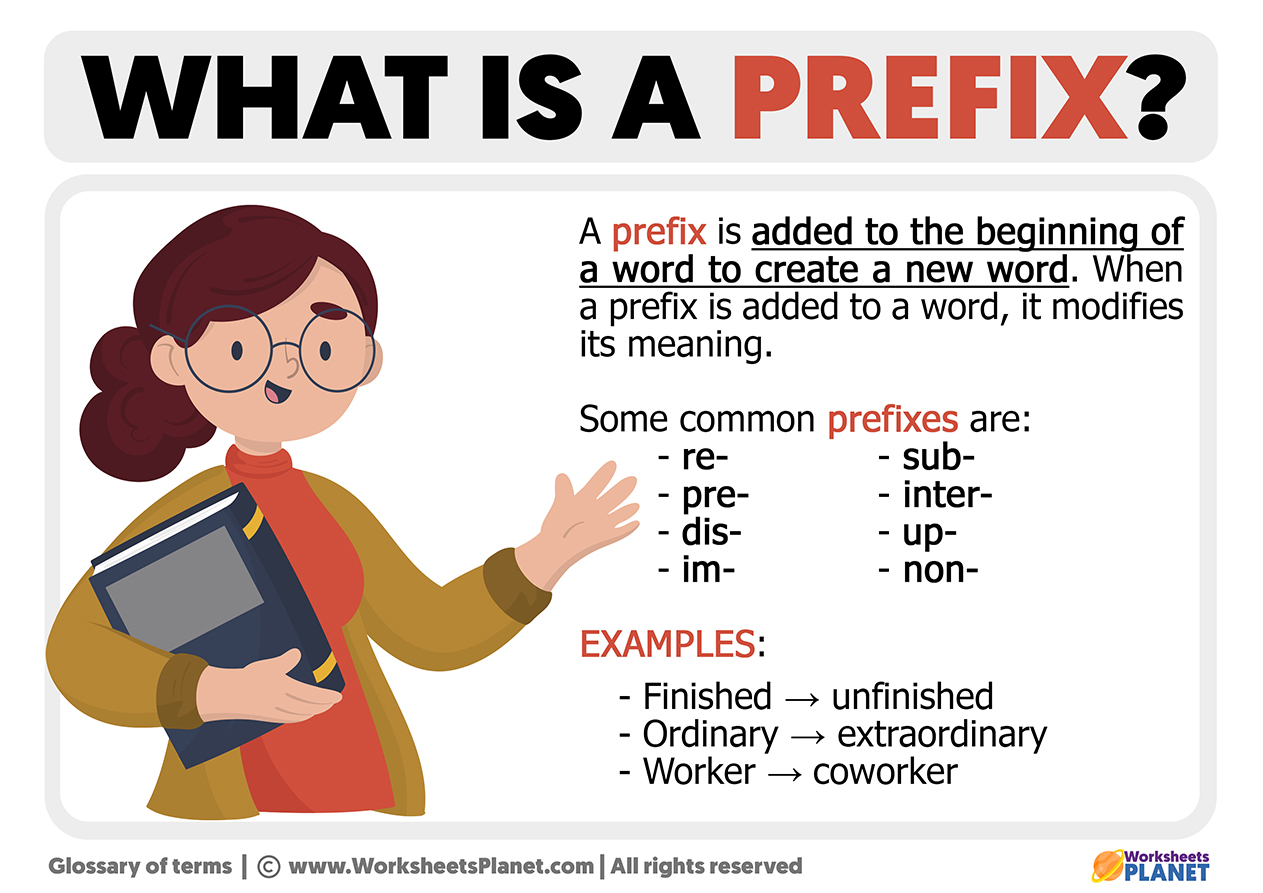
In the broad landscape of linguistics, a prefix is a simple tool: a letter or group of letters placed at the beginning of a word to alter its meaning. However, within the domain of technology, the concept of a “prefix” transcends simple grammar. It becomes a foundational mechanism for organization, a critical component of networking protocols, a strategy for cross-browser compatibility, and a cornerstone of modern artificial intelligence.
Understanding the meaning of a prefix in tech requires looking beyond the dictionary definition. It is a tool for categorization and efficiency, allowing systems to parse massive amounts of data by identifying key identifiers at the very start of a string, an address, or a line of code. From the way your internet router directs traffic to the way software engineers manage complex codebases, the prefix is an unsung hero of the digital age.

The Foundation of Network Architecture: IP Prefixes and Subnetting
In networking, the “prefix” is the most vital part of an Internet Protocol (IP) address. It defines the network portion of the address, distinguishing it from the host portion. Without these prefixes, the global internet would be a chaotic web of unroutable data packets.
How IP Prefixes Define Network Boundaries
When we look at an IP address accompanied by a slash (such as 192.168.1.0/24), the “/24” is known as the prefix length. This notation, called Classless Inter-Domain Routing (CIDR), tells the system how many bits of the address are dedicated to the network identity. A prefix effectively acts as a “zip code” for data. By identifying the prefix first, routers can determine whether a packet is intended for a local network or if it needs to be sent to a distant gateway. This hierarchical structure is what allows the internet to scale to billions of devices.
The Transition from IPv4 to IPv6 Prefixes
As the world exhausted the available pool of IPv4 addresses, the transition to IPv6 introduced a much larger prefix system. In IPv6, prefixes are typically much longer (often /48 or /64). The meaning of the prefix here is even more significant; it allows for nearly infinite sub-networks within a single global prefix. This shift has changed how network administrators approach security and device discovery, making the understanding of prefix delegation essential for modern digital infrastructure.
Routing Tables and Prefix Aggregation
In the core of the internet’s routing system (BGP – Border Gateway Protocol), prefixes are used to summarize routes. This is known as “prefix aggregation” or “route summarization.” Instead of listing every single individual IP address in a routing table, a router lists a single “prefix” that represents thousands of addresses. This reduces the computational load on hardware and ensures that data travels across the globe with minimal latency.
Prefixes in Web Development and Software Engineering
For software developers, prefixes are not just about addresses; they are about clarity, compatibility, and preventing “namespace pollution.” In a world where multiple libraries and frameworks often run simultaneously, the prefix acts as a protective shield for code integrity.
CSS Vendor Prefixes: Navigating Browser Compatibility
During the evolution of web standards, browser engines (like WebKit, Gecko, and Blink) often implement new features before they are officially standardized. To use these experimental features without breaking the web for other browsers, developers use vendor prefixes. Examples include -webkit- (for Chrome and Safari), -moz- (for Firefox), and -ms- (for Edge). By prefixing a CSS property, a developer ensures that the styling is only applied when the specific engine is capable of rendering it correctly, bridging the gap between cutting-edge design and stable user experience.
Naming Conventions: Using Prefixes for Scalable Codebases
In large-scale software projects, naming collisions are a constant threat. If two different developers use the same variable name in different parts of a program, the system may crash. To solve this, many development teams adopt prefix-based naming conventions. For example, in CSS methodologies like BEM (Block Element Modifier), prefixes like c- (for component) or u- (for utility) are used to clarify the purpose of a class. In languages like C++, prefixes like m_ might denote a member variable. This structural use of prefixes makes the code “self-documenting,” allowing new developers to understand the context of a variable just by looking at its first few characters.

The Role of Prefixes in Database Schema Design
Prefixes are also a common sight in database management. When multiple applications share a single database, developers often prefix table names (e.g., wp_users, shop_orders). This ensures that an update to one application’s data structure doesn’t inadvertently overwrite or conflict with another’s. It is a simple yet powerful way to maintain data silo integrity in shared environments.
Data Representation and Digital Units
One of the most common encounters people have with prefixes in tech is through the metric and binary units used to measure data. However, there is often a misunderstanding regarding what these prefixes actually represent in terms of capacity and speed.
Metric vs. Binary Prefixes (Kilo vs. Kibi)
In traditional science, the prefix “kilo-” means 1,000. In computing, however, because systems operate on base-2 (binary), “kilo” historically meant 1,024 (2 to the power of 10). To resolve this ambiguity, the International Electrotechnical Commission (IEC) introduced binary prefixes: “kibi-” (KiB), “mebi-” (MiB), and “gibi-” (GiB). While many operating systems still use the metric terms to describe binary values, the distinction is crucial for hardware manufacturers and cloud service providers. When you buy a “1 Terabyte” hard drive and see only “931 GiB” available, it is a direct result of the difference between decimal and binary prefix interpretations.
The Importance of Precision in Cloud Computing Resources
In the era of cloud computing, prefixes define how resources are scaled and billed. When an engineer provisions a “micro” instance versus a “large” instance, they are interacting with a system of prefixes that denote specific tiers of CPU and memory allocation. Precision in understanding these units is vital for cost management. A misunderstanding of “mega” versus “giga” prefixes in a high-traffic environment can lead to significant financial discrepancies when scaling virtualized infrastructure.
Prefixes in Artificial Intelligence and Natural Language Processing
The rise of Generative AI and Large Language Models (LLMs) has given the term “prefix” a new, specialized meaning within the field of prompt engineering and model training.
Prefix Tuning: A New Era of Prompt Engineering
“Prefix tuning” is a technique used to optimize large language models without the need to retrain the entire network. Instead of modifying the billions of parameters within a model like GPT-4, researchers add a “prefix”—a sequence of continuous vectors—at the start of the input. This prefix acts as a steering mechanism, guiding the model to perform specific tasks (like translation or summarization) more effectively. In this context, the prefix isn’t just a label; it is a mathematical instruction set that reshapes how the AI processes information.
Tokenization and Prefix-based Word Embeddings
When an AI “reads” text, it breaks it down into “tokens.” Many tokenization algorithms use prefix-based logic to handle rare or complex words. For instance, the Byte Pair Encoding (BPE) algorithm looks for common prefixes and suffixes to understand the relationship between different words. By identifying “auto-” as a prefix, the model can infer the meaning of “autonomous” even if it hasn’t seen that specific word frequently in its training data. This makes the AI more resilient and capable of understanding linguistic nuances.
The Future of Naming and System Organization
As technology continues to advance into the realms of the Internet of Things (IoT) and decentralized web (Web3), the role of the prefix is evolving. We are moving toward a world where prefixes are no longer just human-readable labels, but cryptographically secure identifiers.
Evolving Standards in an Interconnected Ecosystem
In IoT, billions of devices must communicate without manual configuration. Universal prefixes are being developed to allow devices to identify their type, manufacturer, and security clearance level instantly upon connection. Similarly, in blockchain technology, prefixes are used in wallet addresses (like “0x” for Ethereum) to identify the network protocol being used.
As we look forward, the “meaning of prefix” will continue to be synonymous with context. In a sea of infinite digital data, the prefix provides the necessary starting point for logic. Whether it is a line of code, a network packet, or a prompt to an AI, the prefix remains the essential “first step” that defines the path for everything that follows. Professional tech literacy requires a deep appreciation for these identifiers, as they are the invisible threads holding the complex tapestry of our digital world together.
aViewFromTheCave is a participant in the Amazon Services LLC Associates Program, an affiliate advertising program designed to provide a means for sites to earn advertising fees by advertising and linking to Amazon.com. Amazon, the Amazon logo, AmazonSupply, and the AmazonSupply logo are trademarks of Amazon.com, Inc. or its affiliates. As an Amazon Associate we earn affiliate commissions from qualifying purchases.