
In the global automotive landscape, few names carry as much weight as Toyota. While the company built its initial reputation on fuel-efficient sedans like the Corolla and the Camry, its modern dominance is defined by its masterful command of the Sport Utility Vehicle (SUV) market. The question “What SUVs does Toyota make?” is not merely a request for a list of models; it is an entry point into a sophisticated brand strategy that spans from compact crossovers to rugged, off-road icons.
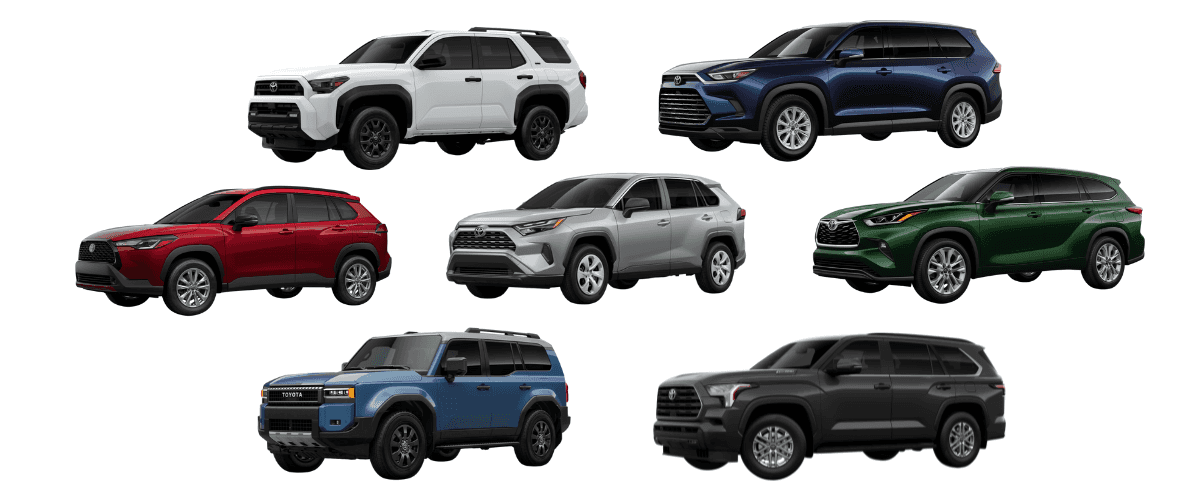
Toyota’s SUV lineup is a case study in strategic segmentation. By diversifying its portfolio to include over a dozen distinct models (depending on the global market), Toyota ensures that there is no “white space” left for competitors. From a brand perspective, this approach allows the company to capture consumers at every stage of their lives—from the first-time car buyer to the growing family and the high-net-worth adventurer.
The Architecture of Brand Loyalty: Why Toyota Leads the SUV Market
To understand the breadth of Toyota’s SUV offerings, one must first understand the core tenets of the Toyota brand. The company does not just sell vehicles; it sells a promise of “Quality, Durability, and Reliability” (QDR). This philosophy has become the bedrock of their brand identity, allowing them to dominate the SUV sector where longevity and resilience are prized above all else.
The “QDR” Philosophy: Quality, Durability, Reliability
In the branding world, Toyota’s QDR is more than a slogan—it is a competitive advantage. While competitors may focus on flashy tech or cutting-edge aesthetics, Toyota has doubled down on the idea that an SUV should last for decades. This has created a self-sustaining cycle of brand loyalty. When a consumer buys a RAV4, they aren’t just buying a commuter vehicle; they are investing in a brand that they trust will start every morning for the next twenty years.
Strategic Segmentation: A Vehicle for Every Lifestyle
Toyota’s brand strategy involves a granular approach to market segments. They do not believe in a “one size fits all” SUV. Instead, they have meticulously mapped out the needs of different demographics. This leads to a lineup that includes subcompact crossovers for urban dwellers, mid-size haulers for suburban families, and body-on-frame monsters for off-road enthusiasts. By offering such a wide variety, Toyota prevents “brand switching,” keeping customers within the Toyota ecosystem as their life needs change.
The Core Pillars: Toyota’s Mid-Size and Full-Size SUV Identity
The heart of Toyota’s SUV lineup lies in its high-volume models. These vehicles are the primary drivers of the brand’s market share and serve as the visual identity of Toyota on roads across the globe.
The RAV4: Defining the Modern Crossover Brand
The RAV4 is arguably the most important vehicle in Toyota’s current portfolio. As the best-selling SUV in the world for several years running, it represents the pinnacle of “approachable utility.” From a brand strategy perspective, the RAV4 is positioned as the “Goldilocks” of vehicles—not too big, not too small, and incredibly efficient. By offering it in gas, hybrid, and plug-in hybrid (Prime) variants, Toyota has successfully branded the RAV4 as the ultimate flexible solution for the modern consumer.
The Highlander and Grand Highlander: Family-Centric Branding
While the RAV4 captures the individual and small family market, the Highlander serves as the brand’s anchor for larger households. Recently, Toyota expanded this brand pillar with the introduction of the Grand Highlander. This was a strategic move to address a specific brand gap: the need for a truly adult-sized third row. By splitting the “Highlander” name into two distinct sizes, Toyota maximized its appeal to suburban families without alienating those who prefer a more maneuverable vehicle.
The 4Runner: Maintaining the Rugged Heritage Identity
Perhaps no vehicle in the lineup has a stronger “cult brand” status than the 4Runner. Despite going years without a major redesign, its sales remained remarkably high. This is because the 4Runner represents the “authentic” side of the Toyota brand. It is an unapologetic, body-on-frame off-roader. From a marketing standpoint, the 4Runner serves as the “halo” of toughness for the entire SUV lineup, proving that Toyota still knows how to build “real” trucks.
Luxury and Legacy: Scaling the Brand Upward

Toyota’s brand strategy also includes a high-end tier that competes with luxury marques. These vehicles are designed to showcase the brand’s engineering prowess and its deep historical roots.
The Land Cruiser: An Icon of Global Brand Equity
The Land Cruiser is more than just an SUV; it is a global icon. After a brief hiatus in the North American market, Toyota brought the nameplate back with a more focused, retro-inspired design. This move was a masterclass in brand revival. By leaning into the Land Cruiser’s heritage as a world-crossing expedition vehicle, Toyota re-established its dominance in the premium off-road segment, directly challenging brands like Land Rover and Jeep.
The Sequoia: Bridging the Gap Between Utility and Premium Status
As Toyota’s largest SUV, the Sequoia is positioned as the brand’s ultimate “status” utility vehicle. Based on the Tundra pickup platform, it offers immense towing capacity and interior volume. In its recent redesign, Toyota shifted the Sequoia’s branding toward a more premium, tech-forward identity, specifically with the “Capstone” trim. This allows Toyota to retain high-income customers who might otherwise migrate to luxury brands like Lexus or Cadillac.
The Future of the Brand: Electrification and Hybrid Synergy
As the automotive industry shifts toward sustainability, Toyota has leveraged its pioneer status in hybrid technology to redefine its SUV lineup. Rather than rushing into a purely electric portfolio, Toyota’s brand strategy focuses on “the power of choice.”
Hybrid as a Brand Differentiator
Toyota has successfully branded “Hybrid” as a synonymous term for “Efficiency without Compromise.” By making hybrid powertrains standard or readily available across the Venza, RAV4, Highlander, and Sequoia, Toyota has positioned itself as the practical leader in green technology. This strategy appeals to the pragmatic consumer who wants to reduce their carbon footprint without the “range anxiety” often associated with pure EVs.
The bZ4X: Transitioning into the Electric Era
The bZ4X represents Toyota’s first dedicated leap into the battery-electric vehicle (BEV) market. The branding here is cautious but intentional. The “bZ” (Beyond Zero) sub-brand is designed to signal a new chapter in Toyota’s history. While the bZ4X is currently the sole electric offering, it serves as a “bridge” for the brand, signaling to shareholders and consumers alike that Toyota is prepared for a zero-emission future while maintaining its core SUV values of reliability and safety.
Brand Longevity: Resale Value as a Marketing Tool
One of the most overlooked aspects of Toyota’s SUV strategy is how they use financial metrics to reinforce brand prestige. Specifically, the exceptionally high resale value of Toyota SUVs is a core part of their brand promise.
The Psychological Impact of High Residual Value
When a consumer knows that a Toyota SUV will retain 60% or 70% of its value after five years, the “brand” becomes a financial asset. This creates a powerful psychological incentive. Toyota markets this indirectly by highlighting “Best Buy” awards and long-term value rankings. This reinforces the idea that buying a Toyota SUV is a “smart” decision, appealing to the rational side of the consumer’s brain.
Building a Lifecycle Ecosystem
By producing a range that starts with the entry-level Corolla Cross and scales up to the premium Sequoia and Land Cruiser, Toyota creates a lifecycle ecosystem. A customer may enter the brand with a used RAV4 in their 20s, upgrade to a new Highlander in their 30s, and eventually purchase a Land Cruiser as a reward for their career success. Each SUV in the lineup is a stepping stone, and the consistency of the branding across these models ensures that the customer rarely feels the need to look elsewhere.

Conclusion: The Mastery of the Multi-Faceted Brand
What SUVs does Toyota make? They make a tool for every task and a vehicle for every dream. The sheer variety of the lineup—the Corolla Cross, RAV4, Venza, 4Runner, Highlander, Grand Highlander, Sequoia, and Land Cruiser—is not accidental. It is the result of a calculated brand strategy designed to blanket the market.
Toyota has mastered the art of being “everything to everyone” without diluting its core identity. Whether it is through the lens of rugged off-roading, suburban family life, or sustainable commuting, Toyota’s SUV lineup remains the benchmark for how to build, maintain, and evolve a global brand. As the industry moves toward an uncertain electric future, Toyota’s diversified portfolio and unwavering commitment to its “QDR” roots ensure that it will remain the dominant force in the SUV market for decades to come.
aViewFromTheCave is a participant in the Amazon Services LLC Associates Program, an affiliate advertising program designed to provide a means for sites to earn advertising fees by advertising and linking to Amazon.com. Amazon, the Amazon logo, AmazonSupply, and the AmazonSupply logo are trademarks of Amazon.com, Inc. or its affiliates. As an Amazon Associate we earn affiliate commissions from qualifying purchases.