
For most individuals, a vehicle represents one of the most significant line items on a personal balance sheet. While the convenience of a dealership trade-in is often touted, it comes at a steep financial cost—frequently leaving thousands of dollars on the table. Selling a car privately is a sophisticated financial move that allows you to capture the full market value of your asset.
This guide treats your vehicle sale not just as a chore, but as a strategic financial transaction. By applying the principles of asset valuation, marketing, and risk management, you can ensure a high-return exit from your current automotive investment.

Preparing the Asset for Maximum ROI
In the world of personal finance, the condition of an asset dictates its liquidity and its ultimate sale price. To sell a car privately for top dollar, you must first bridge the gap between “used car” and “well-maintained investment.”
Valuation Research and Pricing Strategies
The first step in any successful sale is a data-driven valuation. Relying on a single source is a financial mistake. Instead, triangulate your asking price using three primary data points:
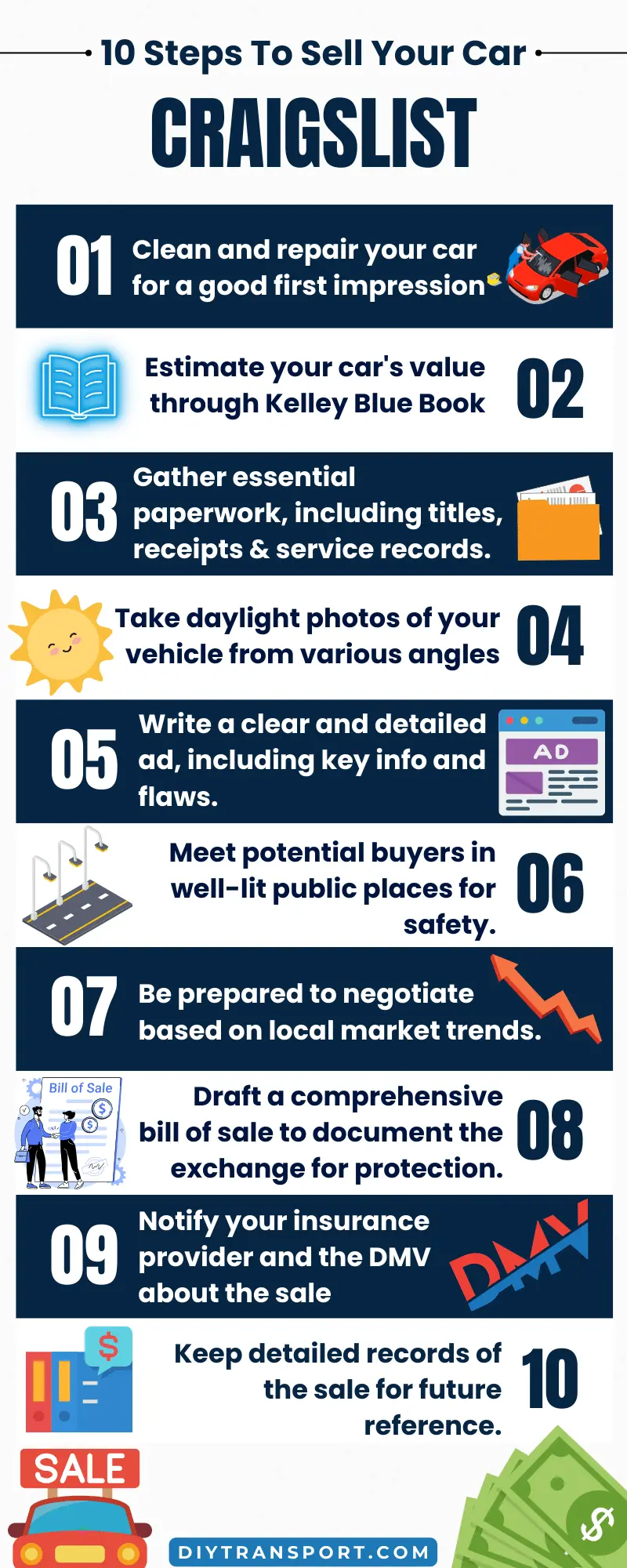
- Algorithmic Valuation Tools: Use sites like Kelly Blue Book (KBB) and Edmunds to establish a baseline for “Private Party” value.
- Market Comparables: Search local listings on platforms like Facebook Marketplace or Autotrader. Look for vehicles of the same make, model, year, and approximate mileage.
- The “Oshkosh” Buffer: Psychological pricing matters. Pricing a car at $14,900 rather than $15,100 keeps you within the search filters of budget-conscious buyers while only costing you $200 in theoretical value—a small price for significantly higher lead volume.
Strategic Reconditioning vs. Diminishing Returns
Financial savvy involves knowing when to spend money to make money. A professional detail (costing $150–$300) can often add $1,000 or more to the perceived value of the car. However, avoid major mechanical overhauls unless they are safety-related. You rarely recoup 100% of the cost of a new transmission or engine work at the point of sale. Instead, focus on “curb appeal” and maintenance records. Having a folder of receipts for every oil change and brake pad replacement serves as “social proof” of the asset’s integrity, allowing you to firm up your asking price during negotiations.
Marketing Your Vehicle as a Premium Offering
To attract high-quality buyers who are willing to pay a premium, your listing must stand out from the sea of low-effort advertisements. In this context, you are acting as your own marketing department.
High-Conversion Listing Strategies
Your listing is your sales pitch. It should be transparent, detailed, and professional.
- The Visual Portfolio: Take at least 20 high-resolution photos. Capture the exterior from all angles, the tread on the tires, the odometer, and any minor imperfections. Transparency builds trust, and trust is the currency of private sales.
- The Narrative: Avoid one-sentence descriptions. Write a comprehensive summary that includes the reason for selling, major features (Apple CarPlay, AWD, etc.), and recent maintenance. Highlight that it is a “smoke-free” or “garage-kept” vehicle if applicable; these are high-value keywords for private buyers.
Identifying the Right Sales Channels
Different platforms attract different tiers of buyers.
- Facebook Marketplace: High volume but requires significant vetting due to “lowballers” and “tire-kickers.”
- Craigslist: Still viable in certain regions, though it now requires a small fee which helps filter out some spam.
- Niche Forums/Bring a Trailer: If you are selling a classic, enthusiast, or luxury vehicle, these platforms attract buyers who understand the specific value of the asset and are often willing to pay above “Blue Book” for the right condition.
The Art of Negotiation and Financial Security
Negotiation is where the financial gain of a private sale is either solidified or lost. Approaching this stage with a clinical, business-oriented mindset prevents emotional decisions that could cost you money.

Vetting Potential Buyers for Financial Credibility
Your time is a valuable resource. Before agreeing to a test drive, conduct a brief “pre-qualification” interview. Ask the buyer if they have the funds available or if they are seeking third-party financing. If a buyer mentions “payment plans” or “trading for a different item,” politely decline. A clean financial transaction involves a single, total payment.
During the test drive, always prioritize safety. Meet in a well-lit, public location—ideally a “safe exchange zone” at a local police station. Verify the buyer’s driver’s license before they get behind the wheel.
Mastering the Closing Conversation
Once a buyer expresses interest, the negotiation begins. Always have a “Walk-Away Price”—the absolute minimum you are willing to accept based on your initial research.
- The “Anchor” Technique: Let the buyer make the first offer. If their offer is within 10-15% of your asking price, you have room to negotiate.
- Focus on Value, Not Price: If they ask for a discount, point back to the new tires or the documented service history. Remind them that they are paying for a vehicle that won’t require immediate investment.
Navigating the Legal and Financial Paperwork
The final stage of the sale is the most critical for protecting your wealth. A mistake in the paperwork can lead to legal liabilities or financial loss through fraud.
Secure Payment Methods and Avoiding Fraud
Never accept personal checks or “promises” of wire transfers. The gold standard for private car sales is a Cashier’s Check or a Direct Bank Transfer performed at the buyer’s bank.
- The Bank Meeting: The safest way to close is to meet the buyer at their financial institution. You can watch the teller issue the cashier’s check, ensuring its authenticity.
- Cash Transactions: If accepting cash, do so inside a bank where the bills can be verified for authenticity and immediately deposited into your account. Avoid carrying large sums of cash in public.
Finalizing the Transfer of Ownership and Liability
Once payment is secured, you must execute the legal transfer.
- The Title: Sign the title over to the buyer according to your state’s specific regulations. Be extremely careful not to make errors on the title, as “white-out” often voids the document, requiring a costly and time-consuming replacement process.
- Bill of Sale: Draft a Bill of Sale that includes the VIN, sale price, date, and the phrase “Sold As-Is.” This protects you from future claims regarding the car’s mechanical condition.
- Release of Liability: This is the most forgotten step. Most states allow you to file a “Release of Liability” online with the DMV. This ensures that if the new owner gets a speeding ticket or is involved in an accident before they register the car, you are not held responsible.
- Insurance: Only cancel your insurance policy after you have confirmed the title transfer and the car has left your possession.
Reinvesting the Proceeds: Your Post-Sale Financial Strategy
The sale of your car has moved a depreciating physical asset into liquid capital. From a personal finance perspective, how you handle this influx of cash is just as important as the sale itself.
Capital Allocation for Your Next Vehicle
If you are selling to upgrade, use the proceeds to minimize your next auto loan. In a high-interest-rate environment, putting a larger down payment on your next vehicle can save you thousands in interest over the life of the loan. Alternatively, if you are downsizing, the surplus cash can be redirected toward high-yield savings accounts or retirement contributions, turning a former expense into a wealth-generating tool.
Tax Implications and Financial Record Keeping
In most cases, you won’t owe taxes on a car sale because vehicles are typically sold for less than their original purchase price (a capital loss). However, if you are selling a collector car or a vehicle that has appreciated, you may be liable for capital gains tax.
Keep a digital folder containing the Bill of Sale, a copy of the signed title, and all maintenance records for at least three years. This documentation is your final line of defense for both tax purposes and potential liability disputes.
Selling a car privately requires more effort than a dealership trade-in, but the financial rewards are undeniable. By treating the process with the rigor of a professional business transaction, you secure the maximum value for your asset while protecting your personal financial interests.
aViewFromTheCave is a participant in the Amazon Services LLC Associates Program, an affiliate advertising program designed to provide a means for sites to earn advertising fees by advertising and linking to Amazon.com. Amazon, the Amazon logo, AmazonSupply, and the AmazonSupply logo are trademarks of Amazon.com, Inc. or its affiliates. As an Amazon Associate we earn affiliate commissions from qualifying purchases.