
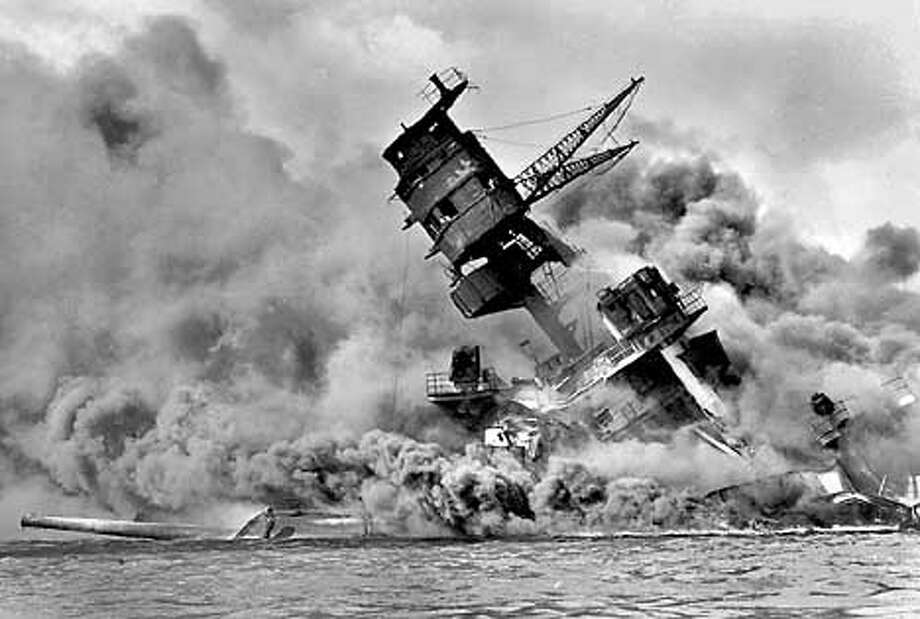
The attack on Pearl Harbor on December 7, 1941, is often studied through the lenses of geopolitics, military strategy, and human sacrifice. However, from a technological perspective, the event represents one of the most significant inflection points in the history of innovation. It was a day when the limitations of emerging technologies were laid bare and the necessity for rapid, high-stakes research and development became a matter of national survival.
The significance of the attack lies not just in the hardware of the era—the Zeros, the Vals, and the great battleships—but in the systemic evolution of radar, cryptography, and naval engineering that followed. By examining Pearl Harbor through the “Tech” niche, we can see it as the ultimate case study in technical failure, rapid iteration, and the eventual birth of the modern military-industrial-technological complex.

The Failure of Early Detection: Radar and the Birth of Integrated Surveillance
In 1941, radar was the “cutting-edge” tech of its day. The United States had recently deployed the SCR-270 mobile radar units to Oahu, representing the pinnacle of early warning technology. However, the significance of Pearl Harbor in tech history is rooted in the gap between having a tool and having a system to utilize its data.
The Opana Radar Station Incident
On the morning of the attack, two privates at the Opana Radar Station detected a massive signal on their oscilloscope—the largest they had ever seen. This was the Japanese first wave. However, the technology was so new that there were no established protocols for data verification. When the privates called the information center, the officer on duty, famously assuming the blips were B-17s arriving from the mainland, told them “not to worry about it.”
This represents a classic tech failure: the “Human-in-the-Loop” error. The hardware performed its function perfectly, but the lack of an integrated data-processing interface rendered the information useless. This failure catalyzed a complete overhaul in how sensor data is aggregated, leading directly to the sophisticated command-and-control (C2) systems we use in modern defense and air traffic control today.
Signal Processing and Human Interpretation
The SCR-270 used an A-scope display, which showed spikes on a horizontal line rather than the “map-style” PPI (Plan Position Indicator) displays we associate with radar today. The difficulty in interpreting these signals highlighted the need for better User Experience (UX) design in high-stakes environments. Post-Pearl Harbor, the push for clearer data visualization became a priority, ensuring that operators could differentiate between noise and actionable intelligence.
Naval Engineering and the Evolution of Specialized Weaponry
The attack on Pearl Harbor forced a rapid evolution in naval engineering, specifically regarding how technology is adapted for specific environments. The Japanese success was not just a result of surprise, but of a specific technical “hack” that American engineers thought was impossible.
Shallow-Water Torpedo Innovation
One of the primary reasons the U.S. Navy felt secure at Pearl Harbor was the depth of the water—only about 40 feet. Conventional torpedoes of the time would dive to 60 or 70 feet upon being dropped from an aircraft before leveling out. The Japanese, however, developed a technological workaround: they attached wooden aerodynamic fins to their Type 91 torpedoes.
These fins acted as stabilizers that prevented the torpedoes from diving too deep into the harbor mud. This “low-tech” modification to a high-tech weapon changed the parameters of naval warfare. It taught the tech world a lasting lesson: specialized environmental constraints require bespoke engineering solutions. This spirit of iterative design—testing, failing, and modifying—became the backbone of the wartime R&D cycle.
The Shift from Battleships to Carrier-Centric Platforms
Before December 7, the battleship was the undisputed “mainframes” of naval power. The attack, which decimated the Pacific Fleet’s “Battle Line” but left the aircraft carriers untouched (as they were at sea), forced a technological pivot. The aircraft carrier became the ultimate mobile “platform,” capable of launching various “applications” (aircraft) to strike from a distance.
This shift mirrors the transition in computing from centralized, heavy infrastructure to distributed, agile systems. The significance of Pearl Harbor was the forced realization that the era of “big iron” (battleships) was ending, and the era of versatile, carrier-based tech was beginning.
Cryptography and the Intelligence Revolution
If radar was the hardware failure of Pearl Harbor, cryptography was the software struggle. The ability to intercept, decrypt, and distribute information is perhaps the most enduring tech legacy of the conflict.
Operation Magic and the Purple Code
U.S. intelligence had already cracked the Japanese diplomatic code, known as “Purple,” using a machine called “Magic.” However, the sheer volume of data and the lack of automated sorting mechanisms meant that the most critical pieces of intelligence often sat in a backlog. This was a 1941 version of a “Big Data” problem.
The significance of the attack was the immediate realization that intercepting a signal is worthless if you cannot process it in real-time. This led to the massive expansion of the Signal Intelligence (SIGINT) community. The lessons learned here directly informed the development of the first programmable digital computers, like ENIAC and Colossus, as the military sought ways to automate the decryption process.
The Foundations of Modern Cybersecurity
The struggle for secure communication at Pearl Harbor laid the groundwork for modern encryption standards. The vulnerability of radio communications led to the development of frequency hopping and more complex algorithmic encryption. Today’s digital security protocols—from SSL/TLS to blockchain—can trace their conceptual lineage back to the desperate need for “Zero Trust” communication architectures that emerged from the failures of 1941.
The Legacy of “Surprise”: From Physical Attacks to the “Digital Pearl Harbor”
In the modern tech landscape, the term “Pearl Harbor” has become a metaphor for a catastrophic, unforeseen strike on critical infrastructure. The significance of the original attack has evolved into a framework for understanding modern digital vulnerabilities.
Cybersecurity and Infrastructure Vulnerabilities
Government officials and tech leaders often warn of a “Digital Pearl Harbor”—a coordinated cyberattack on power grids, financial systems, or water supplies. The 1941 attack showed that a centralized target, if poorly defended, can lead to a systemic collapse. In the tech world, this has driven the move toward decentralized cloud architectures and “edge computing,” where there is no single point of failure that an adversary can exploit to cripple an entire network.
AI-Driven Threat Detection as the New Radar
Just as the radar privates in 1941 were overwhelmed by data they couldn’t interpret, modern security operations centers (SOCs) are inundated with millions of daily alerts. The significance of Pearl Harbor in this context is the push for Artificial Intelligence and Machine Learning in threat detection. We no longer rely on a “Private at a radar screen”; we rely on algorithms that can spot anomalies in microseconds. AI is the modern answer to the “Opana Station” problem, ensuring that the “blips” are identified and escalated without human bias or delay.
Lessons for the Modern Tech Landscape: Redundancy and Rapid Prototyping
The ultimate significance of the attack on Pearl Harbor is the way it reshaped the relationship between technology, speed, and redundancy. It proved that in the face of rapid technological disruption, the only defense is even faster innovation.
Redundancy and Decentralized Systems
One of the most tactical tech lessons from Pearl Harbor was the danger of “bunching.” Aircraft were parked wingtip-to-wingtip to prevent sabotage, making them easy targets for aerial bombardment. In modern IT infrastructure, this is the equivalent of having all your servers in one data center zone. The attack taught the importance of “Geographic Redundancy”—a principle that now governs how Amazon Web Services (AWS) and Google Cloud design their global regions to ensure that one “strike” (be it a fire, a hack, or a power outage) cannot take down the whole system.

The Ethics and Speed of the R&D Cycle
Finally, Pearl Harbor accelerated the “Tech Sprint” to an unprecedented level. Projects that would normally take a decade were completed in months. This period saw the birth of the Manhattan Project and the rapid advancement of jet propulsion and synthetic rubber. For the modern tech industry, this remains a benchmark for what is possible when resources, talent, and a sense of urgency are aligned. It also serves as a reminder of the ethical weight of technology; the innovations born from the tragedy of Pearl Harbor eventually led to both the horrors of nuclear warfare and the wonders of the Space Age.
In conclusion, the significance of the attack on Pearl Harbor is much more than a historical date. For the tech-minded, it is the origin story of modern surveillance, the catalyst for digital encryption, and a permanent warning about the dangers of failing to integrate new technologies into a cohesive, human-centric system. It remains the ultimate reminder that having the best technology is not enough—you must also have the systems, the UX, and the foresight to use it effectively.
aViewFromTheCave is a participant in the Amazon Services LLC Associates Program, an affiliate advertising program designed to provide a means for sites to earn advertising fees by advertising and linking to Amazon.com. Amazon, the Amazon logo, AmazonSupply, and the AmazonSupply logo are trademarks of Amazon.com, Inc. or its affiliates. As an Amazon Associate we earn affiliate commissions from qualifying purchases.