
Understanding how to calculate “percentages off” is more than just a trick for seasonal shopping; it is a fundamental pillar of financial literacy. Whether you are a consumer trying to stick to a strict personal budget or a business owner calculating markdown strategies to clear inventory without eroding your profit margins, the ability to manipulate these numbers is essential.
In the world of finance, percentages are the universal language of change. They describe interest rates, investment growth, inflation, and, most commonly, discounts. Mastering the “percentage off” calculation allows you to move beyond the surface-level price tag and understand the true value of a transaction. This guide will walk you through the essential mathematics, the psychological impact on your personal finances, and the strategic business applications of percentage-based discounting.

The Fundamentals of Percentage-Off Calculations
Before diving into complex financial scenarios, one must master the core arithmetic. Calculating a discount is a two-step process: determining the value of the discount and then subtracting that value from the original price. However, in professional finance, we often use streamlined methods to reach the “net price” more efficiently.
The Basic Formula and the Decimal Method
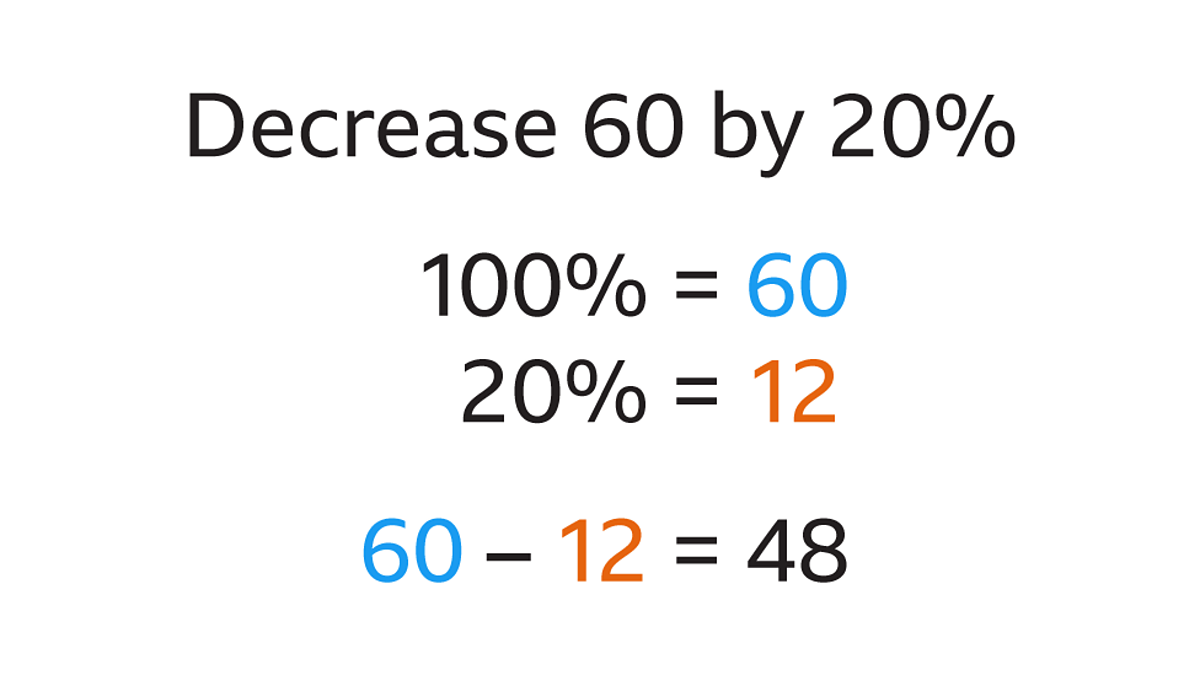
The most straightforward way to calculate a percentage off is to convert the percentage into a decimal. To do this, you divide the percentage by 100. For instance, a 20% discount becomes 0.20.
The formula for the discount amount is:
Original Price × (Discount Percentage / 100) = Savings
To find the final price, you subtract the savings from the original price. However, a faster professional method is the “subtraction from one” technique. If an item is 20% off, you are essentially paying 80% of the original price (100% – 20% = 80%). By multiplying the original price by 0.80, you arrive at the final cost in a single step. This efficiency is crucial when auditing financial statements or performing quick inventory assessments.
Mental Math Shortcuts for Real-World Finance
In fast-paced environments, you won’t always have a calculator or spreadsheet at hand. Mastering mental math for percentages is a hallmark of financial competence. The most effective shortcut is the “10% Rule.”
To find 10% of any number, simply move the decimal point one place to the left. If a product costs $85.00, 10% is $8.50. Once you have the 10% figure, you can calculate almost any other percentage:
- For 5%: Take half of the 10% figure.
- For 20%: Double the 10% figure.
- For 25%: Find 50% (half) and then half that number again.
By layering these simple calculations, you can determine the cost of almost any “percentage off” deal in seconds, allowing for quicker decision-making in both retail and business negotiations.
Beyond the Basics: Percentages in Personal Finance
In personal finance, the “percentage off” concept is often a double-edged sword. While it represents an opportunity to save, it can also lead to “discount bias,” where a consumer spends money they hadn’t planned to spend simply because a deal seemed too good to pass up.
The Opportunity Cost of Discounted Spending
From a wealth-building perspective, a 30% discount is only a “gain” if the purchase was already a necessity within your budget. If you buy a $1,000 item for $700, you haven’t “made” $300; you have spent $700.
Financial experts often use percentage-off calculations to teach the concept of opportunity cost. That $300 “saved” could be redirected into a high-yield savings account or an index fund. Over ten years, at a 7% annual return, that $300 could grow significantly. Understanding the math of percentages allows you to see the long-term value of the money you keep in your pocket rather than the perceived value of the discount you received.
The Psychology of “Percentage Off” in Budgeting
Retailers use percentages rather than flat dollar amounts because they often feel more significant to the human brain. A “20% off” sign on a $50 item feels more compelling than a “$10 off” sign, even though the math is identical.

To manage your money effectively, you must train yourself to reverse these calculations. When you see a percentage, immediately convert it to a dollar amount and weigh that against your hourly wage or your monthly savings goal. If you earn $25 an hour and a 20% discount saves you $50, you have effectively “earned” two hours of labor by being a savvy shopper. This perspective helps align your spending habits with your financial values.
The Business Side: Managing Margins and Markdowns
For business owners and financial managers, “percentages off” are not just about savings; they are about protecting the bottom line. A common mistake in small business finance is failing to realize how a small percentage discount can lead to a massive percentage drop in net profit.
Gross Margin vs. Discount Rates
The relationship between your gross margin and your discount rate is non-linear. If your business operates on a 50% gross margin, a 20% discount doesn’t just reduce your revenue by 20%—it reduces your profit by a much larger margin.
Consider a product that costs $100 to sell, with a $50 cost of goods sold (COGS). Your profit is $50. If you offer a 20% discount, the sale price becomes $80. Your COGS remains $50, meaning your profit is now $30. While your revenue dropped by only 20%, your profit dropped by 40% ($20 reduction from $50). Understanding this “leverage” effect of percentages is vital for maintaining a sustainable business finance model.
Strategic Discounting for Liquidity and Cash Flow
Despite the risk to margins, percentage-off strategies are essential tools for managing cash flow. In business finance, “stagnant inventory is a liability.” If capital is tied up in products that aren’t moving, the business may struggle to meet its short-term obligations or invest in new opportunities.
Financial managers use “aging reports” to identify inventory that has been sitting for 60, 90, or 120 days. They then apply tiered percentage-off discounts (e.g., 15% off at 60 days, 30% off at 90 days) to liquidate stock. The goal here is not necessarily to maximize profit per unit, but to maximize the “velocity of capital.” Getting 70% of the value of an item back into the business’s bank account is often more valuable than holding out for 100% value while the business’s liquidity suffers.
Advanced Tools and Techniques for Modern Financial Analysis
While mental math and basic formulas are great for quick checks, professional financial analysis requires more robust tools. Managing percentages off at scale—such as across a 5,000-item inventory—requires automation and precision.
Excel and Spreadsheet Automation
For anyone serious about their finances, the spreadsheet is the ultimate tool for percentage calculations. Using software like Microsoft Excel or Google Sheets allows you to model different financial scenarios instantly.
The most common formula for calculating a discounted price in a spreadsheet cell is: =A2*(1-B2), where A2 is the original price and B2 is the discount percentage (entered as a decimal or a percentage-formatted cell). By using absolute and relative references, a business owner can see how different discount levels (10%, 20%, 50%) would impact their total quarterly projections. This level of modeling is essential for “stress-testing” a financial plan before implementing a major sale or promotion.
Leveraging Financial Apps for Real-Time Analysis
In the modern fintech landscape, there are numerous apps designed to help both consumers and professionals track “percentage off” impacts. Comparison shopping apps can automatically calculate the best value between different retailers, while business-facing apps like QuickBooks or Xero allow for the automated application of discounts to invoices.
These tools do more than just the math; they provide data visualization. Seeing a pie chart of how much of your gross revenue is being “lost” to discounts can be a sobering and necessary wake-up call for a business owner. Similarly, personal finance apps like YNAB (You Need A Budget) can help individuals track their “savings” from discounts to ensure that money is being allocated toward debt repayment or investment rather than being absorbed back into “invisible” discretionary spending.
Conclusion: The Power of the Percent
Learning “how to do percentages off” is the first step toward a more sophisticated relationship with money. On the surface, it is a simple arithmetic problem. Beneath the surface, it is a gateway to understanding profit margins, opportunity costs, and the psychological triggers of the marketplace.
Whether you are calculating the final price of a laptop, determining the markdown strategy for your retail store, or analyzing the impact of inflation on your purchasing power, the percentage is your most valuable metric. By mastering both the mental shortcuts and the technical tools available today, you can ensure that every “percent off” works in favor of your long-term financial health. Remember: in finance, it’s not just about what you spend; it’s about understanding the value of every point you save.
aViewFromTheCave is a participant in the Amazon Services LLC Associates Program, an affiliate advertising program designed to provide a means for sites to earn advertising fees by advertising and linking to Amazon.com. Amazon, the Amazon logo, AmazonSupply, and the AmazonSupply logo are trademarks of Amazon.com, Inc. or its affiliates. As an Amazon Associate we earn affiliate commissions from qualifying purchases.