
Calculating your retirement income isn’t merely a financial exercise; it’s the bedrock of a secure and fulfilling post-career life. It involves more than just plugging numbers into a calculator; it’s a comprehensive process of understanding your future needs, assessing potential income sources, and strategically planning to bridge any gaps. For many, the prospect of retirement planning feels daunting, shrouded in complex terms and uncertain forecasts. However, breaking down the process into manageable steps reveals a clear path to financial clarity and peace of mind.
This article will demystify the art and science of calculating retirement income, offering insightful guidance for anyone looking to build a robust financial plan for their golden years. We’ll explore the essential components, delve into practical methodologies, and highlight the tools and expertise available to help you craft a retirement strategy that aligns with your unique aspirations.
Understanding Your Retirement Income Needs
The first crucial step in calculating your retirement income is to clearly define what “retirement” looks like for you. This isn’t just about covering basic expenses; it’s about envisioning your desired lifestyle. Do you dream of extensive travel, pursuing new hobbies, or simply enjoying quiet evenings at home? Your vision directly dictates your financial needs.
The “Replacement Rate” Approach
A common starting point is to use the “replacement rate” method. This estimates the percentage of your pre-retirement income you’ll need to maintain your lifestyle in retirement. Financial experts often suggest aiming for a replacement rate of 70-90% of your pre-retirement gross income. The rationale is that certain work-related expenses (commuting, professional attire, saving for retirement itself) disappear, but new expenses (healthcare, leisure, travel) may emerge. A lower rate might suit those who anticipate significant downsizing or a more frugal lifestyle, while a higher rate caters to a more luxurious retirement.
Itemizing Future Expenses (Essential vs. Discretionary)
While the replacement rate offers a useful benchmark, a more granular approach involves creating a detailed post-retirement budget. This entails itemizing both essential and discretionary expenses:
-
Essential Expenses: These are non-negotiable costs like housing (mortgage/rent, property taxes, insurance), utilities, food, transportation, basic healthcare premiums, and medication. These expenses often remain stable or increase with inflation.
-
Discretionary Expenses: These are flexible costs that contribute to your lifestyle, such as travel, hobbies, entertainment, dining out, gifts, and subscriptions. These are areas where you have more control and can adjust spending if needed.
By meticulously listing these, you gain a realistic picture of your annual expenditure. Don’t forget to account for larger, infrequent expenses like home repairs, vehicle replacement, or significant travel plans.
Accounting for Inflation and Healthcare Costs
Two critical factors often underestimated in retirement planning are inflation and healthcare costs.
-
Inflation: The purchasing power of money erodes over time due to inflation. A dollar today will buy less in 20 or 30 years. Your income calculations must project how much more you’ll need just to maintain the same lifestyle in the future. Financial calculators often incorporate an average inflation rate (e.g., 2-3%), but it’s vital to understand its long-term impact.
-
Healthcare Costs: Healthcare expenses typically rise faster than general inflation and often represent one of the largest and most unpredictable costs in retirement. Medicare covers a portion, but co-pays, deductibles, and services not covered (like dental, vision, or long-term care) can be substantial. It’s prudent to significantly over-estimate healthcare costs or consider long-term care insurance.
Sources of Retirement Income
Once you have a clear picture of your income needs, the next step is to identify and quantify your potential sources of retirement income. A diversified approach typically offers the greatest security.
Social Security Benefits
For most Americans, Social Security will be a foundational component of retirement income. The amount you receive depends on your earnings history and the age at which you claim benefits. While you can claim as early as 62, your monthly benefit increases for each year you delay, up to age 70. Accessing your Social Security statement (available through the Social Security Administration website) provides personalized estimates, which are crucial for your calculations. Remember, Social Security is designed to be a supplement, not a sole source, of retirement income.
Employer-Sponsored Plans (401(k), 403(b), Pensions)
These are often the largest source of retirement savings.
-
Defined Contribution Plans (e.g., 401(k), 403(b)): These plans involve contributions from you and potentially your employer, which are then invested. Your retirement income from these plans will depend on the total amount saved and the investment returns. You’ll typically withdraw from these accounts in retirement, and these withdrawals will be taxable (unless it’s a Roth 401(k)).
-
Defined Benefit Plans (Pensions): Less common today, pensions provide a fixed monthly payment for life, usually based on your salary and years of service. If you have a pension, understand its payout structure, spousal benefits, and any cost-of-living adjustments.
Estimate the total value of these accounts at your projected retirement age and consider how much you can safely withdraw annually.
Personal Savings and Investments (IRAs, Brokerage Accounts)
Individual Retirement Accounts (IRAs) – both Traditional and Roth – along with taxable brokerage accounts, represent personal savings efforts.
-
Traditional IRAs: Contributions may be tax-deductible, and earnings grow tax-deferred until retirement, when withdrawals are taxed as ordinary income.
-
Roth IRAs: Contributions are made with after-tax dollars, and qualified withdrawals in retirement are tax-free. This offers incredible flexibility and tax diversification.
-
Taxable Brokerage Accounts: These accounts offer liquidity, but investment gains (dividends, interest, capital gains) are generally taxable in the year they are realized.
The income from these accounts will be derived from drawing down the principal and any investment returns.
Other Potential Income Streams
Don’t overlook less conventional income sources:
-
Part-time Work/Consulting: Many retirees choose to work part-time to supplement their income, stay engaged, or pursue passions.
-
Rental Properties: Income from investment properties can be a significant boost.
-
Business Ventures: If you own a business, consider its potential to generate income in retirement or its value upon sale.
-
Annuities: While complex, annuities can provide guaranteed income streams in retirement in exchange for a lump sum or series of payments.
The Mechanics of Calculation: Key Formulas and Metrics
With your needs identified and income sources mapped, it’s time to put the numbers together. This involves some key financial principles and common metrics.
Estimating Your Retirement Horizon
Your retirement horizon is the period from your planned retirement age until your life expectancy. This timeframe dictates how long your savings need to last. Using an average life expectancy (e.g., 85 or 90) is a good starting point, but consider your family history and personal health. A longer horizon means your money needs to stretch further, potentially requiring a larger initial nest egg or a more conservative withdrawal strategy.
The “Safe Withdrawal Rate” (e.g., 4% Rule)
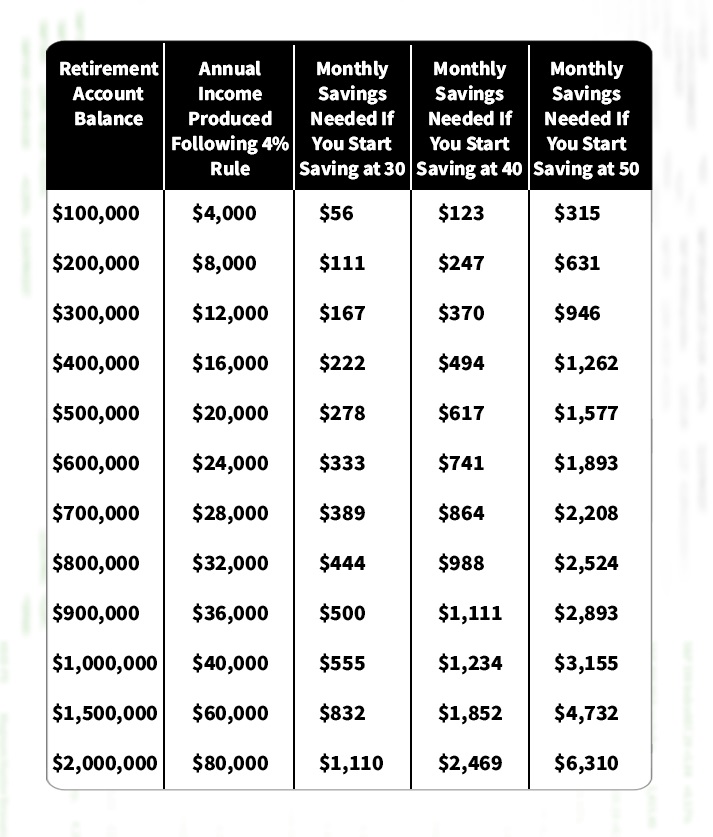
A widely discussed concept is the “safe withdrawal rate,” which suggests the percentage of your retirement nest egg you can withdraw in the first year of retirement, adjusted for inflation annually, without running out of money. The “4% Rule” (derived from the Trinity Study) is a popular benchmark, suggesting you can withdraw 4% of your initial portfolio value in the first year, and then increase that dollar amount by the rate of inflation each subsequent year. While useful, it’s a guideline, not a guarantee. Factors like market performance, your asset allocation, and retirement length can impact its viability. Some advisors suggest a more conservative 3-3.5% for added security.
Future Value and Present Value Calculations
While detailed calculations are often best left to financial software, understanding the concepts of future value (FV) and present value (PV) is insightful.
-
Future Value: This tells you how much a sum of money (or a series of contributions) will be worth at a future date, assuming a certain growth rate. This is essential for projecting the value of your savings accounts at retirement.
-
Present Value: This tells you how much a future sum of money is worth today. This helps in understanding the current cost of funding a future expense, like a specific annual retirement income stream.
These concepts help bridge the gap between today’s savings and tomorrow’s needs.
The Impact of Taxes
Taxes are an unavoidable reality and can significantly impact your net retirement income. Different income sources are taxed differently:
-
Taxable Accounts (Brokerage): Capital gains, dividends, and interest are generally taxed annually.
-
Tax-Deferred Accounts (Traditional 401(k), Traditional IRA): Withdrawals are taxed as ordinary income.
-
Tax-Free Accounts (Roth 401(k), Roth IRA): Qualified withdrawals are tax-free.
-
Social Security: A portion of your Social Security benefits may be taxable depending on your “provisional income.”
Strategic withdrawal planning from various account types (taxable, tax-deferred, tax-free) can help minimize your overall tax burden in retirement.
Leveraging Financial Tools and Professionals
While the concepts might seem complex, you don’t have to navigate them alone. A range of tools and expert advice is available to simplify and refine your retirement income calculations.
Online Retirement Calculators
Numerous free online calculators (from financial institutions, government sites, and financial news outlets) can provide initial estimates. They typically ask for your current age, desired retirement age, current savings, annual contributions, and expected investment return. While they offer a quick snapshot, their projections are often based on simplified assumptions and may not account for individual nuances or complex scenarios. They are excellent for getting a baseline understanding and experimenting with different variables.
Financial Planning Software
More sophisticated financial planning software, often used by professionals but also available to consumers (sometimes for a fee), offers in-depth analysis. These tools can model various scenarios, incorporate detailed income and expense projections, account for inflation and taxes, and stress-test your plan against different market conditions. They provide a more comprehensive and personalized view of your retirement readiness.
The Role of a Certified Financial Planner (CFP)
For many, the most effective approach is to work with a Certified Financial Planner (CFP) or other qualified financial advisor. A CFP can:
-
Help you articulate your retirement goals and lifestyle vision.
-
Analyze your current financial situation, assets, and liabilities.
-
Project your future income needs and potential sources.
-
Develop a personalized retirement income strategy, including investment allocation, withdrawal strategies, and tax optimization.
-
Provide guidance on complex issues like estate planning, long-term care, and spousal benefits.
-
Offer an objective, professional perspective, helping you avoid common pitfalls and make informed decisions.
Ongoing Review and Adjustment
Retirement income calculation is not a set-it-and-forget-it task. Life changes, market conditions shift, and your goals may evolve. Regular review and adjustment are paramount to maintaining a robust retirement plan.
Annual Re-evaluation of Your Plan
Aim to review your retirement plan at least once a year. Assess your progress, update your income and expense projections, and adjust your savings or investment strategies as needed. Are you on track? Have your goals changed? Is your asset allocation still appropriate for your risk tolerance and timeline?
Adapting to Life Changes and Market Volatility
Major life events (marriage, divorce, new children, career changes, health issues) can significantly impact your financial outlook. Similarly, market downturns or unexpectedly high inflation can derail even the best-laid plans. Being flexible and proactive in adapting your strategy to these changes is crucial. Your financial plan should be a living document, evolving with your life.

The Importance of Early Planning
Finally, while it’s never too late to start, the power of compound interest makes early planning incredibly impactful. Starting to save and plan for retirement early gives your money more time to grow, reduces the pressure of needing to save enormous sums later in life, and provides a longer runway for adjustments if your initial calculations prove optimistic.
In conclusion, calculating retirement income is a dynamic process that requires introspection, diligent projection, and strategic planning. By systematically understanding your needs, identifying all income sources, employing sound financial mechanics, and leveraging available tools and expertise, you can confidently build a financial future that supports the retirement lifestyle you’ve always envisioned.
aViewFromTheCave is a participant in the Amazon Services LLC Associates Program, an affiliate advertising program designed to provide a means for sites to earn advertising fees by advertising and linking to Amazon.com. Amazon, the Amazon logo, AmazonSupply, and the AmazonSupply logo are trademarks of Amazon.com, Inc. or its affiliates. As an Amazon Associate we earn affiliate commissions from qualifying purchases.