
Understanding and accurately calculating your annual income is one of the foundational pillars of sound financial management. It’s more than just knowing what you take home each paycheck; it’s a comprehensive look at all the money flowing into your household over a twelve-month period. This figure serves as a crucial benchmark for everything from budgeting and saving to applying for loans and planning for retirement. Without a clear picture of your total earnings, it’s nearly impossible to make informed financial decisions or set realistic goals.
This guide will demystify the process of calculating your annual income, breaking down the various components and offering a step-by-step approach to arrive at an accurate figure. We’ll delve into the nuances of different income types, distinguish between gross and net earnings, and highlight why this calculation is so vital for your financial well-being.

Understanding What Constitutes Annual Income
Before you can calculate your annual income, it’s essential to identify all potential sources of money that contribute to it. Income isn’t always a straightforward salary; it can come from a diverse array of channels, each requiring a slightly different approach to tracking.
Wages and Salaries (W-2 Income)
For many, the most significant portion of their annual income comes from a traditional job where they receive a regular paycheck. If you are an employee, your employer will issue a W-2 form at the end of the year detailing your total wages, salaries, tips, and other compensation for that tax year. This form is a critical document for calculating this type of income. It also lists the taxes withheld, which we’ll discuss when differentiating gross from net income. This category also includes commissions, bonuses, and severance pay received from an employer.
Self-Employment and Business Income (1099 Income)
The gig economy and entrepreneurial spirit mean that a growing number of individuals earn income outside of a traditional employer-employee relationship. If you work as an independent contractor, freelancer, consultant, or operate your own small business, your income will fall into this category. Instead of a W-2, clients or platforms that pay you over a certain threshold (typically $600) will issue a Form 1099-NEC (Nonemployee Compensation) or other 1099 forms (e.g., 1099-K for payment card transactions). For sole proprietors, partnerships, or LLCs, your business revenue, less your business expenses, constitutes your net self-employment income. This calculation can be more complex due to deductible business expenses.
Investment Income (Dividends, Interest, Capital Gains)
Savvy financial planning often involves growing your money through investments. The returns generated from these investments also contribute to your annual income.
-
Interest Income: Money earned from savings accounts, certificates of deposit (CDs), bonds, or money market accounts. You’ll typically receive a Form 1099-INT.
-
Dividend Income: Payments made by companies to their shareholders from their profits. This is reported on Form 1099-DIV.
-
Capital Gains: Profits made from selling an asset (like stocks, real estate, or other investments) for more than you paid for it. These are reported on Schedule D (Form 1040) and Form 8949. While capital gains are not necessarily “annual” in the sense of regular payments, they are an important part of your overall income calculation in the year they are realized.
-
Rental Income: If you own property and lease it out, the income you receive from tenants, minus allowable expenses, is considered rental income. This is reported on Schedule E (Form 1040).
Other Sources of Income (Royalties, Benefits, Pensions)
Beyond the most common sources, various other streams can add to your annual income:
-
Royalties: Income received for the use of your property, such as intellectual property (books, music, patents) or natural resources.
-
Alimony and Child Support: While child support is generally not taxable income for the recipient nor deductible for the payer, alimony payments (for divorces finalized before 2019) are considered taxable income.
-
Social Security and Pension Payments: Benefits received from Social Security, railroad retirement, or private pension plans are often partially or fully taxable income, depending on your overall income level.
-
Unemployment Benefits: Payments received during periods of unemployment are generally considered taxable income.
-
Gambling Winnings: Any winnings from lotteries, casinos, or other forms of gambling are typically taxable income and may be reported on Form W-2G.
Step-by-Step Guide to Calculating Your Gross Annual Income
Calculating your annual income doesn’t have to be daunting. By systematically gathering your financial documents and summing up each category, you can arrive at an accurate gross figure.
Gather Your Financial Documents
The first and most crucial step is to collect all relevant financial statements for the past calendar year (January 1st to December 31st). These documents serve as official records of your income. Key documents include:
-
W-2 Forms from all employers
-
1099-NEC, 1099-MISC, 1099-K, 1099-INT, 1099-DIV, 1099-R, and other 1099 forms
-
Bank statements and deposit records (especially for self-employment income not reported on 1099s)
-
Business ledgers or accounting software reports (for self-employed individuals)
-
Brokerage statements
-
Social Security and pension statements
-
Records of rental income and expenses
Sum Up All W-2 Income
For each W-2 form you received, locate Box 1, “Wages, tips, other compensation.” This figure represents your gross taxable wages from that employer. Add up the amounts from Box 1 of all your W-2 forms. This total is your gross annual income from employment.
Calculate Your Net Self-Employment Income
If you are self-employed, this step requires a bit more diligence. You need to calculate your net earnings from self-employment, which is your total business revenue minus your legitimate business expenses.
-
Total Revenue: Sum all income received from clients, sales, or services. Refer to your 1099-NECs, 1099-K, and bank deposit records.
-
Total Expenses: Tally all allowable business expenses (e.g., office supplies, marketing, travel, home office deduction, professional fees).
-
Net Self-Employment Income: Subtract your total expenses from your total revenue. This net figure is what you’ll add to your other income sources. It’s important to keep meticulous records throughout the year to make this calculation accurate and easy.
Tally Investment and Other Income
Go through each of your other income sources and add them to your running total:
-
Interest: Sum the amounts from all 1099-INT forms.
-
Dividends: Add the total ordinary dividends from all 1099-DIV forms.
-
Capital Gains/Losses: Calculate your net capital gains (total proceeds from sales minus your cost basis). This can be complex, so refer to your brokerage statements and Schedule D.
-
Rental Income: Total your gross rental income and subtract your rental expenses.
-
Other Sources: Add up any unemployment benefits, taxable Social Security benefits, pension income, taxable alimony, or royalty income.
The Grand Total: Your Gross Annual Income
Once you have calculated the total for each category of income, simply add them all together. The sum represents your Gross Annual Income.
- Gross Annual Income = (Total W-2 Income) + (Net Self-Employment Income) + (Total Investment Income) + (Total Rental Income) + (All Other Taxable Income Sources)
Differentiating Between Gross and Net Annual Income

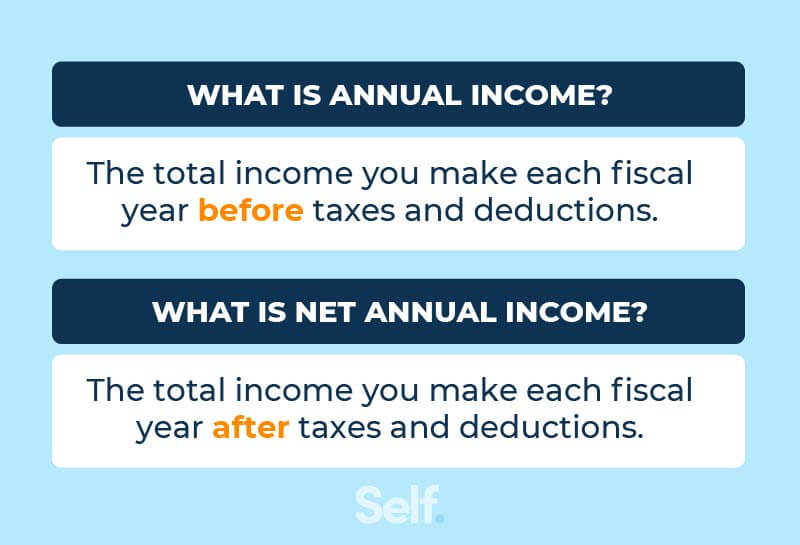
While gross annual income is a critical figure for overall financial planning, it’s equally important to understand its counterpart: net annual income. The distinction lies in the deductions and withholdings that reduce your take-home pay.
What is Gross Annual Income?
As established, your gross annual income is the total amount of money you earned from all sources before any deductions or taxes are taken out. It’s the “headline” figure often used for loan applications, income verification, and determining eligibility for certain programs. It reflects the full value of your labor and investments.
Understanding Deductions and Withholdings
The gap between your gross and net income is filled by various deductions and withholdings, which can be mandatory or voluntary:
-
Federal Income Tax: Required by the IRS based on your income level and W-4 elections.
-
State and Local Income Tax: Varies by state and locality.
-
Social Security Tax (FICA): Funds Social Security benefits.
-
Medicare Tax (FICA): Funds Medicare benefits.
-
Health Insurance Premiums: Your share of employer-sponsored health coverage.
-
Retirement Contributions: Deductions for 401(k), 403(b), or other employer-sponsored retirement plans.
-
Other Pre-Tax Deductions: Such as contributions to Flexible Spending Accounts (FSAs) or Health Savings Accounts (HSAs).
-
Post-Tax Deductions: Union dues, charitable contributions, or loan repayments, for example.
For self-employed individuals, these taxes (Social Security and Medicare, known as self-employment taxes) and sometimes estimated income taxes are not directly withheld but must be paid quarterly to the IRS.
What is Net Annual Income (Take-Home Pay)?
Your net annual income, often referred to as “take-home pay,” is the amount of money you actually receive after all taxes, deductions, and withholdings have been removed from your gross income. This is the money available for your immediate spending, saving, and debt repayment. While financial institutions often focus on gross income for lending purposes, your net income is what truly dictates your day-to-day budget and spending power.
Why Both Figures Matter
Both gross and net income are vital for different aspects of your financial life.
-
Gross income provides the broader picture of your earning capacity and is used for tax calculations, determining loan eligibility, and assessing your overall financial health.
-
Net income is essential for creating a realistic budget, managing monthly cash flow, and understanding how much discretionary income you truly have. Many financial decisions, such as affording a specific rent or car payment, are primarily driven by your net income.
Tools and Resources for Income Calculation
While a pen and paper can certainly get the job done, several tools and resources can simplify and enhance the accuracy of calculating your annual income.
Spreadsheets and Budgeting Apps
For consistent tracking and calculations, digital tools are invaluable:
-
Spreadsheets (Excel, Google Sheets): You can create a simple spreadsheet to list each income source and automatically sum them. This allows for easy categorization, tracking over time, and even projecting future income. Many free templates are available online for income and expense tracking.
-
Budgeting Apps (Mint, YNAB, Personal Capital): These applications often link directly to your bank accounts and investment platforms, automatically categorizing transactions and providing real-time insights into your income and spending. They can generate reports that clearly show your total income for any given period, simplifying the annual calculation.
Online Calculators
Many financial websites offer free online annual income calculators. While these often focus on projecting future income based on hourly wages or salary, some can help you consolidate various income streams for a quick estimate. They can be particularly useful for “what-if” scenarios, such as how a pay raise or a new side hustle might impact your total earnings.
Consulting a Financial Professional
If your income streams are complex (e.g., multiple businesses, significant investment portfolios, international income), or if you simply prefer expert assistance, a financial advisor or tax professional can be an invaluable resource. They can help you:
-
Accurately categorize and calculate all income sources.
-
Understand the tax implications of different income types.
-
Identify potential deductions to maximize your net income.
-
Develop strategies for income optimization and tax planning.
They can also ensure you are compliant with all tax regulations, particularly important for self-employed individuals who need to manage estimated taxes.
Why Accurately Calculating Annual Income is Crucial
Knowing your annual income isn’t just an academic exercise; it’s a fundamental aspect of effective financial stewardship that impacts nearly every facet of your economic life.
Financial Planning and Budgeting
The most immediate benefit of calculating your annual income is its role in financial planning. Your annual income forms the baseline for creating a realistic budget. Without this figure, you cannot accurately determine how much you can afford to spend, save, or invest. It allows you to:
-
Allocate funds to different spending categories (housing, food, transportation, entertainment).
-
Set realistic savings goals for emergencies, large purchases, or retirement.
-
Identify areas where you might be overspending relative to your earnings.
-
Measure your financial progress year over year.
Loan Applications and Creditworthiness
When you apply for a mortgage, car loan, personal loan, or even some credit cards, lenders will invariably ask for your annual income. This figure is a primary factor in determining your eligibility and the terms of the loan. Lenders use it to assess your debt-to-income (DTI) ratio, which indicates your ability to comfortably manage new debt payments. A higher, verifiable annual income generally translates to greater borrowing power and more favorable interest rates.
Tax Planning and Compliance
Your annual income directly determines your tax obligations. The U.S. tax system is progressive, meaning higher incomes are taxed at higher rates. Accurately calculating your annual income is the first step in:
-
Figuring out which tax bracket you fall into.
-
Estimating your total tax liability for the year.
-
Identifying eligible deductions and credits to reduce your taxable income.
-
Ensuring compliance with IRS regulations and avoiding penalties, especially for self-employed individuals who must pay estimated taxes.
Proper tax planning based on an accurate income figure can lead to significant savings and peace of mind.
Goal Setting and Wealth Building
Ultimately, your annual income is a key determinant of your potential for wealth building. Whether your goals include saving for a down payment on a house, funding a child’s education, or achieving early retirement, understanding your income provides the foundation for setting achievable targets. It allows you to:
-
Project how long it will take to reach specific financial milestones.
-
Make informed decisions about increasing your income through career advancement or side hustles.
-
Strategize how to allocate surplus income towards investments that will grow your wealth over time.
In conclusion, calculating your annual income is not a one-time task but an ongoing process that empowers you to take control of your financial destiny. By diligently tracking all your income sources, distinguishing between gross and net figures, and utilizing available tools, you gain clarity, confidence, and the capability to make smarter financial choices that lead to long-term prosperity.
aViewFromTheCave is a participant in the Amazon Services LLC Associates Program, an affiliate advertising program designed to provide a means for sites to earn advertising fees by advertising and linking to Amazon.com. Amazon, the Amazon logo, AmazonSupply, and the AmazonSupply logo are trademarks of Amazon.com, Inc. or its affiliates. As an Amazon Associate we earn affiliate commissions from qualifying purchases.