
In the intricate world of finance, numbers speak a language all their own. While grand figures like millions, billions, or even trillions often capture headlines and imaginations, it is the seemingly small, often overlooked percentages that frequently dictate the true state of our financial health, investments, and economic landscapes. Among these, the concept of “1 percent of” stands out not just as a fundamental mathematical calculation, but as a powerful, pervasive, and often underestimated force in personal finance, business strategy, and macroeconomic trends. Understanding what 1 percent represents, and more importantly, its tangible impact, is a cornerstone of financial literacy.

At its core, “1 percent of” means one part out of every hundred parts of a whole. It’s a proportion, a fraction, a decimal – 1/100, or 0.01. Simple as this calculation may seem, its implications ripple through every facet of our financial lives, from the interest earned on our savings to the fees we pay on our investments, the taxes deducted from our income, and even the nuances of global economic growth. This article delves into the profound significance of “1 percent of” across various financial domains, demonstrating why such a small fraction commands such immense power.
The Foundational Role of Percentages in Finance
Percentages are the universal language of comparison and proportion in finance. They allow us to standardize measurements, compare diverse financial instruments, and quantify change in a way that absolute numbers often cannot. When we ask “what is 1 percent of,” we’re not just performing a sum; we’re initiating a deeper inquiry into relative value, impact, and potential.
Deciphering the “1 Percent Of” Concept
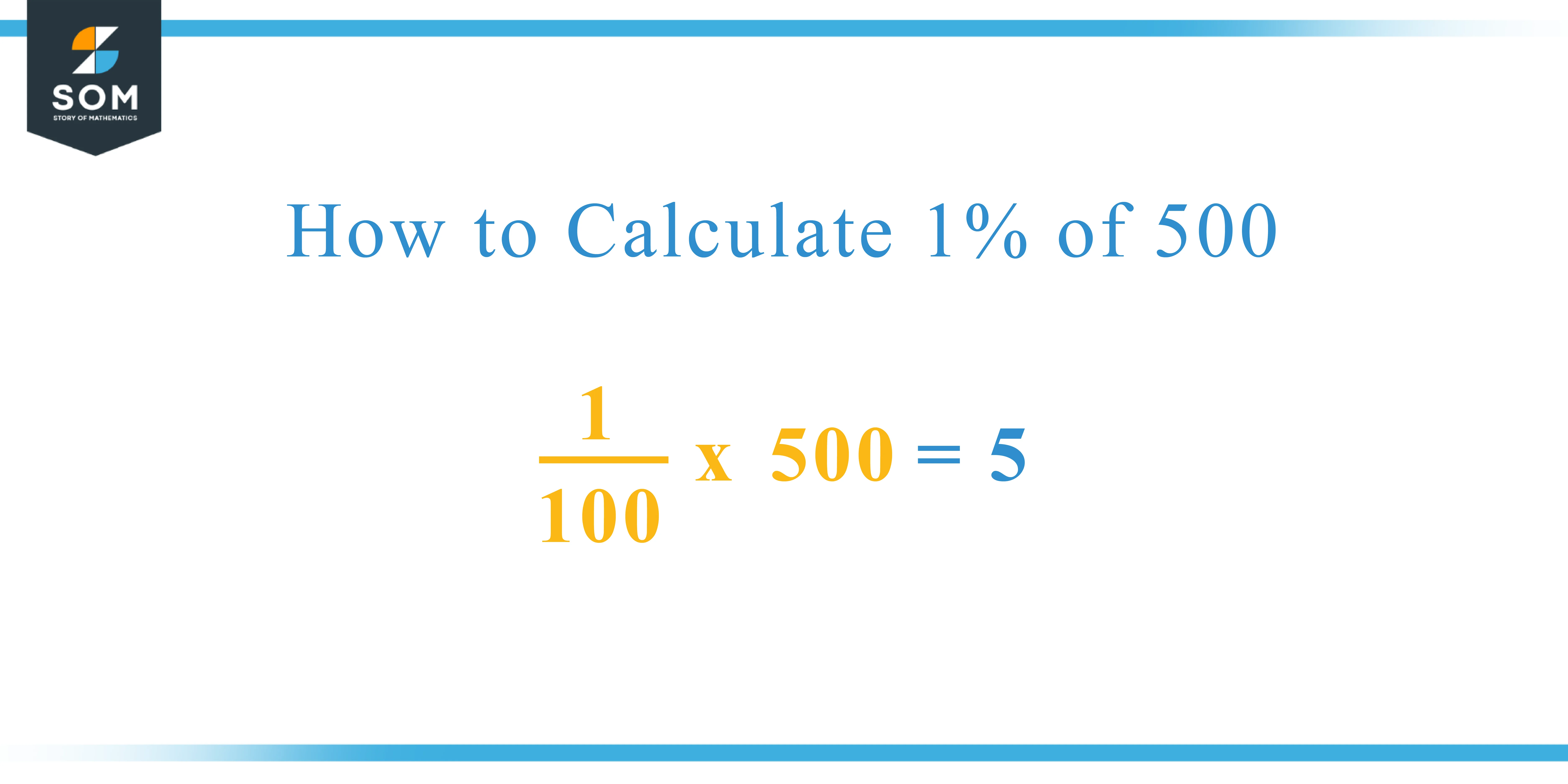
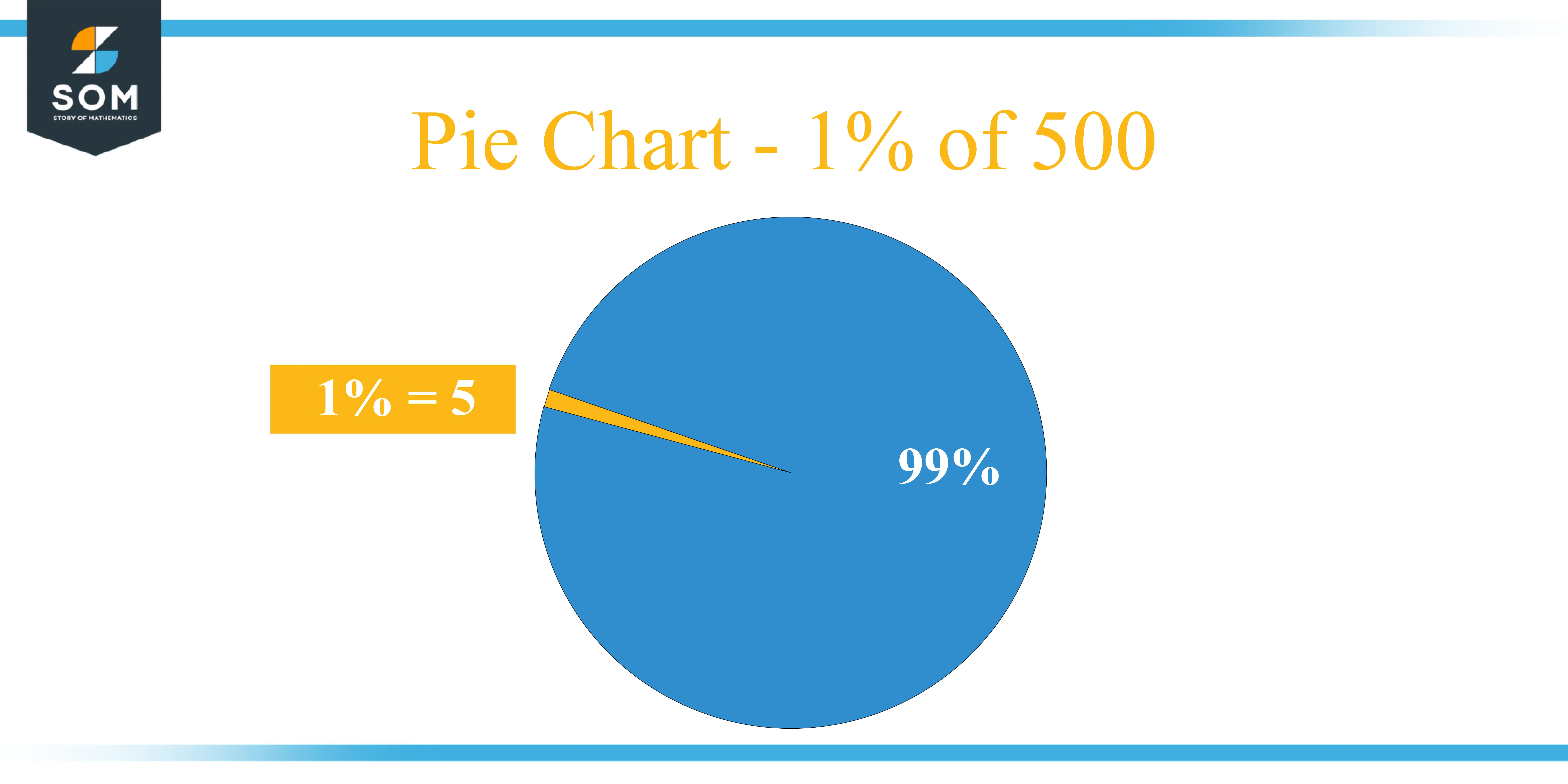
To calculate 1 percent of any given number, you simply divide that number by 100. For instance, 1 percent of $1,000 is $10. 1 percent of $100,000 is $1,000. While the calculation is straightforward, its application is anything but trivial. This simple operation underpins complex financial models, informs critical budgeting decisions, and reveals the true cost or benefit of various financial choices. It’s the building block for understanding more complex percentage-based concepts like annual percentage rates (APR), annual percentage yield (APY), compound interest, inflation rates, and market share. Without a firm grasp of this basic unit, navigating the financial world becomes significantly more challenging. It’s the basic unit of measurement that allows us to compare growth rates, discount rates, and profit margins across vastly different scales.
Why Small Percentages Matter: The Power of Increments
The human mind often gravitates towards large, easily discernible changes. A 50% discount is exciting; a 1% discount might seem negligible. However, in finance, especially over time, small percentages wield disproportionate power. This is the essence of compound interest, the silent accelerator of wealth, where even an extra 1% return annually can translate into hundreds of thousands of dollars over decades. Conversely, a 1% increase in loan interest or investment fees can erode wealth just as effectively. The cumulative effect of minor percentage differences can be staggering, illustrating that financial success often hinges on optimizing these seemingly insignificant increments. It’s not always about hitting home runs; often, it’s about consistently moving the needle by just 1%.
Beyond Simple Calculation: Context is Key
Understanding “what is 1 percent of” goes beyond mere arithmetic. Its true significance is always tied to context. Is it 1 percent of your daily coffee budget, or 1 percent of your annual investment portfolio? The former might be a few cents, the latter potentially thousands of dollars. The value of 1 percent changes dramatically based on the base amount it’s being applied to. This contextual understanding is crucial for making informed financial decisions, enabling us to differentiate between minor fluctuations and significant shifts that demand attention. It helps us prioritize where to focus our financial scrutiny and where marginal gains or losses truly matter.
1 Percent in Personal Finance: Budgeting, Savings, and Debt
For individuals, the “1 percent of” concept is a practical tool for managing everyday finances, fostering saving habits, and strategically tackling debt. It provides a digestible way to approach daunting financial goals.
The 1% Rule in Budgeting: Small Adjustments, Big Impact
Budgeting often feels restrictive, but applying the 1% rule can make it more manageable and effective. Instead of drastic cuts, consider where you can shave off just 1% from various spending categories. Can you reduce your dining out budget by 1%? Your entertainment by 1%? These small, almost imperceptible adjustments add up. For someone spending $4,000 a month, a 1% reduction across the board frees up $40. This $40, when redirected to savings or debt repayment consistently, can have a profound impact over a year or a decade, proving that impactful budgeting doesn’t always require draconian measures. It fosters a mindset of continuous improvement rather than deprivation.
Saving Strategies: The Power of 1% More
Imagine you currently save 10% of your income. What if you committed to saving just 1% more, bringing your total to 11%? For someone earning $60,000 annually, that’s an extra $600 saved per year. Over ten years, this amounts to an additional $6,000, not including any interest or investment gains. This incremental approach makes saving less intimidating and more sustainable. It leverages the psychological principle that small, achievable goals are easier to maintain than large, sudden shifts, gradually building momentum towards significant financial security. Automating this “1% more” ensures consistency and removes the friction of manual transfers.
Tackling Debt: Reducing by Just 1%
Debt can feel overwhelming, but even a 1% strategic focus can accelerate repayment. If you have a credit card balance of $5,000 with a 20% interest rate, paying just 1% more than your minimum payment each month can significantly reduce the total interest paid and shorten the repayment period. Similarly, negotiating a 1% lower interest rate on a mortgage or personal loan can save thousands over the life of the loan. This seemingly small percentage shift can free up cash flow and reduce the burden of interest payments, creating a snowball effect as more principal is paid down.
Understanding Interest Rates: APR and APY Explained
The “1 percent of” concept is at the heart of understanding interest rates. An Annual Percentage Rate (APR) tells you the yearly cost of borrowing money, including fees, expressed as a percentage. An Annual Percentage Yield (APY) reflects the actual rate of return earned on an investment, considering the effect of compounding interest. Even a 1% difference between two savings accounts or loan offers can translate into hundreds or thousands of dollars over time. For example, a savings account offering 1.5% APY versus one offering 0.5% APY might seem negligible at first glance, but on a $10,000 balance, that 1% difference means an extra $100 earned annually, which compounds over time. This illustrates why scrutinizing every percentage point, especially the small ones, is vital when choosing financial products.
The 1% in Investing: Growth, Returns, and Risk
In the realm of investments, “1 percent of” takes on monumental significance. It dictates how quickly your wealth can grow, how much of your returns are eroded by fees, and how effectively you manage risk.
Compounding Returns: The Magic of 1% Annually
The most celebrated financial concept leveraging small percentages is compound interest. Imagine two investors, both starting with $10,000. Investor A earns a consistent 7% annual return, while Investor B earns 8% – just 1% more. After 30 years, Investor A’s portfolio would be worth approximately $76,123. Investor B, with that extra 1%, would have approximately $100,627. That seemingly small 1% difference translates into an additional $24,504 over three decades. This demonstrates the exponential power of compounding and why even marginal improvements in annual returns can lead to substantial wealth creation over long periods. The earlier you start to secure that extra 1%, the more time it has to work its magic.
Investment Fees: How 1% Can Erase Wealth
While an extra 1% return is celebrated, a 1% fee often goes unnoticed but can be equally devastating. Many mutual funds and managed portfolios charge an annual expense ratio of 1% or more. Let’s revisit our Investor A scenario. If their 7% return is before a 1% annual fee, their net return is actually 6%. After 30 years, their $10,000 investment would only grow to approximately $57,435. That single percentage point in fees cost them nearly $18,688 (the difference between $76,123 and $57,435). This stark example underscores the critical importance of understanding and minimizing investment fees. Low-cost index funds and ETFs often boast expense ratios well below 0.5%, illustrating how choosing wisely can save you tens or even hundreds of thousands of dollars over an investing lifetime.
Risk Management: Allocating a 1% “Play” Fund
For those interested in exploring higher-risk investments or speculative ventures, the 1% rule can be a prudent risk management strategy. Allocating no more than 1% of your total investment portfolio to highly volatile assets like individual penny stocks, new cryptocurrencies, or highly speculative ventures ensures that even if these investments go to zero, the impact on your overall financial well-being is minimal. This approach allows for experimentation and potential high returns without jeopardizing your primary financial goals. It balances the desire for excitement with responsible wealth preservation.
Market Fluctuations: Interpreting 1% Shifts
Daily news reports frequently highlight market movements, often expressed in percentages. A “1% dip” or “1% gain” in the stock market can seem small in isolation. However, for a portfolio worth $500,000, a 1% swing means a $5,000 change in value. Understanding that these percentages represent real money helps investors remain rational during periods of volatility. It contextualizes market news and prevents overreactions to minor daily movements, promoting a long-term perspective. While a 1% daily move might be noise, consistent 1% changes over weeks or months can signal significant trends.
Business and Macroeconomics: The Broader Impact of 1%
Beyond individual finances, the “1 percent of” principle plays a pivotal role in corporate profitability, economic growth, and global wealth distribution.
Business Margins: The Critical Role of 1% Profit
For businesses, especially those operating on thin margins, every percentage point of profit is vital. A company might have revenues of $100 million, but if its net profit margin is only 5%, that means $5 million in profit. If they can improve their efficiency or pricing to increase that margin by just 1% (to 6%), their profit jumps to $6 million – a 20% increase in actual profit, derived from a seemingly small percentage point improvement. This continuous quest for incremental efficiency gains and margin improvements drives corporate strategy, cost-cutting initiatives, and pricing decisions across industries.
Economic Indicators: GDP Growth and Inflation
Macroeconomic indicators are almost universally expressed in percentages. Gross Domestic Product (GDP) growth, for instance, measures the percentage increase in a nation’s economic output. A 1% increase in a multi-trillion-dollar economy represents an enormous amount of wealth creation and can signal a healthy economy, leading to job growth and increased consumer confidence. Conversely, inflation, the rate at which the general level of prices for goods and services is rising, is also a percentage. A 1% increase in inflation, while seemingly modest, erodes the purchasing power of every dollar, impacting savings, wages, and the cost of living for millions. Central banks often target specific inflation percentages, such as 2%, recognizing the delicate balance required to maintain economic stability.
Taxation: Understanding Incremental Rates
Taxation systems frequently employ a progressive percentage structure. For instance, income tax brackets might increase by a few percentage points at different income levels. Understanding “what is 1 percent of” your taxable income at each bracket is crucial for tax planning. Similarly, sales tax, property tax, and corporate tax rates are all expressed as percentages, and even a 1% variation can have significant implications for individuals, businesses, and government revenue collection. Lobbying efforts often focus on tiny percentage shifts in tax codes, knowing the monumental impact they can have on different sectors or income groups.
Wealth Distribution: The “Top 1 Percent” Phenomenon
On a societal level, the “top 1 percent” has become a widely discussed concept, highlighting disparities in wealth distribution. This phrase refers to the wealthiest 1% of households in a given country, who collectively hold a disproportionately large share of national wealth. The ongoing debate around economic inequality often revolves around the dynamics of how this top 1% accumulates and maintains its wealth, and how policies might address this distribution. Understanding the sheer scale of assets concentrated within this small percentage of the population underscores the powerful financial forces at play in global economies.
Practical Application: Tools and Strategies for Mastering the 1%
To harness the power of “1 percent of” effectively, individuals and businesses need practical tools and a disciplined approach.
Financial Calculators and Digital Tools
Modern technology offers a plethora of financial calculators (compound interest calculators, loan amortization calculators, budgeting apps) that automatically perform percentage calculations. These tools are invaluable for visualizing the long-term impact of small percentage changes, whether it’s an extra 1% saved, a 1% higher investment return, or a 1% lower interest rate on a loan. Using these tools regularly can transform abstract percentage concepts into concrete financial projections, aiding in decision-making and goal setting.
Setting Realistic Goals: Starting with 1%
When embarking on financial journeys, whether it’s saving for retirement, investing, or paying off debt, aiming for small, manageable 1% improvements can be far more effective than trying for unrealistic leaps. Can you increase your retirement contribution by 1% of your salary this year? Can you pay off 1% more of your credit card balance than the minimum? These small, consistent efforts build momentum and sustainable habits, leading to significant results over time. It’s about progress, not perfection.
The Psychology of Small Gains and Losses
Understanding the psychological impact of 1% changes is also crucial. A 1% gain can be motivating, but a 1% loss can be demoralizing if not properly contextualized. Investors who panic sell during a 1% market downturn often miss out on subsequent recoveries. Cultivating a mindset that recognizes the long-term insignificance of minor daily fluctuations, while appreciating the cumulative power of sustained incremental gains, is key to financial resilience and success.
Continuous Learning and Adaptation
The financial landscape is ever-evolving. Interest rates change, markets fluctuate, and new investment opportunities emerge. Staying informed about how these shifts impact your personal “1 percent of” is vital. Continuous learning, whether through financial news, expert advice, or personal research, enables you to adapt your strategies and consistently optimize for those crucial percentage points that make a world of difference.
Conclusion
The question “what is 1 percent of” may seem like a trivial mathematical exercise, but its implications in the financial world are anything but. From the microscopic adjustments in personal budgets to the macroeconomic shifts affecting entire nations, the power of a single percentage point is profound and far-reaching. It is the silent driver of compound growth, the insidious erosive force of fees and high interest, and the fundamental metric for assessing performance and value.
Mastering the concept of “1 percent of” is not merely about arithmetic; it’s about cultivating a nuanced understanding of financial dynamics. It empowers individuals to make smarter decisions about their savings, investments, and debt. It allows businesses to optimize profitability and efficiency. And it helps us all better comprehend the forces shaping our broader economic environment. By respecting and strategically leveraging this seemingly small fraction, we unlock the potential for significant financial progress and informed decision-making in a world increasingly defined by numbers. The journey to financial mastery often begins with appreciating the immense power contained within that modest “1 percent.”
aViewFromTheCave is a participant in the Amazon Services LLC Associates Program, an affiliate advertising program designed to provide a means for sites to earn advertising fees by advertising and linking to Amazon.com. Amazon, the Amazon logo, AmazonSupply, and the AmazonSupply logo are trademarks of Amazon.com, Inc. or its affiliates. As an Amazon Associate we earn affiliate commissions from qualifying purchases.