
In the intricate world of personal finance and investing, few concepts hold as much power and significance as compounding. Often hailed as the “eighth wonder of the world” by Albert Einstein, compounding is a fundamental principle that underpins wealth creation, debt management, and financial planning. At its heart lies the idea of earning returns not just on your initial principal, but also on the accumulated interest from previous periods. Among its various forms, annual compounding is one of the most common and foundational, offering a clear illustration of this exponential growth mechanism.
Understanding annual compounding is not merely an academic exercise; it’s a critical component of financial literacy that empowers individuals to make informed decisions about their savings, investments, and loans. This article will demystify annual compounding, breaking down its mechanics, illustrating its impact, and demonstrating why grasping this concept is essential for anyone looking to build a secure financial future.
The Core Concept of Compounding
To fully appreciate annual compounding, it’s crucial to first understand the foundational difference between simple and compound interest. This distinction is where the true power of growth begins to reveal itself.
Simple Interest vs. Compound Interest
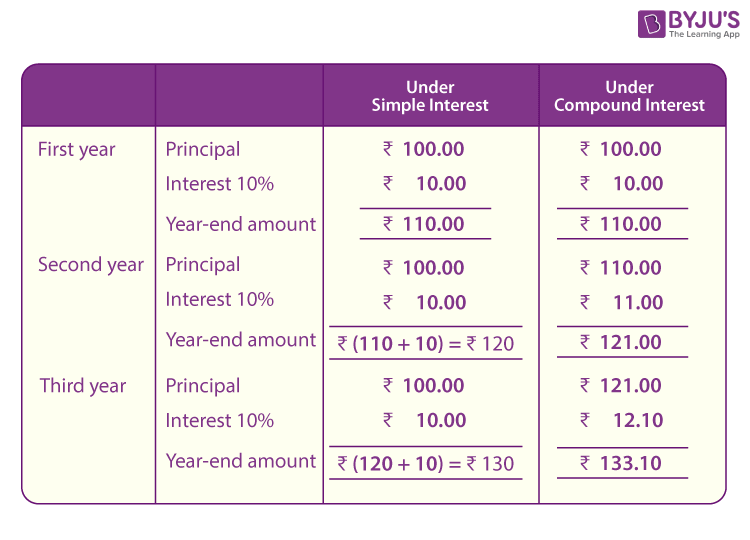
Imagine you lend money or deposit it into a savings account. Simple interest is calculated only on the initial principal amount. For example, if you invest $1,000 at a 5% simple interest rate for five years, you would earn $50 each year ($1,000 * 0.05). After five years, your total interest earned would be $250, and your investment would grow to $1,250. The interest earned each year remains constant because it’s always based on the original $1,000.
Compound interest, on the other hand, is a game-changer. It’s calculated on the initial principal and also on all the accumulated interest from previous periods. Using the same example, if you invest $1,000 at a 5% compound interest rate, the first year you’d earn $50, bringing your total to $1,050. In the second year, the 5% interest isn’t just on the initial $1,000; it’s on the new principal of $1,050, yielding $52.50. This means your principal for the third year starts at $1,102.50, and so on. This continuous snowball effect is the essence of compounding.
The Power of Reinvestment
The magic of compound interest, particularly annual compounding, lies in the principle of reinvestment. When interest is compounded, it means that the interest earned is added back to the principal. This larger principal then earns interest in the next period, leading to a virtuous cycle of accelerated growth. For investors, this means that their earnings themselves start earning money, leading to exponential growth over time. For borrowers, it’s a stark reminder that interest on loans can also compound, potentially leading to a rapidly growing debt burden if not managed effectively.
The Time Horizon Factor
One of the most critical variables influencing the effectiveness of compounding is time. The longer your money has to compound, the more significant the impact. This is often referred to as the “long game” in investing. A small initial investment, given enough time, can grow into a substantial sum purely because of the sustained effect of compounding. Conversely, delaying investments even by a few years can drastically reduce the potential for wealth accumulation due to lost compounding opportunities. The early bird genuinely catches the worm when it comes to harnessing compound interest.
How Annual Compounding Works in Practice
While the general concept of compounding is powerful, understanding its specific application through annual compounding brings it into sharper focus for practical financial planning.
Calculating Annual Compound Interest
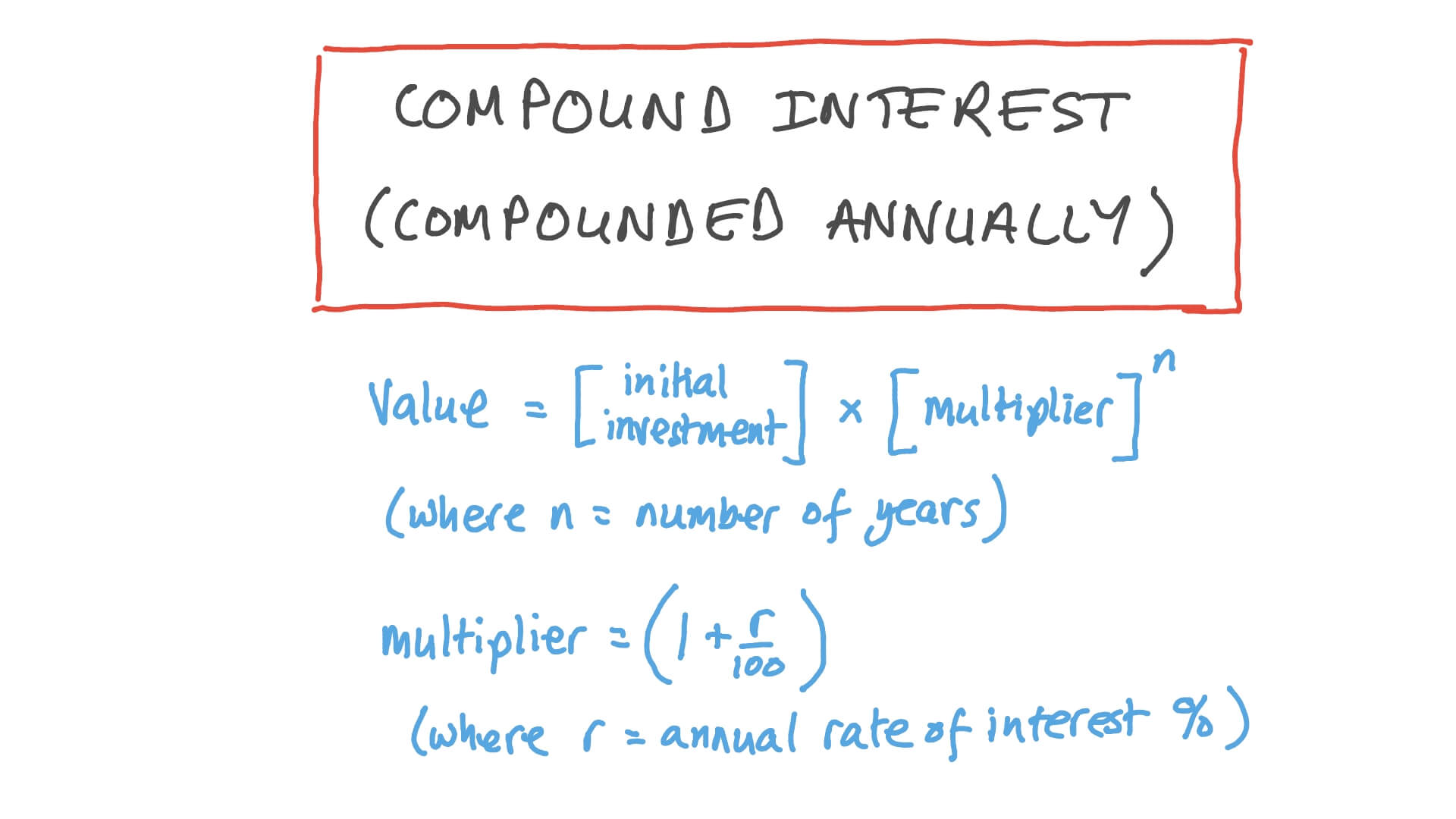
The formula for calculating annual compound interest is relatively straightforward:
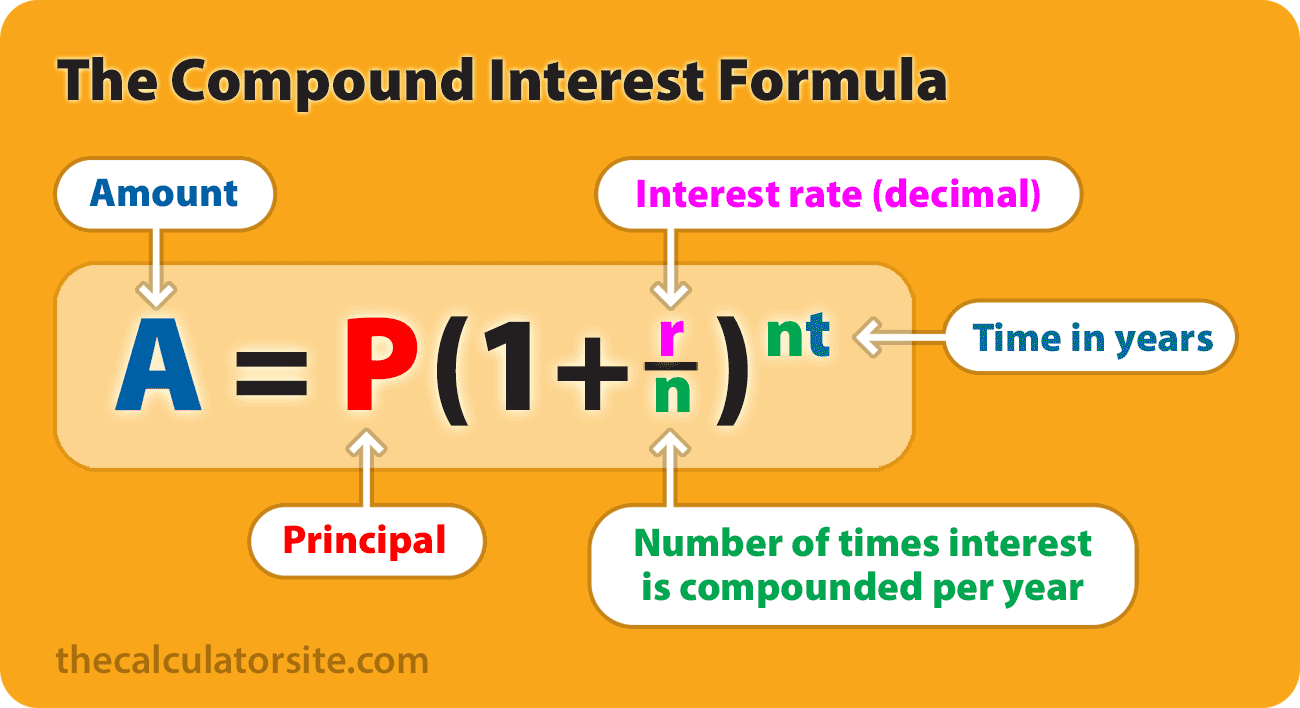
A = P (1 + r)^t
Where:
-
A = the future value of the investment/loan, including interest
-
P = the principal investment amount (the initial deposit or loan amount)
-
r = the annual interest rate (as a decimal)
-
t = the number of years the money is invested or borrowed for
Let’s revisit our example: $1,000 invested at a 5% annual compound interest rate for 5 years.
P = $1,000
r = 0.05
t = 5
A = $1,000 (1 + 0.05)^5
A = $1,000 (1.05)^5
A = $1,000 * 1.27628
A = $1,276.28
After 5 years, your initial $1,000 would have grown to $1,276.28. The total interest earned is $276.28. Compare this to the $250 earned with simple interest over the same period. The difference of $26.28 might seem small over 5 years, but this divergence grows exponentially over longer periods.
The Role of the Interest Rate
While time is a crucial ally, the interest rate (r) also plays a significant role in the pace of compounding. A higher interest rate means a larger percentage of your principal (and accumulated interest) is added each year, leading to faster growth. This is why investors often seek out investments with competitive returns, and why borrowers strive for the lowest possible interest rates on their loans. Even a seemingly small difference in the annual interest rate can lead to a substantial disparity in the final accumulated amount over decades.
Real-World Examples: Savings Accounts and Investments
Annual compounding is pervasive in the financial landscape:
-
Savings Accounts & Certificates of Deposit (CDs): Many high-yield savings accounts and CDs offer interest that is compounded annually (though some compound more frequently). This means at the end of each year, the earned interest is added to your principal balance, and the next year’s interest is calculated on this new, larger sum.
-
Bonds: While interest payments (coupons) on bonds are often semi-annual, if you reinvest those coupon payments into more bonds or other investments, you are effectively compounding your returns.
-
Retirement Accounts (e.g., 401(k)s, IRAs): The investments within these accounts (stocks, mutual funds, ETFs) grow through a combination of capital appreciation and dividends/interest. If these dividends or interest are reinvested, the power of annual (or more frequent) compounding is fully realized, driving significant growth over an individual’s working life.
Why Annual Compounding Matters for Your Financial Future
Understanding annual compounding isn’t just about math; it’s about strategy and achieving your financial goals. Its impact on long-term wealth building is profound.
Building Long-Term Wealth
The most significant benefit of annual compounding for individuals is its unparalleled ability to build long-term wealth. It allows your money to work for you, creating a self-sustaining growth engine. For instance, consistent contributions to a retirement fund coupled with annual compounding can transform modest savings into a substantial nest egg capable of supporting a comfortable retirement. It’s the engine that powers passive income streams and accelerates the journey towards financial independence.
Beating Inflation Over Time
Inflation erodes the purchasing power of money over time. If your investments only earn simple interest, or if your returns are less than the rate of inflation, your real wealth might actually be diminishing. Annual compounding provides a powerful mechanism to beat inflation. By consistently growing your principal at an exponential rate, your investments have a better chance of outpacing the rising cost of living, preserving and enhancing your real wealth over decades.
The Earlier, The Better: Leveraging Time
As highlighted earlier, time is the crucial multiplier for compounding. The concept of “the earlier, the better” cannot be overstated. Starting to save and invest in your 20s, even with small amounts, will almost certainly yield far greater returns than starting in your 40s with significantly larger contributions. This is because the earlier investments have many more years to compound, allowing them to benefit from numerous cycles of interest earning interest. This principle underscores the importance of young adults prioritizing savings and investment to capitalize on the compounding effect.
Beyond Annual: Other Compounding Frequencies
While annual compounding is a foundational concept, it’s important to recognize that interest can be compounded at different frequencies. These variations impact the total return.
Semi-Annual, Quarterly, Monthly, and Daily Compounding
Interest can be compounded more frequently than once a year. Common frequencies include:
-
Semi-annually: Interest is calculated and added to the principal twice a year (every six months).
-
Quarterly: Interest is calculated and added four times a year (every three months).
-
Monthly: Interest is calculated and added twelve times a year.
-
Daily: Interest is calculated and added 365 times a year.
The Impact of Compounding Frequency
The more frequently interest is compounded, the higher the effective annual rate of return, and thus, the faster your money grows. While the difference between annual and semi-annual compounding might be marginal over a short period, it becomes more significant over long durations. This is because the interest starts earning interest sooner and more often. When comparing financial products, always look beyond the stated annual interest rate to the “Annual Percentage Yield” (APY), which accounts for the effect of compounding frequency. The APY gives you a more accurate picture of the actual annual return.
Continuous Compounding: The Theoretical Limit
Continuous compounding is a theoretical concept where interest is compounded an infinite number of times over a given period. While not practically achievable, it represents the upper limit of how much an investment can grow through compounding. It’s often used in advanced financial modeling and calculations, demonstrating the maximum possible growth rate under ideal conditions. In reality, even daily compounding gets very close to the effects of continuous compounding.
Practical Strategies to Harness Annual Compounding
Understanding annual compounding is the first step; actively using this knowledge to your advantage is the next. Here are practical strategies to make annual compounding work for you:
Start Early and Be Consistent
The most impactful strategy is to start saving and investing as early as possible and to contribute consistently. Even small, regular contributions can grow substantially over decades when allowed to compound. Automate your savings by setting up regular transfers to investment accounts, ensuring you consistently feed the compounding engine.
Reinvest Earnings Automatically
To maximize the power of compounding, ensure that any interest, dividends, or capital gains from your investments are reinvested back into the principal. Many brokerage accounts and mutual funds offer automatic reinvestment options. This ensures that your earnings are immediately put to work, generating even more returns.
Understand Fees and Their Impact
Compounding works wonders for growth, but it can also magnify the negative impact of fees. High management fees, expense ratios, or transaction costs can significantly erode your compounded returns over time. Always scrutinize the fees associated with any investment product and opt for low-cost options whenever possible to ensure more of your money is compounding for you.
Diversification and Risk Management
While compounding is a powerful engine, it doesn’t eliminate investment risk. Diversifying your investments across different asset classes (stocks, bonds, real estate) and geographies helps mitigate risk. A well-diversified portfolio that also benefits from annual compounding is generally more resilient and can provide more consistent long-term growth. Regular rebalancing ensures your portfolio stays aligned with your risk tolerance and financial goals.
In conclusion, annual compounding is not just a financial term; it’s a fundamental force that dictates the pace of wealth accumulation and debt growth. By understanding how it works and applying sound financial strategies—starting early, being consistent, reinvesting earnings, and managing costs—you can harness its incredible power to build a robust and secure financial future. It’s the bedrock upon which genuine financial independence is often built.
aViewFromTheCave is a participant in the Amazon Services LLC Associates Program, an affiliate advertising program designed to provide a means for sites to earn advertising fees by advertising and linking to Amazon.com. Amazon, the Amazon logo, AmazonSupply, and the AmazonSupply logo are trademarks of Amazon.com, Inc. or its affiliates. As an Amazon Associate we earn affiliate commissions from qualifying purchases.