
In the world of finance, understanding how to increase a number by a specific percentage is not merely a mathematical exercise; it’s a foundational skill crucial for personal wealth management, investment analysis, business growth, and strategic financial planning. From calculating investment returns and understanding inflation to setting profit margins and evaluating salary increases, the ability to accurately and insightfully apply percentage increases empowers individuals and businesses to make informed decisions and navigate the complex financial landscape. This article delves into the core mechanics of percentage increases and explores their multifaceted applications across various financial domains.
The Fundamental Mechanics: Understanding Percentage Increases
At its heart, increasing a number by a percentage is a straightforward arithmetic operation. However, its implications stretch far beyond the calculator, impacting almost every financial transaction and projection. Mastering this fundamental concept is the first step towards robust financial literacy.
Defining “Percentage Increase”
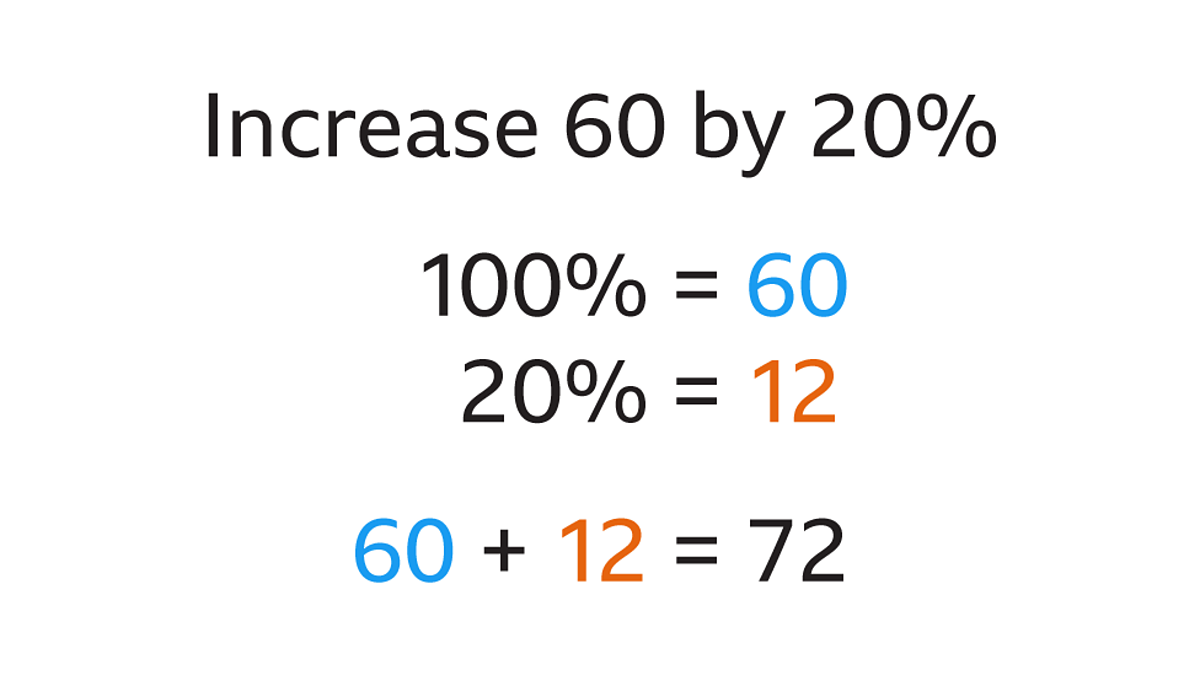
A percentage increase quantifies how much a value has grown relative to its original amount, expressed as a fraction of 100. For instance, a 10% increase means that the new value is 100% of the original value plus an additional 10% of that original value, totaling 110% of the original. This concept allows for standardized comparisons of growth or change, regardless of the initial base number. It provides a common language to express relative change, whether we’re discussing a small business’s quarterly sales growth or the global inflation rate.
The Basic Formula: Step-by-Step Calculation
To increase a number by a percentage, follow these simple steps:
-
Convert the Percentage to a Decimal: Divide the percentage by 100. For example, 15% becomes 0.15; 5% becomes 0.05.
-
Calculate the Increase Amount: Multiply the original number by the decimal equivalent of the percentage. This gives you the absolute value of the increase.
- Example: If you want to increase $200 by 15%, the increase amount is $200 * 0.15 = $30.
-
Add the Increase to the Original Number: Sum the original number and the calculated increase amount. This gives you the new, increased number.
- Example: Continuing from above, $200 + $30 = $230.
A more streamlined approach combines these steps: Multiply the original number by (1 + decimal equivalent of the percentage).
- Example: To increase $200 by 15%, calculate $200 * (1 + 0.15) = $200 * 1.15 = $230.
This method is often preferred for its efficiency, especially when dealing with multiple calculations or using spreadsheets.
Real-World Examples: Beyond Simple Numbers
The application of percentage increases extends to countless everyday financial scenarios:
-
Sales Tax: When you buy a product, the sales tax percentage is added to its base price. A $50 item with an 8% sales tax becomes $50 * 1.08 = $54.
-
Tips: Tipping a waiter involves increasing your bill by a certain percentage (e.g., 15-20%). A $75 meal with a 20% tip becomes $75 * 1.20 = $90 (total including tip).
-
Markups: Businesses use percentage markups to determine selling prices. If an item costs $10 to produce and a business wants a 30% markup, the selling price would be $10 * 1.30 = $13.
These examples highlight how fundamental this calculation is to understanding costs, prices, and personal budgeting.
Percentage Increases in Personal Finance: Growing Your Wealth
For individuals, understanding percentage increases is paramount to effectively managing personal finances, planning for the future, and growing wealth. It’s the language of investment returns, the measure of economic forces, and a critical component of debt evaluation.
Investment Returns and Compound Interest
Perhaps the most compelling application of percentage increases in personal finance is in investment returns and the magic of compound interest. When your investments yield a certain percentage return, that return is added to your principal, and in subsequent periods, your returns are calculated on this new, larger sum. This “return on return” effect is what makes compound interest such a powerful wealth-building tool.
-
Example: Investing $1,000 at a 7% annual return.
-
Year 1: $1,000 * 1.07 = $1,070
-
Year 2: $1,070 * 1.07 = $1,144.90
-
Year 3: $1,144.90 * 1.07 = $1,225.04
-
Over time, even modest percentage increases can lead to substantial wealth accumulation, underscoring the importance of early and consistent investing.
Salary Raises and Inflation’s Impact
Understanding percentage increases is crucial when evaluating salary adjustments. A 5% raise sounds good, but its real value can only be assessed by considering inflation – the rate at which the general level of prices for goods and services is rising. If you receive a 5% raise, but inflation is 3%, your “real” purchasing power has effectively increased by only about 2%. Conversely, if inflation is 6%, a 5% raise means your real purchasing power has decreased. Keeping an eye on these percentages helps in negotiating salaries and understanding the true growth of your income.
Debt Management: The Cost of Interest Rates
On the flip side, percentage increases are central to understanding the cost of borrowing money. Loan interest rates, whether for mortgages, car loans, or credit cards, represent the percentage by which your outstanding balance increases over time. A 15% annual percentage rate (APR) on a credit card balance means your debt is increasing significantly each year if not paid down. Conversely, understanding the percentage interest you save by paying off high-interest debt early can motivate disciplined financial behavior. These percentages highlight the importance of minimizing high-interest debt and maximizing interest-earning assets.
Strategic Business Applications: Driving Growth and Profitability
For businesses, manipulating and understanding percentage increases is fundamental to strategic decision-making, from pricing products to analyzing market performance and managing operational costs. It’s the bedrock of financial analysis and goal setting.
Pricing Strategies and Profit Margins
Businesses routinely use percentage increases to establish competitive pricing and ensure profitability. When sourcing products or services, a business must decide on a percentage markup over their cost of goods sold (COGS) to cover overheads and generate profit.
- Example: If a product costs $60 to produce and the business aims for a 40% profit margin on cost, the selling price would be $60 * 1.40 = $84. This simple percentage increase calculation determines the viability and competitiveness of a product in the market. Setting the right percentage is crucial for balancing sales volume with profitability.
Sales Growth and Market Share Expansion
Tracking sales growth as a percentage increase is a key performance indicator (KPI) for any business. Comparing current period sales to previous periods, expressed as a percentage increase, provides a clear picture of business trajectory. Similarly, market share is often expressed as a percentage of the total market, and efforts to “increase market share” inherently involve a percentage increase calculation. Businesses set targets like “increase Q3 sales by 10%” or “grow market share by 2 percentage points,” all relying on the accurate understanding and projection of percentage increases.
Budgeting and Cost Management: Identifying Areas for Optimization
Effective budgeting involves forecasting expenses and revenue, often by projecting percentage increases (or decreases) from previous periods. Businesses might forecast an “increase in raw material costs by 5%” or “an increase in advertising spend by 15%.” Furthermore, identifying areas for cost optimization often means looking for where costs are increasing disproportionately. By analyzing expense categories and their percentage changes, businesses can pinpoint inefficiencies and implement strategies to control or reduce spending, thereby increasing their bottom line.
Advanced Concepts and Critical Considerations
Beyond the basic calculations, a deeper understanding of percentage increases involves recognizing their cumulative power and potential pitfalls.
The Power of Compounding: Small Increases, Big Impact
The concept of compounding, previously mentioned in investments, applies across many financial contexts. Small, consistent percentage increases, whether in savings rates, profit margins, or even productivity, can lead to exponential growth over time. The earlier one starts to benefit from compounding, the greater the final impact. This principle is a cornerstone of long-term financial planning for both individuals and corporations.
Beware of Percentage Traps: Context is Key
While percentages offer a clear way to compare relative changes, it’s crucial to understand their context. A 50% increase in sales from $1,000 to $1,500 is very different from a 5% increase from $1,000,000 to $1,050,000, even though the latter represents a much larger absolute dollar gain. Similarly, a percentage increase on a very small base number can appear disproportionately large. Always consider the absolute numbers alongside the percentages to gain a complete and accurate perspective, avoiding misleading interpretations.
Tools and Technology for Financial Analysis
In today’s digital age, numerous tools simplify the calculation and analysis of percentage increases. Financial calculators, spreadsheet software like Microsoft Excel or Google Sheets, and specialized financial planning applications automate these calculations, reducing the risk of human error and allowing for more complex scenario planning. Learning to leverage these tools effectively can significantly enhance one’s ability to manage and grow finances, both personal and business-related.
Mastering Percentage Increases for Financial Success
The ability to calculate and strategically apply percentage increases is more than just arithmetic; it’s a critical component of financial intelligence. Whether you are an individual planning for retirement, an entrepreneur setting prices, or an investor evaluating opportunities, a deep understanding of how percentages drive financial outcomes is indispensable.
Continuous Learning and Adaptation
The financial landscape is ever-changing, with inflation rates fluctuating, investment markets evolving, and business environments shifting. Continuous learning about these dynamics, always interpreted through the lens of percentage changes, allows for informed adaptation and timely decision-making. Staying current with economic indicators, market trends, and personal financial health reports—all steeped in percentage data—is key to sustained financial well-being.

The Discipline of Strategic Application
Ultimately, the knowledge of how to increase a number by a percentage must be coupled with the discipline to apply it strategically. This means consistently investing, diligently managing debt, intelligently pricing products, and carefully budgeting. By integrating this fundamental mathematical concept into daily financial habits and strategic planning, individuals and businesses can confidently navigate their financial journeys, making choices that steadily increase their wealth and secure their financial future. Mastering percentage increases is not just about crunching numbers; it’s about building a robust foundation for enduring financial success.
aViewFromTheCave is a participant in the Amazon Services LLC Associates Program, an affiliate advertising program designed to provide a means for sites to earn advertising fees by advertising and linking to Amazon.com. Amazon, the Amazon logo, AmazonSupply, and the AmazonSupply logo are trademarks of Amazon.com, Inc. or its affiliates. As an Amazon Associate we earn affiliate commissions from qualifying purchases.