
In the realm of personal and business finance, the ability to calculate percentages accurately is more than just a mathematical skill—it is a fundamental requirement for sound decision-making. Whether you are calculating the return on an investment, determining the interest rate on a loan, or analyzing the profit margins of a side hustle, percentages provide the standardized language needed to compare different financial scenarios. Understanding how to manipulate these numbers allows you to look past raw data and see the actual health of your financial life.
To master percentage calculations within a financial context, one must move beyond the basic schoolroom formulas and understand how these figures represent growth, decay, and proportional value in the real world.

The Foundations of Percentage Calculations in Personal Finance
At its core, a percentage is a way of expressing a number as a fraction of 100. The word itself comes from the Latin “per centum,” meaning “by the hundred.” In finance, this allows us to normalize different scales of money. For instance, earning $100 on a $1,000 investment is the same performance as earning $10,000 on a $100,000 investment. Both represent a 10% return.
The Basic Formula and Its Application
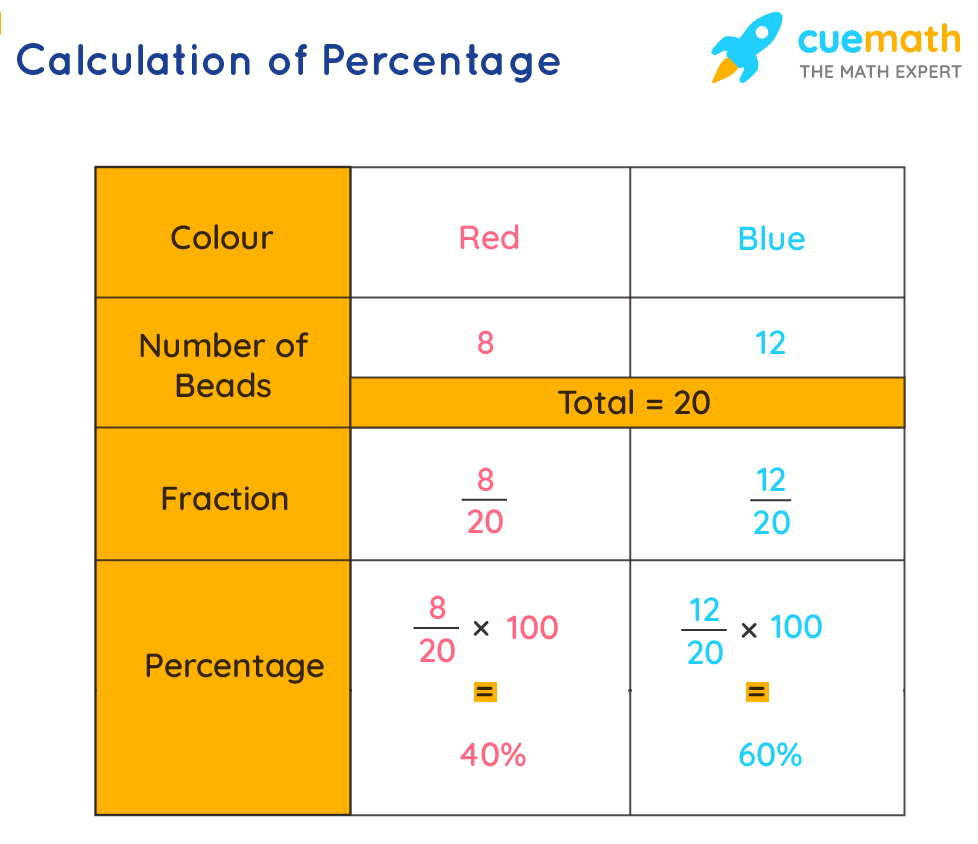
The standard formula for finding a percentage is:
(Part / Whole) × 100 = Percentage
In a budgeting context, if your monthly income is $5,000 and your rent is $1,500, you can determine what portion of your income goes toward housing by dividing 1,500 by 5,000, which equals 0.3. Multiplying by 100 gives you 30%. This calculation is the bedrock of the “50/30/20 rule,” where 50% of income goes to needs, 30% to wants, and 20% to savings. By calculating these percentages, you can identify if your spending is out of alignment with your long-term goals.
Calculating Percentage Increase and Decrease
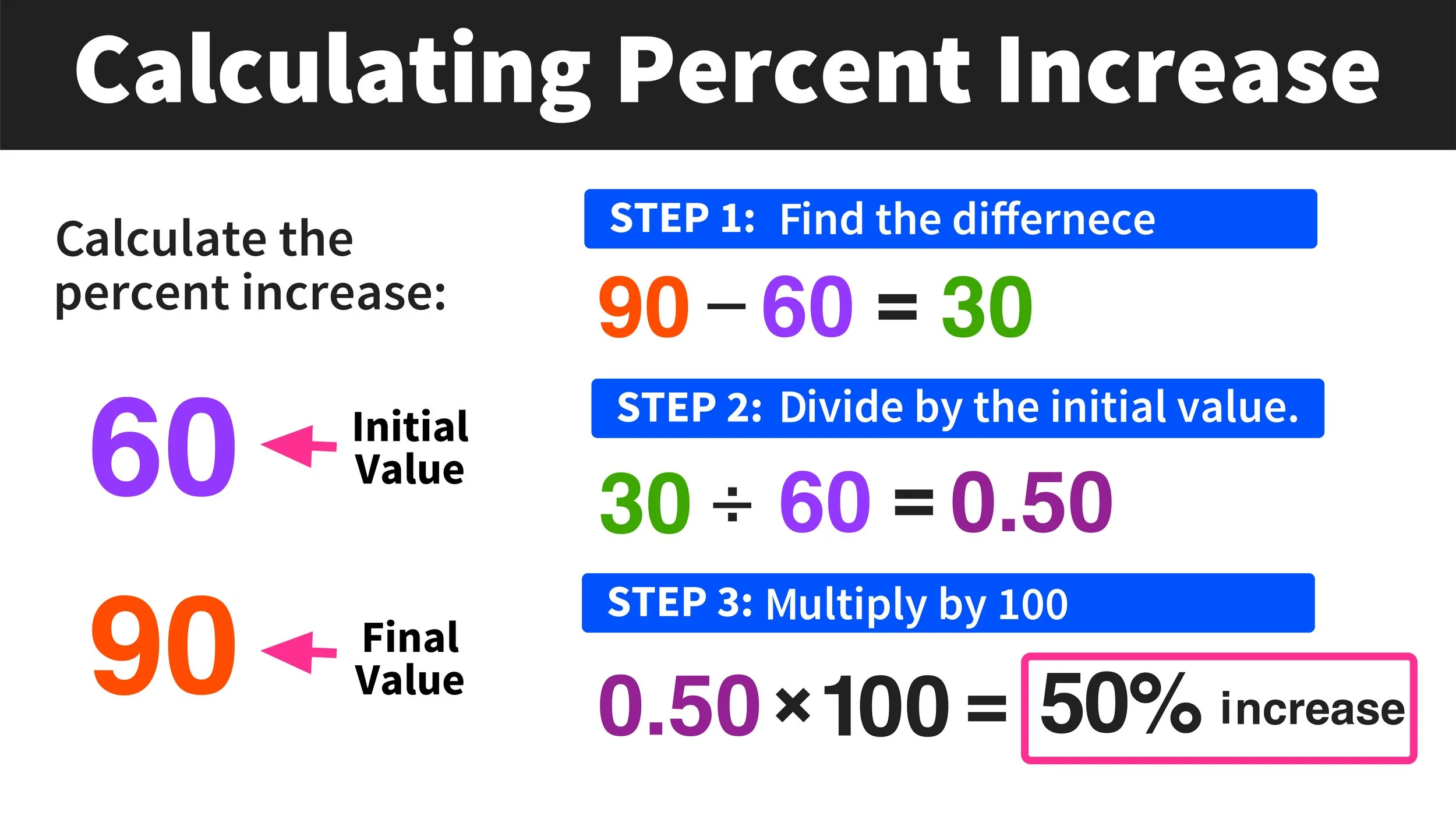
For investors and business owners, the percentage change formula is perhaps the most vital tool in the kit. It measures the growth or decline of an asset over time:
((New Value – Old Value) / Old Value) × 100 = Percentage Change
If you purchased a stock for $50 and its current market price is $75, the calculation would be:
(75 – 50) / 50 = 0.5.
0.5 × 100 = 50% increase.
Conversely, understanding percentage decrease is crucial for risk management. A common trap in investing is the “asymmetry of returns.” If a portfolio drops by 50%, it requires a 100% gain just to get back to the original starting point. This is because the “whole” (the denominator) has shrunk, making every subsequent percentage point harder to earn back.
Business Finance and Profitability Metrics
In the world of business and online income, percentages are the primary indicators of efficiency. A business can have millions of dollars in revenue, but if its expenses represent 99% of that revenue, the business is in a precarious position compared to a leaner operation with lower revenue but higher margins.
Gross and Net Profit Margins
To calculate your gross profit margin, you must first subtract the Cost of Goods Sold (COGS) from your total revenue to find your gross profit. The formula is:
(Gross Profit / Total Revenue) × 100 = Gross Profit Margin %
This tells you how much money is left over to cover operating expenses and taxes. If you sell a digital course for $200 and it costs you $40 in advertising and platform fees to acquire that customer, your gross profit is $160. Your margin is (160 / 200) × 100 = 80%. High-margin businesses are generally more resilient and easier to scale.
Net profit margin takes this a step further by including every single expense—rent, utilities, taxes, and labor.
(Net Income / Total Revenue) × 100 = Net Profit Margin %
This is the ultimate “bottom line” figure that determines if a business is truly sustainable.
Markup vs. Margin: Avoiding the Common Pitfall
Many entrepreneurs confuse markup with margin, leading to significant pricing errors.
-
Markup is the percentage added to the cost to reach a selling price: ((Price – Cost) / Cost).
-
Margin is the percentage of the selling price that is profit: ((Price – Cost) / Price).
If an item costs $100 and you want a 25% markup, you sell it for $125. However, your profit margin on that $125 sale is only 20% (25/125). If you intended to have a 25% margin to cover overhead, your business would be underperforming its targets. Mastering these distinct calculations ensures that your pricing strategy supports your financial stability.
Investment Mathematics: ROI and Compound Interest
Investing is essentially the art of putting money to work to generate more money. Percentages are the only way to measure how hard that money is working.
Calculating Return on Investment (ROI)
ROI is the universal metric for evaluating the efficiency of an investment.
((Current Value of Investment – Cost of Investment) / Cost of Investment) × 100 = ROI
If you invest $10,000 in a mutual fund and after three years the balance is $14,000, your total ROI is 40%. However, to compare this to other opportunities, such as a high-yield savings account or real estate, you need to understand the Annualized Return. This accounts for the time the money was invested, providing a “per year” percentage that makes various assets comparable.
The Power of Compound Interest
Compound interest is often called the eighth wonder of the world because it involves calculating a percentage on top of a percentage. The formula for compound interest is:
A = P(1 + r/n)^(nt)
-
A = the future value of the investment
-
P = the principal investment amount
-
r = the annual interest rate (decimal)
-
n = the number of times that interest is compounded per year
-
t = the number of years the money is invested
For a casual investor, simply knowing how to calculate the “Rule of 72” is a powerful shortcut. By dividing 72 by your annual interest rate, you can estimate how many years it will take for your money to double. At a 6% return, your money doubles in 12 years (72 / 6). At a 10% return, it doubles in 7.2 years. This highlights why even a 1% or 2% difference in fees or returns can result in hundreds of thousands of dollars in lost wealth over a lifetime.
Debt Management and Interest Rate Mastery
On the flip side of investing is debt. Interest rates on loans and credit cards are percentages that work against your net worth. Understanding how these are calculated can save you a fortune in finance charges.
APR vs. APY
When dealing with debt or savings, you will encounter two different percentage expressions: Annual Percentage Rate (APR) and Annual Percentage Yield (APY).
-
APR is the simple interest rate over a year. It does not account for the compounding of interest within that year.
-
APY (or EAR – Effective Annual Rate) accounts for compounding.
If a credit card has an APR of 19.99% compounded daily, the APY is actually closer to 22.12%. When you are the borrower, you want the lowest APR. When you are the saver, you want the highest APY. Knowing how to convert between these allows you to see the true cost of a loan.
Credit Utilization Ratios
Your credit score, a vital component of your financial health, is heavily influenced by a specific percentage: the credit utilization ratio. This is calculated by:
(Total Credit Card Balances / Total Credit Limits) × 100 = Utilization %
Financial experts generally recommend keeping this percentage below 30%. If you have a $10,000 limit across your cards and you carry a $4,000 balance, your utilization is 40%. Even if you pay your bills on time, this high percentage can signal to lenders that you are overextended, lowering your credit score and increasing the interest rates you are offered on future loans.
Advanced Tools and Avoiding Calculation Pitfalls
While mental math is useful for quick estimates, modern financial planning requires precision. Utilizing digital tools can help prevent the “human error” that leads to costly financial mistakes.
Leveraging Financial Tools and Spreadsheets
Programs like Microsoft Excel and Google Sheets are designed around percentage calculations. In these platforms, you don’t need to multiply by 100 manually; you simply format the cell as a “Percentage.”
-
To find 15% of a value in cell A1, you would use the formula:
=A1*0.15. -
To find the percentage change between A1 (old) and B1 (new), you use:
=(B1-A1)/A1.
Using spreadsheets allows you to run “What If” scenarios. For example, you can calculate how a 1% increase in your mortgage interest rate would affect your total interest paid over 30 years. Often, a seemingly small percentage change results in a massive difference in total cash outlay.
Common Pitfalls: Percentages of Percentages
One of the most frequent errors in financial reasoning involves “percentage points” versus “percentages.” If a central bank raises the interest rate from 3% to 4%, that is a 1 percentage point increase, but it is a 33.3% increase in the cost of borrowing (1 / 3 = 0.333).
Similarly, when looking at investment fees, a 1% management fee might sound small. However, if your portfolio returns 6% and the fee is 1%, the fund manager is taking 16.6% of your gains (1 / 6). By understanding the relationship between these numbers, you can better evaluate whether the services provided are worth the proportional cost of your earnings.
In conclusion, mastering the percentage calculation is not merely about solving an equation; it is about developing a lens through which to view every dollar you earn, spend, or invest. By consistently applying these formulas to your personal and business finances, you move from passive observation to active management of your wealth. Precise calculations lead to precise goals, and precise goals are the foundation of long-term financial freedom.
aViewFromTheCave is a participant in the Amazon Services LLC Associates Program, an affiliate advertising program designed to provide a means for sites to earn advertising fees by advertising and linking to Amazon.com. Amazon, the Amazon logo, AmazonSupply, and the AmazonSupply logo are trademarks of Amazon.com, Inc. or its affiliates. As an Amazon Associate we earn affiliate commissions from qualifying purchases.