
Understanding how to compute monthly interest is a foundational skill in personal and business finance. Whether you are looking to maximize the growth of your savings, manage a credit card balance, or project the long-term cost of a mortgage, the ability to break down annual rates into monthly figures is essential. Interest is essentially the cost of using someone else’s money—whether you are the lender (earning interest) or the borrower (paying interest). By mastering these calculations, you gain the clarity needed to make informed decisions that impact your net worth and cash flow.
Understanding the Fundamentals: Simple vs. Compound Interest
Before diving into the specific monthly calculations, it is critical to distinguish between simple and compound interest. These two methods dictate how your balance evolves over time and determine the total financial outcome of any loan or investment.
The Simple Interest Formula
Simple interest is calculated only on the principal amount—the original sum of money borrowed or invested. It does not account for interest earned or accrued in previous periods. The formula for simple interest is:
I = P × r × t
Where:
-
I is the total interest.
-
P is the principal amount.
-
r is the annual interest rate (expressed as a decimal).
-
t is the time the money is borrowed or invested, in years.
To find the monthly interest using this formula, you simply set the time (t) to 1/12 (one month out of twelve). For example, if you have a $10,000 investment at a 6% annual simple interest rate, the monthly interest would be calculated as:
$10,000 × 0.06 × (1/12) = $50.
The Mechanics of Monthly Compounding
In the modern financial landscape, simple interest is relatively rare outside of short-term personal loans. Most savings accounts, credit cards, and mortgages utilize compound interest. Compounding occurs when the interest earned in one period is added to the principal, and then the next period’s interest is calculated based on that new, higher balance. This creates a “snowball effect” where your wealth (or debt) grows at an accelerating rate.
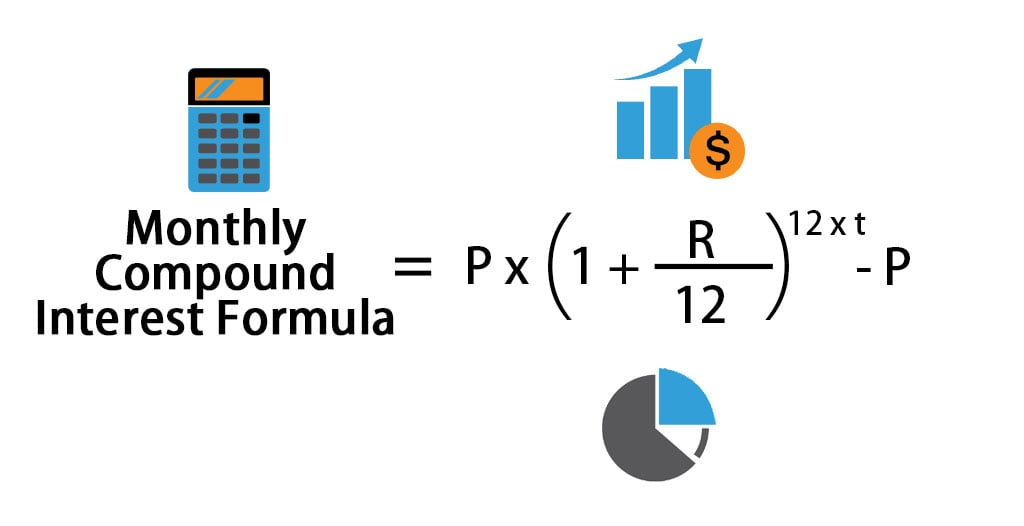
When interest is compounded monthly, the formula becomes slightly more complex:
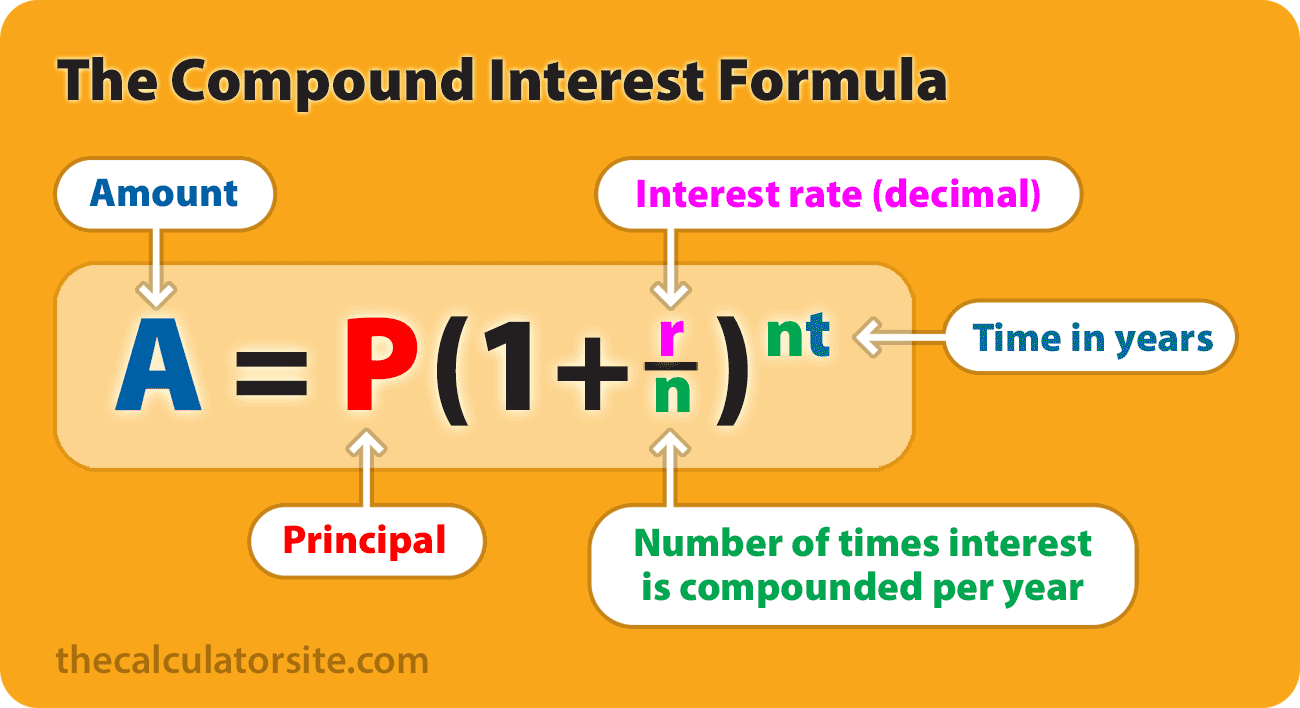
A = P(1 + r/n)^(nt)
Where:
-
A is the final amount.
-
n is the number of times interest compounds per year (for monthly, n = 12).
To isolate just the interest for a single month in a compounding environment, you must calculate the interest on the current balance (principal plus all previously accumulated interest) for that specific 30-day window.
Real-World Applications: Managing Debt and Maximizing Savings
Calculating interest is not just an academic exercise; it has immediate practical applications in your daily financial life. Depending on the financial instrument you are using, the “monthly” interest might be calculated in slightly different ways.
Credit Card Interest and Daily Periodic Rates
Credit cards are unique because they often calculate interest based on your “average daily balance.” Most credit card companies quote an Annual Percentage Rate (APR). To find your monthly interest, the bank first determines your Daily Periodic Rate (DPR) by dividing the APR by 365.
For example, if your APR is 24%:
24% / 365 = 0.0657% per day.
The bank then multiplies this daily rate by your balance every single day and adds it up at the end of the billing cycle. If you carry a balance of $2,000 throughout the month, your monthly interest would be roughly:
$2,000 × 0.000657 × 30 days = $39.42.
Understanding this calculation highlights the importance of paying down debt as early as possible in the billing cycle. Because interest is calculated daily, making a payment on the 10th of the month instead of the 28th reduces the average daily balance, thereby lowering the total interest charged for that month.
Mortgages and the Amortization Schedule
Mortgage interest is typically calculated monthly, but the way it is applied changes over the life of the loan through a process called amortization. In the early years of a mortgage, a significant portion of your monthly payment goes toward interest, while only a small fraction reduces the principal.
To calculate the interest portion of your next mortgage payment, you use the remaining principal balance. If you owe $300,000 on a house with a 4% annual interest rate, you divide the annual rate by 12 (4% / 12 = 0.333%).
$300,000 × 0.00333 = $1,000 in interest for that month.

If your total monthly payment is $1,432, then $1,000 goes to the bank as interest, and $432 goes toward reducing your debt. The following month, the interest is calculated on the new balance ($299,568), meaning you will pay slightly less interest and slightly more toward the principal.
High-Yield Savings and CDs
On the flip side of the coin, computing monthly interest for savings allows you to project your passive income. For a High-Yield Savings Account (HYSA), interest is often compounded daily but credited monthly. If you have $50,000 in an account paying 4.5% APY, you can estimate your monthly gain by dividing the rate by 12.
$50,000 × (0.045 / 12) ≈ $187.50.
Seeing these numbers can help you decide whether to lock money into a Certificate of Deposit (CD) or keep it in a liquid savings account.
Key Financial Metrics: APR vs. APY
A common point of confusion when computing monthly interest is the difference between the Annual Percentage Rate (APR) and the Annual Percentage Yield (APY). While they may look similar, they represent different financial realities.
The APR (Annual Percentage Rate)
The APR is the “stated” rate. It does not take into account the effect of compounding within the year. It is most commonly used for loans and credit cards. When you see a car loan advertised at 5% APR, that is the simple interest rate used to calculate your monthly payments. As we saw in the credit card example, the APR is the starting point for finding the daily or monthly rate.
The APY (Annual Percentage Yield)
The APY is the “effective” rate. It reflects the total amount of interest you will earn (or pay) in a year, accounting for the effect of compounding. Because interest grows on interest, the APY is always higher than the stated APR if the interest is compounded more than once a year.
The formula to convert APR to APY is:
APY = (1 + r/n)^n – 1
If a savings account has an APR of 5% compounded monthly, the APY would be:
(1 + 0.05/12)^12 – 1 = 5.116%.
When you are comparing financial products, always look at the APY for savings (to see how much you really make) and the APR for loans (to understand the base cost before fees).
Strategies for Optimization and the Rule of 72
Once you understand how to compute monthly interest, you can use that knowledge to optimize your financial strategy. Knowing the math allows you to move beyond passive observation and into active management of your wealth.
Leveraging the Power of Time
The “monthly” nature of interest means that time is your greatest ally or your most persistent enemy. In the context of investing, the earlier you start, the more “monthly cycles” you have for compounding to do the heavy lifting. Even small monthly contributions can grow exponentially because the interest earned in month 12 is calculated on a much larger base than the interest earned in month 1.
For debt management, the strategy is the opposite: acceleration. By adding a small amount to your monthly principal payment on a loan, you reduce the balance upon which the next month’s interest is calculated. This creates a reverse-compounding effect that can shave years off a mortgage or car loan.
The Rule of 72: A Mental Shortcut
While precise calculations are necessary for budgeting, the “Rule of 72” is a helpful mental tool for understanding interest over the long term. By dividing 72 by your annual interest rate, you can estimate how many years it will take for your money to double.
-
At a 6% rate, your money doubles in 12 years (72 / 6).
-
At a 10% rate, it doubles in 7.2 years.
This rule emphasizes why even a 1% difference in interest rates matters. Over several decades, that 1% difference can result in hundreds of thousands of dollars in lost or gained wealth due to the monthly compounding cycle.
Using Technology for Precision
While manual calculations provide a deep understanding of the mechanics of finance, modern tools are essential for precision. Financial calculators, spreadsheet software like Excel or Google Sheets, and specialized banking apps can handle complex variables such as fluctuating interest rates, leap years, and varying day counts (360 vs. 365-day years).
In a spreadsheet, you can use the IPMT function to calculate the interest portion of a specific loan payment or the FV (Future Value) function to see how a series of monthly deposits will grow over time.
For example, =FV(0.05/12, 120, -500, 0) would tell you the future value of saving $500 a month for 10 years (120 months) at a 5% annual interest rate.
Mastering the computation of monthly interest is more than just a mathematical exercise; it is a vital component of financial sovereignty. It allows you to see through marketing jargon, compare financial products accurately, and build a strategy that prioritizes your long-term stability and growth. Whether you are paying down debt or building an investment portfolio, the math remains the same: every percentage point and every compounding period counts.
aViewFromTheCave is a participant in the Amazon Services LLC Associates Program, an affiliate advertising program designed to provide a means for sites to earn advertising fees by advertising and linking to Amazon.com. Amazon, the Amazon logo, AmazonSupply, and the AmazonSupply logo are trademarks of Amazon.com, Inc. or its affiliates. As an Amazon Associate we earn affiliate commissions from qualifying purchases.