
In a world increasingly driven by data and numerical analysis, a solid grasp of basic mathematical concepts is not just a classroom requirement—it’s a prerequisite for navigating the complexities of personal finance, investing, and business. Among these foundational skills, the ability to convert a whole number into a percent stands out as surprisingly crucial. While it might seem like a simple arithmetic exercise, its implications stretch across every facet of our financial lives, from understanding interest rates on a loan to deciphering investment returns, calculating discounts, or planning for taxes.

Many financial decisions, whether big or small, hinge on a clear understanding of percentages. Yet, a surprising number of people struggle with this concept, often leading to misinterpretations that can have significant financial consequences. This article aims to demystify the process, not just by showing you how to convert a whole number to a percent, but by deeply exploring why this skill is indispensable for anyone looking to build financial acumen, make informed choices, and ultimately achieve their financial goals. We’ll delve into the core principles, practical applications, and common pitfalls, all within the invaluable context of money management.
The Core Concept: Understanding Percents in a Financial Context
Before we dive into the mechanics of conversion, it’s essential to appreciate what a percent truly represents and why it holds such a pivotal position in financial discussions. Percents are not just arbitrary numbers; they are a universal language for comparison and proportion, allowing us to standardize ratios and make sense of quantities relative to a whole.
What Exactly is a Percent?
The word “percent” originates from the Latin phrase “per centum,” meaning “per hundred” or “out of one hundred.” In essence, a percentage is a way of expressing a number as a fraction of 100. When we say 20%, we mean 20 out of 100, or 20/100. This standardized base of 100 makes it incredibly easy to compare different proportions, regardless of the original total amount.
In the realm of finance, this characteristic is invaluable. Imagine trying to compare a profit of $50 on a $200 investment with a profit of $120 on a $600 investment. Without percentages, this comparison is cumbersome. However, by converting both to percentages ($50/$200 = 0.25 or 25%; $120/$600 = 0.20 or 20%), we immediately see that the first investment yielded a better return, despite the smaller absolute profit. This clarity is why percentages are the bedrock of financial communication.
Why Financial Decisions Hinge on Percentages
From the moment we open a savings account to the day we plan for retirement, percentages are omnipresent. They are the shorthand for communicating financial performance, cost, growth, and risk.
-
Interest Rates: Whether it’s the Annual Percentage Rate (APR) on your credit card, the interest you earn on a savings account (APY), or the mortgage rate on your home, these are all expressed as percentages. Understanding how these percentages translate into actual dollar amounts is critical for managing debt and maximizing savings. A 15% APR on a credit card debt of $1,000 means you’ll pay $150 in interest over a year, provided no payments are made.
-
Discounts and Sales Tax: Shopping for a new gadget? That “30% off” sign or the “7% sales tax” added at checkout directly impacts your final cost. Knowing how to quickly calculate these percentages allows you to budget effectively and verify prices.
-
Investment Returns: When a financial advisor talks about an “average annual return of 8%,” they are referring to a percentage. This metric is vital for projecting future wealth and comparing the performance of different investment vehicles like stocks, bonds, or mutual funds.
-
Inflation: The eroding power of inflation is often measured as a percentage, indicating how much purchasing power is lost over time. A 3% inflation rate means that what cost $100 last year now costs $103.
-
Business Finance: Profit margins, expense ratios, growth rates – these are all percentages that business owners and investors analyze to gauge a company’s health and potential. A 10% profit margin means that for every dollar of revenue, the business keeps 10 cents as profit.
Without a solid understanding of how to work with and interpret percentages, navigating these common financial scenarios becomes akin to sailing without a compass.
The Simple Steps: Converting Whole Numbers to Percents
The process of changing a whole number into a percent is remarkably straightforward. It involves a single arithmetic operation and the addition of a universal symbol.
Step 1: Understand the Implied Decimal Point
Every whole number, by definition, has an implied decimal point at its end, followed by an infinite string of zeros. For instance, the whole number 5 can be thought of as 5.0, 5.00, or 5.000, depending on the required precision. While we typically don’t write these decimal points or zeros for whole numbers, understanding their presence is the first conceptual step in conversion. This is crucial because percentages are, fundamentally, a way of expressing a number relative to 100, much like decimals express numbers relative to powers of 10.
Step 2: Multiply by 100
The core of the conversion lies in multiplication. Since “percent” means “per hundred,” to express a number as a percentage, you simply need to multiply it by 100. This effectively scales the number to a base of 100, making it ready for the percent symbol.
-
If you have the whole number
2, you multiply2 * 100 = 200. -
If you have the whole number
0.5(which technically isn’t a whole number but demonstrates the principle), you multiply0.5 * 100 = 50.
Conceptually, this multiplication shifts the decimal point two places to the right. For a whole number like 5, imagining 5.0, multiplying by 100 moves the decimal two places right, resulting in 500..
Step 3: Add the Percent Symbol (%)
The final and indispensable step is to append the percent symbol (%) to the result. This symbol formally denotes that the number is now being expressed as a percentage, signifying that it represents a fraction out of 100. Without the symbol, 200 is just 200; with it, 200% conveys a specific meaning of “two hundred out of one hundred,” or twice the original value.
Practical Examples with Whole Numbers:
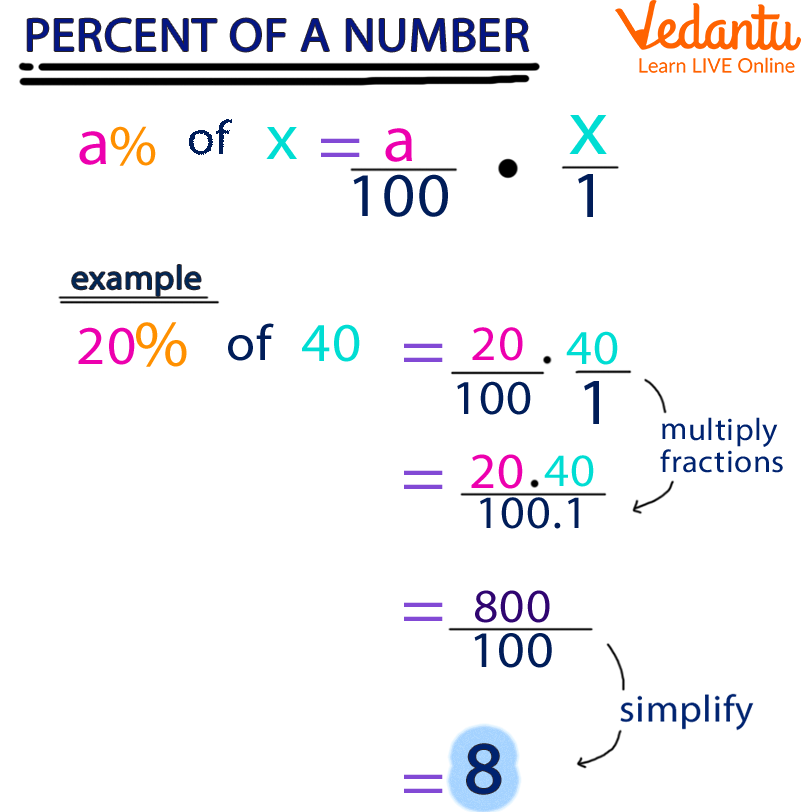
Let’s illustrate with some common scenarios in finance:
-
Converting a Simple Whole Number (e.g., 2, 5, 10) to a Percent:
-
If you’re looking at a multiplier of
2(e.g., your investment doubled), to express this as a percentage:2 * 100 = 200. So, doubling your money is a200%return. -
A factor of
5(e.g., an asset is now five times its original value):5 * 100 = 500. This represents a500%value. -
If a product is
10times more expensive due to inflation (an extreme example, but for illustrative purposes):10 * 100 = 1000. That’s a1000%increase.
-
-
When a Whole Number Represents a Ratio or Multiplier:
Often, whole numbers in finance are implied multipliers or ratios derived from other calculations. For example, if your income
doubledlast year, the whole number multiplier is2. If ittripled, the multiplier is3.-
Doubled (factor of 2):
2 * 100% = 200%. This means your new income is 200% of your old income. -
Tripled (factor of 3):
3 * 100% = 300%. Your new income is 300% of your old income. -
This also applies to situations where you’re comparing quantities. If you have 4 apples and your friend has 1 apple, you have 4 times as many apples as your friend. In percentage terms, you have
4 * 100% = 400%of the number of apples your friend has.
-
Beyond Whole Numbers: Practical Applications in Money
While the conversion itself is simple, its power comes alive in its financial applications. Understanding how to interpret and use these percentages is where true financial literacy shines.
Interest Rates and Loans
Consider a loan where the interest rate is 5% annually. You need to convert this percent back to a decimal (0.05) or a whole number (when multiplied by 100 for percentage calculation) to apply it to your principal amount. Conversely, if you want to know what a whole number multiplier means for an interest rate (e.g., if interest rates double), converting that multiplier to a percent gives you the full picture. If your savings account used to yield 1% and now yields 2%, the multiplier is 2, meaning a 200% increase in the interest rate, even though it’s only a 1 percentage point increase.
Discounts and Markups
When a store advertises “1/2 off” or “buy one get one free,” these can be understood as whole number or fractional discounts. “1/2 off” means a multiplier of 0.5 applied to the original price for the discount amount, or that you pay 0.5 of the original price. Converting 0.5 to a percent: 0.5 * 100% = 50%. So, it’s a 50% discount. For markups, if a wholesaler marks up a product by a factor of 2, it’s a 200% markup on the original cost.
Investment Growth and Returns
If your initial investment of $1,000 grew to $2,000, your money doubled. The whole number multiplier is 2. As a percentage, this is a 200% return relative to the initial investment (or, more commonly, a 100% gain because the gain itself is $1,000, which is 100% of the initial $1,000). This distinction is important: 200% of the original value, or a 100% increase in value. If your portfolio is now 1.5 times its original size, that’s 1.5 * 100% = 150% of the original value.
Taxes and Financial Planning
Sales tax, income tax brackets, property tax rates – all are expressed as percentages. Understanding how a 7% sales tax translates to an extra 0.07 multiplier on your purchase price is key. If you are trying to save 1/4 of your income, you are aiming to save 0.25 of your income. Converting to a percent: 0.25 * 100% = 25%. This helps in setting clear, measurable financial goals.
Common Pitfalls and Nuances
While the conversion itself is straightforward, interpreting percentages in financial contexts can sometimes lead to misunderstandings. Awareness of these nuances is vital for precision.
Misinterpreting Percentages in Context
One common mistake is confusing a percentage point change with a percentage change. If an interest rate increases from 2% to 4%, it’s a 2 percentage point increase. However, the rate itself has doubled, meaning it’s a 100% increase in the rate value (4 is 200% of 2, so the increase is 100% of the original rate). This distinction is critical in finance, especially when discussing investment growth or economic data. A stock that rises from $10 to $20 has a 100% gain, meaning its value is now 200% of its original value.
The Importance of the Base
A percentage is always of something. 20% means nothing without knowing “20% of what?” Is it 20% of your salary, 20% of your investment principal, or 20% off the original price? The “base” or the “whole” number that the percentage is applied to fundamentally changes the absolute value. Understanding the base is paramount for accurate financial calculations and interpretations. A 5% return on $1,000 is $50, but a 5% return on $100,000 is $5,000. The percentage is the same, but the base makes all the difference.
Rounding and Precision
In finance, precision matters. When converting numbers or performing calculations, rounding too early or too aggressively can lead to significant discrepancies, especially with large sums of money or over long periods. While for simple whole numbers the conversion is exact, when dealing with numbers that have many decimal places (e.g., 1/3 = 0.3333…), deciding where to round is crucial. For percentages, it’s often standard to round to two decimal places (e.g., 5.75%) but be mindful of the context.

Conclusion
The seemingly simple act of changing a whole number into a percent is far more than a basic math trick; it’s a cornerstone of financial literacy and empowerment. This fundamental skill underpins our ability to comprehend, analyze, and make informed decisions across the entire spectrum of personal finance, from managing daily expenses to planning for long-term wealth accumulation.
By understanding that a percent is a standardized way of expressing a part of a hundred, and by mastering the straightforward steps of multiplying by 100 and adding the percent symbol, you unlock a powerful tool for interpreting financial data. Whether you’re evaluating interest rates, calculating discounts, assessing investment returns, or navigating tax obligations, a confident grasp of percentages is indispensable.
Moving beyond rote calculation to an insightful understanding of what percentages mean in a financial context allows you to avoid common pitfalls, appreciate the significance of the base value, and accurately interpret financial information. In a world saturated with numerical information, the ability to fluidly translate between whole numbers and percentages doesn’t just improve your mathematical fluency—it profoundly enhances your financial intelligence, equipping you to make smarter choices and build a more secure future. Embrace this foundational skill, and watch your financial acumen grow exponentially.
aViewFromTheCave is a participant in the Amazon Services LLC Associates Program, an affiliate advertising program designed to provide a means for sites to earn advertising fees by advertising and linking to Amazon.com. Amazon, the Amazon logo, AmazonSupply, and the AmazonSupply logo are trademarks of Amazon.com, Inc. or its affiliates. As an Amazon Associate we earn affiliate commissions from qualifying purchases.