
The journey into the stock market is often driven by the ambition to grow wealth. Whether you’re a seasoned investor or just starting, a fundamental skill that underpins successful investing is the ability to accurately calculate your stock market gains. This isn’t just an academic exercise; it’s a critical component of understanding your investment performance, making informed future decisions, and fulfilling your tax obligations. Without a clear grasp of how to measure your profits (or losses), you’re navigating the complex world of finance without a compass.
This comprehensive guide will demystify the process of calculating stock market gains, moving beyond simple arithmetic to explore various scenarios, essential considerations, and practical tools. By the end, you’ll possess the knowledge to confidently track your investment performance and make more strategic financial choices.

Understanding the Fundamentals of Investment Gains
Before diving into the mechanics of calculation, it’s crucial to establish a clear understanding of the core concepts that define investment gains in the stock market. These foundational principles serve as the bedrock for all subsequent calculations and analyses.
Defining Capital Gains and Losses
At its most basic, a “capital gain” occurs when you sell an investment for a price higher than you paid for it. Conversely, a “capital loss” occurs when you sell an investment for less than its original purchase price. The difference between the selling price and the cost basis (what you originally paid, plus any associated costs) determines whether you’ve made a gain or incurred a loss. These gains and losses are typically realized when the asset is sold. Unrealized gains or losses refer to the theoretical profit or deficit an investment has accrued but has not yet been sold. While important for portfolio valuation, only realized gains/losses impact your immediate cash flow and tax situation.
The Importance of Accurate Calculation
Accurate calculation of stock market gains is paramount for several reasons. Firstly, it provides a realistic measure of your investment strategy’s effectiveness. Are your choices generating the returns you anticipated? Secondly, it’s indispensable for tax planning. Governments typically tax capital gains, and knowing your exact gains helps you prepare for these liabilities and potentially identify opportunities for tax optimization, such as tax-loss harvesting. Thirdly, precise figures enable better future decision-making. By understanding which investments have performed well and why, you can refine your investment criteria and allocate capital more strategically. Without accuracy, you’re essentially flying blind.
Key Components of an Investment Transaction
Every stock market transaction, whether a buy or a sell, involves several key components that contribute to the final gain or loss calculation:
-
Purchase Price: The price per share at which you bought the stock.
-
Number of Shares: The total quantity of shares acquired.
-
Selling Price: The price per share at which you sold the stock.
-
Commissions and Fees: Charges incurred during both the buying and selling processes (e.g., brokerage fees, transaction fees). These costs reduce your net gain or increase your net loss.
-
Dividends: Cash payments or additional shares distributed by a company to its shareholders. These represent a form of investment income separate from capital gains but contribute to the overall return.
Basic Methods for Calculating Gains
With the foundational concepts in place, let’s explore the fundamental methods for calculating stock market gains, starting with the simplest scenarios and progressively adding layers of complexity.
Simple Capital Gains (Buy and Hold)
The most straightforward calculation applies to a single purchase and a single sale of a stock, often referred to as a “buy and hold” strategy.
The formula is:
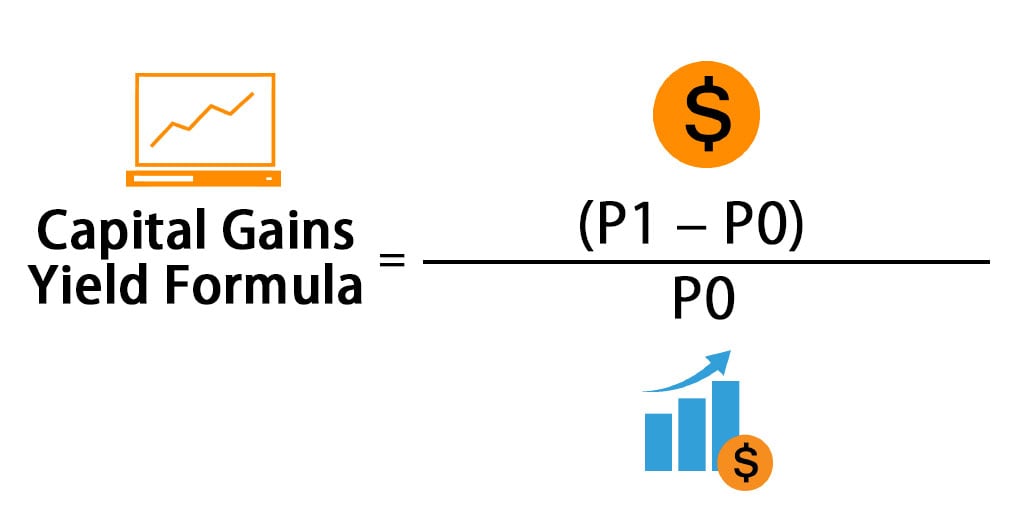
Total Gain (or Loss) = (Selling Price per Share – Purchase Price per Share) * Number of Shares
Let’s illustrate with an example:
You buy 100 shares of Company A at $50 per share.
You sell those 100 shares at $70 per share.
Purchase Cost = $50 * 100 = $5,000
Selling Proceeds = $70 * 100 = $7,000
Simple Capital Gain = $7,000 – $5,000 = $2,000
Alternatively, using the formula: ($70 – $50) * 100 = $20 * 100 = $2,000.
This calculation provides the gross capital gain before considering any additional factors.
Incorporating Dividends and Income
Many investments, especially dividend-paying stocks, generate income beyond just the increase in share price. To calculate your total return, you must include these distributions.
Total Return = Capital Gain (or Loss) + Total Dividends Received
Example (continuing from above):
Suppose Company A paid a $1.00 dividend per share while you owned the stock.
Total Dividends = $1.00 * 100 shares = $100
Total Return = $2,000 (Capital Gain) + $100 (Dividends) = $2,100
For a more comprehensive “total return percentage,” you would divide the total return by your initial investment:
Total Return Percentage = (Total Return / Initial Investment) * 100
= ($2,100 / $5,000) * 100 = 42%
This percentage is a more accurate reflection of your investment’s performance, as it captures both capital appreciation and income generation.
Accounting for Transaction Costs
Transaction costs, such as brokerage commissions and fees, are an often-overlooked but crucial element in calculating your net gain. These costs reduce your actual profit. For tax purposes, these costs are typically added to your cost basis when buying and subtracted from your proceeds when selling.
Adjusted Purchase Cost (Cost Basis) = (Purchase Price per Share * Number of Shares) + Buying Commissions
Net Selling Proceeds = (Selling Price per Share * Number of Shares) – Selling Commissions
Net Gain (or Loss) = Net Selling Proceeds – Adjusted Purchase Cost
Example (continuing from above):
You bought 100 shares of Company A at $50, incurring a $10 commission.
You sold 100 shares at $70, incurring another $10 commission.
Adjusted Purchase Cost = ($50 * 100) + $10 = $5,000 + $10 = $5,010
Net Selling Proceeds = ($70 * 100) – $10 = $7,000 – $10 = $6,990
Net Capital Gain = $6,990 – $5,010 = $1,980
Notice how the $20 in commissions reduced your gain from $2,000 to $1,980. This seemingly small detail can significantly impact your returns, especially with frequent trading or smaller transaction sizes.
Advanced Scenarios and Considerations
While the basic calculations are essential, real-world investing often involves more complex situations that require a nuanced approach to calculating gains.
Calculating Gains with Multiple Purchases/Sales (Cost Basis)
When you buy shares of the same company at different times and at different prices, determining your cost basis for a partial sale becomes critical. The “cost basis” is the original value of an asset for tax purposes, adjusted for commissions and other fees. Several methods are accepted, each impacting your reported gain or loss:
First-In, First-Out (FIFO)
This method assumes that the first shares you bought are the first ones you sell. FIFO is the IRS’s default method if you don’t specify otherwise.
Example: You buy 100 shares at $50, then another 100 shares at $60. If you sell 100 shares, FIFO assumes you sold the first 100 shares bought at $50, resulting in a potentially larger gain (or smaller loss) if prices have risen.
Last-In, First-Out (LIFO)
This method assumes the last shares you bought are the first ones you sell. While less common for individual investors and generally not permitted for tax purposes in the U.S. for securities, it’s worth understanding the concept for completeness. It can be useful in declining markets to realize losses sooner.
Average Cost
This method calculates the average purchase price of all shares owned and uses that average as the cost basis for any shares sold. This method is often allowed for mutual funds.
Example: 100 shares at $50, 100 shares at $60. Total cost = $5,000 + $6,000 = $11,000 for 200 shares. Average cost = $11,000 / 200 = $55 per share. If you sell 100 shares, your cost basis would be $55 per share.
Specific Identification
This is often the most advantageous method for investors. It allows you to choose exactly which shares (from which specific purchase lot) you are selling. This provides flexibility to manage your capital gains and losses for tax purposes. For instance, you could choose to sell shares with a higher cost basis to minimize gains or realize losses, or sell shares held for longer than a year to qualify for long-term capital gains tax rates. You must notify your broker at the time of sale which specific shares you intend to sell.
Impact of Short-Term vs. Long-Term Gains
The holding period of your investment significantly impacts how your gains are taxed.
-
Short-Term Capital Gains: Apply to investments held for one year or less. These gains are typically taxed at your ordinary income tax rate, which can be considerably higher than long-term rates.
-
Long-Term Capital Gains: Apply to investments held for more than one year. These gains generally qualify for lower, more favorable tax rates, often 0%, 15%, or 20%, depending on your income level.
Understanding this distinction is crucial for tax planning, as it can influence when you decide to sell an investment.
Dealing with Stock Splits, Mergers, and Spinoffs
Corporate actions like stock splits, mergers, and spinoffs can complicate cost basis calculations but do not, in themselves, trigger a taxable event (unless cash is received).
-
Stock Splits: If a stock splits (e.g., 2-for-1), your number of shares doubles, and your price per share is halved, but your total cost basis remains the same. Example: 100 shares at $100 ($10,000 basis) becomes 200 shares at $50 ($10,000 basis).
-
Reverse Stock Splits: The opposite occurs; fewer shares at a higher price per share.
-
Mergers and Acquisitions: Your shares in the acquired company are typically converted into shares of the acquiring company or cash. The cost basis of the old shares is usually transferred to the new shares or used to calculate a gain/loss if cash is received.
-
Spinoffs: When a company spins off a subsidiary into a new, separate company, you usually receive shares in the new entity. Your original cost basis is allocated proportionally between the original company’s shares and the new spinoff shares, based on their relative fair market values immediately after the spinoff. These situations often require careful attention to tax documentation provided by the brokerage.
The Role of Taxes and Net Gains
Calculating your gross gains is only half the battle. To understand your true financial outcome, you must factor in the impact of taxation, leading to your net gain.
Understanding Capital Gains Tax Rates
As discussed, capital gains are generally subject to taxation. The specific rate depends on whether the gain is short-term or long-term and your overall income level.
-
Short-term capital gains are taxed at ordinary income tax rates (which can range from 10% to 37% in the U.S.).
-
Long-term capital gains enjoy preferential rates (0%, 15%, or 20% in the U.S. for most taxpayers).
It’s important to consult current tax laws or a tax professional, as these rates and thresholds can change and vary by jurisdiction. For instance, some states also impose their own capital gains taxes.
Tax-Loss Harvesting Strategies
An important strategy for managing investment taxes is “tax-loss harvesting.” This involves intentionally selling investments at a loss to offset capital gains and potentially a limited amount of ordinary income.
-
You can use capital losses to offset capital gains dollar-for-dollar.
-
If your capital losses exceed your capital gains, you can deduct up to $3,000 of the remaining loss against your ordinary income each year.
-
Any unused capital losses can be carried forward indefinitely to offset future capital gains and ordinary income.
This strategy, when employed carefully and in compliance with “wash sale” rules (which prevent you from repurchasing a substantially identical security within 30 days before or after the sale), can significantly reduce your tax burden.
Net Realized Gains and Portfolio Performance
Ultimately, the net realized gain after taxes is what truly matters to your personal wealth. This figure, combined with any dividends and interest income, represents the actual financial benefit derived from your investments. Regularly calculating and reviewing your net gains allows you to:
-
Assess the true profitability of your investment decisions.
-
Understand your effective tax rate on investments.
-
Make adjustments to your portfolio or tax planning strategies.
-
Evaluate your overall investment strategy against your financial goals.
Tools and Resources for Calculation
While manual calculation is possible, especially for simpler portfolios, several tools and resources can streamline and enhance the accuracy of your stock market gain calculations.
Brokerage Statements and Reports
Your brokerage firm is typically your primary source of investment data. They provide:
-
Monthly/Quarterly Statements: Detail all transactions, positions, and often show realized gains/losses.
-
Annual Tax Forms (e.g., Form 1099-B): These are crucial for tax season, as they report the proceeds from sales of stocks, bonds, and other securities, along with their cost basis (if reported to the IRS). This form is an invaluable summary of your realized gains and losses for the year.
-
Online Portals: Most brokers offer robust online platforms where you can view your transaction history, current holdings, and often generate customized reports for performance tracking and tax purposes.
Relying on these official documents helps ensure accuracy and compliance with tax regulations.
Spreadsheet Software (Excel, Google Sheets)
For investors with a moderate number of transactions, spreadsheet software like Microsoft Excel or Google Sheets can be incredibly powerful. You can create custom templates to:
-
Track purchase dates, prices, quantities, and commissions.
-
Input sales data.
-
Automate calculations for capital gains/losses, including applying FIFO, specific identification, or average cost methods.
-
Integrate dividend income.
-
Calculate total returns and visualize performance over time.
This provides a high degree of control and customization, allowing you to tailor the analysis to your specific needs.
Financial Calculators and Software
Beyond spreadsheets, various specialized financial tools and software can assist:
-
Online Capital Gains Calculators: Many financial websites offer free tools that allow you to input purchase and sale data to quickly estimate gains/losses.
-
Portfolio Tracking Apps/Software: Services like Personal Capital, Quicken, or advanced trading platforms often have built-in features for tracking investment performance, calculating gains/losses, and even generating tax reports. These tools can aggregate data from multiple brokerage accounts, providing a holistic view of your entire portfolio.
-
Tax Preparation Software: Programs like TurboTax or H&R Block integrate directly with brokerage accounts or allow manual input of 1099-B data, automating the calculation and reporting of capital gains and losses for your tax return.

Empowering Your Investment Journey
Mastering the art of calculating stock market gains is more than just crunching numbers; it’s about gaining clarity, control, and confidence in your financial endeavors. From understanding the nuances of capital gains and losses to navigating the complexities of cost basis methods and tax implications, each step in this process strengthens your position as an informed investor.
By diligently tracking your transactions, accurately applying the appropriate calculation methods, and leveraging the available tools, you transform raw data into actionable insights. This empowers you to assess past performance, refine future strategies, and ultimately, steer your investment journey towards greater financial success. Remember, informed decisions are profitable decisions, and accurate gain calculation is fundamental to making them.
aViewFromTheCave is a participant in the Amazon Services LLC Associates Program, an affiliate advertising program designed to provide a means for sites to earn advertising fees by advertising and linking to Amazon.com. Amazon, the Amazon logo, AmazonSupply, and the AmazonSupply logo are trademarks of Amazon.com, Inc. or its affiliates. As an Amazon Associate we earn affiliate commissions from qualifying purchases.