
Understanding how to calculate percentages in relation to money is perhaps the most fundamental skill in personal and business finance. Percentages are the universal language of the financial world; they describe everything from the interest you earn in a savings account to the discounts you receive at a retail store, the taxes you owe the government, and the performance of your investment portfolio. Without a firm grasp of these calculations, making informed decisions about budgeting, debt management, and wealth building becomes significantly more difficult.
This guide provides a deep dive into the mechanics of financial percentages, offering practical examples and advanced applications to help you master your money.
Understanding the Fundamentals of Financial Percentages
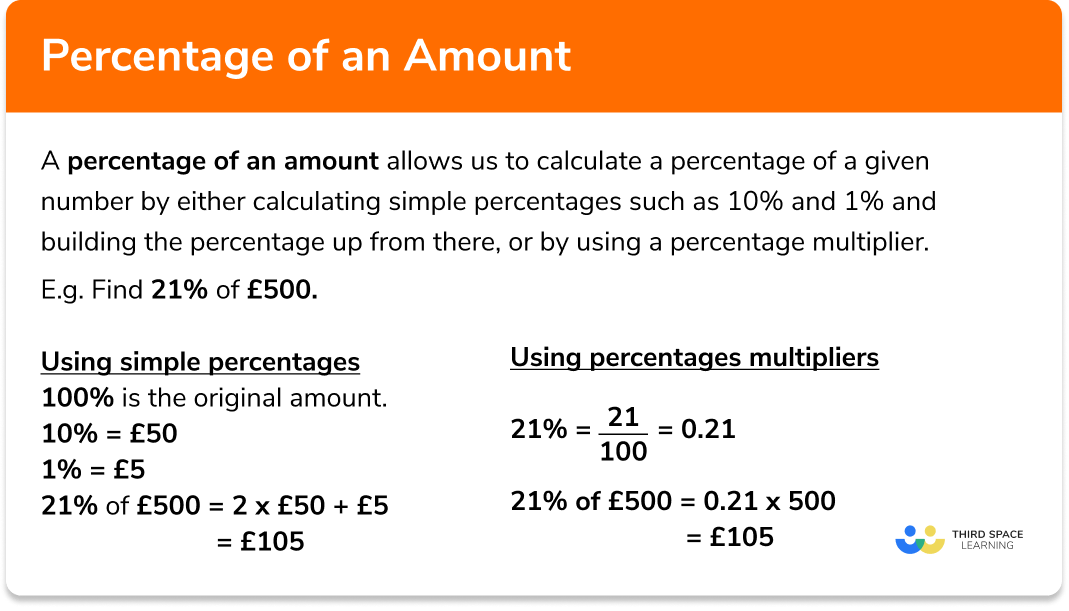
At its core, a percentage is a way of expressing a number as a fraction of 100. When we talk about “percentage money,” we are looking at how a specific portion of a total sum relates to the whole. Mastery of this concept begins with the basic formula and the ability to convert figures into various formats.
The Basic Formula for Monetary Percentages
The standard formula for finding a percentage of a total amount of money is:
(Percentage / 100) × Total Amount = Resulting Amount
For example, if you want to find 15% of $200, you would divide 15 by 100 (resulting in 0.15) and then multiply that by 200. The result is $30. Conversely, if you want to find what percentage one amount is of another, the formula is:
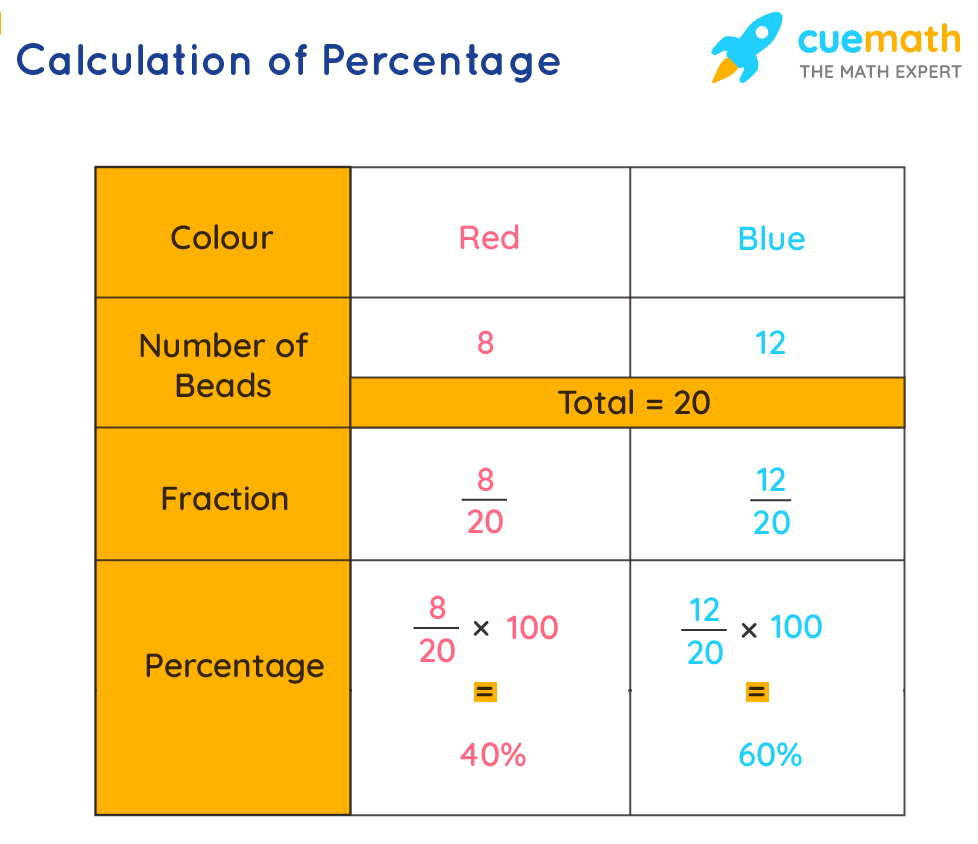
(Part / Whole) × 100 = Percentage
If you saved $50 out of a $500 paycheck, you would divide 50 by 500 (0.1) and multiply by 100 to find that you saved 10% of your income.
Converting Decimals and Fractions in Finance
Financial institutions often switch between percentages and decimals. Most calculators and spreadsheets require you to use the decimal form. To convert a percentage to a decimal, simply move the decimal point two places to the left. Thus, 7.5% becomes 0.075. This conversion is crucial when calculating complex figures like mortgage interest or investment growth over time.
Why Percentage Literacy is Essential
In finance, looking at raw numbers alone can be misleading. A $100 profit might sound excellent, but if you had to invest $10,000 to get it, your “return” is only 1%. However, if you only invested $200, that same $100 represents a 50% return. Percentages provide context, allowing you to compare different financial opportunities on an equal playing field.
Practical Applications in Personal Finance
Daily life is filled with “money math.” From the grocery store to the car dealership, being able to run these numbers mentally or on a quick smartphone calculation can save you thousands of dollars over a lifetime.
Calculating Discounts and Sales Tax
When you see a sign that says “30% off,” you need to know how much you are actually going to pay. The most efficient way to calculate a discount is to subtract the percentage from 100 and multiply the remainder by the price. If an item is $80 and it is 30% off, you are paying 70% of the price.
$80 × 0.70 = $56.
Sales tax works the opposite way. If your local sales tax is 8%, you add that to 100% and multiply.
$56 × 1.08 = $60.48.
Understanding these two movements—reduction and addition—is the cornerstone of consumer savvy.
Navigating Tipping and Service Charges
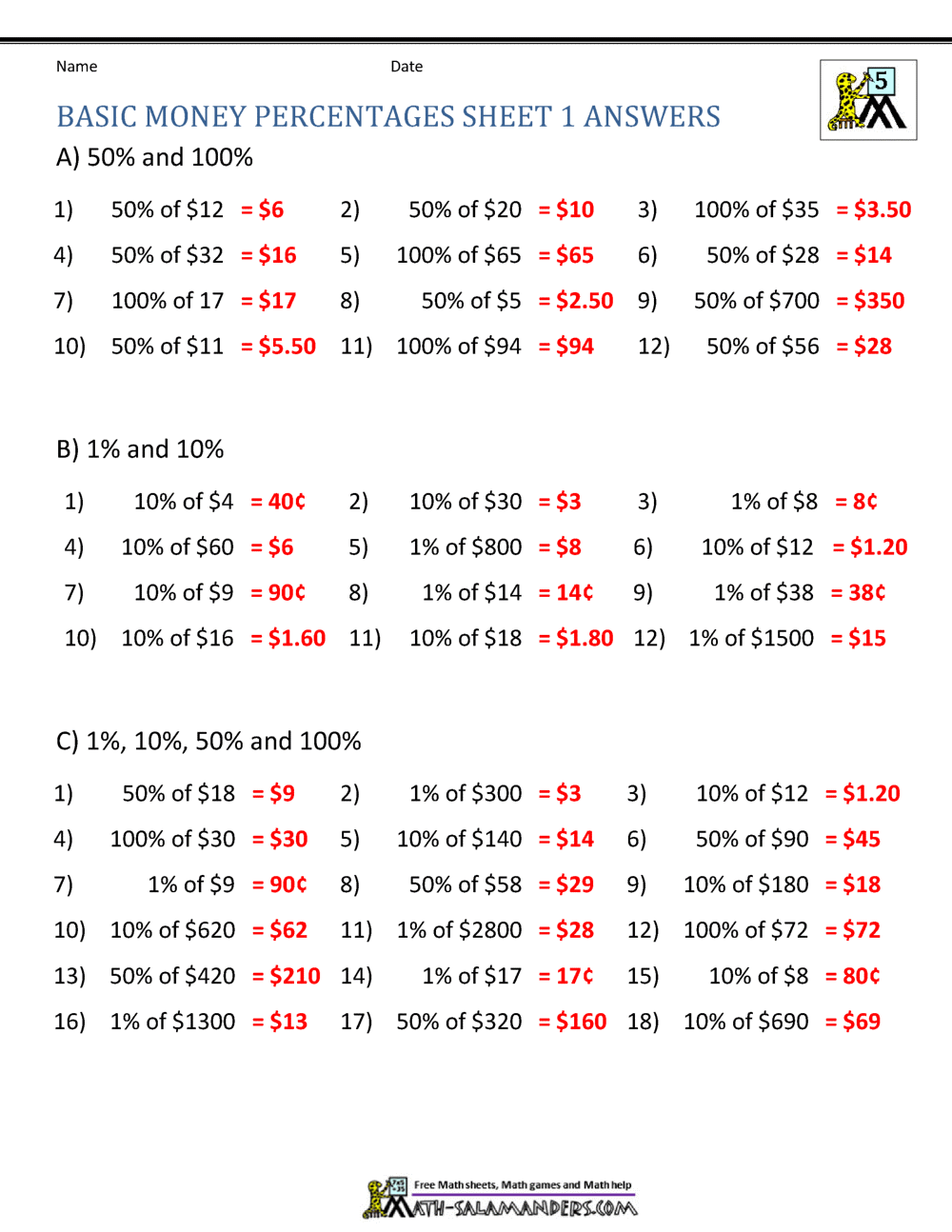
Tipping is a standard percentage-based transaction. While 15% to 20% is common in the United States, calculating it quickly is a useful skill. A simple “life hack” for a 20% tip is to find 10% (by moving the decimal one place to the left) and then doubling it. For a $64.50 bill, 10% is $6.45. Doubling that gives you a tip of $12.90.
Budgeting with the 50/30/20 Rule
One of the most popular personal finance frameworks is the 50/30/20 rule. This strategy suggests allocating your after-tax income into three percentage-based categories:
-
50% for Needs: Housing, utilities, groceries, and transportation.
-
30% for Wants: Dining out, hobbies, and entertainment.
-
20% for Savings and Debt Repayment: Building an emergency fund or paying down credit cards.
By calculating these percentages against your monthly take-home pay, you create a sustainable financial roadmap. If you earn $4,000 a month, you know exactly how much you can afford for rent ($2,000) and how much you should be saving ($800).
Percentages in Savings and Investing
When we move from spending to growing money, percentages become even more vital. This is where “percentage money” translates into “wealth creation.”
Understanding Interest Rates: Simple vs. Compound
Interest is essentially the “rent” paid for using money.
-
Simple Interest: This is calculated only on the principal amount. If you lend $1,000 at 5% simple interest for three years, you earn $50 each year ($150 total).
-
Compound Interest: This is interest calculated on the initial principal and also on the accumulated interest of previous periods.
The formula for compound interest is more complex: A = P(1 + r/n)^(nt). Even if you don’t memorize the formula, understanding the percentage effect is key. Compounding at 7% annually means your money doubles approximately every 10 years. This leads us to the “Rule of 72″—divide 72 by your interest rate to see how many years it takes to double your money.
Calculating Annual Percentage Yield (APY)
When looking at savings accounts, you will see APY. Unlike a simple interest rate, APY accounts for how often the interest compounds within a year. A 4% interest rate compounded monthly results in a slightly higher APY than 4% compounded annually. When comparing financial tools, always look at the APY to get a true percentage-to-percentage comparison of your potential earnings.
Determining Investment Returns (ROI)
The Return on Investment (ROI) is a percentage used to evaluate the efficiency of an investment.
ROI = [(Current Value – Original Cost) / Original Cost] × 100
If you bought a stock for $1,000 and sold it for $1,250, your gain is $250.
($250 / $1,000) × 100 = 25%.
Knowing your ROI allows you to compare the performance of a real estate investment against a mutual fund or a side business.
Advanced Business and Debt Calculations
For business owners and those managing significant debt, percentage calculations are tools for survival and growth.
Calculating Profit Margins and Markups
Retailers and service providers must understand the difference between markup and margin.
-
Markup is the percentage added to the cost to get the selling price. If an item costs $100 and you sell it for $150, the markup is 50%.
-
Profit Margin is the percentage of the final selling price that is profit. Using the same $150 sale, the $50 profit is 33.3% of the total price.
Successful businesses focus on maintaining healthy margins to ensure they cover overhead costs beyond the raw price of goods.
Understanding Credit Card APR and Interest Charges
Annual Percentage Rate (APR) is the cost you pay each year to borrow money, expressed as a percentage. However, credit cards calculate interest daily. To find your daily periodic rate, you divide the APR by 365. If your APR is 24%, your daily rate is approximately 0.065%. This percentage is applied to your average daily balance, which is why carrying a balance can become so expensive so quickly.
Debt-to-Income (DTI) Ratio
Lenders use the DTI ratio to determine your creditworthiness for mortgages or car loans. It is calculated by dividing your total monthly debt payments by your gross monthly income. For example, if you pay $1,500 in debt and earn $5,000, your DTI is 30%. Most lenders prefer a DTI below 36% to ensure you have enough “percentage” of your income left over to cover living expenses.
Mastering Financial Ratios for Long-Term Wealth
The final level of calculating percentage money involves evaluating your overall financial health through ratios. These percentages don’t just look at one transaction; they look at your entire life’s work.
Savings Rate and Net Worth Growth
Your “Savings Rate” is the percentage of your gross income that you keep. In the world of “Financial Independence, Retire Early” (FIRE), this is the most important number. A person earning $200,000 who spends $190,000 has a lower savings rate (5%) than someone earning $50,000 who spends $40,000 (20%). The latter will often achieve financial freedom faster because their lifestyle requires a smaller percentage of their total capital.
The Impact of Inflation on Purchasing Power
Inflation is a percentage that works against your money. If inflation is 3%, your money loses 3% of its purchasing power every year. To truly “grow” your wealth, your investments must return a higher percentage than the inflation rate. This is known as your “Real Rate of Return.”
Real Return = Nominal Return % – Inflation %
If your savings account pays 4% but inflation is 3%, your real growth is only 1%.
Portfolio Asset Allocation
In investing, you must decide what percentage of your money goes into stocks, bonds, and cash. This is called asset allocation. A common aggressive strategy might be 80% stocks and 20% bonds. As the market fluctuates, these percentages will shift. “Rebalancing” is the process of selling or buying assets to bring them back to your target percentages, ensuring you are buying low and selling high automatically.
By mastering these various ways to calculate percentage money, you move from being a passive observer of your finances to an active manager. Whether you are calculating the tip at a restaurant or the projected growth of a retirement fund, these percentages are the keys to unlocking a more secure and prosperous financial future.
aViewFromTheCave is a participant in the Amazon Services LLC Associates Program, an affiliate advertising program designed to provide a means for sites to earn advertising fees by advertising and linking to Amazon.com. Amazon, the Amazon logo, AmazonSupply, and the AmazonSupply logo are trademarks of Amazon.com, Inc. or its affiliates. As an Amazon Associate we earn affiliate commissions from qualifying purchases.