
In the world of personal and business finance, the ability to translate abstract percentages into concrete figures is more than just a mathematical skill—it is a foundational pillar of financial literacy. Whether you are assessing the real-world impact of an interest rate hike, determining the dollar value of a retail discount, or calculating the tax implications of a major investment, percentages are the language of growth, cost, and risk.
Understanding how to calculate a number from a percentage allows you to move beyond the surface-level marketing of “20% off” or “5% yield” and into the realm of precise financial planning. This guide explores the essential methodologies for these calculations, tailored specifically for those navigating the complexities of modern finance, investing, and wealth management.

Understanding the Core Mathematical Framework in a Financial Context
At its simplest, a percentage is a way of expressing a number as a fraction of 100. However, in a financial context, that fraction represents a portion of capital, a cost of borrowing, or a slice of equity. To effectively manage your money, you must be able to move fluidly between these percentages and the actual currency values they represent.
The Basic Formula and Its Variations
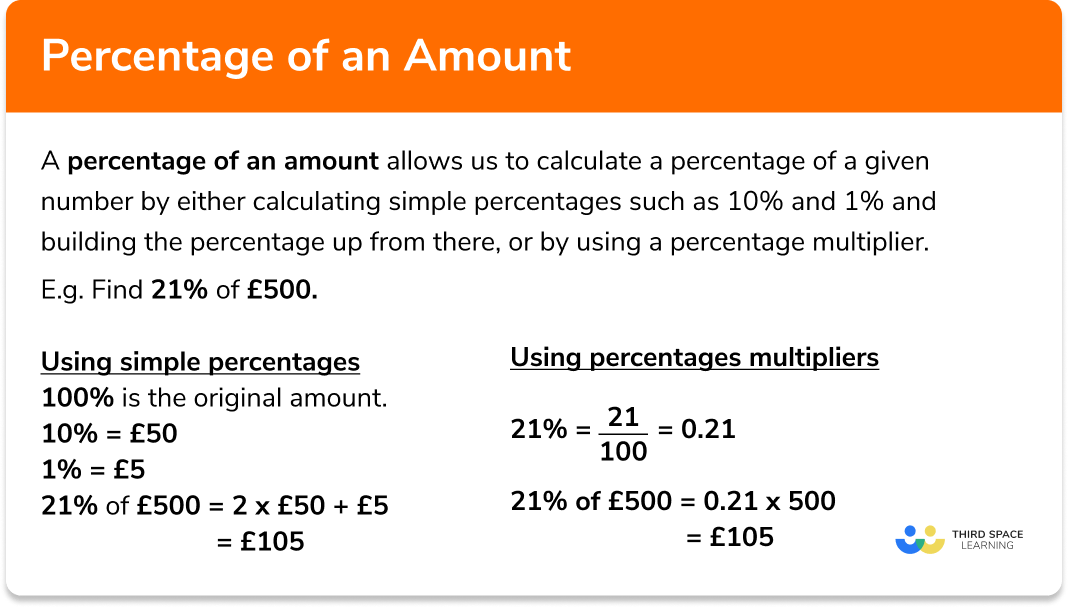
The most fundamental calculation involves finding a specific part of a known total. If you know the total amount (the “Base”) and the percentage (the “Rate”), the formula to find the specific amount (the “Part”) is:
Part = (Percentage / 100) × Total
For instance, if you are a business owner looking to set aside 15% of your $50,000 monthly revenue for quarterly taxes, you would divide 15 by 100 (0.15) and multiply it by 50,000. This yields $7,500. While this basic calculation is intuitive, the real value in financial decision-making often comes from manipulating this formula to find the “Total” or the “Base” when only the percentage and the part are known.
Solving for the Whole: Working Backward from the Part
In many financial scenarios, you are presented with a result and a rate, but the original figure is missing. This is common when trying to determine the original price of an item after a discount or calculating the total size of an investment portfolio based on the dividends received.
To find the total number when you know the percentage and the specific part, the formula is:
Total = Part / (Percentage / 100)
Imagine you received a dividend payment of $1,200 from an investment that has an annual yield of 4%. To understand how much capital you have invested in that specific asset, you would divide $1,200 by 0.04. The result, $30,000, provides the total value of your position. Mastering this “backward” calculation is essential for auditing financial statements and verifying that investment returns align with advertised rates.
Strategic Investing: Converting Rates into Real-World Capital
For investors, percentages are the primary metric of success. However, an 8% return on a $1,000 investment feels very different from an 8% return on $100,000. Translating these rates into numbers is vital for determining if an investment meets your lifestyle needs or retirement goals.
Assessing Portfolio Performance
When reviewing a quarterly brokerage statement, you might see that your portfolio has grown by 12%. To make this actionable, you need to convert that percentage into a currency figure to understand your new liquidity or “purchasing power.” If your starting balance was $250,000, a 12% gain is calculated as 0.12 × 250,000, which equals $30,000.
This calculation becomes more complex—and more necessary—when dealing with rebalancing. If your target allocation for “Tech Stocks” is 20% of your total portfolio, and your total portfolio is now worth $280,000, you must calculate 0.20 × 280,000 ($56,000) to know exactly how much capital should be parked in that sector. If your current tech holdings are $65,000, you know you need to sell $9,000 worth of shares to maintain your strategic allocation.
Projecting Future Value and Capital Requirements
Perhaps the most critical use of percentage-to-number calculation in finance is determining how much you need to save to achieve a specific income. This is often referred to as “Reverse Engineering Your Retirement.”
If you have determined that you need an annual income of $80,000 to live comfortably in retirement, and you expect a safe withdrawal rate (or yield) of 4% from your portfolio, you are looking for the “Total.” Using the formula Total = Part / (Percentage / 100), you would calculate:
$80,000 / 0.04 = $2,000,000
This calculation turns a vague goal into a concrete target. It tells the investor exactly what the “number” is that they need to reach. Without the ability to calculate the whole from the percentage, financial planning remains a series of guesses rather than a calculated strategy.
Corporate and Small Business Applications: Beyond Simple Arithmetic
In the business world, calculating numbers from percentages is an hourly requirement. From calculating the “burn rate” of a startup to determining the gross profit on a product line, the accuracy of these numbers dictates the health of the enterprise.
Navigating Profit Margins and Markups
One of the most common points of confusion in business finance is the difference between markup and margin. A 25% markup is not the same as a 25% profit margin, and mistaking the two can lead to significant revenue shortfalls.
If a product costs $100 to manufacture and you want a 25% profit margin, you are not simply adding 25% to the cost. A 25% margin means that 25% of the final selling price is profit. To find that price, the formula is:
Selling Price = Cost / (1 – Margin Percentage)
Selling Price = $100 / (1 – 0.25) = $133.33
In this scenario, the profit “number” is $33.33. If you had mistakenly used a 25% markup ($125 selling price), your actual margin would only be 20%, potentially underfunding your operational overhead.
The Intricacies of Sales Tax and VAT Adjustments
Businesses often receive payments that already include taxes, such as Sales Tax or Value Added Tax (VAT). To keep accurate books, a bookkeeper must extract the base price from the total paid. If a customer pays $1,080 for a service in a jurisdiction with an 8% sales tax, the $1,080 represents 108% of the base price.
To find the number representing the base price:
Base Price = Total Amount / (1 + Tax Rate)
Base Price = $1,080 / 1.08 = $1,000
This allows the business to correctly identify $1,000 as revenue and $80 as a tax liability to be remitted to the government.
Advanced Budgeting: Using Percentages to Drive Wealth Creation
On a personal level, the most effective budgets are often percentage-based. However, a budget cannot be executed until those percentages are converted into spendable (or savable) dollars.
The 50/30/20 Rule in Practice
The 50/30/20 rule is a popular financial framework where 50% of income goes to needs, 30% to wants, and 20% to savings and debt repayment. To apply this to a net monthly income of $6,400, the individual must perform three calculations:
-
Needs: 0.50 × 6,400 = $3,200
-
Wants: 0.30 × 6,400 = $1,920
-
Savings: 0.20 × 6,400 = $1,280
By converting these percentages into numbers, the budgeter can set up automatic transfers to savings accounts or set “hard caps” on discretionary spending apps. This transition from theory to math is what makes a budget sustainable.
Debt Management and Interest Rate Impact
When managing debt, such as a mortgage or a credit card balance, understanding the percentage (the APR) is only the beginning. The real question is: “How much is this debt costing me in dollars every month?”
If you carry a $5,000 balance on a credit card with a 24% APR, the annual cost in dollars is $1,200 (0.24 × 5,000). To find the monthly cost, you divide that by 12, resulting in $100 per month just in interest. Seeing the $100 figure is often much more motivating for debt repayment than seeing the “24%” figure, as it represents a tangible loss of monthly capital.
Avoiding Common Errors in Financial Percentage Calculations
Even experienced financial professionals can fall into traps when dealing with percentages. Accuracy in these calculations is paramount, as a small error in a percentage can lead to a massive discrepancy in the final dollar amount.
Percent vs. Percentage Points
A common error in financial reporting is confusing a “percent increase” with an increase in “percentage points.” If a central bank raises the interest rate from 3% to 4%, that is an increase of one percentage point. However, in terms of the cost of borrowing, it is a 33.3% increase (1 / 3).
If you are calculating the new payment on a variable-rate loan, you must use the new total percentage (4%) against the principal, rather than adding 1% to your previous dollar payment. Failing to distinguish between these two can lead to significant underestimation of interest expenses.

The Compounding Error in Sequential Percentages
In investing, percentages are not additive; they are multiplicative. If an investment loses 50% of its value in year one and gains 50% in year two, many people intuitively think they are back to “even.” However, the math tells a different story.
If you start with $10,000:
-
Year 1 (50% loss): 0.50 × 10,000 = $5,000 remaining.
-
Year 2 (50% gain): 0.50 × 5,000 = $2,500 gain.
-
Total: $7,500.
You are still down $2,500 despite the “50% gain” because the gain was calculated from a smaller base. This is why “calculating the number” at every step of a financial journey is the only way to maintain a true perspective on your net worth and performance.
By mastering the transition from percentages to numbers, you empower yourself to make data-driven decisions. Whether you are optimizing a corporate balance sheet or simply trying to get the best deal on a car loan, the ability to see the “real number” behind the percentage is the ultimate financial advantage.
aViewFromTheCave is a participant in the Amazon Services LLC Associates Program, an affiliate advertising program designed to provide a means for sites to earn advertising fees by advertising and linking to Amazon.com. Amazon, the Amazon logo, AmazonSupply, and the AmazonSupply logo are trademarks of Amazon.com, Inc. or its affiliates. As an Amazon Associate we earn affiliate commissions from qualifying purchases.