
In the intricate world of finance, where numbers dictate decisions and trends shape fortunes, understanding how to calculate an increase percentage is not merely a mathematical exercise—it’s a fundamental skill. From charting the upward trajectory of your investment portfolio to scrutinizing the growth of your business’s revenue, or even just making sense of how much more your groceries cost this month, the ability to quantify growth as a percentage provides clarity, context, and actionable insight. It allows you to move beyond raw figures and grasp the relative magnitude of change, empowering smarter budgeting, savvier investing, and more robust business strategies.
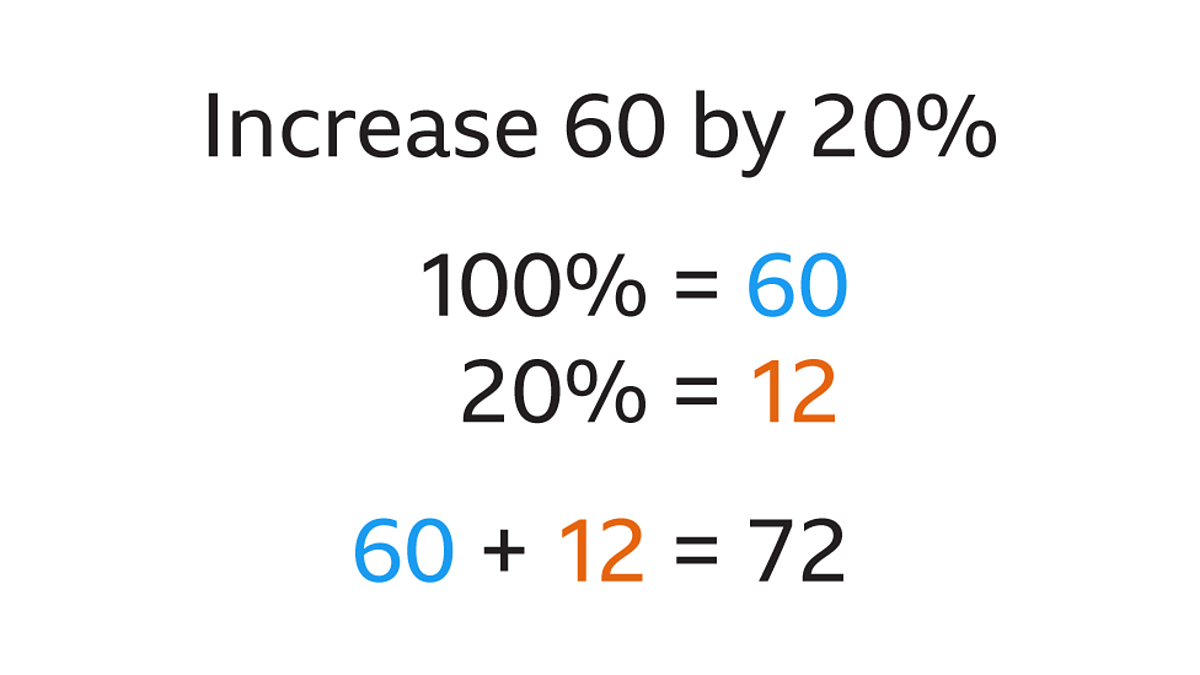
This comprehensive guide will break down the mechanics of calculating an increase percentage, delve into its widespread applications across personal and business finance, highlight common pitfalls, and explore the tools that can simplify this essential calculation. Mastering this concept is a cornerstone of financial literacy, indispensable for anyone looking to navigate their financial landscape with confidence and precision.
The Core Formula: Understanding the Basics
At its heart, calculating an increase percentage is about determining the relative change between an initial value and a new, larger value. It quantifies how much a quantity has grown as a proportion of its starting point.
Defining Key Terms
Before diving into the formula, let’s clarify the essential components:
-
Original Value (or Start Value): This is the baseline number from which the increase is measured. It’s the point of comparison. For instance, if you’re looking at your investment’s growth over a year, this would be its value at the beginning of the year.
-
New Value (or End Value): This is the higher number after the increase has occurred. Following the investment example, this would be its value at the end of the year.
-
Difference/Change: This is the absolute numerical increase, found by subtracting the Original Value from the New Value.
-
Percentage Increase: This is the difference expressed as a percentage of the Original Value, indicating the relative growth.
The Fundamental Formula Step-by-Step
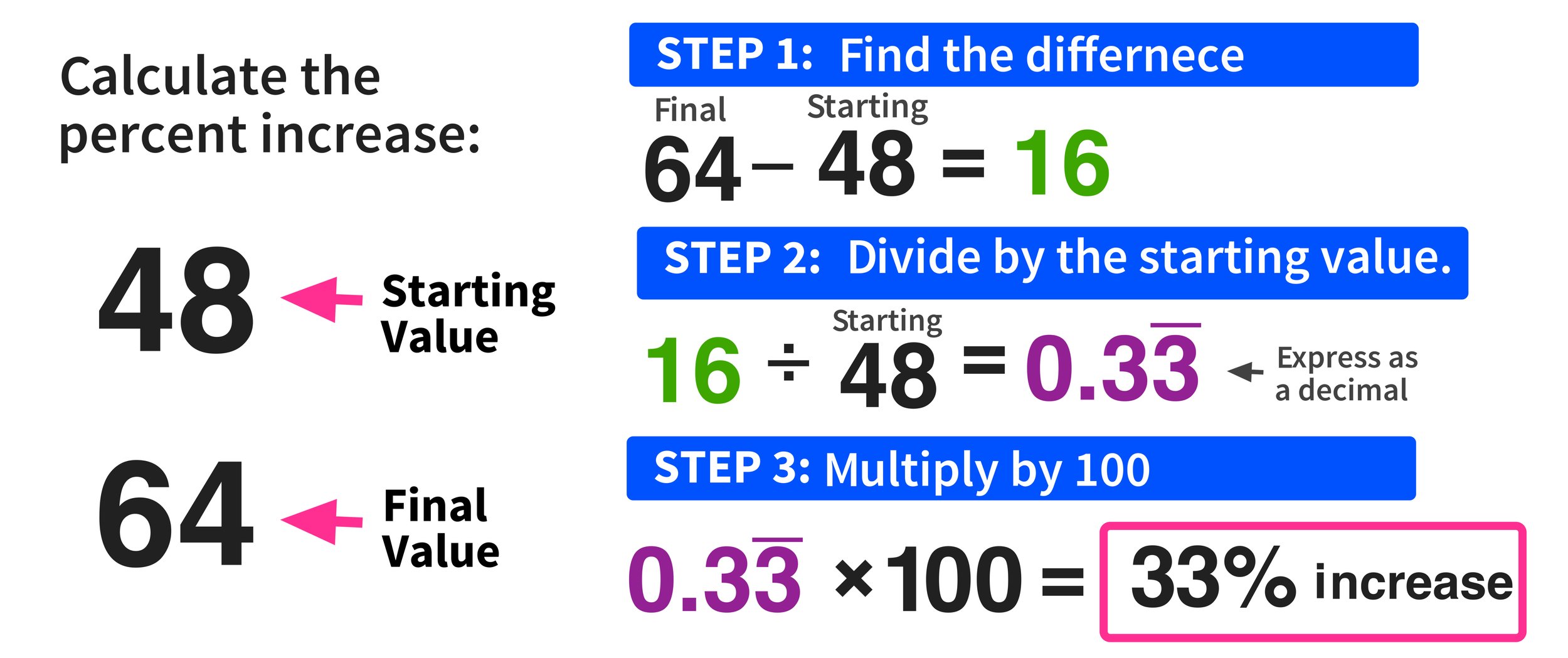
The calculation is straightforward and can be broken down into three logical steps:
-
Calculate the Absolute Difference: Subtract the Original Value from the New Value. This gives you the raw amount of the increase.
Difference = New Value - Original Value -
Divide the Difference by the Original Value: This step determines the increase as a decimal fraction of the starting amount.
Fractional Increase = Difference / Original Value -
Multiply by 100: Convert the decimal fraction into a percentage.
Percentage Increase = Fractional Increase * 100
Combining these steps, the complete formula is:
Percentage Increase = ((New Value - Original Value) / Original Value) * 100
Let’s illustrate with a simple example: If your savings account had $1,000 last year (Original Value) and now has $1,050 (New Value), the increase percentage would be:
((1,050 - 1,000) / 1,000) * 100 = (50 / 1,000) * 100 = 0.05 * 100 = 5%
Your savings have increased by 5%.
Practical Applications in Personal Finance
For individuals, understanding percentage increase is a superpower for managing personal wealth, making informed spending decisions, and planning for the future.
Tracking Investment Growth
One of the most common and critical applications of percentage increase is in evaluating investment performance. Whether it’s stocks, mutual funds, real estate, or a retirement account, knowing the percentage gain helps you assess returns objectively and compare different investment vehicles.
-
Example: You invested $10,000 in a stock portfolio. After one year, its value grew to $11,200.
Percentage Increase = (($11,200 - $10,000) / $10,000) * 100 = ($1,200 / $10,000) * 100 = 0.12 * 100 = 12%Your portfolio saw a 12% return, which you can now compare to benchmarks or other investments.
Analyzing Budgetary Changes
Budgets are dynamic, and expenses often fluctuate. Calculating percentage increases helps you pinpoint areas of rising costs and make necessary adjustments to maintain financial health.
-
Example: Your monthly electricity bill was $75 last year, but this year it averaged $90.
Percentage Increase = (($90 - $75) / $75) * 100 = ($15 / $75) * 100 = 0.20 * 100 = 20%A 20% increase in utility costs is significant and might prompt you to look for energy-saving measures or adjust other spending categories.
Understanding Salary Raises and Inflation
When you receive a salary raise, knowing the percentage increase helps you understand its real impact. Similarly, monitoring inflation, often reported as a percentage increase in the Consumer Price Index (CPI), is crucial for understanding how your purchasing power changes over time.
-
Example: Your annual salary increased from $50,000 to $53,000.
Percentage Increase = (($53,000 - $50,000) / $50,000) * 100 = ($3,000 / $50,000) * 100 = 0.06 * 100 = 6%If inflation was 3% during the same period, your real increase in purchasing power is closer to 3% (6% raise – 3% inflation).
Essential for Business Finance and Online Income
For entrepreneurs, small business owners, and those generating income online, percentage increase is a vital metric for assessing performance, identifying growth opportunities, and making strategic decisions.
Measuring Sales and Revenue Growth

One of the primary indicators of a business’s health is its ability to grow revenue. Calculating the percentage increase in sales over different periods (e.g., month-over-month, year-over-year) provides a clear picture of market penetration and business expansion.
-
Example: A small e-commerce store’s revenue grew from $25,000 in Q1 to $32,000 in Q2.
Percentage Increase = (($32,000 - $25,000) / $25,000) * 100 = ($7,000 / $25,000) * 100 = 0.28 * 100 = 28%A 28% quarter-over-quarter growth is excellent and indicates effective marketing or product-market fit.
Calculating Profit Margin Improvements
Beyond just revenue, businesses must focus on profitability. An increase in profit margin (the percentage of revenue that turns into profit) signifies greater efficiency and financial health.
-
Example: A freelance consultant’s net profit was $4,000 last month, and this month, due to reduced overhead, it rose to $4,600.
Percentage Increase = (($4,600 - $4,000) / $4,000) * 100 = ($600 / $4,000) * 100 = 0.15 * 100 = 15%A 15% increase in net profit is a strong indicator of improved operational efficiency.
Evaluating Side Hustle Performance
For those engaged in side hustles, tracking growth is crucial for determining viability and potential for scaling. Whether it’s income from a YouTube channel, affiliate marketing, or a part-time service, percentage increase helps you gauge progress.
-
Example: Your income from a blogging side hustle increased from $300 in one month to $450 the next.
Percentage Increase = (($450 - $300) / $300) * 100 = ($150 / $300) * 100 = 0.50 * 100 = 50%A 50% jump suggests positive momentum, perhaps from effective content strategies or increased traffic.
Common Pitfalls and Advanced Considerations
While the formula for percentage increase is straightforward, there are nuances and common errors to be aware of, especially in complex financial scenarios.
The Importance of the Original Value
The base from which you calculate the increase is paramount. Always ensure you are using the correct “Original Value.” An incorrect base will lead to a skewed and misleading percentage. For instance, if a business lost money last year and made a profit this year, calculating the “increase” from a negative original value requires careful interpretation or alternative metrics, as the standard formula might not yield a meaningful result. Generally, percentage increases are most useful when the original value is positive.
Distinguishing Between Percentage Increase and Percentage Point Increase
This is a critical distinction, especially in financial reporting and analysis. A “percentage point” refers to the absolute difference between two percentages, while a “percentage increase” refers to the relative growth of a percentage value.
-
Example: An interest rate increases from 5% to 6%.
-
This is a 1 percentage point increase (6% – 5% = 1%).
-
However, the percentage increase in the interest rate itself is:
((6% - 5%) / 5%) * 100 = (1% / 5%) * 100 = 0.20 * 100 = 20%
So, the rate increased by 20%, which is a 1 percentage point rise. Confusing these can lead to serious misinterpretations.
-
Compound Growth vs. Simple Increase
Our discussion thus far has focused on simple percentage increase between two distinct points in time. However, in finance, particularly with investments, compound growth is often at play. Compound growth occurs when the increase (or return) earned in one period is added to the original principal, and then the next period’s increase is calculated on this new, larger principal. This “interest on interest” effect is incredibly powerful over time.
While calculating a simple increase percentage captures the change between two values, understanding compound annual growth rate (CAGR) is essential for evaluating investments over multiple periods where growth compounds. CAGR effectively smooths out volatile returns and provides a single, representative growth rate over time, which involves a slightly more complex formula than a simple percentage increase.
Tools and Resources for Easier Calculation
While manually calculating percentage increases is fundamental, various tools can simplify the process, especially when dealing with large datasets or frequent analysis.
Spreadsheet Software (Excel/Google Sheets)
Spreadsheets are invaluable for financial calculations. You can easily set up columns for Original Value, New Value, and then apply the percentage increase formula.
- Formula Example in Excel: If your Original Value is in cell A2 and New Value in B2, the formula for percentage increase would be:
=(B2-A2)/A2(formatted as a percentage) or((B2-A2)/A2)*100(for a numerical result). You can then drag this formula down to apply it to multiple rows of data.
Online Calculators
Numerous websites offer free percentage increase calculators. These are convenient for quick, one-off calculations without needing to open a spreadsheet. Simply input your original and new values, and the calculator provides the result instantly. While convenient, it’s always wise to understand the underlying formula to verify results and apply the concept correctly in different scenarios.
Financial Calculators and Apps
More advanced financial calculators and dedicated apps often include functions for calculating percentage changes, growth rates, and compound interest. These are particularly useful for complex financial modeling, investment analysis, and long-term financial planning where various types of percentage calculations are needed.
Conclusion
The ability to calculate an increase percentage is a cornerstone of financial literacy, bridging the gap between raw data and meaningful insight. Whether you’re a diligent personal budgeter, a shrewd investor, an aspiring entrepreneur, or a seasoned business owner, mastering this skill empowers you to make more informed decisions. From tracking the impressive growth of your investment portfolio to identifying a concerning spike in operational costs, the percentage increase provides the critical context needed to understand the true magnitude of change.
By understanding the simple formula, recognizing its diverse applications in both personal and business finance, and being mindful of common pitfalls, you can wield this powerful tool with confidence. Regularly applying this calculation will not only sharpen your analytical skills but also significantly enhance your capacity for strategic planning, ultimately leading to greater financial success and peace of mind. Embrace the numbers, and let them guide your journey towards a more secure and prosperous financial future.
aViewFromTheCave is a participant in the Amazon Services LLC Associates Program, an affiliate advertising program designed to provide a means for sites to earn advertising fees by advertising and linking to Amazon.com. Amazon, the Amazon logo, AmazonSupply, and the AmazonSupply logo are trademarks of Amazon.com, Inc. or its affiliates. As an Amazon Associate we earn affiliate commissions from qualifying purchases.