
In the world of finance, percentages are the fundamental language of growth, risk, and value. Whether you are analyzing a stock portfolio, managing a corporate budget, or simply trying to optimize your personal savings, the ability to calculate and interpret percentages is an indispensable skill. While basic arithmetic allows us to count currency, percentages allow us to understand the relationship between numbers, providing the context necessary for high-stakes decision-making.
Understanding how to figure out a percentage is the first step toward financial mastery. It transforms raw data into actionable insights, allowing investors to compare the performance of disparate assets and business owners to evaluate the health of their margins. This guide explores the essential formulas, practical applications in business finance, and the sophisticated metrics used by industry professionals to measure success.
The Mathematical Foundation of Financial Percentages
At its simplest level, a percentage represents a fraction of 100. In a financial context, this allows for a standardized comparison across different scales of economy. To figure out a basic percentage, the universal formula is:
(Part / Whole) × 100 = Percentage
For example, if a business generates $25,000 in profit from $200,000 in revenue, the profit percentage is calculated by dividing 25,000 by 200,000, resulting in 0.125. Multiplying by 100 gives a 12.5% profit margin.
Calculating Percentage Change: The Metric of Growth
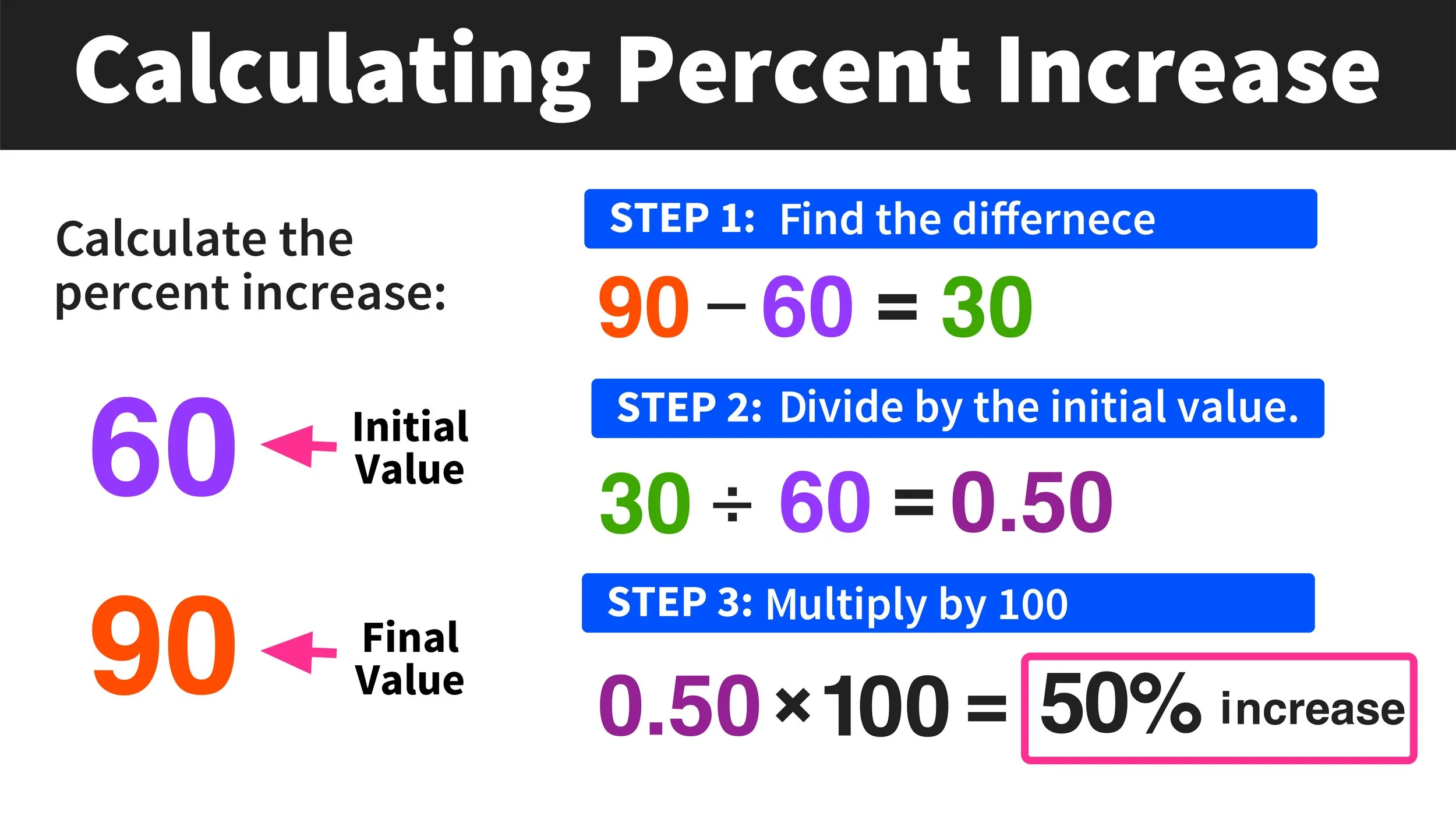
In finance and investing, static percentages are rarely enough. Professionals need to understand the rate of change over time. Whether it is a stock price fluctuation or a year-over-year revenue increase, the percentage change formula is critical:
[(New Value – Old Value) / Old Value] × 100 = Percentage Change
If a tech company’s share price rises from $150 to $180, the calculation is ($180 – $150) / $150. This equals 30 / 150, or 0.20. Multiplying by 100 reveals a 20% gain. This formula is equally vital for tracking inflation, expense growth, and portfolio volatility. Mastering this allows an individual to move beyond looking at dollar amounts and start seeing the underlying momentum of their wealth.
Converting Decimals and Fractions for Rapid Analysis
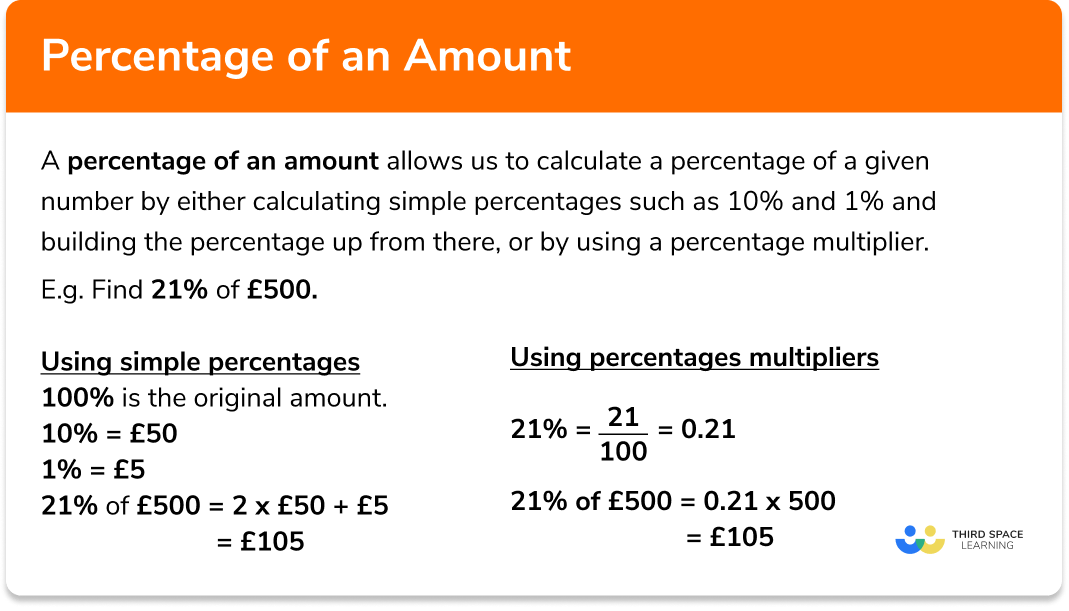
Financial analysts often work with decimals to speed up calculations on spreadsheets and financial modeling software. A 5% interest rate is expressed as 0.05, and a 25% tax bracket is 0.25. To quickly figure out the dollar amount of a percentage, simply multiply the total by the decimal form. For instance, finding 15% of a $4,000 bonus involves calculating 4,000 × 0.15, which yields $600. This mental agility is a hallmark of financial literacy, enabling quick evaluations of discounts, commissions, and tax liabilities during negotiations.
Percentages in Investment Analysis and Asset Management
For the serious investor, percentages are the primary tools used to measure efficiency and risk. Without them, it would be impossible to compare the performance of a small-cap stock to a multi-billion-dollar real estate investment.
Return on Investment (ROI)
The most ubiquitous percentage in the financial world is Return on Investment (ROI). It measures the probability of gaining a profit from an investment. It is a ratio that compares the gain or loss from an investment relative to its cost.
ROI = [(Current Value of Investment – Cost of Investment) / Cost of Investment] × 100
ROI allows for a “level playing field” comparison. An investment that returns $1,000 might seem better than one that returns $500, but if the first required an outlay of $10,000 (10% ROI) and the second only required $1,000 (50% ROI), the latter is significantly more efficient.
Dividend Yield and Interest Rates
Income-focused investors rely on the dividend yield percentage to determine how much cash flow an asset generates relative to its price. This is calculated by dividing the annual dividends paid per share by the price per share. Similarly, fixed-income investors look at the “Yield to Maturity” (YTM) of bonds, which is a complex percentage calculation representing the total return anticipated on a bond if it is held until it expires.
Understanding these percentages is vital for portfolio balancing. If the inflation rate is 4% and your savings account offers a 2% interest rate, your “real” percentage return is actually negative 2%. Without the ability to figure out these percentages, an investor might believe they are gaining wealth when they are actually losing purchasing power.
Compound Annual Growth Rate (CAGR)
When looking at investments over several years, simple percentage change can be misleading due to volatility. This is where the Compound Annual Growth Rate (CAGR) comes in. CAGR provides a smoothed annual rate of return, essentially telling you what the investment would have returned if it had grown at a steady rate each year with profits reinvested. While the formula is more complex—involving exponents—it remains a percentage-based metric that serves as the gold standard for comparing the long-term performance of various asset classes.
Business Finance: Margins, Markups, and Profitability
In the corporate world, the ability to figure out percentages dictates whether a company thrives or faces insolvency. Business owners must distinguish between various types of “margins” to ensure their pricing strategies are sustainable.
Gross Margin vs. Net Margin
One of the most common errors in business finance is confusing gross margin with net margin.
-
Gross Margin Percentage: This measures the percentage of revenue that exceeds the Cost of Goods Sold (COGS). It is calculated as [(Total Revenue – COGS) / Total Revenue] × 100. This indicates how efficiently a company produces its products.
-
Net Profit Margin: This is the “bottom line” percentage. It takes all expenses into account, including taxes, interest, and operating costs. It is calculated as (Net Income / Revenue) × 100.
A company might have a healthy 60% gross margin but a razor-thin 2% net margin due to high administrative costs or debt interest. By breaking these down into percentages, management can identify exactly where the business is losing efficiency.
Markup vs. Margin
Pricing strategy often hinges on the difference between markup and margin. Markup is the percentage added to the cost to reach a selling price, while margin is the percentage of the selling price that is profit.
If an item costs $100 and you want a 25% markup, the price is $125. However, the profit margin on that $125 sale is actually only 20% ($25 profit / $125 price). If a business owner mistakes a 25% markup for a 25% margin, they may inadvertently underprice their services and fail to cover overhead costs.
Break-Even Analysis
Figure out the break-even point often involves percentages of variable costs. By understanding what percentage of each dollar of sales goes toward covering fixed costs, a business can determine exactly how much volume is required to reach profitability. This “Contribution Margin” is a critical percentage for startups and scaling enterprises.
Personal Finance and Debt Management
On an individual level, percentages dictate the cost of our lifestyles. From credit card interest to mortgage qualifications, your financial health is often summarized by a few key ratios.
The Debt-to-Income (DTI) Ratio
When applying for a mortgage or a significant loan, lenders figure out your Debt-to-Income ratio. This is the percentage of your gross monthly income that goes toward paying debts.
DTI = (Total Monthly Debt Payments / Gross Monthly Income) × 100
Lenders typically look for a DTI of 36% or less. Understanding this percentage helps individuals realize how much “house” they can afford before they even step into a bank. It is a preventative metric that keeps consumers from becoming “house poor.”
Annual Percentage Rate (APR) and Compounding
Perhaps the most expensive percentage in a person’s life is the APR on debt. Unlike a simple interest rate, the APR includes fees and the effect of compounding. If you carry a balance on a credit card with a 24% APR, the percentage of interest you pay is calculated daily. Figuring out how much of your monthly payment goes toward interest versus principal is essential for debt elimination strategies like the “Debt Avalanche” method, which prioritizes paying off the highest percentage interest rates first.
The 50/30/20 Budgeting Rule
Percentages also provide a framework for healthy spending habits. Many financial advisors recommend the 50/30/20 rule:
-
50% of income toward Needs (housing, utilities, groceries).
-
30% of income toward Wants (dining out, hobbies, travel).
-
20% of income toward Savings and Debt Repayment.
By viewing a budget through the lens of percentages rather than fixed dollar amounts, the plan remains scalable. Whether you earn $50,000 or $500,000, the percentage-based allocation ensures that your lifestyle does not outpace your ability to save for the future.

Conclusion: The Strategic Power of Percentages
Figuring out a percentage is more than a mathematical exercise; it is a strategic necessity. In the realm of money—from the individual saver to the institutional investor—percentages provide the clarity needed to navigate a complex economic landscape. They allow us to strip away the noise of raw numbers and see the underlying truth of growth, efficiency, and risk.
By mastering these calculations, you gain the ability to evaluate investment opportunities critically, price products profitably, and manage debt aggressively. In a world driven by data, the percentage remains the most potent tool for translating financial information into financial success. Whether you are calculating the ROI on a new venture or the impact of a 0.5% interest rate hike on a mortgage, the ability to figure out percentages ensures that you are making decisions based on logic, strategy, and a clear vision of your financial future.
aViewFromTheCave is a participant in the Amazon Services LLC Associates Program, an affiliate advertising program designed to provide a means for sites to earn advertising fees by advertising and linking to Amazon.com. Amazon, the Amazon logo, AmazonSupply, and the AmazonSupply logo are trademarks of Amazon.com, Inc. or its affiliates. As an Amazon Associate we earn affiliate commissions from qualifying purchases.