
In the landscape of personal finance, few metrics are as vital—yet as frequently misunderstood—as the savings percentage. While many people focus exclusively on their total net worth or their annual salary, the percentage of income you successfully set aside is often the most accurate predictor of long-term financial independence. It is the engine that drives wealth accumulation, providing a clear snapshot of the relationship between what you earn and what you retain.
Calculating your savings percentage is more than a simple arithmetic exercise; it is a diagnostic tool that reveals the health of your spending habits and the velocity of your journey toward your financial goals. Whether you are aiming for a comfortable retirement, building an emergency fund, or saving for a significant life purchase, mastering this calculation is the first step toward intentional wealth management.

The Fundamentals of the Savings Rate Calculation
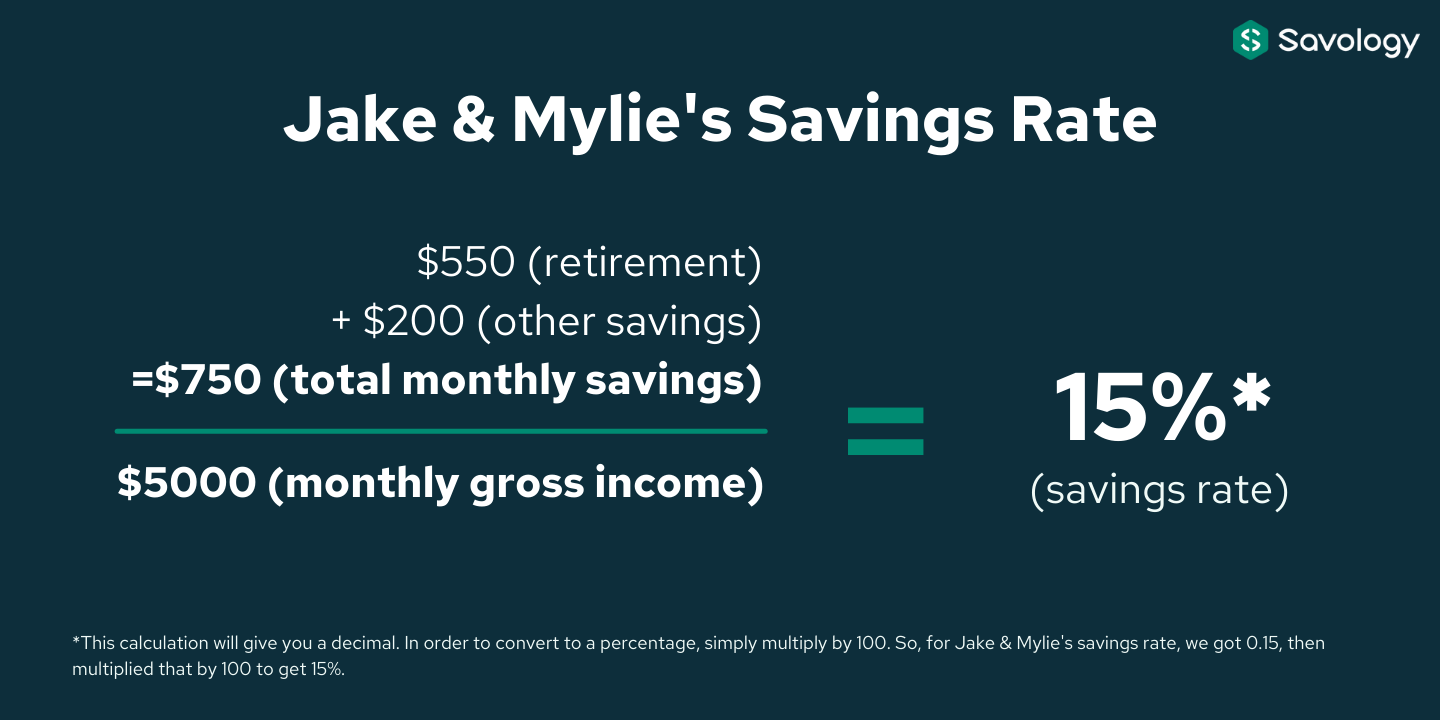
At its most basic level, your savings percentage is the portion of your total income that remains after all expenses have been paid and is subsequently directed toward assets or reserves. The core formula is straightforward:
(Total Amount Saved ÷ Total Income) × 100 = Savings Percentage
While the math is simple, the variables within that equation require careful definition to ensure an accurate reflection of your financial reality.
Identifying Your Savings
The “Total Amount Saved” figure should encompass more than just the money you move into a traditional savings account. In a comprehensive financial plan, savings include:
-
Cash Reserves: Contributions to high-yield savings accounts or money market funds.
-
Retirement Contributions: Employee contributions to 401(k), 403(b), or IRAs.
-
Employer Matching: Many financial experts argue that employer contributions should be included in both the “saved” and “income” portions of the calculation, as they represent a direct increase in your net worth.
-
Debt Principal Payments: While paying off a credit card balance is an expense, paying down the principal on a mortgage or student loan can be viewed as “forced savings” because it increases your equity and net worth.
Defining Your Income Base
The denominator of your equation—Total Income—is where most discrepancies occur. You must decide whether to calculate your percentage based on “Gross Income” (before taxes) or “Net Income” (take-home pay).
Calculating based on net income is often more practical for day-to-day budgeting because it reflects the actual cash flow you control. However, using gross income is the standard for many high-level financial planning benchmarks. Whichever you choose, consistency is key. If you are including pre-tax 401(k) contributions in your “saved” column, you must use your gross income as the denominator to maintain mathematical integrity.
Why the Savings Percentage Outperforms Other Metrics
In the world of money management, “how much you make” is a vanity metric, while “how much you keep” is a sanity metric. A high earner who spends 99% of their income is effectively living on the brink of financial disaster, whereas a moderate earner with a 25% savings rate is building a robust safety net and a path to freedom.
The Buffer Against Lifestyle Creep
Lifestyle creep occurs when an increase in income leads to a proportional increase in spending. By focusing on a savings percentage rather than a fixed dollar amount, you create an automatic guardrail. If you receive a 10% raise and commit to maintaining a 20% savings rate, your savings naturally increase alongside your lifestyle, preventing you from outspending your gains.
Measuring Financial Velocity
Your savings percentage dictates your “time to financial independence.” If you save 10% of your income, you are working nine years to support one year of living expenses. If you can increase that to 50%, you are working one year to support one year of living expenses. This perspective shifts the focus from the dollar amount to the time-value of your labor, providing a more motivating framework for wealth building.
Flexibility and Scalability
Unlike a fixed budget that might break during a month of high expenses, a percentage-based approach allows for flexibility. It scales with your life stages. A young professional might start at 5% or 10%, while an established executive might aim for 40%. The percentage serves as a universal language for financial health regardless of the specific dollar amounts involved.
Strategic Benchmarks: What Should You Aim For?

Once you have calculated your current percentage, the natural next question is: “Is this enough?” While the answer depends heavily on your age and objectives, there are several widely recognized frameworks that serve as excellent starting points.
The 50/30/20 Rule
Popularized as a foundational budgeting tool, this rule suggests allocating 50% of your income to needs, 30% to wants, and 20% to savings and debt repayment. In this framework, a 20% savings rate is the gold standard for basic financial security. It provides enough cushion to handle emergencies while steadily building retirement wealth over a 30-to-40-year career.
The Aggressive Growth Tier (30% to 50%)
For individuals pursuing “FIRE” (Financial Independence, Retire Early) or those who started saving later in life, a 20% rate may be insufficient. Aiming for a 30% to 50% savings rate requires significant lifestyle optimization and often involves “investing the difference” of every pay raise. At these levels, the compounding effect of your investments accelerates dramatically, often cutting decades off a traditional career timeline.
The Minimum Safety Floor (10% to 15%)
Most financial advisors suggest that 10% to 15% is the absolute minimum required to maintain one’s lifestyle into retirement, assuming a traditional 40-year working window. If your calculation reveals a percentage lower than 10%, it is an indicator that your current cost of living may be misaligned with your long-term security.
Tools and Methods to Optimize Your Rate
Calculating the percentage is a diagnostic; improving it is the treatment. To move the needle on your savings rate, you must employ specific financial tools and behavioral strategies.
Automating the “Pay Yourself First” Principle
The most effective way to ensure your calculated savings percentage stays consistent is to remove the human element. By automating transfers to savings and investment accounts to occur on the same day your paycheck hits, you treat savings as a non-negotiable expense. This “pays you first” before you have the opportunity to spend the surplus on discretionary items.
Utilizing Modern Financial Software
Manually calculating your savings rate every month can be tedious. Leveraging fintech apps and personal finance aggregators can provide real-time dashboards of your savings percentage. These tools sync with your bank accounts and credit cards, categorizing transfers to investment accounts as “savings” and giving you a rolling average of your performance.
The “Half-of-Every-Raise” Strategy
To increase your percentage without feeling the “pinch” of a reduced budget, commit to saving at least 50% of every future salary increase. This allows you to enjoy a slight improvement in your quality of life while simultaneously boosting your savings rate. Over a few years, this strategy can move a household from a 10% savings rate to a 25% rate with virtually no perceived sacrifice.
Overcoming Common Calculation Obstacles
Real-world finances are rarely as tidy as a textbook formula. Several factors can complicate your savings percentage calculation, and knowing how to handle them is crucial for an accurate view.
Handling Variable Income
For freelancers, small business owners, or those with commission-based pay, income fluctuates monthly. In these cases, it is best to calculate your savings percentage on a trailing twelve-month (TTM) basis. This smooths out the peaks and valleys, providing a more realistic average of your financial behavior than a single month’s snapshot would.
The Debt Dilemma
If you are aggressively paying down high-interest debt, such as credit cards or personal loans, your “savings” might look artificially low. However, debt repayment is a direct contributor to your net worth. For the purposes of calculating your financial health, include any debt payments above the minimum required amount in your “savings” column. Once the debt is cleared, that same percentage of income should be immediately redirected into investments to maintain your savings momentum.
Large One-Time Expenses
Life events like home repairs, medical bills, or weddings can temporarily tank your savings percentage. It is important not to let these outliers discourage you. Use these moments to analyze your emergency fund’s effectiveness. If you have to dip into savings, your percentage for that month may be negative, but as long as your annual average remains on track, your financial foundation remains secure.
Conclusion: The Path to Mastery
The question “how do you calculate savings percentage” is ultimately a question about personal accountability. By identifying your income, clarifying what constitutes savings, and applying the formula consistently, you gain a level of clarity that most people never achieve with their finances.
This percentage is your financial pulse. It tells you when you are thriving and when you need to recalibrate. By prioritizing this metric over mere balance totals, you empower yourself to make informed decisions about your career, your spending, and your future. Wealth is not built by chance; it is built by the disciplined application of the surplus you create. Whether your current rate is 5% or 50%, the goal remains the same: understand the number, track it relentlessly, and strive for the incremental improvements that lead to lasting financial freedom.
aViewFromTheCave is a participant in the Amazon Services LLC Associates Program, an affiliate advertising program designed to provide a means for sites to earn advertising fees by advertising and linking to Amazon.com. Amazon, the Amazon logo, AmazonSupply, and the AmazonSupply logo are trademarks of Amazon.com, Inc. or its affiliates. As an Amazon Associate we earn affiliate commissions from qualifying purchases.