
Understanding the relationship between principal and interest is the cornerstone of financial literacy. Whether you are navigating the complexities of a thirty-year mortgage, managing a revolving credit card balance, or calculating the growth of a high-yield savings account, the math behind these figures determines your long-term net worth. At its simplest, the principal is the original sum of money borrowed or invested, while interest is the cost of borrowing that money—or the reward for lending it.
Mastering these calculations allows you to peel back the curtain on bank statements and loan offers. It empowers you to see exactly how much of your monthly payment is actually reducing your debt and how much is simply profit for the lender. By the end of this guide, you will understand the formulas, the variables, and the strategic implications of principal and interest in your personal financial journey.

The Mathematical Foundation: Simple vs. Compound Interest
Before diving into complex loan schedules, it is vital to distinguish between the two primary ways interest is calculated: simple and compound. The method used dictates how quickly debt grows or how fast an investment matures.
The Simple Interest Formula
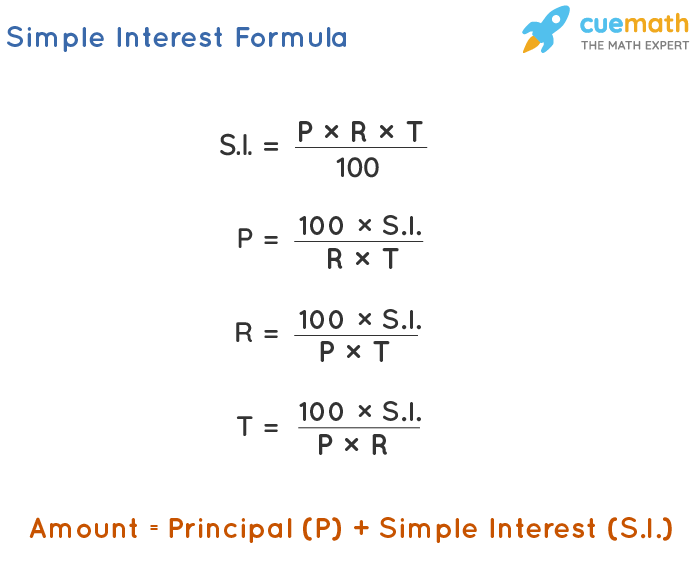
Simple interest is calculated only on the principal amount. It is most commonly found in short-term personal loans or certain types of consumer financing. The formula is straightforward:
Interest = Principal × Annual Interest Rate × Term of the Loan
For example, if you borrow $10,000 at a 5% annual interest rate for three years, the calculation is:
$10,000 × 0.05 × 3 = $1,500.
In this scenario, your total repayment would be $11,500. The interest remains static because it does not “see” the remaining balance or any previously accumulated interest; it only cares about the original principal and the time elapsed.
The Power of Compound Interest
Compound interest is the engine of the modern financial system. It is “interest on interest.” When interest compounds, the interest earned in the first period is added to the principal, and the interest for the next period is calculated on that new, larger total.
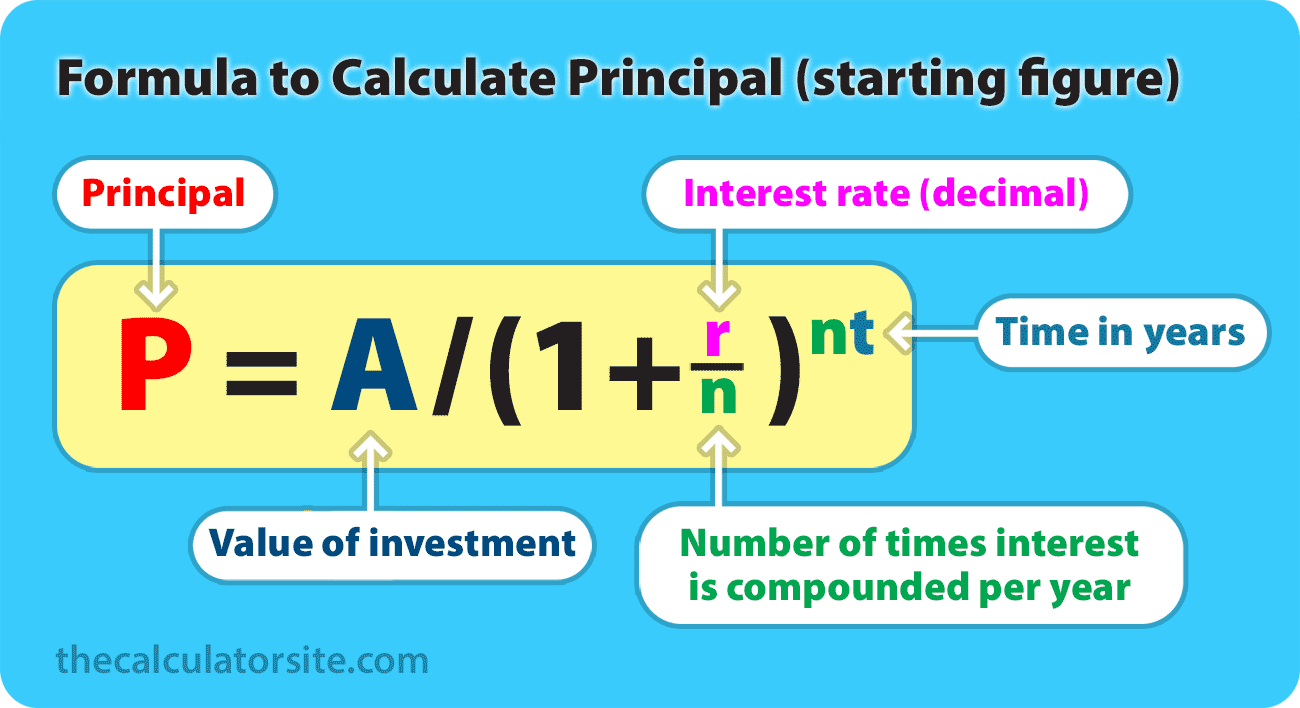
The formula for compound interest is:
A = P(1 + r/n)^{nt}
-
A = the total amount of money accumulated (principal + interest)
-
P = the principal amount
-
r = the annual interest rate (decimal)
-
n = the number of times interest compounds per year
-
t = the number of years
Compounding can happen annually, monthly, daily, or even continuously. For a borrower, frequent compounding is expensive. For an investor, it is the most potent tool for wealth creation. If you have a $10,000 investment with a 5% interest rate compounded monthly for three years, you would end up with approximately $11,614.72—over $114 more than the simple interest version.
Calculating Monthly Payments on Amortized Loans
Most significant consumer debts, such as mortgages and auto loans, utilize an amortization structure. An amortized loan is designed to be paid off in equal installments over a set period. However, the internal composition of those payments—how much goes to principal versus interest—changes every single month.
The Amortization Formula
To calculate the fixed monthly payment (A) for an amortized loan, the following formula is used:
A = P [ i(1 + i)^n ] / [ (1 + i)^n – 1 ]
-
P = Principal loan amount
-
i = Monthly interest rate (Annual rate divided by 12)
-
n = Total number of months (Term in years multiplied by 12)
This formula ensures that by the final month of the loan term, the balance hits exactly zero. In the early years of a long-term loan, such as a 30-year mortgage, the vast majority of your monthly payment is directed toward interest. As the principal balance slowly decreases, the interest (which is calculated on that balance) also decreases, allowing more of your fixed payment to be applied to the principal.
Breaking Down a Monthly Statement
To see how much interest you are paying in a specific month without using a complex calculator, you can perform a manual check:
-
Take your current remaining principal balance.
-
Multiply it by your annual interest rate.
-
Divide that result by 12.
If you have a $250,000 mortgage balance at a 6% interest rate:
($250,000 × 0.06) / 12 = $1,250.
If your total monthly payment is $1,498, then $1,250 goes to the bank as interest, and only $248 goes toward reducing your $250,000 debt. This “interest-heavy” front-loading is why early equity building in a home is often slow.
Factors That Influence the Cost of Borrowing
When you calculate principal and interest, you quickly realize that the interest rate isn’t the only factor determining the total cost of a loan. Several variables interact to shift the financial weight of the debt.
The Impact of the Loan Term
The length of time you take to repay a loan is perhaps the most significant factor in the total interest paid. A longer term results in lower monthly payments, which is attractive for cash flow, but it significantly increases the total interest expense.
Compare a $30,000 auto loan at 7% interest:
-
60-Month Term: Monthly payment is roughly $594. Total interest paid over the life of the loan: $5,642.
-
72-Month Term: Monthly payment drops to $512. However, the total interest paid jumps to $6,832.
By extending the loan by just one year, the borrower pays nearly $1,200 more for the exact same vehicle.
Credit Score and Risk-Based Pricing
In the world of finance, interest is the price of risk. Lenders use your credit score to determine the likelihood of the principal being repaid. A higher credit score signals lower risk, which translates to a lower interest rate.
A difference of even 1% on a mortgage can result in tens of thousands of dollars in interest over 30 years. Calculating the “spread” between different interest rate offers is an essential step before signing any contract, as it reveals the true cost of your credit profile.
Compounding Frequency in Credit Cards
Unlike mortgages, which usually compound interest monthly, many credit cards calculate interest daily. They use a Daily Periodic Rate (DPR), which is your APR divided by 365. This daily compounding means that if you carry a balance, the interest starts accruing immediately on every purchase, and that interest begins to compound the very next day. This is why credit card debt can spiral out of control much faster than other types of loans.
Strategies to Minimize Interest and Accelerate Principal Paydown
Once you understand how interest is calculated, you can use that knowledge to reverse-engineer your debt and save money. The goal for any borrower should be to reduce the principal balance as quickly as possible, because every dollar removed from the principal is a dollar that can no longer generate interest.
Making Extra Principal Payments
Most loans (though you should always check for “prepayment penalties”) allow you to pay more than the minimum monthly amount. When you make an extra payment and specify that it should be applied to the principal, you are effectively shortening the life of the loan.
Because interest is calculated based on the remaining balance, a one-time principal reduction of $5,000 on a mortgage doesn’t just save you $5,000; it saves you the interest that $5,000 would have accrued over the next 10, 15, or 20 years.
The Bi-Weekly Payment Strategy
A popular method for reducing mortgage interest is the bi-weekly payment schedule. Instead of making one full payment per month, you make half a payment every two weeks. Because there are 52 weeks in a year, you end up making 26 half-payments, which equals 13 full monthly payments instead of the standard 12. This extra payment, applied annually, can shave years off a 30-year mortgage and save the homeowner a fortune in interest.
Refinancing and Consolidation
If market interest rates drop or your credit score improves significantly, it may be time to recalculate your principal and interest under new terms. Refinancing involves taking out a new loan to pay off the old one. If the new interest rate is lower, more of your monthly payment goes toward the principal from day one. However, it is vital to calculate the “break-even point”—the time it takes for the interest savings to outweigh the closing costs of the new loan.
The Role of Principal and Interest in Wealth Building
While much of the focus on these calculations revolves around debt, the same principles apply to investing. In the context of a retirement account or a brokerage portfolio, the principal is your “seed money,” and the interest (or market return) is the “harvest.”
Harnessing the “Rule of 72”
A quick way to visualize the impact of interest on your principal is the Rule of 72. By dividing 72 by your annual rate of return, you can estimate how many years it will take for your initial principal to double.
-
At a 6% return, your money doubles in 12 years.
-
At a 10% return, your money doubles in 7.2 years.
This mental shortcut highlights why starting early is so critical. The more time your interest has to compound, the less “heavy lifting” your initial principal has to do to reach your financial goals.
Inflation: The Silent Eroder
When calculating the long-term value of principal and interest, professional investors also account for inflation. While your principal might grow in nominal terms, its purchasing power can decrease. The “Real Rate of Return” is the interest rate minus the inflation rate. If your savings account pays 4% interest but inflation is 3%, your principal is only growing by 1% in terms of actual buying power.
Understanding these nuances ensures that you are not just accumulating more currency, but actually building more wealth. Whether you are paying down a debt or building an empire, the math of principal and interest remains the fundamental language of money. By mastering these calculations, you gain control over your financial destiny, moving from a passive participant to a strategic manager of your economic life.
aViewFromTheCave is a participant in the Amazon Services LLC Associates Program, an affiliate advertising program designed to provide a means for sites to earn advertising fees by advertising and linking to Amazon.com. Amazon, the Amazon logo, AmazonSupply, and the AmazonSupply logo are trademarks of Amazon.com, Inc. or its affiliates. As an Amazon Associate we earn affiliate commissions from qualifying purchases.