
In the world of finance, precision is paramount. Whether you’re dissecting investment returns, navigating complex discount structures, or forecasting budget allocations, the ability to accurately calculate a percentage of a percentage is a fundamental skill. It’s more than just a mathematical exercise; it’s a critical tool for making informed financial decisions, avoiding costly misinterpretations, and gaining a clearer understanding of how various financial factors compound or interact. This guide will demystify the process, illustrating its importance across personal and business finance, and providing you with the practical knowledge to apply it confidently.
Understanding the Core Concept: The Building Blocks
Before diving into complex financial scenarios, it’s essential to grasp the foundational mathematical principles. Calculating a percentage of a percentage is often misunderstood, leading to common errors. A solid understanding of the basics will ensure accuracy and confidence in your financial computations.
What is a Percentage?
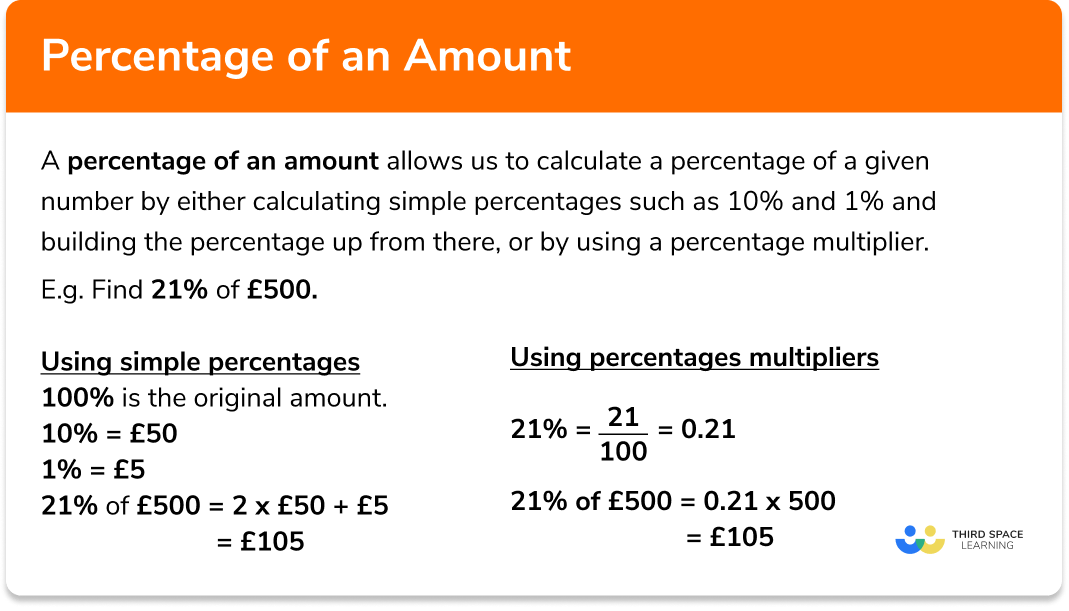
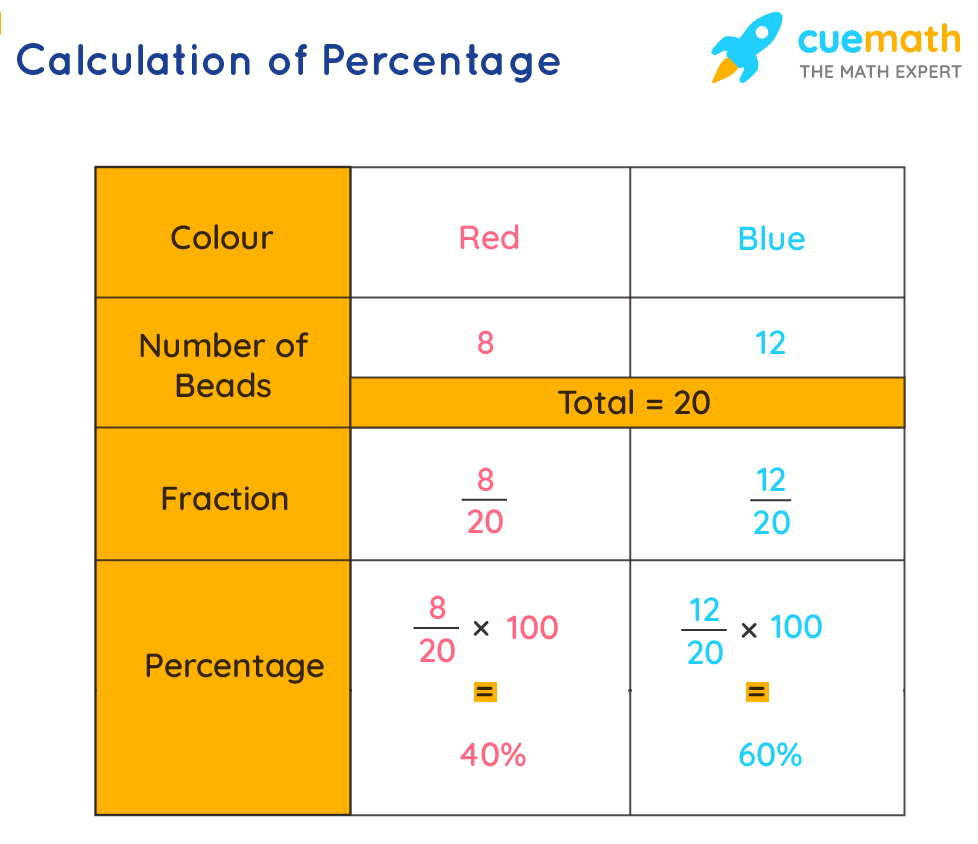
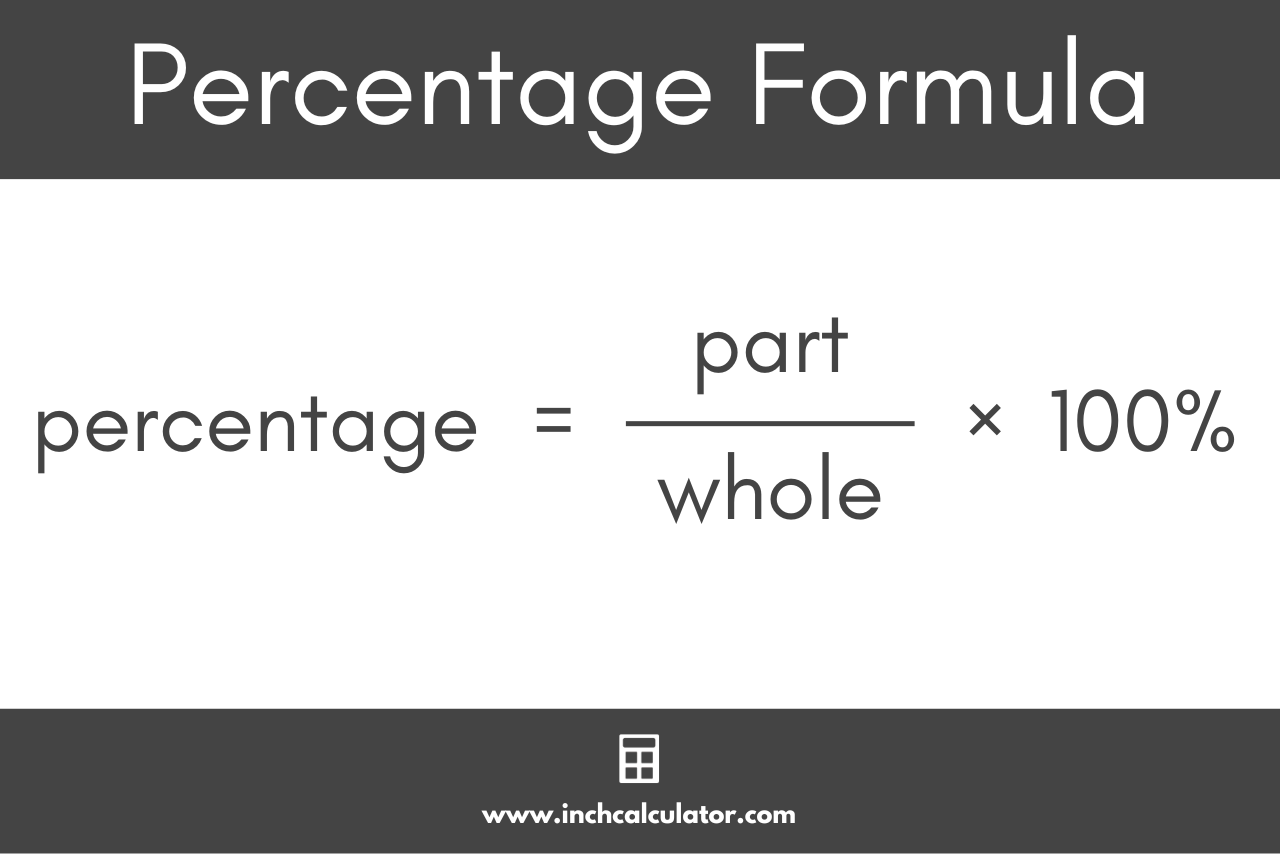
At its simplest, a percentage represents a part of a whole, expressed as a fraction of 100. For instance, 25% means 25 out of 100, or 25/100, which as a decimal is 0.25. Financial calculations frequently use percentages to describe rates, ratios, gains, losses, and allocations. Understanding this conversion to a decimal is the first crucial step in any percentage calculation, especially when dealing with multiple percentages.
What Does “Of” Mean in Math?
In mathematics, the word “of” almost universally signifies multiplication. When you see “20% of 50,” it means 20% multiplied by 50. Applying this rule is the key to correctly interpreting and calculating a percentage of a percentage. For example, “10% of 20%” means 10% multiplied by 20%. This seemingly simple rule is where many people get tripped up, often mistakenly trying to add or subtract percentages instead of multiplying them.
The Basic Formula Explained
The general formula for calculating a percentage of a percentage involves converting each percentage to its decimal equivalent and then multiplying them. If you want to find A% of B% of a base value X, the formula is:
(A / 100) * (B / 100) * X
Alternatively, if you’re solely calculating A% of B% (meaning, what proportion of B% is A%), it would be:
(A / 100) * (B / 100)
This resulting decimal would then represent that combined percentage. For example, 10% of 20% is 0.10 * 0.20 = 0.02, or 2%. This means that if something is 20% of a whole, and you take 10% of that 20%, you effectively have 2% of the original whole. This fundamental understanding is critical for applying these calculations to real-world financial situations.
Practical Applications in Personal Finance and Business
The ability to calculate a percentage of a percentage is not an abstract skill; it’s a practical necessity across various financial domains. From smart shopping to strategic business planning, these calculations offer clarity and precision.
Chained Discounts and Sales Tax
One of the most common applications of percentages of percentages in personal finance occurs during shopping. Imagine a product is already on sale for 20% off, and then a store offers an additional 10% discount on the sale price. It’s a widespread misconception that this equates to a 30% total discount. However, the second discount is applied to the reduced price, not the original. This is a classic “percentage of a percentage” scenario.
Similarly, consider sales tax. If a discount is applied, sales tax is typically calculated on the discounted price. So, you might first calculate the percentage discount, resulting in a new price, and then apply the sales tax percentage to that new price. Understanding the sequence and the base for each percentage is crucial to accurately determining the final cost.
Investment Returns and Compounding
In investing, understanding how percentages interact is vital for evaluating returns and the impact of fees. While direct “percentage of a percentage” calculation might not always describe sequential annual returns (which are usually calculated on the new principal), it’s highly relevant for specific scenarios. For example, if a fund charges a 1% management fee on the net assets, and those assets have already grown by 10% for the year, the 1% fee is a percentage of the new total, which itself is a percentage increase on the initial investment.
Another example is calculating commission on profit. If an investment yields a 25% profit, and your financial advisor takes a 15% commission on that profit, you’re calculating 15% of the 25% gain. This reveals the true proportion of the original investment that goes towards the commission (15% of 25% = 3.75% of the initial investment’s gain). This perspective helps in evaluating the net gain from investments.
Financial Analysis and Performance Metrics
Businesses extensively use percentage-of-percentage calculations for internal analysis and performance reporting. Consider a company’s Cost of Goods Sold (COGS) as a percentage of its revenue. Then, within COGS, the raw material cost might be a specific percentage of the total COGS. To find the raw material cost as a percentage of total revenue, you would perform a percentage-of-percentage calculation.
For instance, if COGS is 60% of Revenue, and Raw Materials are 70% of COGS, then Raw Materials are 70% of 60% of Revenue. This means Raw Materials are 0.70 * 0.60 = 0.42 or 42% of total revenue. This type of breakdown is crucial for understanding cost structures, profit margins, and identifying areas for efficiency. Similarly, marketing spend as a percentage of gross profit, or a specific advertising channel’s cost as a percentage of the total marketing budget (which is already a percentage of revenue), are common scenarios requiring this calculation.
Step-by-Step Calculation Guide with Examples
Mastering the calculation involves a simple, consistent process: convert to decimals, then multiply. Let’s walk through common financial examples.
Converting Percentages to Decimals
This is the cornerstone of accurate percentage calculations. To convert a percentage to a decimal, simply divide it by 100.
-
20% = 20 / 100 = 0.20
-
15% = 15 / 100 = 0.15
-
5% = 5 / 100 = 0.05
This conversion makes multiplication straightforward and prevents common errors.
Example 1: Double Discount Scenario
You’re eyeing a new gadget priced at $500. It’s advertised with an initial 20% discount, and for a limited time, you get an additional 15% off the already discounted price.
Goal: Find the final price.
Steps:
-
Calculate the first discount:
-
Original Price: $500
-
Discount 1: 20% = 0.20
-
Discount amount 1: $500 * 0.20 = $100
-
Price after first discount: $500 – $100 = $400
-
-
Calculate the second discount (percentage of the discounted price):
-
Current Price: $400
-
Discount 2: 15% = 0.15
-
Discount amount 2: $400 * 0.15 = $60
-
Final Price: $400 – $60 = $340
-
Alternatively, using the multiplication method for remaining percentage:
-
After 20% off, you pay 80% (100% – 20%) of the original price.
-
After an additional 15% off, you pay 85% (100% – 15%) of the new price.
-
Combined effective payment percentage: 0.80 * 0.85 = 0.68 (or 68%).
-
Final Price: $500 * 0.68 = $340.
This method reveals that the total effective discount is 100% – 68% = 32%, not 35%.
Example 2: Commission on Profit
A small business generated $20,000 in revenue, with a profit margin of 30% of that revenue. The sales team earns a 10% commission on the profit.
Goal: Calculate the sales team’s commission amount.
Steps:
-
Calculate the profit amount:
-
Revenue: $20,000
-
Profit Margin: 30% = 0.30
-
Profit: $20,000 * 0.30 = $6,000
-
-
Calculate the commission (percentage of the profit):
-
Profit: $6,000
-
Commission Rate: 10% = 0.10
-
Commission Amount: $6,000 * 0.10 = $600
-
In this scenario, the sales team’s commission is 10% of 30% of the revenue. That’s 0.10 * 0.30 = 0.03, or 3% of the total revenue. So, $20,000 * 0.03 = $600.
Example 3: Budget Allocation
A company has an annual marketing budget of $150,000. 40% of this budget is allocated to digital marketing. Within the digital marketing budget, 25% is specifically designated for social media advertising.
Goal: Determine the amount allocated to social media advertising.
Steps:
-
Calculate the digital marketing allocation:
-
Total Marketing Budget: $150,000
-
Digital Marketing Share: 40% = 0.40
-
Digital Marketing Budget: $150,000 * 0.40 = $60,000
-
-
Calculate the social media advertising allocation (percentage of the digital marketing budget):
-
Digital Marketing Budget: $60,000
-
Social Media Share: 25% = 0.25
-
Social Media Advertising Budget: $60,000 * 0.25 = $15,000
-
This means social media advertising accounts for 25% of 40% of the total marketing budget. That’s 0.25 * 0.40 = 0.10, or 10% of the total marketing budget. So, $150,000 * 0.10 = $15,000.
Common Pitfalls and How to Avoid Them
Even with a clear understanding, certain mistakes frequently occur when dealing with percentages of percentages. Recognizing these pitfalls can save you from miscalculations.
The “Add Them Up” Fallacy
This is perhaps the most common error. When presented with sequential discounts, like “20% off, then an additional 10% off,” many people incorrectly assume the total discount is 30%. As demonstrated in the double discount example, this is false. Each percentage is applied to a different base value. Always calculate sequentially or multiply the remaining percentages, never just add them.
Misinterpreting the Base
A percentage is always “of” something. The critical mistake is often misunderstanding what that “something” is for each subsequent percentage. Is the second percentage off the original amount or the new amount after the first percentage? The wording is key. “10% off the original price” is different from “10% off the discounted price.” Always identify the base value for each percentage application before proceeding with your calculation.
Order of Operations
While multiplication is commutative (A * B is the same as B * A), the logic of applying percentages in a financial context might imply a specific order. For instance, calculating a discount then sales tax is different from calculating sales tax then a discount, especially if the tax is on the full price before a discount (though usually tax is on the final sale price). Always follow the natural or stipulated sequence of events in the financial scenario to ensure accuracy. If unsure, assume sequential application unless explicitly stated otherwise.
Leveraging Financial Tools for Complex Calculations
While understanding the manual calculation is crucial, modern financial tools can significantly streamline the process, especially for more complex or repetitive scenarios.
Spreadsheets (Excel/Google Sheets)
Spreadsheets are invaluable for percentage calculations. You can set up formulas that automatically calculate chained percentages. For instance, if cell A1 contains the original price, cell B1 contains the first discount percentage (e.g., 0.20 for 20%), and cell C1 contains the second discount percentage (e.g., 0.15 for 15%), you can use formulas like:
-
=A1*(1-B1)*(1-C1)for the final price after two sequential discounts. -
=A1*B1*C1if you truly need A% of B% of C% of A1.
This allows for quick adjustments and minimizes human error in repetitive tasks.
Financial Calculators and Software
Dedicated financial calculators (like HP 12c or Texas Instruments BA II Plus) often have built-in percentage functions that can simplify multi-step calculations, especially those involving compounding or net present value, which implicitly deal with percentages over time. More sophisticated financial software packages (e.g., accounting software, investment platforms) will handle these calculations automatically, but understanding the underlying math helps you verify outputs and interpret results accurately.
Online Percentage Calculators
For quick, one-off calculations, numerous free online percentage calculators can perform these tasks for you. While convenient, always ensure you understand the logic behind how they function to input your values correctly and avoid misinterpreting their results. They serve as excellent tools for verification once you’ve done the manual thought process.
Conclusion
Calculating a percentage of a percentage is a fundamental mathematical operation with profound implications across personal and business finance. From evaluating the true cost of discounted items to dissecting intricate investment returns and understanding budget allocations, mastering this skill is indispensable. By diligently converting percentages to decimals, applying the “of means multiply” rule, and carefully identifying the base for each calculation, you can navigate complex financial scenarios with confidence and accuracy. Avoid common pitfalls like the “add them up” fallacy, and leverage financial tools to streamline your processes. Ultimately, a clear understanding of how percentages interact empowers you to make smarter, more informed financial decisions, ensuring you never leave money on the table or misinterpret critical financial data.
aViewFromTheCave is a participant in the Amazon Services LLC Associates Program, an affiliate advertising program designed to provide a means for sites to earn advertising fees by advertising and linking to Amazon.com. Amazon, the Amazon logo, AmazonSupply, and the AmazonSupply logo are trademarks of Amazon.com, Inc. or its affiliates. As an Amazon Associate we earn affiliate commissions from qualifying purchases.