
For seasoned investors and casual market observers alike, the period between Thanksgiving and the end of the year represents one of the most unique cycles in the financial world. While much of the American public is focused on retail sales and holiday traditions, the financial markets operate under a modified set of rules. A central question for those managing portfolios during this time is: what time does the stock market close on Black Friday?
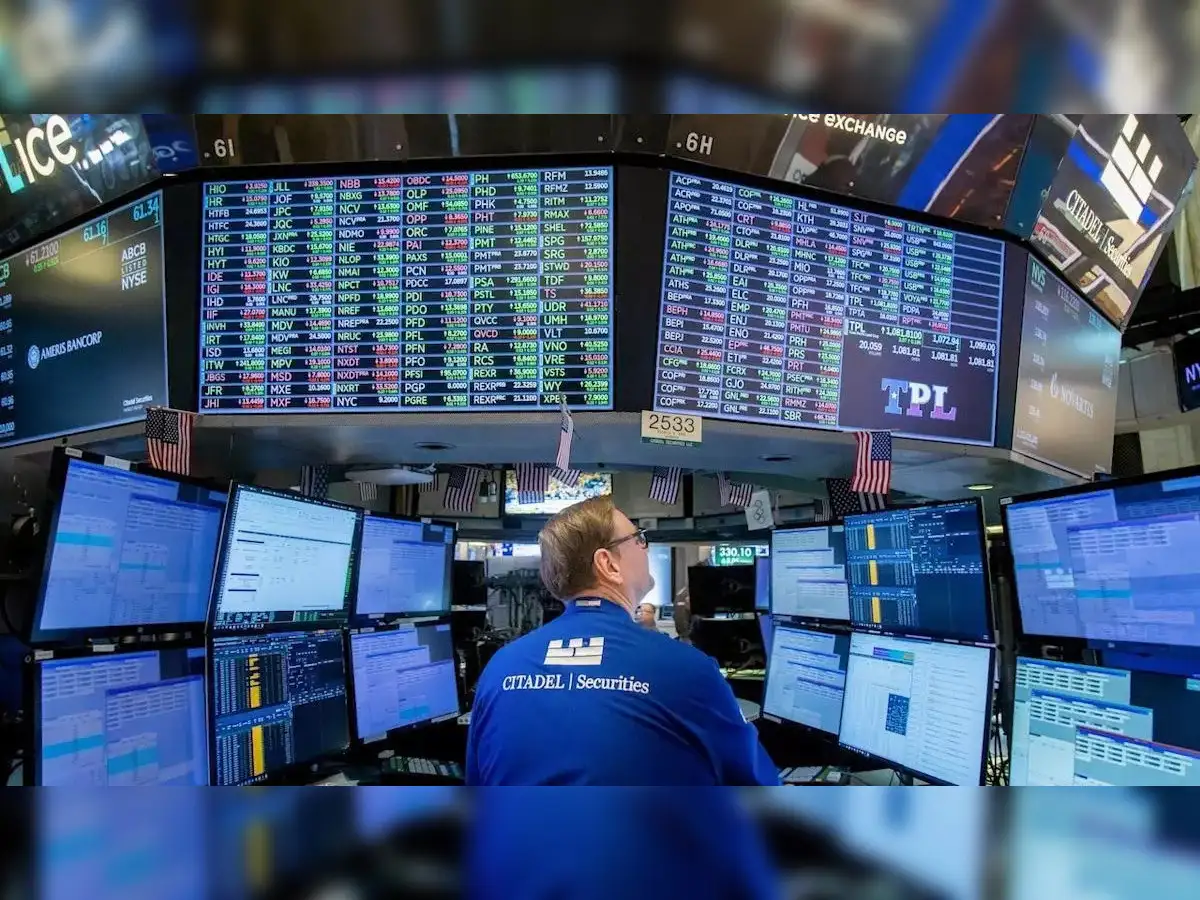
On Black Friday, the New York Stock Exchange (NYSE) and the Nasdaq Stock Market close early at 1:00 PM Eastern Time. This truncated trading session follows a full market closure on Thanksgiving Day. While the 1:00 PM bell signals the end of regular trading, the implications for liquidity, volatility, and sector-specific performance extend far beyond the shortened hours. Understanding the mechanics of this half-day is essential for any investor looking to protect their capital or capitalize on short-term market movements.

The Specifics of the Black Friday Early Close
The tradition of the early close on the Friday following Thanksgiving is a long-standing practice designed to allow market participants—from floor traders to institutional analysts—to enjoy an extended holiday weekend while still providing a window for necessary price discovery and liquidity.
NYSE and NASDAQ Hours
Both the NYSE and the Nasdaq adhere to the same schedule on Black Friday. The markets open at their usual time of 9:30 AM ET, but instead of the standard 4:00 PM ET closing bell, the session ends abruptly at 1:00 PM ET. This three-and-a-half-hour window is the shortest regular trading session of the year.
It is also important to note that “After-Hours” trading is similarly affected. While extended-hours trading typically continues until 8:00 PM ET on a standard day, on Black Friday, most electronic communication networks (ECNs) and brokerage platforms wind down their extended sessions much earlier, usually by 5:00 PM ET, though this can vary by broker.
The Bond Market and Fixed Income
Investors in fixed income must pay attention to a slightly different set of rules. The Securities Industry and Financial Markets Association (SIFMA) typically recommends a 2:00 PM ET close for the trading of US dollar-denominated government securities, mortgage-backed securities, and corporate bonds on Black Friday. Because the bond market serves as the bedrock for interest rate expectations and broader economic health, its slightly longer session can sometimes provide clues for how equity futures might trade over the weekend.
The Financial Psychology of the Holiday Session
The Black Friday session is rarely characterized by the heavy institutional volume seen during “Triple Witching” Fridays or end-of-quarter rebalancing. Instead, the market often experiences what analysts call “thin trading.” This environment changes the psychological and mechanical landscape of the market in several ways.
Thin Liquidity and Increased Volatility
Liquidity refers to the ease with which an asset can be bought or sold without affecting its price. On Black Friday, many institutional desks are minimally staffed or closed entirely, as fund managers take the four-day weekend off. When fewer participants are in the market, the “bid-ask spread”—the difference between the highest price a buyer is willing to pay and the lowest price a seller is willing to accept—tends to widen.
In a thin market, even a relatively small order can cause a disproportionate move in a stock’s price. For the individual investor, this means that market orders can be dangerous. A sudden surge in selling or buying in a low-volume environment can lead to “slippage,” where the execution price is significantly different from the expected price.
The Institutional “Skeleton Crew” Effect
With most senior traders away from their desks, much of the activity on Black Friday is driven by automated trading algorithms and “skeleton crews” at major banks. These algorithms are programmed to react to news headlines and technical levels. In the absence of human intervention to provide a “buffer,” these programs can sometimes create feedback loops. Consequently, while Black Friday is often quiet, it has the latent potential for sharp, sudden movements if unexpected geopolitical or economic news breaks during the morning hours.
Sector Performance and the Retail Barometer

Beyond the clock, Black Friday holds significant symbolic weight for the “Money” sector, particularly for consumer discretionary stocks. Traditionally, this day marked the point in the year when retailers finally moved out of the “red” (losses) and into the “black” (profit), hence the name.
Analyzing Consumer Discretionary Stocks
Investors closely monitor the performance of retail giants like Walmart, Target, Amazon, and Best Buy on Black Friday. While the actual sales data for the day isn’t fully tallied until much later, real-time foot traffic reports and early e-commerce data often drive sentiment. If early reports suggest that consumers are spending freely despite inflationary pressures or high interest rates, the retail sector may see a “relief rally” during the shortened session.
However, the “Black Friday Effect” on stock prices is often a case of “buy the rumor, sell the news.” Many retail stocks see an run-up in price in the weeks leading up to Thanksgiving. By the time the markets open on Black Friday, much of the optimism may already be priced in, leading to flat or even slightly negative performance as traders take profits.
The Shift from Brick-and-Mortar to E-commerce
The relevance of Black Friday as a single-day event has evolved with the rise of e-commerce. With the advent of Cyber Monday and “Black Friday Month” promotions, the urgency of the Friday session has dissipated somewhat. For the modern investor, the focus has shifted toward logistics, payment processors (like Visa, Mastercard, and PayPal), and cloud computing providers that power the digital economy. A strong Black Friday is no longer just about shoppers in a mall; it is about the throughput of the global digital supply chain.
Strategic Considerations for Individual Investors
Navigating a shortened trading day requires a different tactical approach than a standard Tuesday or Wednesday. Because the market closes at 1:00 PM ET, the window for correcting mistakes or reacting to trend changes is significantly narrowed.
Avoiding “Flash Crashes” in Low-Volume Environments
For those managing their own brokerage accounts, the most important rule on Black Friday is to use limit orders rather than market orders. A limit order ensures that you only buy or sell at a specific price or better. In the volatile, low-volume environment of a holiday session, this protects you from the aforementioned slippage.
Furthermore, many professional traders suggest that individual investors avoid trading at all during the final 30 minutes of the Black Friday session. Between 12:30 PM and 1:00 PM ET, there is often a flurry of activity as those who were “day trading” the session must close out their positions before the long weekend. This “amateur hour” volatility can be unpredictable and is rarely based on fundamental shifts in company value.
Preparing for the Monday Momentum
While Black Friday itself may be a half-day, it sets the stage for the following week. Investors often use the quiet Friday session to position themselves for “Cyber Monday.” If Black Friday retail performance is viewed as a disappointment, Monday’s open could be bearish. Conversely, if consumer spending proves resilient, it can ignite a “Santa Claus Rally”—a historical tendency for stock prices to increase during the last week of December and the first two days of January.
Navigating the Year-End Market Landscape
The early close on Black Friday serves as the unofficial kickoff to the “year-end stretch.” For personal finance and portfolio management, this period is about more than just holiday sales; it is about fiscal discipline and strategic positioning for the new tax year.
Tax-Loss Harvesting and Portfolio Rebalancing
Because volume is low on Black Friday, it can be an opportune time for investors to review their portfolios for tax-loss harvesting. This involves selling securities at a loss to offset capital gains tax liabilities. While you wouldn’t necessarily execute all these trades during a low-volume Friday, the quiet hours of the afternoon—after the market has closed at 1:00 PM—provide a perfect window to analyze which positions are underperforming and plan your exits for the following week.
The Bigger Picture: 2025 and Beyond
As the closing bell rings at 1:00 PM ET on Black Friday, the focus of the financial world begins to shift toward the coming year. The performance of the markets during this shortened window is often a microcosm of broader economic sentiment. Whether it is the resilience of the American consumer or the cautiousness of institutional lenders, the data points gathered during this brief session help shape the narrative for the final month of the year.
In conclusion, while the stock market’s early close at 1:00 PM ET on Black Friday may seem like a minor footnote in the annual financial calendar, it represents a critical juncture for liquidity management and sector analysis. By understanding the truncated schedule, the risks of low-volume volatility, and the shifting dynamics of the retail economy, investors can navigate the holiday season with the professional insight necessary to protect and grow their wealth. Keep your eyes on the clock, but more importantly, keep your eyes on the underlying market mechanics that make this Friday unlike any other.
aViewFromTheCave is a participant in the Amazon Services LLC Associates Program, an affiliate advertising program designed to provide a means for sites to earn advertising fees by advertising and linking to Amazon.com. Amazon, the Amazon logo, AmazonSupply, and the AmazonSupply logo are trademarks of Amazon.com, Inc. or its affiliates. As an Amazon Associate we earn affiliate commissions from qualifying purchases.