
For investors, traders, and anyone keen on the rhythms of global finance, understanding when the stock markets open and, crucially, when they close, is fundamental. This seemingly simple question unlocks a deeper appreciation of market dynamics, liquidity, and strategic planning. The closing bell signifies not just the end of a trading day but often sets the stage for overnight news, pre-market anticipation, and the subsequent day’s market sentiment. Navigating the world of investing requires a precise awareness of these timeframes, which vary significantly across different exchanges and can even be influenced by special circumstances.
Understanding Standard Stock Market Hours
The core of stock market activity revolves around its standard trading hours, periods designed to maximize liquidity and ensure fair price discovery. These hours are the primary window for most retail and institutional trading, providing a structured environment for market participants.
The Core Trading Session
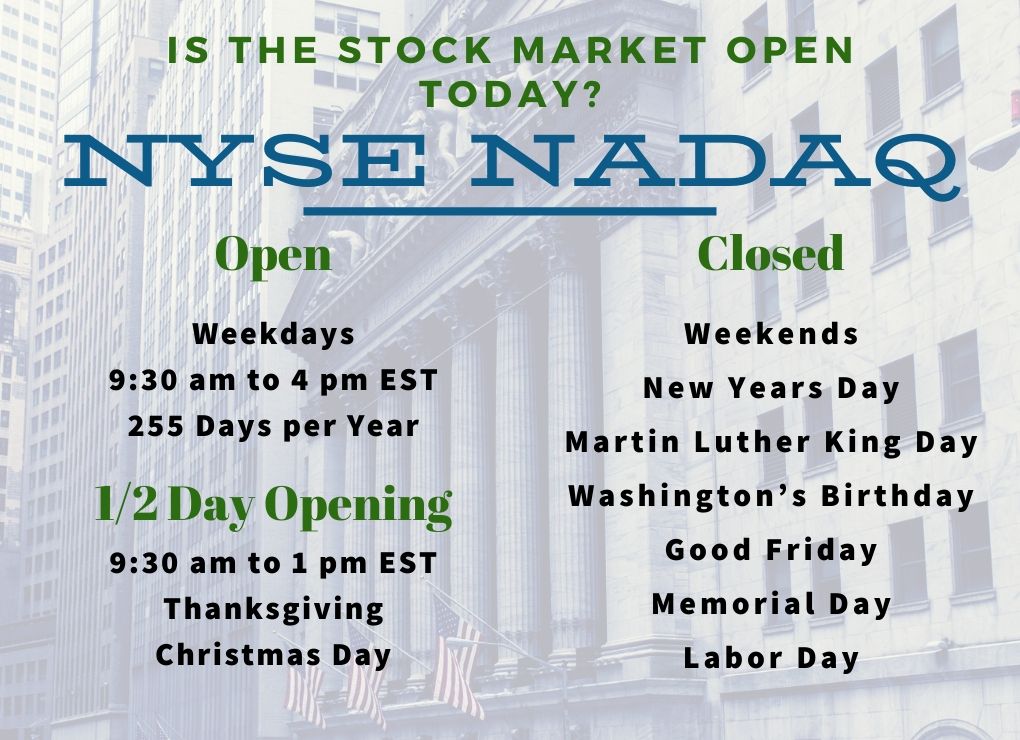
In the United States, the two primary stock exchanges, the New York Stock Exchange (NYSE) and the NASDAQ Stock Market, operate with remarkably consistent hours. Their standard trading session runs from 9:30 AM Eastern Time (ET) to 4:00 PM ET on weekdays. This seven-and-a-half-hour window is when the vast majority of trading volume occurs, leading to the tightest bid-ask spreads and the most accurate reflection of a security’s current market value. During these hours, a confluence of buyers and sellers, propelled by fresh news, economic data, and technical analysis, engage in constant price negotiation.
The opening bell, often a ceremonial event, kicks off a flurry of activity as investors react to overnight news, while the closing bell brings an end to the official trading day, locking in closing prices that become benchmarks for the next session. It’s important to remember that these hours apply Monday through Friday, excluding specific federal holidays when the markets are entirely closed. Understanding this core session is the first step in synchronizing one’s investment strategy with market reality.
Why These Hours? Historical Context and Efficiency
The establishment of specific trading hours is far from arbitrary; it’s a practice rooted in centuries of market evolution and practical necessity. Historically, before the advent of electronic trading, stock exchanges were physical locations where brokers met to trade. Fixed hours were essential for logistical reasons, allowing time for trade settlement, record-keeping, and ensuring all participants had equal access to market information during a specific timeframe.
Today, even with markets largely digitized, the concept of standardized hours persists for several compelling reasons. Firstly, it creates a concentrated period of liquidity, which is vital for efficient price discovery. When all market participants are active simultaneously, there’s a greater chance for supply and demand to meet, reducing volatility and ensuring that asset prices accurately reflect their underlying value. Secondly, fixed hours provide a crucial balance for participants. They allow market professionals time to analyze performance, prepare for the next day, and manage risk, while also giving retail investors a predictable schedule. This structure also facilitates the dissemination of corporate news and economic reports, which are often released outside market hours to avoid immediate, erratic price reactions. In essence, these hours strike a balance between providing ample trading opportunity and ensuring market stability, integrity, and efficiency.
Beyond Standard Hours: Extended Trading
While the official 9:30 AM to 4:00 PM ET window defines the core trading day, the financial markets are not entirely dormant outside these hours. Modern technology, specifically Electronic Communication Networks (ECNs), has enabled extended trading sessions, offering investors opportunities to react to news and execute trades before the opening bell and after the closing bell.
Pre-Market Trading
Pre-market trading refers to the period before the official market open. For major US exchanges, this typically runs from 4:00 AM ET to 9:30 AM ET, though the most significant activity usually begins closer to 7:00 AM or 8:00 AM ET. The primary drivers for pre-market trading are often fresh overnight news, earnings reports released before the market opens, or significant movements in global markets (like those in Asia and Europe) that have already concluded their trading day.
Investors participating in pre-market sessions aim to get an early jump on potential price movements, whether to capitalize on positive news or mitigate losses from negative announcements. However, it’s a session characterized by significantly lower liquidity compared to standard hours. With fewer buyers and sellers, bid-ask spreads tend to be wider, and even small orders can cause substantial price swings. This reduced liquidity translates to higher volatility and increased risk, making limit orders (orders to buy or sell at a specific price or better) a preferred strategy for cautious traders.
After-Hours Trading
Conversely, after-hours trading takes place once the official market closes at 4:00 PM ET. This session typically extends until 8:00 PM ET, though some platforms may offer even longer access. Similar to pre-market, after-hours trading is driven by breaking news, company announcements made after the closing bell, or reactions to broader economic data released in the late afternoon.
For instance, a company might release a crucial earnings report immediately after 4:00 PM, prompting an immediate reaction from investors looking to buy or sell before the next trading day begins. Like pre-market trading, after-hours sessions suffer from reduced liquidity and wider spreads, making them susceptible to amplified price volatility. While they offer flexibility and a chance to react swiftly to developments, the inherent risks associated with thinner markets mean that investors must exercise heightened caution. Understanding these extended hours provides a more complete picture of the market’s operational landscape and the continuous nature of price discovery.
Implications and Risks of Extended Trading
Extended trading offers both opportunities and challenges for investors. The primary opportunity lies in the ability to react instantaneously to information that emerges outside standard trading hours. For instance, a major acquisition announcement after 4 PM can cause a stock to gap up significantly in after-hours trading, offering early movers a potential advantage. Similarly, negative news might prompt a quick exit before the next day’s open.
However, the risks are considerable. The most significant is reduced liquidity. With fewer participants, order books are thinner, meaning there are fewer available buyers and sellers at any given price. This can lead to:
-
Wider Bid-Ask Spreads: The difference between the highest price a buyer is willing to pay (bid) and the lowest price a seller is willing to accept (ask) increases, making it more expensive to execute trades.
-
Increased Volatility: Even small orders can have a disproportionate impact on a stock’s price, leading to rapid and unpredictable price swings.
-
Price Discrepancies: The price at which a stock trades in extended hours might differ significantly from its opening price the next day, creating “market gaps” that can be detrimental to positions taken during illiquid periods.
-
Limited Order Types: Not all order types (like market orders) may be suitable or even supported in extended sessions due to the volatility and lack of guaranteed execution at a specific price. Using limit orders is generally recommended to control the price at which a trade is executed.
These implications underscore the importance of understanding the mechanics of extended trading and approaching these sessions with a clear strategy and a robust risk management plan.
Variations Across Global Markets
While the US stock market operates on a specific schedule, it’s crucial for globally-minded investors to recognize that market hours are far from uniform worldwide. Different time zones, cultural practices, and regulatory frameworks lead to a diverse array of opening and closing times across major international exchanges.
European Exchanges (e.g., London Stock Exchange, Euronext)
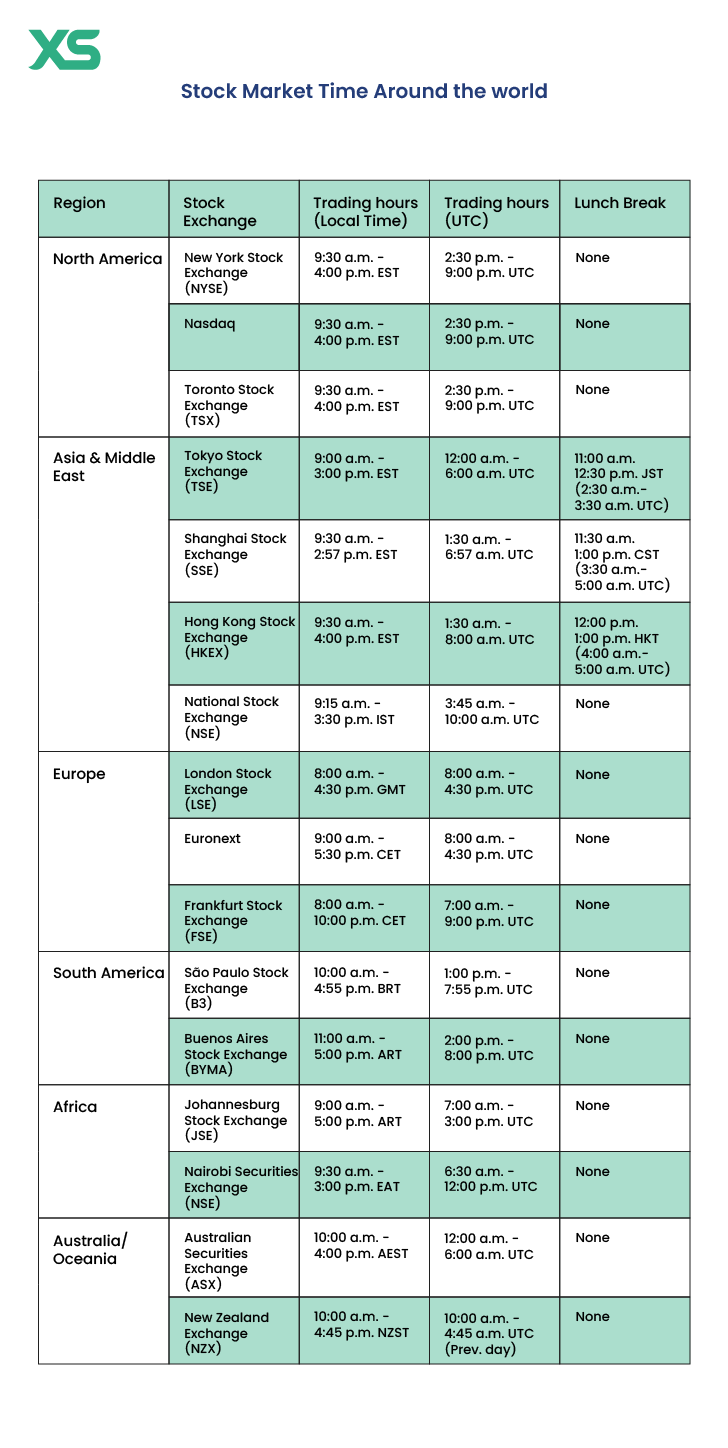
Europe hosts several major stock exchanges, each with its own rhythm. The London Stock Exchange (LSE), one of the oldest and largest in the world, typically operates from 8:00 AM to 4:30 PM Greenwich Mean Time (GMT). Its early opening often provides an initial indication of market sentiment that can influence US pre-market trading.
Other significant European exchanges, such as those under the Euronext umbrella (Amsterdam, Paris, Brussels, Lisbon, Dublin, Oslo, Milan), generally follow similar trading patterns. For instance, Euronext Paris typically operates from 9:00 AM to 5:30 PM Central European Time (CET). These hours are designed to align with the European workday and allow for connections with Asian market closes and US market opens. For investors in North America, trading on European exchanges means adjusting to a time difference, often requiring pre-market engagement to capture the European trading day effectively. The overlapping hours between European and US markets facilitate significant cross-border trading and arbitrage opportunities.
Asian Exchanges (e.g., Tokyo Stock Exchange, Shanghai Stock Exchange)
Asia is home to some of the world’s largest and most influential stock markets, whose activity often sets the global tone for the trading day. The Tokyo Stock Exchange (TSE), a key player in the Asian markets, typically operates from 9:00 AM to 3:00 PM Japan Standard Time (JST), with a lunch break from 11:30 AM to 12:30 PM JST. This midday pause is a common feature in many Asian markets, a practice that contrasts sharply with the continuous trading model of Western exchanges.
The Shanghai Stock Exchange (SSE) and the Shenzhen Stock Exchange (SZSE), the primary exchanges in mainland China, similarly feature a midday break. Their trading hours are typically from 9:30 AM to 11:30 AM and 1:00 PM to 3:00 PM China Standard Time (CST). Other prominent Asian exchanges, like the Hong Kong Stock Exchange (HKEX) and the Singapore Exchange (SGX), also generally follow similar segmented trading days. The early closing of Asian markets means their performance provides critical data points for investors in Europe and North America, often influencing pre-market movements and overall sentiment before their own trading days begin.
Other Key Markets (e.g., Australia, India, Canada)
Beyond the major financial hubs, other significant markets worldwide contribute to the global trading tapestry, each with its own distinct operating hours.
The Australian Securities Exchange (ASX) in Sydney typically runs from 10:00 AM to 4:00 PM Australian Eastern Standard Time (AEST). As one of the first major markets to open each day, its performance can offer an initial glimpse into global investor sentiment.

In India, the National Stock Exchange (NSE) and the Bombay Stock Exchange (BSE) both operate from 9:15 AM to 3:30 PM Indian Standard Time (IST), reflecting the vibrant and growing Indian economy.
To the north of the US, the Toronto Stock Exchange (TSX) in Canada largely mirrors its southern counterpart, operating from 9:30 AM to 4:00 PM Eastern Time (ET), allowing for seamless integration with US market activity.
These diverse schedules highlight that “market close” is not a singular event but a continuous, rolling process across the globe. For international investors, managing portfolios across different time zones necessitates a careful understanding of these varying hours, including any daylight saving adjustments, to ensure timely execution and effective risk management. Awareness of these global rhythms is essential for a comprehensive and informed investing strategy.
Impact of Market Closures on Investors
The closing of the stock market isn’t merely a pause in trading; it has profound implications for how investors manage their portfolios, execute orders, and strategize for future movements. The period outside standard trading hours can be just as critical as the trading session itself, albeit for different reasons.
Order Execution and Pending Orders
When the market closes, immediate order execution ceases. Any market orders placed after the closing bell will typically be queued for execution at the next market open. This can be problematic if significant news breaks overnight, as the opening price might be vastly different from the closing price of the previous day. For this reason, many investors prefer to use limit orders even during standard hours, but especially when dealing with extended or future execution. A limit order specifies the maximum price you’re willing to pay to buy or the minimum price you’re willing to accept to sell. This provides a level of control, ensuring that your order isn’t filled at an unexpectedly unfavorable price if the market gaps up or down significantly at the open.
Furthermore, investors can place “good ’til canceled” (GTC) orders, which remain active until they are executed or manually canceled. These orders can be particularly useful for long-term strategies, allowing investors to set specific price targets without constantly monitoring the market. However, even GTC orders need to be reviewed periodically, as market conditions can change dramatically over time, rendering an old price target obsolete. Understanding how different order types behave when markets close is crucial for effective trade management.
Portfolio Monitoring and News Analysis
The time when markets are closed is not a time for investors to disengage entirely. In fact, it’s often a critical period for portfolio monitoring and comprehensive news analysis. Many significant corporate announcements, economic data releases (e.g., unemployment figures, inflation reports), and geopolitical developments occur outside standard trading hours to minimize immediate, knee-jerk reactions during active trading.
Savvy investors use this time to digest these developments, assess their potential impact on their holdings, and formulate strategies for the next trading day. This involves:
-
Reviewing overnight news: Checking financial news outlets for any significant headlines from global markets or specific companies.
-
Analyzing earnings reports: Many companies release their quarterly earnings after the market close or before the open, requiring investors to quickly analyze the results and guidance.
-
Monitoring futures markets: Futures on major indices (like S&P 500 futures) often trade nearly 24/7, providing an early indication of market sentiment and potential opening movements.
By staying informed during market closures, investors can better anticipate potential price movements and adjust their strategies accordingly, rather than being caught off guard by unexpected shifts at the opening bell.
Risk Management and Market Gaps
One of the most significant risks associated with market closures is the potential for market gaps. A market gap occurs when the opening price of a stock (or index) is substantially different from its previous closing price, leaving a “gap” on the price chart. These gaps are typically caused by major news, earnings surprises, or significant economic data released during the time markets were closed. For example, a company announcing a highly favorable drug trial result overnight might see its stock open significantly higher the next morning, creating an upward gap. Conversely, a negative earnings revision could lead to a downward gap.
These gaps pose a considerable risk, particularly for traders utilizing stop-loss orders. While a stop-loss order is designed to limit potential losses by automatically selling a security if it falls to a certain price, in a gapping scenario, the stock might open below the stop-loss price. In such cases, the stop-loss order would execute at the next available price, which could be much lower than the intended stop price, leading to larger-than-expected losses.
Effective risk management during market closures involves:
-
Diversification: Spreading investments across different assets and sectors to mitigate the impact of adverse news on any single holding.
-
Position Sizing: Limiting the capital allocated to individual high-risk positions.
-
Awareness of news calendars: Knowing when key economic reports or company earnings are expected.
-
Using limit orders strategically: For long-term investors, limit orders can ensure trades are executed only at desired prices, preventing adverse fills during volatile opens.
By acknowledging the risks of market gaps and actively monitoring developments, investors can better protect their portfolios from the unpredictable shifts that can occur between the closing and opening bells.
Factors Influencing Market Hours and Exceptions
While standard market hours provide a reliable framework, the financial markets are not entirely static. Various factors can lead to deviations from the regular schedule, and investors must be aware of these exceptions to avoid missed opportunities or unexpected delays.
Public Holidays and Observed Days
One of the most common reasons for altered market hours, or complete closures, is the observance of public holidays. In the United States, for instance, the NYSE and NASDAQ are closed on federal holidays such as New Year’s Day, Martin Luther King, Jr. Day, Presidents’ Day, Good Friday, Memorial Day, Juneteenth National Independence Day, Independence Day, Labor Day, Thanksgiving Day, and Christmas Day.
Other countries have their own sets of national holidays that result in market closures. For example, the London Stock Exchange is closed on UK bank holidays, and Asian markets observe holidays like Chinese New Year. It’s also common for exchanges to have early closures on the day before a major holiday, such as Christmas Eve or the day after Thanksgiving (Black Friday in the US), where trading might conclude at 1:00 PM ET instead of 4:00 PM ET. Investors should always consult the official holiday schedules of the exchanges relevant to their investments to stay informed.
Early Closures and Special Circumstances
Beyond scheduled holidays, market hours can occasionally be truncated or adjusted due to special circumstances. While rare, events such as national emergencies, severe weather conditions (e.g., blizzards that prevent staff from reaching exchanges), or significant technical glitches can lead to unscheduled early closures or even full-day closures. Historically, exchanges have even closed for extended periods during major national crises, though such instances are extremely uncommon in modern times.
The rationale behind these early closures or suspensions is typically to ensure orderly market operations, protect investors from undue volatility, or address unforeseen operational challenges. While these events are infrequent, they underscore the importance of staying abreast of market announcements and news updates from exchange operators.
Time Zone Adjustments and Daylight Saving
For international investors, navigating global market hours is further complicated by time zone differences and the biannual shift of Daylight Saving Time (DST). While an exchange’s local operating hours remain fixed, the corresponding time in an investor’s own time zone can change.
For example, a US investor trading on the London Stock Exchange must account for GMT. When the US shifts to DST, the time difference between the US Eastern Time and GMT changes, effectively shifting the perceived opening and closing times of the LSE for the US investor. The same applies when the UK shifts to or from BST (British Summer Time). Similarly, some countries do not observe DST, creating periods where time differences are either compressed or expanded relative to those that do.
This means that an investor tracking global markets must not only know the local hours of each exchange but also understand how DST changes in different regions will impact their calculation of current market status. Consulting real-time financial calendars and reliable time zone converters is essential for accurately tracking market hours across different geographies, ensuring that investment decisions are made with precise timing.
Conclusion
Understanding “what time do the stock markets close” is far more than a trivial piece of information; it’s a critical component of informed investing. From the bustling core trading sessions of major exchanges like the NYSE and NASDAQ to the dynamic opportunities and risks of extended pre-market and after-hours trading, market closing times dictate the rhythm of global finance. Investors must also contend with the diverse schedules of international markets, each with its unique opening, closing, and even midday breaks.
Beyond the standard operating hours, a variety of factors, including public holidays, early closures, and the complexities of time zone adjustments, can alter market accessibility. Being aware of these variations is essential for managing order execution, staying abreast of crucial news, and mitigating the risks associated with market gaps. Ultimately, precise knowledge of when markets open and close empowers investors to make timely decisions, manage risk effectively, and engage strategically with the ever-evolving financial landscape, ensuring their investment journey is both productive and well-informed.
aViewFromTheCave is a participant in the Amazon Services LLC Associates Program, an affiliate advertising program designed to provide a means for sites to earn advertising fees by advertising and linking to Amazon.com. Amazon, the Amazon logo, AmazonSupply, and the AmazonSupply logo are trademarks of Amazon.com, Inc. or its affiliates. As an Amazon Associate we earn affiliate commissions from qualifying purchases.