
For anyone navigating the complex world of finance, from seasoned institutional investors to individual retail traders, understanding the concept of “market days” is fundamental. It’s not merely a trivial calendar count but a crucial framework that dictates when assets can be bought and sold, influences market liquidity, and shapes investment strategies. While the question seems simple, the answer is nuanced, varying across different types of financial markets and geographies. Delving into the rhythms of market days reveals the pulse of the global economy and offers critical insights for effective financial planning and investment execution.
The Core Concept of Market Days
At its heart, a market day refers to any day on which a particular financial market is open for trading. This seemingly straightforward definition, however, carries significant implications for market participants worldwide.
Defining a Market Day
A standard market day for most major stock exchanges, such as the New York Stock Exchange (NYSE) or NASDAQ, typically runs from 9:30 AM to 4:00 PM Eastern Time, Monday through Friday. These hours define the “regular trading session,” a period characterized by the highest liquidity and most efficient price discovery. However, the financial landscape extends beyond these core hours. Pre-market trading sessions often begin as early as 4:00 AM ET, and after-hours trading can extend until 8:00 PM ET. While these extended hours offer flexibility, they often feature lower liquidity and higher volatility, posing different sets of risks and opportunities.
For other markets, such as bond markets, trading hours can sometimes differ slightly, often closing earlier than equity markets on certain days. The defining characteristic of a “market day” is the official opening and closing of an exchange or trading platform, facilitating the exchange of financial instruments under regulated conditions.
Why the Count Matters
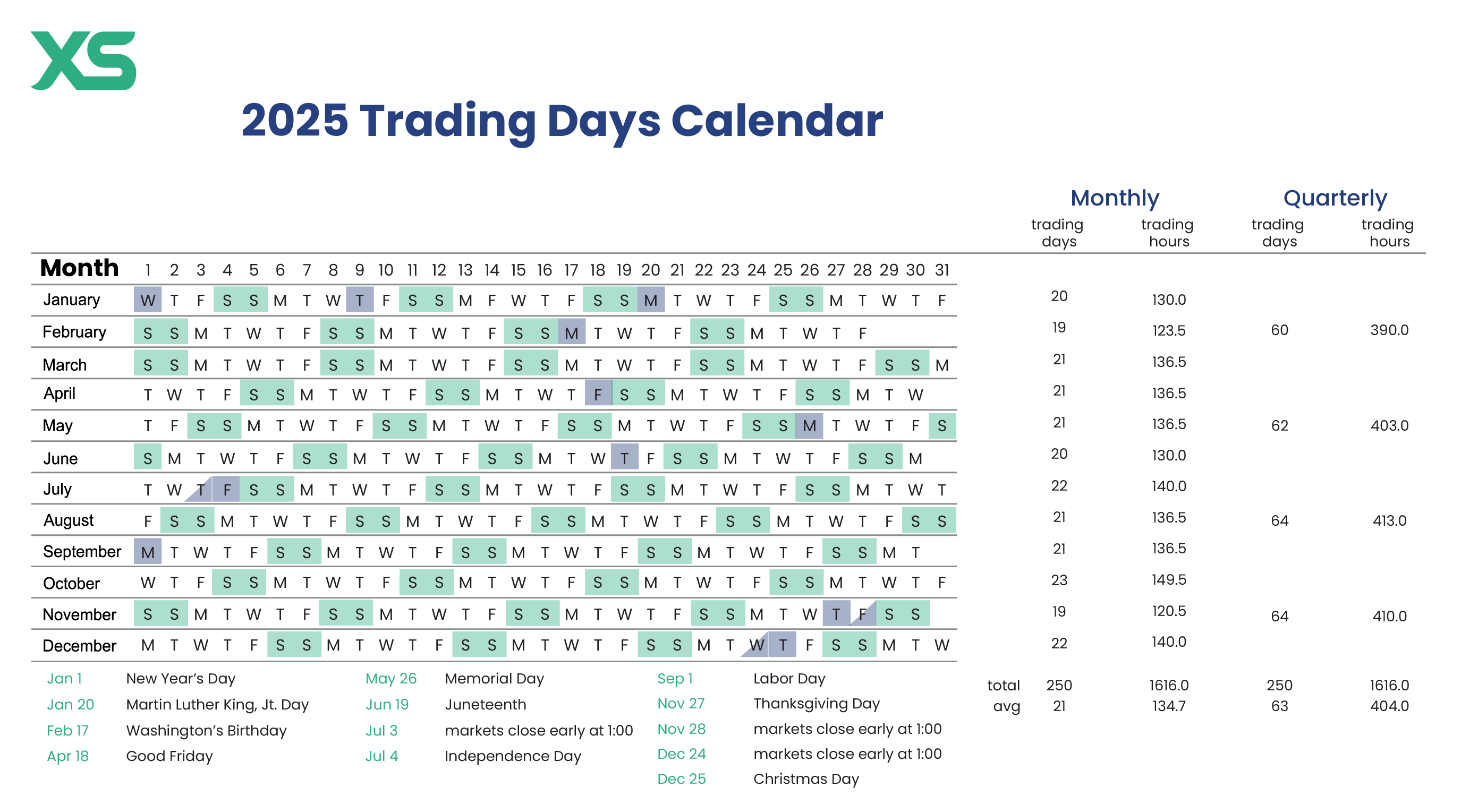
The number of market days in a year is not just a statistical curiosity; it has profound practical implications for investors. Firstly, it directly impacts the opportunity window for trading and portfolio adjustments. With approximately 252-253 trading days in a typical year for major US stock markets (after accounting for weekends and holidays), investors have a finite number of days to execute trades, react to news, and rebalance portfolios.
Secondly, the count affects the calculation of financial metrics and performance. Annualized returns, volatility measurements, and daily trading volumes are all intrinsically linked to the concept of market days. Fund managers often benchmark their performance against market indices over specific trading periods. Understanding the exact number of trading days is also critical for compliance and reporting requirements. Moreover, extended market closures, whether due to weekends or holidays, can lead to “gap” openings when markets reopen, as accumulated news and events are priced in rapidly, potentially causing significant price movements.
Unpacking Different Financial Markets
The notion of “market days” varies significantly depending on the specific financial instrument and the geographical location of the exchange. A nuanced understanding of these differences is essential for global investors.
Equity Markets (Stock Exchanges)
Major equity markets like the NYSE, NASDAQ, London Stock Exchange (LSE), Tokyo Stock Exchange (TSE), and Deutsche Börse (Xetra) generally operate on a five-day workweek, Monday to Friday. They observe national holidays of their respective countries. For instance, in the U.S., markets are closed for holidays like New Year’s Day, Martin Luther King, Jr. Day, Presidents’ Day, Good Friday, Memorial Day, Juneteenth, Independence Day, Labor Day, Thanksgiving Day, and Christmas Day. This typically results in about 10-12 public holidays per year, reducing the total trading days from 260 (52 weeks x 5 days) to approximately 252. European and Asian exchanges have their own sets of national and regional holidays, which must be factored in by international investors.
Bond Markets
While often closely related to equity markets, bond markets can sometimes have slightly different operational schedules. For example, in the U.S., the Securities Industry and Financial Markets Association (SIFMA) publishes a recommended holiday schedule for bond markets, which can include early closures on days preceding or following major holidays, even if the stock market remains open for a full day. The over-the-counter (OTC) nature of many bond trades also means that while official markets may be closed, some level of private dealing might occur, though with significantly reduced liquidity.
Commodity and Futures Markets
Commodity exchanges (e.g., CME Group for agricultural products, energy, and metals) and futures markets often have more extensive trading hours, reflecting the global nature of these underlying assets. Electronic trading platforms allow for nearly 24-hour trading for many commodities and futures contracts, sometimes from Sunday evening through Friday afternoon, with short breaks. While physically open for a significant portion of the week, they too observe specific holidays, which can vary by the particular commodity or derivative product being traded. Their continuous nature blurs the traditional “market day” concept slightly, but defined closure periods for settlement and maintenance still exist.
Foreign Exchange (Forex) Market
The foreign exchange (Forex) market stands apart in its operational rhythm. It is a truly global, 24-hour market, opening on Sunday evening (typically around 5 PM ET with the Sydney market) and running continuously until Friday afternoon (around 5 PM ET with the New York market close). Because it’s a decentralized, over-the-counter market with no single exchange, it effectively runs five days a week, around the clock, with trading moving from one major financial center to the next (Sydney, Tokyo, London, New York). While individual banks and brokers might have their own operating hours, the underlying market never truly closes during the week, making the concept of distinct “market days” less relevant than in traditional equity or bond markets.
The Influence of Weekends and Holidays
The absence of trading during weekends and holidays is more than just a pause; it creates unique dynamics that investors must understand.
Standard Market Closures
Saturdays and Sundays are universally observed non-trading days for most major regulated financial markets. This two-day hiatus means that any news, economic data, or geopolitical events occurring over the weekend have the potential to significantly impact market sentiment and asset prices when trading resumes on Monday. This often leads to “gap” openings, where the opening price is substantially higher or lower than the previous day’s close, representing the market’s collective reaction to the weekend’s developments.
Major Public and Bank Holidays
Each country’s financial markets observe its national public and bank holidays. These can range from a handful to over a dozen days a year. The impact of these holidays extends beyond the domestic market. For instance, when U.S. markets are closed for Thanksgiving, it can reduce liquidity and trading volume in European and Asian markets that might otherwise trade heavily in dollar-denominated assets. Major global holidays like Christmas or New Year’s Day see most global markets shut down, leading to a near-complete cessation of organized trading activity.
Half-Day Sessions and Early Closures
Some markets may also observe half-day sessions or early closures, particularly on days preceding or following major holidays. For example, the U.S. stock market often closes early on the day before Independence Day or on Black Friday (the day after Thanksgiving). These shortened sessions typically exhibit lower trading volumes and potentially higher volatility due to reduced liquidity. Investors need to be aware of these modified schedules to avoid unexpected trade execution issues or to plan their strategies accordingly.
Impact of Market Closures on Trading
Market closures inherently lead to illiquidity. With no buyers or sellers actively trading, it becomes impossible to enter or exit positions at predictable prices. This can be particularly problematic for short-term traders or those managing highly leveraged positions. Moreover, the “information asymmetry” that builds up during closures means that significant news could be released when markets are shut, leading to sharp, unpredictable price movements upon reopening. Savvy investors often adjust their exposure or hedging strategies in anticipation of such events, especially around long holiday weekends.
Global Market Perspectives and Interconnectedness
While the concept of fixed “market days” applies to individual exchanges, the global financial system operates with a continuous, though segmented, flow of activity.
The 24/7 Global Economy
The rise of electronic trading and the interconnectedness of global financial centers mean that economic activity, data releases, and corporate news occur around the clock. Even when a specific market is closed, related markets in other time zones might be actively trading. For example, a major economic announcement in China might impact European and then American markets as they open, creating a chain reaction that spans time zones and market days. This necessitates a broader view beyond just one market’s calendar.
Following Global Market Calendars
For investors with international holdings or those engaged in multi-asset strategies, tracking the holiday schedules and trading hours of various global markets is crucial. Financial news platforms, brokerage houses, and dedicated financial data providers offer comprehensive global market calendars. These tools help investors anticipate periods of reduced liquidity, plan international transactions, and understand the ripple effects of regional market closures on global asset prices.
Implications of Global Holidays
When one major market is closed, it can have a tangible impact on others. For example, if the London Stock Exchange is closed for a bank holiday, trading volume for European equities might be lower across the board, even in markets that are open. Similarly, a holiday in Japan could affect trading in Asian currencies or specific global commodities heavily traded in Tokyo. Global investors must factor in these interdependencies to manage risk and optimize their trading strategies.
Strategic Considerations for Investors
Understanding the cadence of market days is not just academic; it profoundly influences investment strategy and tactical decision-making.
Trading During Market Hours
The regular trading session, characterized by high liquidity and tighter bid-ask spreads, is generally the most advantageous time for active traders to execute orders. During these hours, large institutional players are active, ensuring robust price discovery and minimizing slippage, which is the difference between the expected price of a trade and the price at which the trade is actually executed.
Navigating Pre-Market and After-Hours Trading
While offering flexibility, pre-market and after-hours trading sessions come with increased risks due to lower liquidity. Price movements can be exaggerated on relatively small trading volumes, and wider spreads can make entry and exit points less favorable. These sessions are often driven by immediate reactions to news (e.g., earnings reports released after market close) and are best approached with caution and a clear understanding of the associated risks.
Event-Driven Trading Around Closures
Market closures often coincide with or precede significant economic or corporate announcements. Investors engaging in event-driven strategies must meticulously plan their trades around these periods. For example, an investor might close out positions or implement hedging strategies before a long holiday weekend if a critical economic report is due to be released when markets are shut, mitigating the risk of adverse gap openings.
Long-Term vs. Short-Term Strategies
The impact of market days differs significantly for long-term investors versus short-term traders. Long-term investors, focused on fundamental value and multi-year horizons, are less concerned with daily market hours or specific holiday closures. Their strategy is more about sustained growth over many years of market days. Short-term traders, conversely, are acutely sensitive to every trading session, every opening bell, and every closure, as their profitability hinges on capitalizing on intra-day or intra-week price movements.

Utilizing Financial Tools and Calendars
Modern financial tools are indispensable for navigating market days. Brokerage platforms provide real-time market hours and holiday schedules. Financial news websites offer economic calendars detailing data releases, corporate earnings, and central bank meetings. These resources empower investors to stay informed, plan their trading activity, and make timely decisions, ensuring they are always synchronized with the global financial pulse.
In conclusion, while the precise number of “market days in a year” hovers around 252 for major stock exchanges, the true scope of financial trading is far broader. It encompasses continuous global markets, varying trading schedules, and a strategic rhythm dictated by weekends and holidays. For any participant in the financial world, a comprehensive understanding of these market days and their implications is not just an advantage, but a necessity for informed decision-making, effective risk management, and ultimately, successful investment outcomes.
aViewFromTheCave is a participant in the Amazon Services LLC Associates Program, an affiliate advertising program designed to provide a means for sites to earn advertising fees by advertising and linking to Amazon.com. Amazon, the Amazon logo, AmazonSupply, and the AmazonSupply logo are trademarks of Amazon.com, Inc. or its affiliates. As an Amazon Associate we earn affiliate commissions from qualifying purchases.