
The New York Stock Exchange (NYSE), often dubbed “The Big Board,” stands as an enduring symbol of global capitalism and a cornerstone of the financial world. More than just a historic trading floor, it represents a vast ecosystem where public companies meet investors, capital flows, and economic narratives unfold. For anyone engaged in personal finance, investing, or business finance, understanding the sheer scale and dynamics of the NYSE is crucial. The question “how many companies are listed on the NYSE?” isn’t merely about a static number; it’s a gateway to comprehending market depth, economic health, and the mechanisms of capital formation.
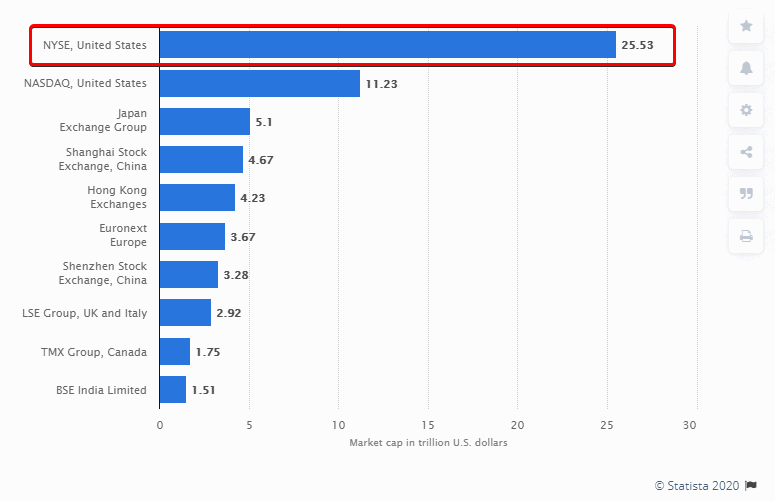
While the exact figure fluctuates daily due to new listings, delistings, mergers, and acquisitions, the NYSE typically hosts between 2,400 to 2,800 companies. This vast assemblage includes some of the world’s most iconic corporations, from venerable industrial giants to cutting-edge technology leaders (even if some tech firms prefer NASDAQ). Each company listed here represents a unique investment opportunity, a segment of the global economy, and a testament to the rigorous standards required to be part of such a prestigious exchange. Delving into this number allows us to explore the heartbeat of the stock market, the criteria for entry, and the profound implications for both businesses and individual investors.
The NYSE: A Pillar of Global Finance
The New York Stock Exchange’s history dates back to 1792 with the Buttonwood Agreement, making it one of the oldest and most influential stock exchanges globally. Its iconic building on Wall Street has witnessed centuries of economic booms, busts, technological revolutions, and geopolitical shifts, consistently remaining at the forefront of financial innovation.
Historical Significance and Evolution
From its humble beginnings, facilitating the trading of a handful of securities, the NYSE grew in tandem with the American economy. It quickly became the primary venue for companies to raise capital from public investors, funding everything from railroads and steel mills in the 19th century to tech giants and pharmaceutical conglomerates today. The exchange’s evolution reflects broader economic trends, adapting from manual floor trading to sophisticated electronic systems, while retaining its unique auction market structure where designated market makers facilitate trades. This blend of tradition and technology underpins its enduring relevance in the 21st century, continuing to attract companies seeking liquidity, prestige, and access to a broad investor base.
The Role of a Major Exchange in Capital Markets
A stock exchange like the NYSE performs several vital functions within the capital markets. Firstly, it provides a regulated marketplace where buyers and sellers of securities can transact efficiently and transparently. This liquidity is paramount for investors, allowing them to buy and sell shares without significant price impact, and for companies, ensuring their stock remains attractive. Secondly, it acts as a primary mechanism for capital formation. By listing on the NYSE, companies can raise substantial funds through Initial Public Offerings (IPOs) or subsequent equity offerings, which they then use for expansion, research and development, debt repayment, and other strategic initiatives. This capital injection is a crucial driver of economic growth and job creation. Finally, the NYSE, through its stringent listing requirements and regulatory oversight, fosters investor confidence, ensuring a level of corporate governance and disclosure that protects shareholders and maintains market integrity.
Counting the Giants: Current NYSE Listing Landscape
While the exact number fluctuates, a deep dive into the NYSE’s listed companies reveals not just a quantitative measure but also a qualitative insight into the global economy. The sheer volume of companies, coupled with their collective market capitalization, underscores the exchange’s pivotal role.
Current Figures and Fluctuations
As of early-mid 2020s, the number of companies listed on the NYSE generally hovers around 2,400 to 2,800. This figure represents a dynamic count. Each business day can see new companies conducting their IPOs, existing companies delisting due to mergers, acquisitions, bankruptcies, or failure to meet listing standards, and other firms migrating from or to other exchanges. For instance, a major economic downturn might see an increase in delistings, while a bullish market could spur more IPOs. It’s important for investors to refer to official NYSE statistics or reputable financial data providers for the most up-to-date figures, as published on a quarterly or annual basis.
Diversity Across Sectors and Market Capitalization
The NYSE prides itself on a broad and diverse range of listed companies, spanning virtually every sector of the global economy. From traditional industries like manufacturing, energy, and finance to modern sectors such as healthcare, consumer goods, and technology (though many major tech firms opt for NASDAQ), the NYSE offers investors a vast array of choices. This diversity is crucial for portfolio diversification and reflects the complexity of the modern economic landscape.
Beyond sectoral diversity, NYSE-listed companies also represent a wide spectrum of market capitalizations. While it is home to many of the world’s mega-cap and large-cap corporations (companies with market caps in the hundreds of billions or even trillions of dollars, like Berkshire Hathaway or Johnson & Johnson), it also lists numerous mid-cap and small-cap companies. These smaller firms, while perhaps less known, often represent significant growth opportunities and contribute substantially to job creation and innovation. This blend ensures that the NYSE appeals to various types of investors, from those seeking stable, dividend-paying behemoths to those looking for high-growth potential.
NYSE vs. NASDAQ: A Brief Comparison
While both are major U.S. exchanges, the NYSE and NASDAQ possess distinct characteristics. Traditionally, the NYSE was favored by older, more established industrial and financial companies, known for its auction-based trading floor and prestige. NASDAQ, on the other hand, emerged as a technology-focused exchange, characterized by its fully electronic, dealer-based market and its appeal to innovative, often younger, tech and biotech firms.
Consequently, while the NYSE has a slightly higher number of listed companies, NASDAQ often boasts a higher number of technology companies and, in recent years, has sometimes surpassed the NYSE in terms of the total market capitalization of its listed companies, thanks to the immense valuations of its largest tech constituents like Apple, Microsoft, and Amazon. Investors often consider the exchange a company lists on as part of its identity, though many companies cross-list or may choose either based on strategic factors rather than a strict sector alignment.
The Listing Process: What It Takes to Join the Ranks

Gaining a listing on the New York Stock Exchange is a significant milestone for any company, signifying a level of maturity, transparency, and financial robustness. It is not a simple process; rather, it involves meeting stringent financial thresholds and adhering to comprehensive regulatory and governance standards.
Eligibility Criteria and Financial Thresholds
To list on the NYSE, companies must satisfy several key financial criteria, designed to ensure they are substantial and stable enough to be publicly traded. These include:
-
Earnings Test: A cumulative pre-tax income over the last three years (e.g., $10 million) with a minimum in the two most recent years (e.g., $2 million per year).
-
Revenue Test: Significant revenue over a specified period (e.g., $75 million in the most recent fiscal year) combined with a high market capitalization.
-
Cash Flow Test: Substantial aggregate cash flow from operations over a set period (e.g., $25 million in the last three years) with a minimum market cap.
-
Shareholder Equity: A minimum amount of shareholder equity (e.g., $40 million).
-
Public Float: A substantial number of publicly traded shares (e.g., 1.1 million shares) and a minimum aggregate market value of publicly held shares (e.g., $40 million or $100 million for IPOs).
-
Share Price: A minimum share price (e.g., $4.00 per share) at the time of listing.
These thresholds are regularly reviewed and updated by the NYSE, reflecting market conditions and regulatory priorities. Meeting these criteria demonstrates a company’s financial health and its capacity to manage the responsibilities of public ownership.
Regulatory Compliance and Corporate Governance
Beyond financial metrics, NYSE-listed companies must adhere to rigorous regulatory compliance and corporate governance standards. These are largely dictated by federal securities laws, primarily enforced by the U.S. Securities and Exchange Commission (SEC), and supplemented by NYSE’s own rules.
-
SEC Filings: Public companies are required to regularly file detailed financial reports (e.g., 10-K annual reports, 10-Q quarterly reports) and other material disclosures (e.g., 8-K reports for significant events). These filings provide transparency to investors and ensure that all market participants have access to critical information.
-
Sarbanes-Oxley Act (SOX): Post-Enron, SOX mandates strict internal controls and financial reporting standards, holding management accountable for the accuracy of financial statements.
-
Board Independence: NYSE rules require a majority of a company’s board of directors to be independent, enhancing oversight and protecting shareholder interests.
-
Audit Committee: Companies must have an independent audit committee with financial expertise to oversee the financial reporting process.
-
Shareholder Approval: Certain corporate actions, such as significant stock option plans, often require shareholder approval.
These rules aim to protect investors, prevent fraud, and promote ethical conduct, reinforcing the NYSE’s reputation as a reliable and trusted marketplace.
The IPO Journey
For many companies, the path to a NYSE listing culminates in an Initial Public Offering (IPO). This multi-stage process typically involves:
-
Selection of Underwriters: Investment banks are chosen to advise on the IPO, market the shares, and facilitate the offering.
-
Due Diligence: A thorough examination of the company’s financials, legal structure, and business operations.
-
Registration Statement: Preparation and filing of Form S-1 with the SEC, a comprehensive disclosure document for potential investors.
-
Roadshow: Company management and underwriters present to institutional investors to gauge interest and determine a price range for the shares.
-
Pricing and Allocation: Shares are priced, and allocations are made to investors, often prioritizing large institutional clients.
-
First Day of Trading: The company’s shares begin trading on the NYSE, often marked by a bell-ringing ceremony.
The IPO journey is complex and resource-intensive, but a successful listing on the NYSE provides unparalleled access to capital and significantly enhances a company’s public profile.
Beyond the Numbers: The Impact on Investors and the Economy
The sheer number of companies listed on the NYSE is more than just a statistic; it has profound implications for individual investors, portfolio managers, and the broader economy, influencing everything from investment strategies to national economic indicators.
Investment Opportunities and Portfolio Diversification
For investors, a large and diverse NYSE offers an expansive universe of investment opportunities. Whether seeking growth stocks, value plays, dividend income, or sector-specific exposure, the NYSE likely hosts companies that fit various investment objectives. The wide range of industries and market capitalizations available enables investors to construct highly diversified portfolios, spreading risk across different sectors and company sizes. This ability to diversify is a cornerstone of sound investment strategy, helping to mitigate the impact of underperformance in any single stock or industry. Furthermore, the high liquidity characteristic of NYSE-listed shares means investors can generally buy and sell stocks with ease, providing flexibility in managing their portfolios.
Economic Barometer and Capital Allocation
The NYSE, with its hundreds of billions (or even trillions) of dollars in daily trading volume and the collective market capitalization of its listed firms, serves as a crucial economic barometer. The performance of its indices, such as the Dow Jones Industrial Average (which includes 30 major NYSE-listed companies) and the broader S&P 500 (dominated by NYSE and NASDAQ listings), are closely watched indicators of economic health. Rising stock prices can signal investor confidence and economic expansion, while declines may forewarn of recessions or market instability.
Moreover, the exchange plays a critical role in capital allocation. By providing a platform for companies to raise capital, the NYSE helps direct funds from investors towards productive enterprises. This efficient allocation of capital fuels innovation, job creation, and economic growth, allowing successful companies to expand and new ventures to emerge. The pricing mechanism of the stock market also provides signals to companies and investors about where capital is most effectively deployed, encouraging investment in sectors and firms deemed most promising by the market.

Global Reach and International Investment
The NYSE’s influence extends far beyond U.S. borders. Many international companies choose to list their shares on the NYSE through American Depositary Receipts (ADRs) or direct listings, seeking access to the vast pool of U.S. and international capital. This global reach makes the NYSE an international marketplace, allowing U.S. investors to easily invest in leading foreign companies without directly trading on overseas exchanges. Conversely, it provides foreign companies with enhanced visibility, liquidity, and a higher public profile in the world’s largest economy. This cross-border capital flow fosters international economic integration and provides investors with even greater opportunities for global diversification, linking the fortunes of companies worldwide to the operations of “The Big Board.”
In conclusion, the question of “how many companies are on the NYSE” unveils a multifaceted answer. It’s not just a number, but a dynamic reflection of economic vitality, corporate ambition, and investment opportunity. With over 2,400 to 2,800 companies representing a diverse tapestry of industries and market caps, the NYSE remains an indispensable engine of the global financial system, providing liquidity, facilitating capital formation, and serving as a critical benchmark for economic performance. For investors and businesses alike, understanding its scale and operational depth is paramount to navigating the complex world of finance.
aViewFromTheCave is a participant in the Amazon Services LLC Associates Program, an affiliate advertising program designed to provide a means for sites to earn advertising fees by advertising and linking to Amazon.com. Amazon, the Amazon logo, AmazonSupply, and the AmazonSupply logo are trademarks of Amazon.com, Inc. or its affiliates. As an Amazon Associate we earn affiliate commissions from qualifying purchases.