
The question “who owns the stock in the stock market” might seem straightforward, but its answer is a complex tapestry woven from individual investors, massive institutions, corporate entities, and even governments. It’s a fundamental query that delves into the very mechanics of capital allocation, wealth distribution, and corporate governance, sitting squarely at the heart of personal finance, investing, and business finance. Far from being a simple case of individuals directly holding shares, the reality is a multi-layered ecosystem where direct and indirect ownership structures create a fascinating, often surprising, picture of who truly controls the global marketplace. Understanding this landscape is crucial for anyone seeking to comprehend market dynamics, investment strategies, and the broader economic implications of share ownership.
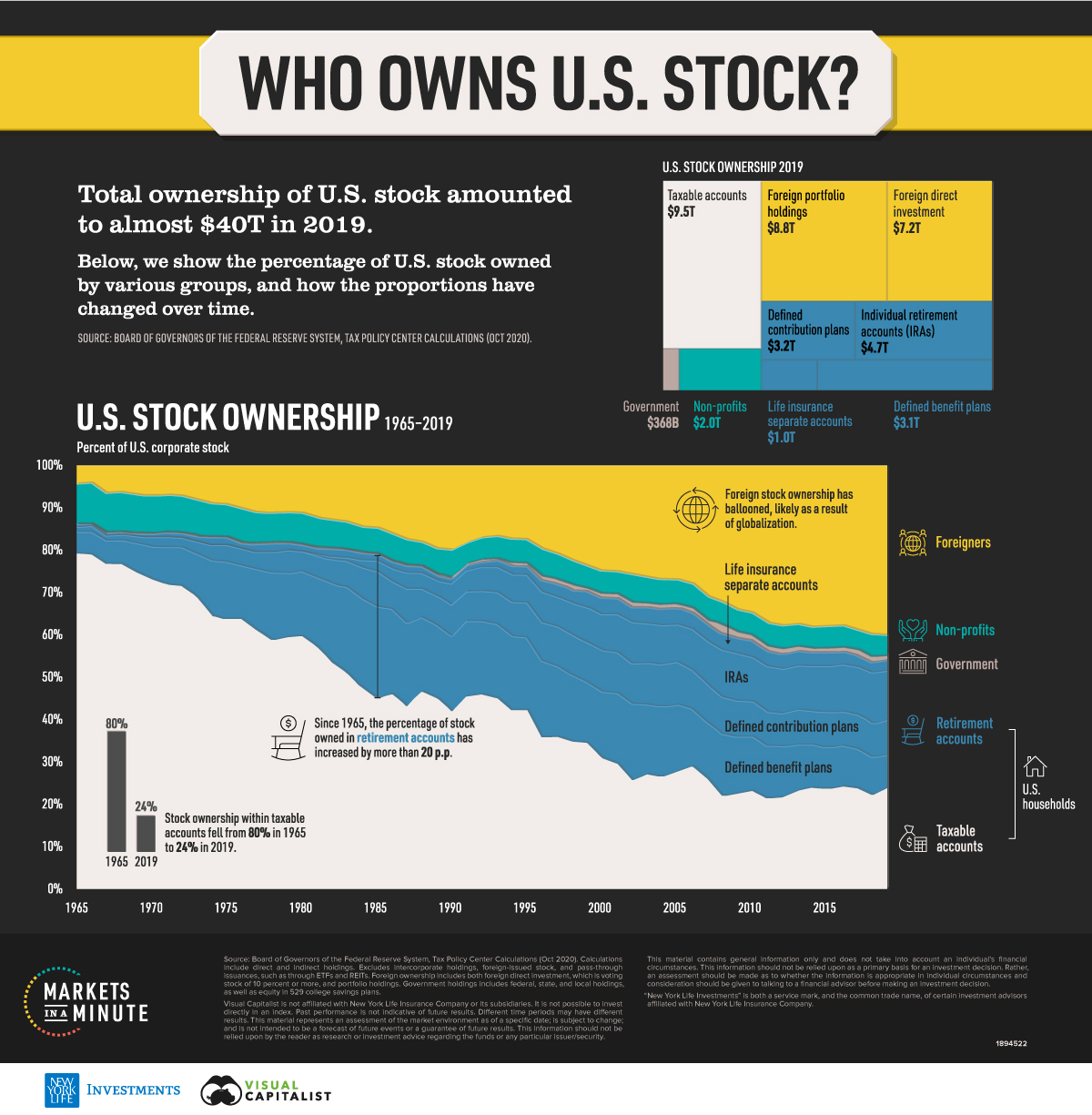
The stock market, at its core, represents fractional ownership of publicly traded companies. When you buy a share, you become a part-owner, entitled to a slice of the company’s assets and earnings, and a say in its direction, however small. Yet, the vast majority of these shares are not held by the individual retail investors many might imagine. Instead, the overwhelming bulk is managed by sophisticated entities on behalf of millions, if not billions, of people and institutions worldwide. This article will unravel these layers, moving from the visible individual investor to the colossal, often unseen, influence of institutional capital, exploring the diverse forms of stock ownership and their profound implications.
The Diverse Faces of Stock Ownership: Direct vs. Indirect
The immediate thought for many when considering stock ownership is the individual investor – someone logging into a brokerage account and buying shares of their favorite company. While this direct participation is a vital component, it represents only a fraction of the total market capitalization. The lion’s share, the true engine of market activity and ownership, lies within indirect holdings managed by professional financial entities. This distinction between direct and indirect ownership is paramount to grasping the true scale and distribution of market power.
Direct Ownership: The Visible Hand of Individuals and Insiders
Direct ownership refers to instances where shares are held explicitly in the name of an individual or entity. This is the most transparent form of ownership, where the owner has direct control over their investment decisions.
Retail Investors and High-Net-Worth Individuals
Retail investors are the individual members of the public who buy and sell securities for their personal accounts. They typically use online brokerage platforms, investing their personal savings in a diversified portfolio or concentrating on specific stocks they believe in. While collectively numerous, their individual stakes are often relatively small compared to institutional holdings. High-net-worth individuals (HNWIs) and family offices also engage in direct ownership, often holding significant stakes in companies, sometimes even maintaining seats on boards of directors, wielding considerable influence due to the sheer size of their personal capital. These investors, through active management or passive holdings, are a visible force, influencing price movements through their buy and sell decisions.
Founders, Executives, and Employees
A significant portion of direct ownership within a company often resides with its founders, current and former executives, and employees. Founders typically retain substantial equity stakes, especially in the early stages of a company’s life, as a testament to their entrepreneurial vision and continued involvement. Executives are often compensated with stock options or restricted stock units (RSUs), aligning their financial incentives with the company’s performance. Furthermore, many companies offer Employee Stock Ownership Plans (ESOPs) or direct purchase programs, allowing a broader base of employees to own a piece of the company they work for. This form of ownership creates a vested interest among those directly contributing to the company’s success, potentially fostering greater loyalty and productivity.
Indirect Ownership: The Unseen Force Behind the Market
The vast majority of stock in the market is not directly owned by individuals but is held indirectly through various financial intermediaries. This means that while an individual might benefit from stock ownership, they don’t directly control the specific shares or vote on corporate matters. This “invisible hand” of indirect ownership represents trillions of dollars managed on behalf of millions, making institutional investors the true behemoths of the stock market.
The Colossus of Institutional Investors
Institutional investors are organizations that pool money from multiple sources and invest it in a variety of assets, including stocks. These entities wield immense power due to the sheer volume of capital they control, profoundly influencing market trends, corporate behavior, and overall economic stability. Their investment decisions can move markets, dictate corporate strategies, and shape the financial landscape.
Mutual Funds and Exchange-Traded Funds (ETFs)
Mutual funds and ETFs are among the most popular vehicles for indirect stock ownership. They allow individual investors to pool their money with thousands of others to collectively invest in a diversified portfolio of stocks.
-
Mutual Funds: Professionally managed funds that invest in stocks, bonds, and other securities. Investors buy shares of the fund, which then owns the underlying assets. The fund manager makes investment decisions, aiming to achieve specific objectives (e.g., growth, income).
-
ETFs: Similar to mutual funds, but they trade like individual stocks on exchanges throughout the day. Many ETFs are designed to track a specific index (e.g., S&P 500), offering broad market exposure with lower fees, making them highly attractive for passive investing strategies.
Millions of Americans and global citizens indirectly own stocks through these funds, often without realizing the extent of their exposure to the equity market. These funds represent a democratic way to access diversified portfolios, effectively turning small individual savings into collective investment power.
Pension Funds and Endowments
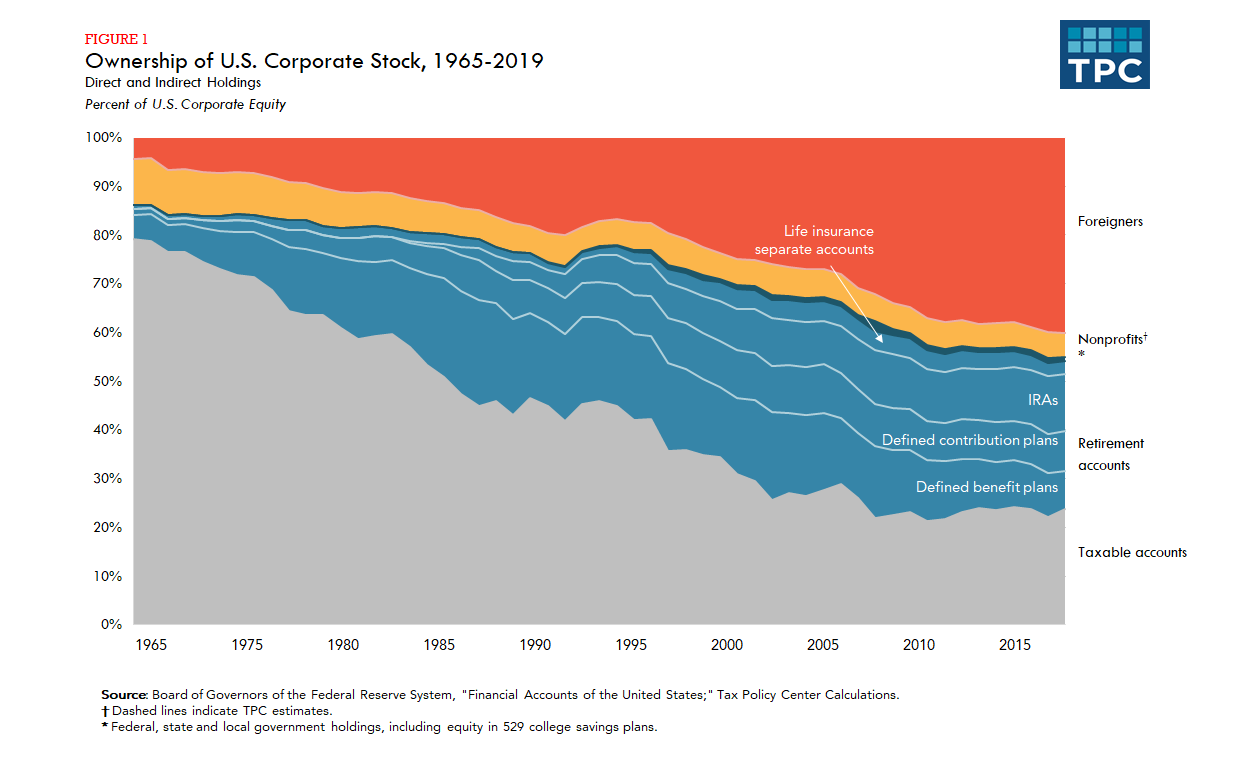
Perhaps the largest pools of indirect stock ownership come from pension funds and endowments.
-
Pension Funds: These funds manage the retirement savings of employees, both private and public sector. They invest these vast sums over long time horizons to ensure they can meet their future obligations to retirees. Due to their long-term perspective and massive capital, pension funds are often considered “patient capital” and can influence corporate governance through their voting power.
-
Endowments: These are investment funds established by non-profit institutions like universities, hospitals, and charitable foundations. They invest donations and gifts to generate income that supports the institution’s ongoing operations and mission. Endowments, like pension funds, have substantial capital and long investment horizons, making them significant players in the equity markets.
Together, pension funds and endowments are responsible for managing trillions of dollars globally, making them some of the most powerful institutional investors, with a vested interest in the long-term health and profitability of the companies they invest in.
Hedge Funds and Sovereign Wealth Funds
While perhaps less directly tied to the “average” person’s retirement account, hedge funds and sovereign wealth funds represent another tier of massive institutional ownership, often employing more aggressive or strategic investment approaches.
-
Hedge Funds: These are privately managed investment funds that use a wide range of sophisticated strategies, often involving leverage and complex derivatives, to generate high returns. They typically cater to accredited investors and institutional clients due to their higher risk profiles and minimum investment requirements. Their trading activity can significantly impact market volatility and specific stock prices.
-
Sovereign Wealth Funds (SWFs): These are state-owned investment funds that hold assets on behalf of a national government. Often funded by surplus revenues from natural resources (like oil) or balance of payments surpluses, SWFs invest globally in a diverse range of assets, including significant stakes in public companies. They represent national wealth and strategic investments, often with geopolitical implications in their ownership choices.
The sheer financial muscle of these entities gives them substantial sway over corporate boards and market directions, underscoring the concentration of power within institutional hands.
Beyond Traditional Investors: Other Forms of Equity Ownership
While individuals and institutions form the bulk of stock ownership, other significant players also hold equity, further diversifying the landscape of “who owns the stock.” These forms of ownership often serve specific strategic, financial, or governance purposes.
Corporate Ownership and Treasury Stock
Companies themselves can be owners of their own stock, known as treasury stock. This occurs when a company buys back its own shares from the open market. There are several reasons for share buybacks:
-
Increasing Shareholder Value: By reducing the number of outstanding shares, a company can increase its earnings per share (EPS), making the remaining shares more valuable.
-
Returning Capital to Shareholders: Buybacks are an alternative to dividends for distributing capital to shareholders.
-
Offsetting Dilution: Companies might buy back shares to offset the dilutive effect of stock options exercised by employees.
-
Strategic Acquisition: Sometimes, a company might buy back shares to prevent a hostile takeover or to strengthen its control.
Additionally, companies can own shares in other publicly traded companies. These cross-holdings can be strategic, representing alliances, partnerships, or even attempts at eventual acquisition, further intertwining corporate interests across the market.
Government Ownership and State Enterprises
In some cases, governments directly own significant stakes in companies, particularly in industries deemed strategically important or when companies are rescued from bankruptcy. These can range from partial stakes to outright nationalized enterprises. Examples include state-owned banks, energy companies, or infrastructure providers in various countries. While less common in highly capitalistic economies for most sectors, government ownership still represents a noteworthy segment of stock holdings globally, often driven by public interest, economic stability, or national security concerns rather than pure profit maximization.
The Implications of Dispersed Ownership
The complex web of stock ownership, with its mix of direct and indirect, individual and institutional, private and public entities, has profound implications for market dynamics, corporate governance, and wealth distribution. It shapes how companies are run, how markets behave, and who ultimately benefits from economic growth.
Corporate Governance and Shareholder Power
The question of “who owns the stock” directly translates into “who controls the company.” While a company’s board of directors and executive team manage day-to-day operations, shareholders ultimately have the power to elect board members and vote on major corporate actions (e.g., mergers, significant acquisitions, executive compensation).
-
Institutional Influence: With large institutional investors holding substantial blocks of shares, their votes carry immense weight. Activist investors, often hedge funds, specifically acquire large stakes to push for changes in management, strategy, or financial structure, demonstrating the power of concentrated ownership.
-
Retail Shareholder Engagement: While individual retail investors often feel their votes are inconsequential, platforms are making it easier for them to participate in proxy voting. However, the sheer logistics and small individual stakes mean institutional votes largely dominate corporate governance debates. The balance of power between management, boards, and various shareholder groups is a constant dynamic shaping corporate strategy and accountability.
Market Stability and Volatility
The composition of stock ownership also plays a critical role in market stability and volatility.
-
Institutional Trading: The large-scale buying and selling by institutional investors can trigger significant market movements. Algorithmic trading, often employed by these institutions, can exacerbate these movements, leading to rapid price swings.
-
Passive Investing Growth: The rise of passive investing through index funds and ETFs means a growing portion of the market moves in tandem with indices. This can reduce price discovery for individual stocks and potentially amplify market-wide downturns or upturns, as selling in one stock might be dictated by its inclusion in an index rather than its fundamental value. Understanding these dynamics is crucial for investors trying to navigate market cycles.

Wealth Distribution and Economic Impact
Finally, stock ownership is a major driver of wealth accumulation and distribution. Those who own stocks, directly or indirectly, benefit from capital appreciation and dividends.
-
Concentration of Wealth: While many people indirectly own stocks through retirement accounts, a disproportionate amount of wealth from stock ownership is concentrated among a smaller segment of the population, particularly the wealthiest individuals and large institutional investors. This contributes to wealth inequality, as those with more capital to invest naturally accumulate more assets over time.
-
Economic Growth Link: The stock market also serves as a barometer and engine of economic activity. Companies raise capital through stock issuance to fund expansion, innovation, and job creation. Thus, the health of the stock market and the participation of diverse owners are intrinsically linked to broader economic growth and prosperity. The question of who owns the stock, therefore, extends beyond mere financial mechanics to touch upon societal well-being and equitable access to economic opportunities.
In conclusion, the ownership of stock in the stock market is far from a simple proposition. It is a complex, dynamic interplay of individual ambition, institutional might, corporate strategy, and governmental oversight. While the individual retail investor forms the visible tip of the iceberg, the vast majority of capital and influence resides with massive institutional investors managing assets on behalf of millions. Understanding this intricate ecosystem is not just an academic exercise; it is fundamental to comprehending how wealth is created, distributed, and managed in modern economies, influencing everything from individual retirement plans to the very direction of global commerce.
aViewFromTheCave is a participant in the Amazon Services LLC Associates Program, an affiliate advertising program designed to provide a means for sites to earn advertising fees by advertising and linking to Amazon.com. Amazon, the Amazon logo, AmazonSupply, and the AmazonSupply logo are trademarks of Amazon.com, Inc. or its affiliates. As an Amazon Associate we earn affiliate commissions from qualifying purchases.