
The stock market, often perceived as a mysterious realm of complex transactions and high-stakes gambles, is, at its core, a vital mechanism underpinning global economies. Far from being an exclusive club for the ultra-wealthy, it is an accessible platform where individuals and institutions can buy and sell ownership stakes in publicly traded companies. Understanding “what is the stock market” is not merely an academic exercise; it’s a fundamental step towards grasping personal finance, business growth, and the broader economic landscape. It represents a powerful confluence of capital, innovation, and human ambition, facilitating wealth creation for investors while providing essential funding for businesses to expand, innovate, and generate employment. This comprehensive guide aims to demystify the stock market, exploring its fundamental components, operational mechanics, the opportunities it presents, and the intelligent approaches to navigate its inherent risks.
Decoding the Stock Market: A Fundamental Overview
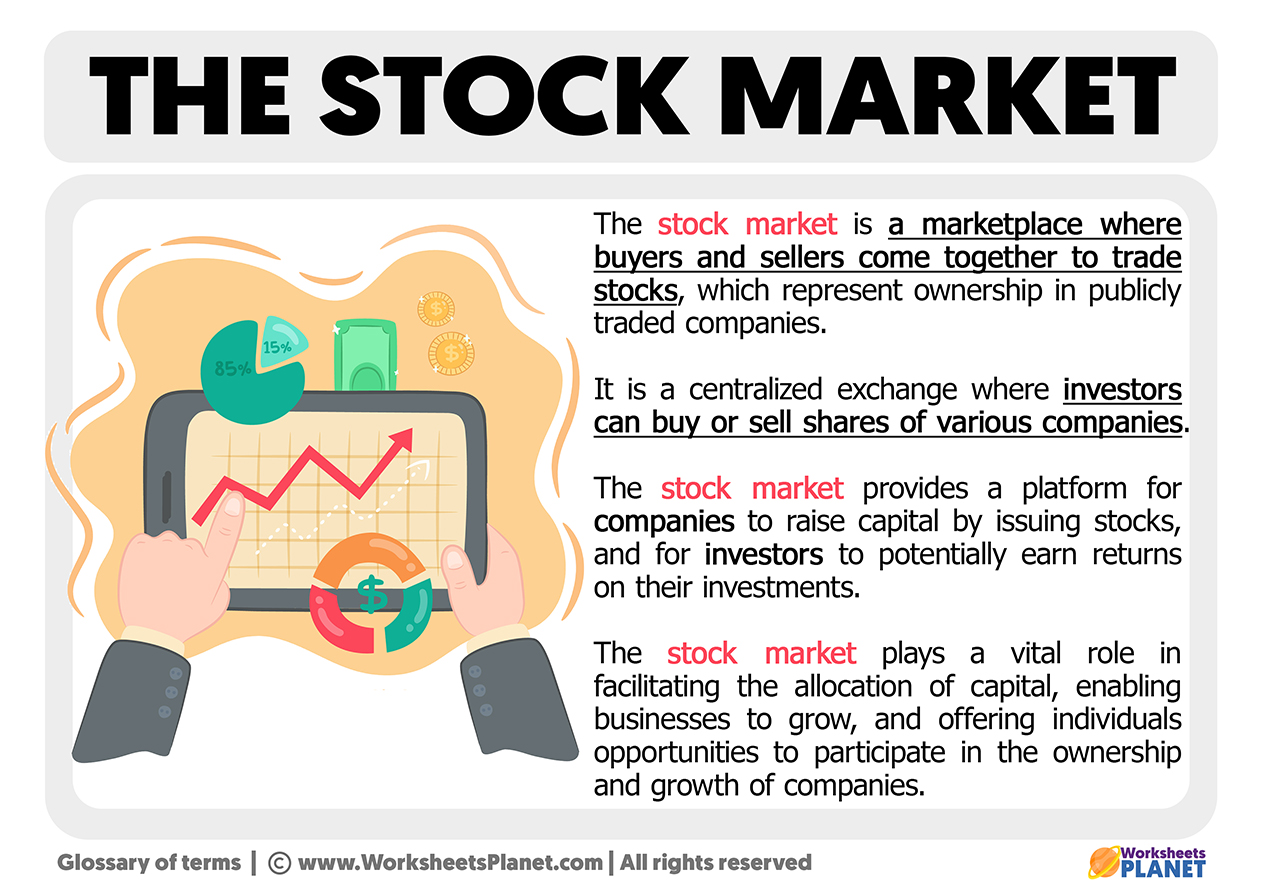
At its most basic, the stock market is a collection of exchanges and over-the-counter (OTC) markets where investors buy and sell shares of publicly traded companies. These shares, also known as stocks or equities, represent a fractional ownership in a company. When you own a stock, you own a tiny piece of that company, giving you a claim on its assets and earnings.
More Than Just a Trading Floor: Understanding its Purpose
The stock market serves two primary functions. Firstly, it provides companies with a platform to raise capital for expansion, research and development, debt repayment, or other corporate initiatives. By issuing shares to the public (known as an Initial Public Offering or IPO), companies can tap into a vast pool of investor funds without incurring debt. This access to capital is crucial for economic growth and innovation.
Secondly, for investors, the stock market offers an opportunity to grow wealth. By purchasing shares, investors hope that the company will perform well, increasing the value of their shares, or that the company will distribute a portion of its profits directly to shareholders in the form of dividends. It also provides liquidity, allowing investors to buy and sell their ownership stakes relatively easily. This dynamic exchange of ownership helps allocate capital to productive enterprises and allows individuals to participate in the economic success of various industries.
Key Players: Who Makes the Market Move?
The stock market is a dynamic ecosystem populated by various participants, each playing a critical role.
-
Companies (Issuers): These are the entities that sell their ownership stakes (stocks) to the public to raise capital.
-
Investors: This broad category includes individuals (retail investors), institutional investors (e.g., pension funds, mutual funds, hedge funds), and corporations that buy and sell stocks.
-
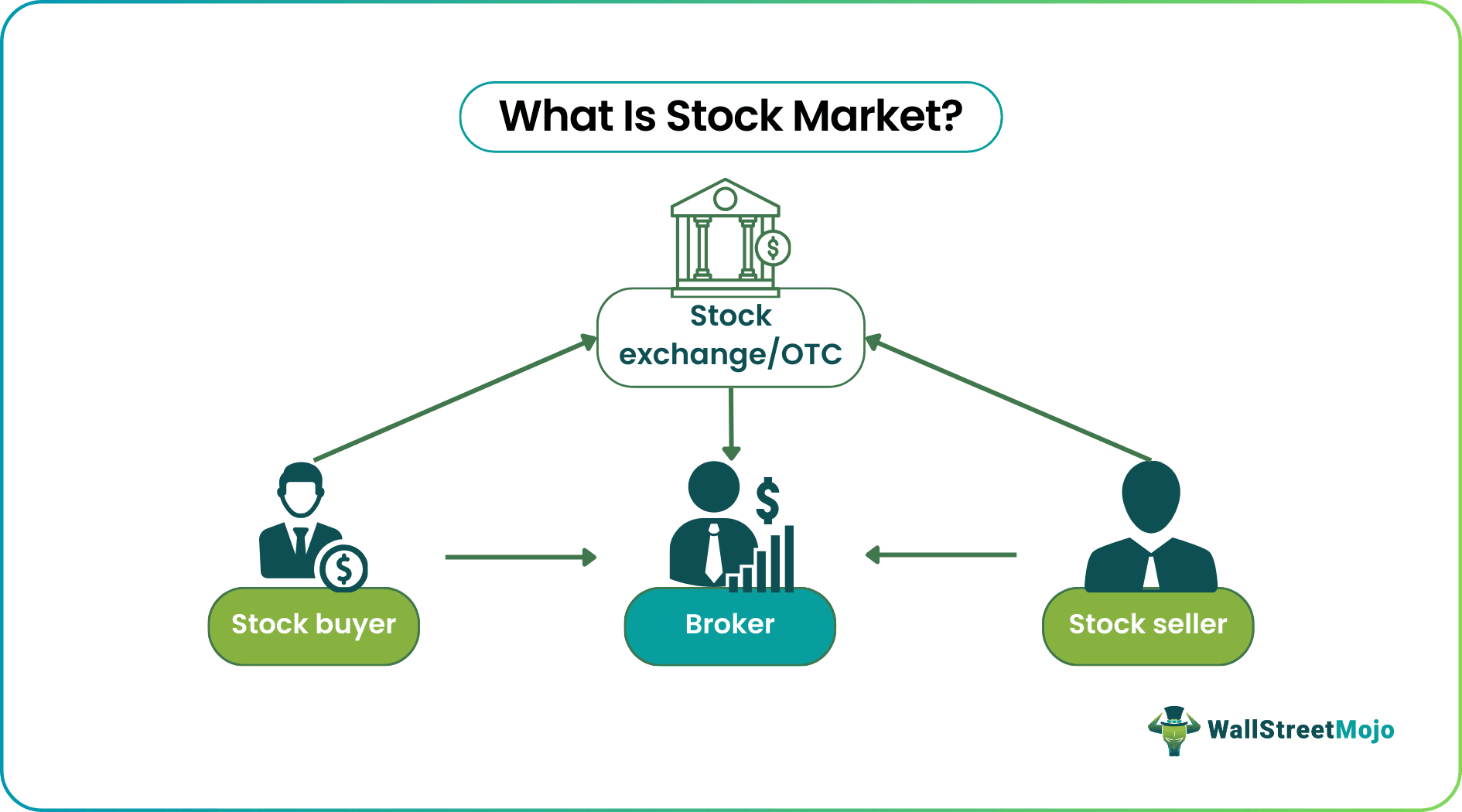
Brokers: These are intermediaries that execute buy and sell orders on behalf of investors. In today’s digital age, online brokerage platforms have made investing more accessible.
-
Market Makers: Firms that provide liquidity by continuously quoting both buy (bid) and sell (ask) prices for a specific stock, ensuring that there’s always a counterparty for a trade.
-
Regulators: Government bodies (like the Securities and Exchange Commission in the U.S.) that establish and enforce rules to ensure fairness, transparency, and investor protection.
-
Investment Banks: Firms that assist companies with IPOs, mergers, and acquisitions, and often act as underwriters for new stock issues.
Stocks vs. Shares: Clarifying the Terminology
While often used interchangeably, “stock” and “shares” have subtle differences in context. “Stock” typically refers to the overall ownership equity in a company or a general type of investment instrument (e.g., “I invest in the stock market”). “Shares,” on the other hand, usually refer to specific units of ownership (e.g., “I own 100 shares of Apple stock”). Essentially, shares are the individual units that make up a company’s stock. Understanding this distinction, while minor, contributes to a more precise understanding of investment language.
The Mechanics of Trading: How the Stock Market Operates
The modern stock market operates through sophisticated electronic networks, a far cry from the bustling trading pits of old. Yet, the underlying principles of supply and demand remain paramount, dictating share prices based on investor sentiment, company performance, and broader economic conditions.
Primary vs. Secondary Markets: Where Shares Are Born and Traded
The journey of a stock begins in the primary market. This is where new securities are issued for the first time. The most common primary market transaction is an Initial Public Offering (IPO), where a private company sells its shares to the public for the first time. The company receives the proceeds from these sales.
Once shares have been issued in the primary market, they are then traded in the secondary market. This is what most people refer to when they talk about the “stock market.” In the secondary market, investors buy and sell existing shares from each other, not directly from the company. The company whose stock is being traded does not receive any money from secondary market transactions; instead, the money exchanges hands between the buying and selling investors. This continuous trading of existing shares is what provides liquidity and determines the fluctuating market price of a stock based on real-time supply and demand.
Stock Exchanges: The Arenas of Investment
Stock exchanges are centralized marketplaces where buyers and sellers meet to trade stocks. Major exchanges like the New York Stock Exchange (NYSE) and the Nasdaq in the U.S., the London Stock Exchange (LSE), or the Tokyo Stock Exchange (TSE) provide the infrastructure for these trades. Historically, exchanges were physical locations with traders shouting orders; today, they are predominantly electronic platforms.
-
NYSE: Known for its hybrid market, combining human judgment with electronic trading.
-
Nasdaq: An entirely electronic exchange, famous for listing technology and growth companies.
-
Other Exchanges: Many countries have their own primary stock exchanges, each serving as a hub for local and international securities trading.
These exchanges set rules for listing companies, ensuring transparency and order in the market.
Market Orders and Execution: How Transactions Happen
When you decide to buy or sell a stock, you typically place an order through a brokerage account. There are different types of orders:
-
Market Order: An instruction to buy or sell a stock immediately at the best available current price. Market orders are guaranteed to be executed, but the execution price might differ slightly from the quoted price due to rapid price changes (slippage).
-
Limit Order: An instruction to buy or sell a stock at a specific price or better. A buy limit order will only execute at your specified price or lower, while a sell limit order will only execute at your specified price or higher. Limit orders guarantee price but not execution.
-
Stop Order: An order to buy or sell once a stock’s price reaches a specified price (the “stop price”), at which point it becomes a market order. These are often used to limit potential losses.
Once an order is placed, it is routed through the brokerage to the exchange, where it matches with a corresponding buy or sell order. This electronic matching process occurs in fractions of a second, enabling continuous trading throughout market hours.
Indices and Benchmarks: Measuring Market Health
Stock market indices are statistical measures that track the performance of a basket of stocks, representing a particular market or segment. They serve as benchmarks to gauge the overall health and direction of the stock market or specific sectors.
-
Dow Jones Industrial Average (DJIA): Tracks 30 large, publicly owned companies traded on the NYSE and Nasdaq, generally considered a barometer for the U.S. economy.
-
S&P 500: Represents 500 of the largest U.S. publicly traded companies, widely considered the best gauge of large-cap U.S. equities and a proxy for the overall health of the American stock market.
-
Nasdaq Composite: Tracks all stocks listed on the Nasdaq exchange, heavily weighted towards technology and growth companies.
-
Russell 2000: An index of 2,000 small-cap U.S. companies, often used to gauge the performance of smaller domestic businesses.
These indices are crucial for investors to understand broad market trends and compare the performance of their own portfolios against professional benchmarks.
Why Invest? Benefits and Risks of Stock Market Participation
Participating in the stock market offers significant potential for wealth accumulation, but it also comes with inherent risks. A balanced understanding of both is crucial for any aspiring investor.
Potential for Growth and Wealth Creation
Historically, the stock market has been one of the most effective vehicles for long-term wealth creation. Over extended periods, stocks have generally outperformed other asset classes like bonds or cash, even accounting for periods of volatility. This growth comes from several factors:
-
Capital Appreciation: As companies grow and become more profitable, their stock value tends to increase, allowing investors to sell their shares for more than they paid.
-
Reinvestment of Earnings: Companies often reinvest profits back into the business, fueling further growth and enhancing future earnings potential, which in turn boosts stock value.
Dividends and Income Generation
Many companies distribute a portion of their profits to shareholders in the form of dividends. These can be a significant source of regular income for investors, especially those in retirement or seeking passive income streams. Dividend-paying stocks are particularly attractive for income-focused portfolios and can provide a cushion during market downturns.

Liquidity and Accessibility
Compared to other investments like real estate, stocks are highly liquid, meaning they can be bought or sold relatively quickly at market prices during trading hours. This accessibility makes it easy for investors to enter or exit positions as needed. Furthermore, with the advent of online brokerage platforms, investing in the stock market has become incredibly accessible to individual investors with varying levels of capital.
Understanding and Managing Investment Risks
While the rewards can be substantial, investing in the stock market is not without risk.
-
Volatility: Stock prices can fluctuate significantly in the short term due to news, economic data, company announcements, or investor sentiment. This volatility can lead to substantial gains or losses.
-
Company-Specific Risks (Idiosyncratic Risk): The performance of an individual stock can be affected by factors unique to that company, such as poor management decisions, product failures, legal issues, or competitive pressures.
-
Market Risk (Systematic Risk): This is the risk that the entire market or a broad segment of it will decline, often due to macroeconomic factors like recessions, interest rate changes, geopolitical events, or widespread financial crises. This risk cannot be diversified away entirely but can be mitigated through asset allocation.
-
Inflation Risk: The risk that the purchasing power of your investment returns will be eroded by inflation. While stocks historically combat inflation better than cash, it’s still a consideration.
Effective risk management involves diversification, investing for the long term, avoiding emotional decisions, and only investing capital you can afford to lose.
Navigating the Investment Landscape: Strategies and Tools
Successful navigation of the stock market requires more than just understanding its mechanics; it demands a strategic approach, informed decision-making, and the utilization of appropriate tools.
Fundamental vs. Technical Analysis: Different Lenses for Evaluation
Investors employ various methods to evaluate stocks and make investment decisions:
-
Fundamental Analysis: This approach involves evaluating a company’s intrinsic value by examining financial statements (income statements, balance sheets, cash flow statements), management quality, industry trends, economic outlook, and competitive advantages. Fundamental analysts look for undervalued stocks that they believe will perform well over the long term. Key metrics include P/E ratio, earnings per share (EPS), revenue growth, and debt levels.
-
Technical Analysis: This method focuses on studying past market data, primarily price and volume charts, to identify patterns and predict future price movements. Technical analysts believe that all relevant information is already reflected in the stock price and that historical price action can indicate future trends. They use indicators like moving averages, relative strength index (RSI), and MACD to identify entry and exit points.
Many investors use a combination of both approaches to gain a holistic view.
Diversification: The Golden Rule of Investing
Diversification is perhaps the single most important principle in risk management. It involves spreading your investments across various asset classes, industries, geographic regions, and company sizes to reduce exposure to any single risk factor.
-
Asset Class Diversification: Investing in stocks, bonds, real estate, and commodities.
-
Sector Diversification: Spreading investments across different industries (e.g., technology, healthcare, energy, consumer staples).
-
Geographic Diversification: Investing in companies from different countries to mitigate country-specific risks.
-
Company Size Diversification: Including large-cap, mid-cap, and small-cap stocks in your portfolio.
The goal is to ensure that a poor performance in one area doesn’t severely impact your entire portfolio. “Don’t put all your eggs in one basket” is the mantra of diversification.
Long-Term vs. Short-Term Investing: Defining Your Horizon
Your investment horizon significantly influences your strategy:
-
Long-Term Investing: This strategy involves holding investments for many years (typically 5+ years) with the aim of benefiting from compounding returns and riding out short-term market fluctuations. This approach often involves investing in fundamentally strong companies or broad market index funds.
-
Short-Term Investing (Trading): This involves buying and selling stocks frequently, sometimes within hours or days, to profit from small price movements. This strategy is highly speculative, requires significant time, research, and risk tolerance, and often involves higher transaction costs and tax implications. For most individual investors, a long-term approach is generally recommended due to its lower stress and higher historical success rate.
Choosing an Investment Platform: Brokers and Robo-Advisors
To invest in the stock market, you need a brokerage account. Today’s options include:
-
Traditional Brokerage Firms: Offer full-service advice, research, and personalized guidance, often with higher fees.
-
Discount Brokerage Firms: Provide lower-cost execution of trades and basic research tools, suitable for self-directed investors.
-
Robo-Advisors: Automated, algorithm-driven platforms that build and manage diversified portfolios based on your risk tolerance and financial goals, typically at a very low cost. They are excellent for beginners or those who prefer a hands-off approach.
Choosing the right platform depends on your investing style, budget, and desired level of guidance.
The Role of Financial News and Research
Staying informed is crucial. Regularly consuming financial news from reputable sources, reading company reports (like 10-K and 10-Q filings for U.S. companies), and leveraging analyst reports can provide valuable insights. However, it’s equally important to filter information critically, avoid reacting impulsively to every headline, and focus on long-term fundamentals rather than speculative rumors. Many brokerage platforms also offer extensive research tools and educational resources to help investors make informed decisions.
The Stock Market’s Broader Economic Impact
Beyond individual wealth creation, the stock market plays an indispensable role in the broader economy, acting as a crucial cog in the machinery of capitalism.
Capital Formation for Businesses
The primary market’s ability to facilitate IPOs and subsequent stock offerings is vital for businesses to raise the capital needed for expansion, innovation, and job creation. Without access to public markets, many companies would struggle to fund ambitious projects, limiting their growth potential and, by extension, economic progress. This capital infusion supports research and development, stimulates technological advancements, and allows companies to remain competitive globally.
Economic Indicator and Barometer
The stock market is often considered a leading economic indicator, reflecting investor sentiment about future corporate earnings and economic conditions. A rising market can signal optimism and potential economic growth, while a declining market might indicate impending challenges. While not always perfectly predictive, major market movements are closely watched by policymakers and economists as a barometer of economic health and confidence. It aggregates the collective wisdom and fears of millions of investors, making it a powerful, albeit sometimes noisy, signal.
Impact on Individual Savings and Retirement
For millions worldwide, the stock market is an integral component of their long-term financial planning, particularly for retirement savings. Through pension funds, 401(k)s, IRAs, and other investment vehicles, individuals invest in stocks and stock-based mutual funds or ETFs to build nest eggs that can sustain them in their later years. The growth potential of the stock market is often essential for outpacing inflation and ensuring a comfortable retirement, making it a cornerstone of intergenerational wealth transfer and financial security.
Empowering Your Financial Future Through the Stock Market
The stock market, far from being an enigmatic financial labyrinth, is an accessible and powerful engine for both individual wealth creation and national economic development. It is where ambition meets capital, where innovation finds funding, and where ordinary individuals can become part-owning partners in the world’s most successful enterprises. While it presents opportunities for significant growth, it demands respect for its inherent risks. A disciplined approach, rooted in research, diversification, and a long-term perspective, can transform the seemingly complex world of stocks into a practical pathway toward achieving your financial aspirations. By understanding its core functions, mechanisms, benefits, and risks, you empower yourself to make informed decisions, build a resilient portfolio, and actively participate in shaping your financial future.
aViewFromTheCave is a participant in the Amazon Services LLC Associates Program, an affiliate advertising program designed to provide a means for sites to earn advertising fees by advertising and linking to Amazon.com. Amazon, the Amazon logo, AmazonSupply, and the AmazonSupply logo are trademarks of Amazon.com, Inc. or its affiliates. As an Amazon Associate we earn affiliate commissions from qualifying purchases.