
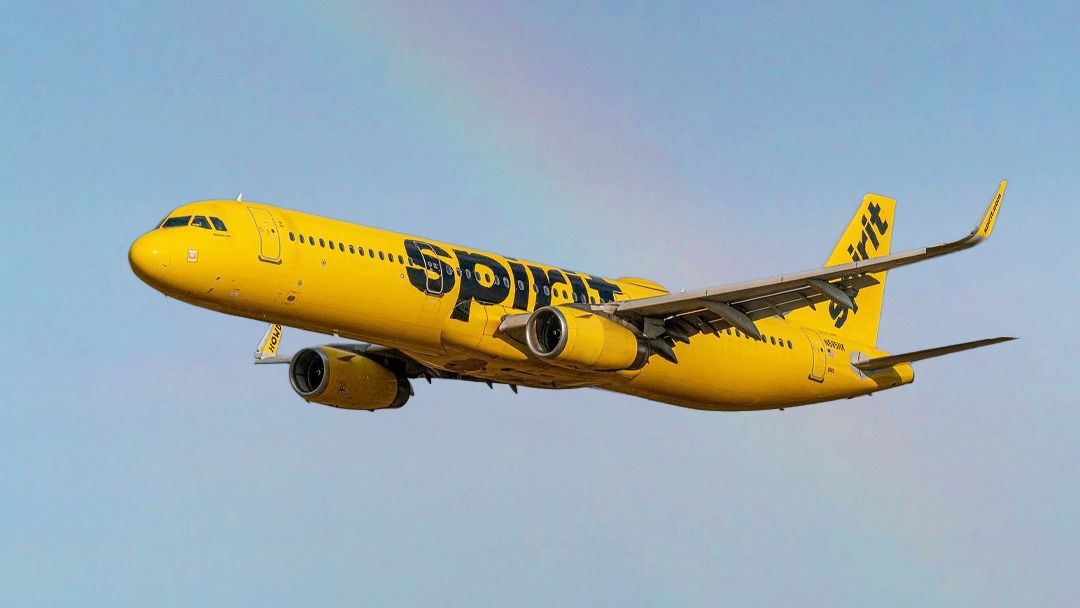
The question of “who owned Spirit Airlines” delves deep into the intricate world of corporate finance, investment strategies, and the dynamic landscape of the airline industry. Unlike a small business with a handful of individual owners, a publicly traded company like Spirit Airlines has a complex ownership structure, primarily driven by institutional investors and the ebb and flow of capital markets. Understanding this structure requires exploring its journey from a privately held entity to a major publicly traded airline, the strategic financial maneuvers it has undertaken, and the dramatic, ultimately unsuccessful, attempt at a significant acquisition that captured the financial headlines.
The Dynamic Landscape of Airline Ownership
Airline ownership is rarely static. It’s a perpetually evolving mosaic of individual investors, pension funds, mutual funds, hedge funds, and other institutional giants, all vying for a piece of the pie. These entities invest based on financial performance, growth potential, market strategy, and broader economic forecasts.
Public vs. Private Ownership Models
Historically, many airlines began as private ventures, often founded by audacious entrepreneurs with a vision for air travel. As they scaled, the need for significant capital infusion typically led them to either seek private equity investment or, more commonly for larger players, to go public through an Initial Public Offering (IPO). Spirit Airlines followed this trajectory. A private company’s ownership is typically concentrated among a few individuals or private equity firms. In contrast, a public company, listed on stock exchanges, fragments ownership among thousands, if not millions, of shareholders globally. This shift from private to public profoundly changes a company’s financial imperatives, governance structures, and reporting requirements, all geared towards maximizing shareholder value. For investors, purchasing shares means buying a tiny fraction of the company, with the expectation of capital appreciation and potential dividends.
The Role of Institutional Investors
For a large, publicly traded entity like Spirit Airlines, the vast majority of its shares are not held by individual retail investors but by institutional investors. These include:
-
Mutual Funds: Actively or passively managed funds that pool money from many investors to purchase a diverse portfolio of stocks, including airline shares.
-
Pension Funds: Funds established by employers to provide retirement benefits, often investing in public equities to generate long-term returns.
-
Hedge Funds: Investment funds that often employ aggressive strategies to generate high returns, taking significant positions in companies they believe are undervalued or overvalued.
-
Exchange-Traded Funds (ETFs): Similar to mutual funds but traded like stocks, many ETFs track specific sectors, like airlines, or broader market indices, holding shares of companies like Spirit.
These institutional owners often hold substantial voting power and can influence corporate strategy, governance, and even executive decisions. Their financial analysis and investment decisions collectively drive the stock price and, by extension, the perceived value and stability of the airline.
Regulatory Oversight and Market Forces
The ownership and operational aspects of airlines are heavily regulated, particularly in the United States. Agencies like the Department of Transportation (DOT) and the Federal Aviation Administration (FAA) oversee various aspects, from safety to route approvals. From a financial perspective, the Securities and Exchange Commission (SEC) mandates stringent disclosure requirements for publicly traded companies, ensuring transparency for all shareholders. Furthermore, market forces – fuel prices, consumer demand, economic recessions, and global events – profoundly impact an airline’s profitability and, consequently, its attractiveness to investors. The financial health of an airline directly influences who owns its shares and at what valuation.
Spirit Airlines: A Journey Through Ownership and Corporate Strategy
Spirit Airlines’ financial narrative is one of adaptation, strategic positioning, and, at times, aggressive expansion within a highly competitive industry. Its ownership structure has evolved significantly since its inception.
Early Days and Founding Ownership
Spirit Airlines traces its roots back to 1964, initially operating as Clippert Trucking Company. It later transitioned into the air travel industry in 1990 as Charter One, a Detroit-based charter tour operator. Initially, its ownership would have been private, likely concentrated among the founder and a small group of early investors or family members. As Charter One evolved into Spirit Airlines in 1992 and began scheduled service, it would have progressively sought external capital, initially from private sources, to fund its growth, fleet expansion, and operational infrastructure. During these early stages, the ownership would have been more direct and less fragmented than its eventual public iteration.
Evolution to a Publicly Traded Entity (IPO and Shareholder Base)
The pivotal financial moment for Spirit Airlines’ ownership structure was its Initial Public Offering (IPO). Spirit Airlines went public on May 24, 2011, listing its shares on the NASDAQ stock exchange under the ticker symbol “SAVE.” The IPO marked a fundamental shift, transforming Spirit from a privately held company to one owned by a myriad of public shareholders.
-
The IPO’s Purpose: The primary reasons for an IPO are typically to raise substantial capital for expansion, debt reduction, or to provide liquidity for early investors and founders. Spirit’s IPO injected significant funds, enabling it to pursue its strategy as an Ultra-Low-Cost Carrier (ULCC).
-
Shareholder Base Expansion: Post-IPO, its ownership immediately diversified. While the initial shares might have been allocated to institutional investors, investment banks, and some retail investors, the secondary market soon allowed anyone to buy a piece of the company. Over time, its shareholder base grew to include prominent asset management firms and diverse individual portfolios.
The Ultra-Low-Cost Carrier (ULCC) Model and Investor Appeal
Spirit Airlines pioneered and championed the ULCC model in the U.S. market. This model is characterized by:
-
Unbundled Fares: Offering extremely low base fares and charging separately for almost everything else (baggage, seat selection, refreshments).
-
High Aircraft Utilization: Maximizing flight hours per day to extract more value from each aircraft.
-
Standardized Fleet: Operating a single type of aircraft (Airbus A320 family) to reduce maintenance and training costs.
-
Point-to-Point Routes: Focusing on direct flights to avoid hub complexities and costs.
-
Lean Operations: Minimizing overheads and personnel.
From an investor’s perspective, the ULCC model offered a compelling financial proposition: high operating leverage, strong ancillary revenue growth, and the potential to capture a significant market share by appealing to budget-conscious travelers. This strategy attracted specific types of investors seeking growth and efficiency, contributing to the composition of its shareholder base. Fund managers and analysts closely scrutinized Spirit’s financial metrics – such as passenger load factor, cost per available seat mile (CASM), and ancillary revenue per passenger – to evaluate its investment potential.
The Proposed JetBlue Acquisition: A Financial Saga
The question of “who owned Spirit Airlines” gained unprecedented prominence during the protracted and dramatic acquisition battle that unfolded in 2022. This saga was a masterclass in corporate finance, shareholder activism, and regulatory intervention.
Initial Bids and Competing Offers (Frontier vs. JetBlue)
In February 2022, Frontier Airlines announced an agreement to merge with Spirit in a cash-and-stock deal valued at approximately $2.9 billion. This was initially lauded as a financially synergistic move to create a new low-cost giant. However, this agreement was swiftly challenged when JetBlue Airways launched an unsolicited, all-cash takeover bid for Spirit, valuing it at roughly $3.6 billion, a significantly higher premium. This ignited a bidding war:
-
Frontier’s Rationale: Focused on creating the “fifth-largest” U.S. airline, leveraging similar ULCC models for operational synergies and cost savings. The deal structure offered Spirit shareholders a mix of cash and Frontier stock.
-
JetBlue’s Rationale: Sought to expand its network and acquire Spirit’s fleet and pilot resources to better compete with the “Big Four” airlines. JetBlue’s offer was all-cash, appealing directly to Spirit shareholders looking for immediate returns.

The financial calculus for Spirit’s board and shareholders became complex: evaluate two distinct offers, one with potentially more long-term synergistic value (Frontier) but stock market volatility, and another with a higher immediate cash payout (JetBlue) but significant regulatory risk.
The Financial Rationale Behind the Merger (Synergies, Market Share, Valuation)
Both potential acquirers highlighted compelling financial rationales:
-
Cost Synergies: Significant savings from combining operations, maintenance, procurement, and administrative functions. For example, Frontier estimated over $500 million in annual synergies.
-
Revenue Synergies: Expanded route networks, increased passenger traffic, and enhanced pricing power. JetBlue, for instance, aimed to leverage Spirit’s extensive domestic network.
-
Market Share: Merging would create a larger, more formidable airline, increasing market share and competitive leverage against larger incumbents.
-
Valuation: The bidding war pushed Spirit’s share price significantly above its pre-bid levels, providing a substantial premium for its existing shareholders. JetBlue eventually increased its all-cash offer to approximately $3.8 billion, representing a significant premium over Spirit’s standalone valuation. Spirit’s board initially favored Frontier due to perceived lower regulatory risk, but ultimately succumbed to the higher cash offer from JetBlue, a decision driven by shareholder demand for immediate financial gain.
Regulatory Hurdles and Anti-Trust Concerns (DOJ Lawsuit and Impact)
Despite the financial appeal to shareholders, the proposed JetBlue-Spirit merger faced immense regulatory scrutiny. The U.S. Department of Justice (DOJ), along with attorneys general from several states, filed an antitrust lawsuit in March 2023 to block the merger.
-
DOJ’s Argument: The DOJ contended that the merger would lead to higher fares, fewer choices, and reduced competition, particularly for budget-conscious travelers. They argued that Spirit, as a ULCC, played a crucial role in driving down prices across the industry, and its acquisition by JetBlue, a higher-fare airline, would eliminate that competitive pressure.
-
JetBlue’s Defense: JetBlue argued that the merger would create a stronger competitor to the “Big Four” airlines and that any divestitures (like slot divestitures at key airports) could mitigate antitrust concerns.
-
Financial Impact: The lawsuit created enormous uncertainty, impacting the stock prices of both JetBlue and Spirit. The prolonged legal battle drained financial resources and created an overhang that dampened investor enthusiasm for both airlines. The uncertainty prolonged the finalization, and the integration costs would be substantial.
The Eventual Termination and Financial Fallout for Both Parties
In January 2024, facing an unfavorable ruling from a federal judge that sided with the DOJ and a daunting appeals process, JetBlue and Spirit Airlines mutually agreed to terminate their merger agreement.
-
Spirit’s Financial Position: Spirit, which had received a termination fee from JetBlue as part of the initial agreement, found itself in a challenging standalone position. Its stock price plummeted post-termination, reflecting investor concern about its future profitability and ability to compete without the merger’s proposed synergies. The airline was left with an aging fleet and a business model under increasing pressure.
-
JetBlue’s Financial Position: JetBlue also suffered significant financial and strategic setbacks. It paid a substantial breakup fee to Spirit ($69 million upon termination, plus a previous $400 million prepayment to Spirit shareholders) and incurred considerable legal and advisory costs. The failed acquisition also left JetBlue without the immediate growth and network expansion it sought, forcing it to reassess its long-term strategy. The termination highlighted the significant financial risks associated with major M&A transactions, especially in heavily regulated industries.
Deconstructing Spirit’s Current Ownership Structure
Following the tumultuous merger attempt, Spirit Airlines continues to be a publicly traded company, and its ownership is still highly diversified, primarily among institutional investors.
Key Institutional Shareholders and Their Influence
As of late 2023 and early 2024, major institutional investors in Spirit Airlines included:
-
Vanguard Group: One of the world’s largest asset managers, often holding significant stakes in thousands of public companies through its various mutual funds and ETFs.
-
BlackRock: Another financial behemoth, similar to Vanguard, with vast holdings across global markets.
-
Dimensional Fund Advisors: Known for its systematic, evidence-based investment approach.
-
Other Hedge Funds and Investment Managers: A constantly shifting landscape of smaller but often influential funds taking tactical positions.
These institutions own the lion’s share of Spirit’s stock. Their collective decisions to buy, hold, or sell shares significantly influence Spirit’s market valuation and capital availability. They typically vote their shares on important corporate matters, from board elections to executive compensation.
Understanding Shareholder Activism and Corporate Governance
During the JetBlue-Frontier bidding war, shareholder activism played a crucial role. Activist investors or large institutional holders can pressure a company’s management or board to make specific decisions that they believe will enhance shareholder value – in this case, accepting the highest cash offer. Corporate governance, the system of rules, practices, and processes by which a company is directed and controlled, is paramount. Spirit’s board of directors, elected by shareholders, is responsible for overseeing management and making strategic decisions, always with a fiduciary duty to maximize shareholder wealth. The events of 2022-2024 tested Spirit’s governance framework intensely.
Implications for Future Strategic Directions
With the merger terminated, Spirit’s current owners face renewed questions about the airline’s independent viability and strategic direction.
-
Capital Allocation: Investors will closely scrutinize how Spirit allocates its capital—whether for fleet modernization, network expansion, or maintaining competitive pricing.
-
Profitability Challenges: The ULCC model is under increasing pressure from rising operating costs and growing competition. Investors will demand clear financial strategies to restore and sustain profitability.
-
Potential for Future M&A: While the recent failure was a blow, Spirit could still be viewed as an attractive acquisition target in the future, given its substantial fleet and market presence, albeit at a potentially lower valuation. Any future M&A discussions would again involve a complex financial analysis for its shareholders.
The Broader Financial Implications of Airline Consolidations
The Spirit Airlines merger saga provides a critical case study in the broader financial implications of airline consolidations, which have reshaped the industry over the past two decades.
Impact on Competition and Consumer Fares
From a financial perspective, mergers theoretically lead to economies of scale and scope, which can lower operational costs. However, reduced competition typically means less pressure on airlines to offer low fares. The DOJ’s successful blocking of the JetBlue-Spirit merger highlighted a prevailing regulatory concern: the financial benefit to shareholders of merging may come at a significant financial cost to consumers through higher prices. The existence of a strong ULCC like Spirit was deemed crucial for maintaining competitive fare structures across the industry.
Investor Perspectives on Mergers and Acquisitions (M&A)
For investors, M&A in the airline sector is a double-edged sword:
-
Potential Upside: Acquiring airlines often trade at a premium during a bidding war, offering existing shareholders a lucrative exit or a higher valuation. The merged entity often promises enhanced financial performance through synergies.
-
Significant Risks: Mergers are notoriously difficult to execute, often fraught with integration challenges, cultural clashes, and unforeseen costs. Regulatory hurdles, as seen with Spirit and JetBlue, can completely derail a deal, leading to substantial financial losses for the acquiring party and leaving the target company in a precarious position. Investors must weigh these risks against potential rewards.

The Future of Airline Ownership in a Challenging Market
The airline industry remains capital-intensive, highly cyclical, and susceptible to external shocks (fuel price volatility, geopolitical events, pandemics). This environment continuously shapes ownership.
-
Consolidation Pressure: Despite regulatory pushback, the underlying financial drivers for consolidation (achieving scale, reducing competition, improving pricing power) persist. Future M&A attempts are likely, although they will face even greater scrutiny.
-
Financial Health: The long-term financial health and profitability of individual airlines will determine their attractiveness to institutional investors and their ability to remain independent. Airlines with strong balance sheets, efficient operations, and clear strategic visions will command investor confidence.
-
Evolving Investor Base: As ESG (Environmental, Social, and Governance) factors gain prominence, the financial decisions of investors will increasingly consider an airline’s sustainability practices, employee relations, and broader societal impact, adding another layer of complexity to ownership and valuation.
In conclusion, “who owned Spirit Airlines” is not a simple question with a single answer. It describes a dynamic, multifaceted ownership structure dominated by institutional investors, whose financial decisions are shaped by market forces, corporate strategy, regulatory actions, and the airline’s performance within the highly competitive and capital-intensive world of air travel. The failed JetBlue acquisition serves as a potent reminder of the profound financial implications, risks, and rewards inherent in the ownership of major public companies.
aViewFromTheCave is a participant in the Amazon Services LLC Associates Program, an affiliate advertising program designed to provide a means for sites to earn advertising fees by advertising and linking to Amazon.com. Amazon, the Amazon logo, AmazonSupply, and the AmazonSupply logo are trademarks of Amazon.com, Inc. or its affiliates. As an Amazon Associate we earn affiliate commissions from qualifying purchases.