
In the competitive landscape of air travel, Spirit Airlines and Frontier Airlines stand out as pioneers and stalwarts of the Ultra-Low-Cost Carrier (ULCC) model. Both have carved out significant market share by offering rock-bottom base fares, fundamentally changing how many consumers approach air travel. However, their shared philosophy often leads to a common question: which airline truly offers a better financial proposition, whether you’re a budget-conscious traveler seeking the lowest total cost or an astute investor weighing market opportunities?
This article delves into a comprehensive financial comparison of Spirit and Frontier, dissecting their business models, revenue strategies, traveler cost structures, and investment appeal. We’ll explore how their approaches to unbundling services, managing ancillary fees, and optimizing operational efficiency impact both consumer wallets and shareholder value, helping you determine which “frontier” or “spirit” aligns better with your financial objectives.
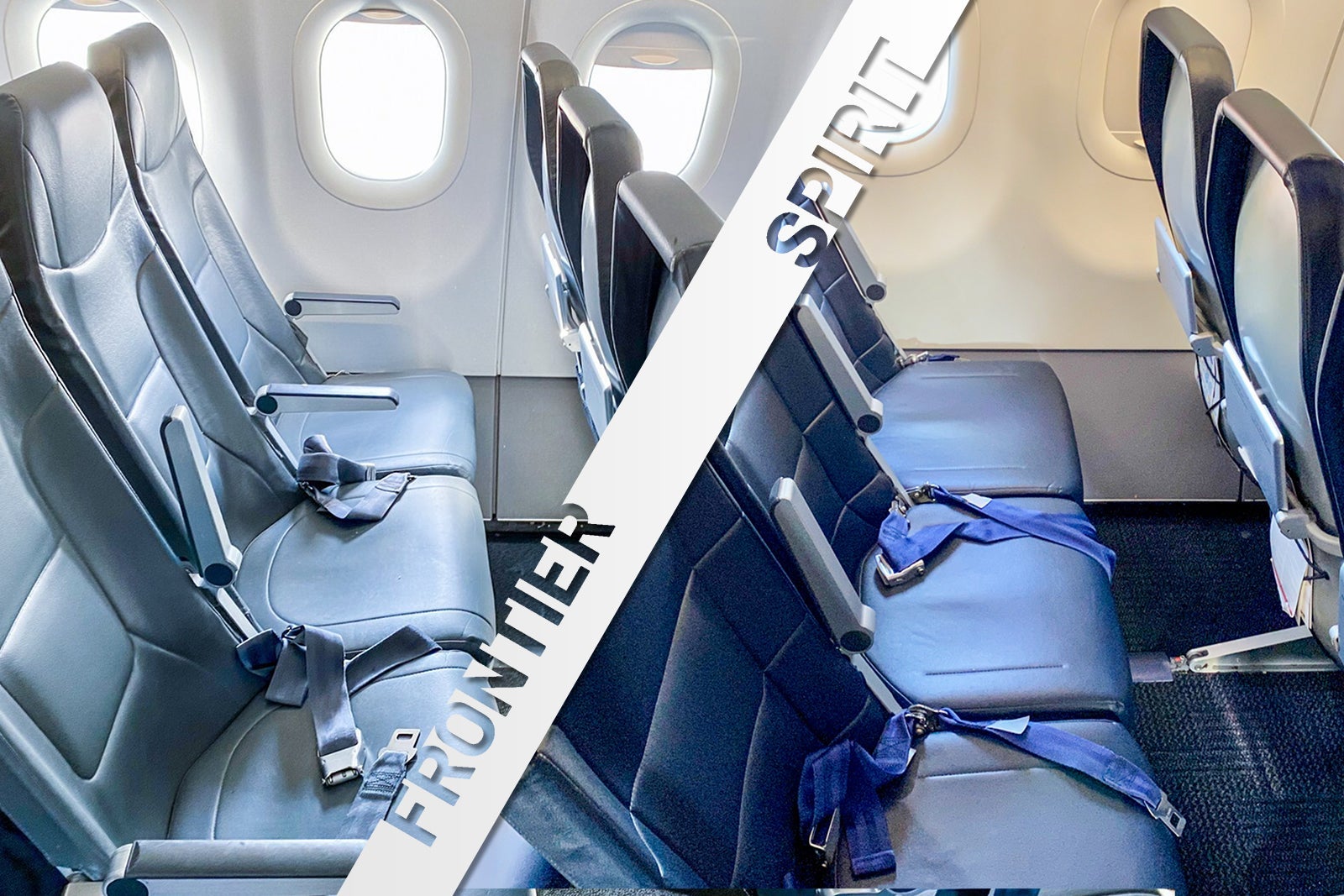
The Ultra-Low-Cost Carrier Model: A Shared Philosophy
At the core of both Spirit and Frontier’s operations lies the ULCC model, a strategic framework designed to minimize base ticket prices to attract a broad segment of price-sensitive travelers. This model, while widely adopted by these two carriers, is fundamentally different from traditional full-service airlines and even many legacy low-cost carriers. Understanding its mechanics is crucial for any financial assessment.
Core Business Strategy: Unbundling Services
The defining characteristic of the ULCC model is the radical unbundling of services. Unlike traditional airlines where a single ticket price often includes checked baggage, seat assignments, in-flight meals, and even basic entertainment, Spirit and Frontier strip down the base fare to its absolute minimum: transportation from point A to point B. Every additional service—from carry-on bags and checked luggage to seat selection, priority boarding, and even printing a boarding pass at the airport—is offered à la carte at an additional charge. This transparent yet often surprising fee structure is designed to give passengers control over their expenses, ostensibly allowing them to pay only for what they need. For the airlines, it transforms traditionally bundled costs into separate, high-margin revenue streams.
Revenue Generation Beyond the Base Fare
For Spirit and Frontier, the advertised base fare is merely the entry point. The true profitability of their model hinges significantly on “ancillary revenue”—income generated from services beyond the basic transportation. This includes fees for bags, seat selection, change fees, food and beverages onboard, and travel insurance. Both airlines have meticulously optimized their ancillary revenue strategies, often generating upwards of 40-50% of their total revenue from these non-ticket sources. This diversified revenue stream provides financial resilience, allowing them to remain profitable even when base fares are highly competitive. For investors, a strong ancillary revenue performance indicates a robust and adaptable business model. For travelers, it means the lowest advertised price is almost never the final price, necessitating a careful calculation of the total cost of travel.
For the Savvy Traveler: Navigating Fares and Fees
For consumers, the “better” airline often boils down to which one offers the lowest total cost for their specific travel needs, combined with an acceptable level of service. This requires a diligent comparison of not just base fares but the myriad of fees that can quickly inflate the final price.
Base Fare vs. Total Cost: What to Expect
Both Spirit and Frontier aggressively market incredibly low base fares, often significantly cheaper than competitors. However, the critical financial decision for a traveler is not the base fare, but the “total cost of ownership” for their trip. This includes all necessary add-ons. For instance, a $29 base fare can easily balloon to $100-$150 once baggage, seat selection, and other essentials are included. Travelers must accurately estimate their needs—do they require a carry-on? A checked bag? A specific seat? Are they traveling with infants who require special accommodations? Each of these considerations has a direct financial implication that can shift the balance between Spirit and Frontier. Generally, Spirit tends to have slightly higher base fares but sometimes offers more consistent ancillary pricing, while Frontier might have lower base fares but more variable (and potentially higher) add-on costs depending on the route and timing.
Baggage Policies: A Major Cost Driver
Baggage fees represent arguably the largest and most impactful ancillary charge for most travelers. Both airlines charge for carry-on bags that fit in the overhead bin, as well as checked luggage. Personal items that fit under the seat are typically free, but their dimensions are strictly enforced. The pricing structure for baggage is dynamic and varies based on the route, time of booking (cheaper online, more expensive at the airport gate), and bag size/weight. Spirit’s baggage fees, while substantial, are often perceived as more straightforward. Frontier, on the other hand, can sometimes have slightly lower initial baggage fees, but their fee structure can be more opaque or subject to greater fluctuations, potentially leading to unexpected costs if not meticulously reviewed during booking. For those who travel light with only a personal item, both airlines offer a truly ultra-low-cost option. For others, comparing the specific baggage fees for their flight is paramount.
Seat Selection, Amenities, and Loyalty Programs
Beyond baggage, seat selection is another common fee. Both airlines charge extra for choosing a specific seat, with premium options (e.g., extra legroom like Spirit’s “Big Front Seat” or Frontier’s “Stretch” seats) commanding higher prices. In-flight amenities are minimal and also come at a cost; expect to pay for snacks, drinks, and Wi-Fi. Spirit offers Wi-Fi on most of its fleet, whereas Frontier’s rollout has been slower. For the financially savvy traveler, these amenities are often foregone in favor of cost savings.
Loyalty programs, while not directly reducing costs upfront, can offer financial benefits over time. Spirit’s “Free Spirit” program and Frontier’s “Frontier Miles” program reward frequent flyers with points that can be redeemed for future travel or status perks. However, given their ULCC model, these programs are designed differently from traditional airlines. Status often translates into perks like free bag allowances or seat selection, effectively reducing future ancillary costs. Evaluating which program offers better value depends entirely on individual travel frequency and typical spending patterns on extras.
The Hidden Costs of Flexibility
Another financial consideration is the cost of flexibility. ULCCs are notorious for charging significant fees for itinerary changes or cancellations. While both airlines offer bundles (like Spirit’s “Bundle It” or “Boost It” or Frontier’s “Works Bundle” or “Perks Bundle”) that include benefits like free changes, baggage, and seat selection, these bundles often add a substantial amount to the fare. For travelers who value the ability to change plans without incurring hefty penalties, these bundles might offer a better financial value than paying for each service individually and risking high change fees later. Understanding your risk tolerance for travel changes is key to budgeting accurately.
For the Astute Investor: Financial Health and Market Position
From an investor’s perspective, comparing Spirit and Frontier moves beyond individual flight costs to evaluate their broader financial performance, market strategy, and potential for sustainable growth. Both companies operate on thin margins, and their success hinges on meticulous cost control and efficient capital deployment.
Revenue Streams and Profitability Metrics

As discussed, ancillary revenue is critical for both airlines. Investors scrutinize metrics like total revenue per available seat mile (TRASM), unit costs excluding fuel (CASM ex-fuel), and load factor to gauge operational efficiency and pricing power. Spirit has historically demonstrated a slightly higher TRASM, indicating more effective revenue generation per unit of capacity. Its ancillary revenue per passenger has also often outpaced Frontier’s. However, Frontier has made strides in recent years to optimize its ancillary strategy. Profitability for both is sensitive to fuel prices and economic downturns, making cost control paramount. Investors look for consistent positive net income and healthy operating margins, often adjusted for one-time events.
Operational Efficiency and Cost Structure
Both Spirit and Frontier are obsessed with low costs. Their operational efficiencies stem from a highly standardized fleet (predominantly Airbus A320 family aircraft), high aircraft utilization (flying planes more hours per day), rapid turnaround times at gates, and a point-to-point route network that minimizes connection costs and delays. Labor costs are managed tightly, and aircraft maintenance is optimized. While both are highly efficient, Spirit has sometimes been recognized for slightly better on-time performance and lower cancellation rates, which translates to fewer operational disruptions and associated costs. Frontier has historically had a slightly lower CASM ex-fuel, suggesting it is often more cost-efficient in its core operations, though this can be offset by lower TRASM. Investors seek companies with a clear and sustainable cost advantage in their competitive landscape.
Growth Strategies and Market Share Dynamics
Both airlines are in growth mode, continuously expanding their route networks and fleet sizes. Their growth strategies focus on underserved markets, point-to-point connections, and challenging legacy carriers on specific routes. Spirit has traditionally focused on higher-density markets and often larger airports, while Frontier has a slightly more diverse footprint, including smaller and leisure-focused destinations. Fleet expansion plans are a significant capital expenditure, and investors evaluate these plans for their potential return on investment, route profitability, and ability to capture market share without overly diluting yields. Market share gains against legacy carriers and even against each other are closely watched indicators of successful execution of their growth strategies.
Debt, Liquidity, and Valuation
Financial stability is key for investors. Both Spirit and Frontier have leveraged balance sheets, common in the capital-intensive airline industry. Investors analyze their debt-to-equity ratios, cash flow from operations, and liquidity positions (cash on hand, available credit lines) to assess their ability to meet financial obligations and fund future growth. Valuations, often using metrics like price-to-earnings (P/E) ratios, enterprise value to EBITDA, and price-to-book, are used to determine if the stocks are undervalued or overvalued relative to their peers and historical performance. The potential for mergers and acquisitions (like the previously proposed Spirit-Frontier merger, which ultimately failed) also plays a significant role in market valuation and speculation.
Beyond the Numbers: Customer Experience and Brand Perception (through a financial lens)
While customer experience might seem like a soft metric, for ULCCs, it has direct financial implications. The perception of value, reliability, and service quality directly impacts repeat business, brand loyalty, and ultimately, future revenue streams.
Impact of Customer Satisfaction on Future Revenue
Spirit and Frontier have long battled a perception challenge: how to deliver an ultra-low-cost product without alienating customers who may feel “nickel-and-dimed.” Negative customer experiences (e.g., unexpected fees, delays, uncomfortable seats) can lead to reduced willingness to repurchase tickets, diminished word-of-mouth recommendations, and increased customer acquisition costs. Both airlines have invested in improving their operational reliability and clarity around fees, understanding that a marginally better experience can translate into higher customer retention and repeat purchases, which are financially superior to constantly acquiring new customers. A customer who understands and accepts the ULCC model is a financially valuable asset.
Brand Loyalty and Repeat Business Value
True brand loyalty in the ULCC segment is often driven by consistent low total cost and reliability. While customers might switch between Spirit and Frontier based purely on price for a specific route, a consistently positive (or at least predictable) experience with one over the other can foster repeat business. Loyalty programs aim to incentivize this, offering financial perks that make sticking with one carrier more attractive over time. For investors, a strong, if niche, brand reputation among their target demographic ensures a steady stream of customers, making revenue forecasts more predictable and justifying premium valuations relative to less established competitors.
Making Your Choice: Spirit vs. Frontier for Your Wallet
Ultimately, the determination of which airline is “better” from a financial standpoint is highly contextual, depending on whether you’re buying a ticket or shares, and your specific needs and priorities.
When Spirit Might Be Better
For travelers, Spirit might offer a slightly more predictable financial outcome. Their ancillary fees, while high, are often more consistently priced across routes and booking stages. Their “Big Front Seat” offers a genuine upgrade for those willing to pay, providing a more comfortable experience without the full cost of a business-class ticket. For investors, Spirit has historically shown strong ancillary revenue generation and has often been slightly more profitable with better liquidity, making it an attractive option for those seeking consistent financial performance within the ULCC segment.
When Frontier Might Be Better
Frontier can often present lower base fares, potentially making it the absolute cheapest option for those who truly travel with nothing more than a personal item. Their “Works Bundle” can sometimes be a great value for those who need all the extras (baggage, seat selection, flexibility) and find it cheaper than adding each à la carte. For investors, Frontier’s slightly lower CASM ex-fuel might suggest a leaner, more efficient core operation, appealing to those who prioritize cost leadership and potential for future margin expansion. Its expansive route network, including smaller leisure markets, could also present unique growth opportunities.
The “Best” is Personal and Situational
There is no universal winner. For travelers, the “better” choice is the one that results in the lowest total cost for their specific trip, considering baggage, seat preference, and flexibility needs. It requires diligent comparison for each booking. For investors, the “better” airline depends on their investment horizon, risk tolerance, and specific financial metrics they prioritize. Both operate under a similar business model, making their financial performance often correlated, but nuanced differences in execution, market focus, and cost structure can tilt the scale.

Conclusion
Spirit and Frontier Airlines embody the competitive spirit of the Ultra-Low-Cost Carrier model, each vying for the wallets of price-sensitive travelers and the capital of discerning investors. Their shared strategy of unbundling services and relying heavily on ancillary revenue has redefined air travel economics. For the consumer, navigating the complex web of base fares and add-on fees is paramount to determining the true cost of a journey. For the investor, a deep understanding of their revenue streams, operational efficiencies, and growth trajectories is essential for assessing financial health and future potential. Neither airline is definitively “better” across the board; rather, their financial appeal lies in their nuanced differences and how well they align with individual financial goals and expectations. The financially astute traveler and investor will meticulously analyze the specifics before making their choice, ensuring their money is well-spent, whether on a flight or a stock.
aViewFromTheCave is a participant in the Amazon Services LLC Associates Program, an affiliate advertising program designed to provide a means for sites to earn advertising fees by advertising and linking to Amazon.com. Amazon, the Amazon logo, AmazonSupply, and the AmazonSupply logo are trademarks of Amazon.com, Inc. or its affiliates. As an Amazon Associate we earn affiliate commissions from qualifying purchases.